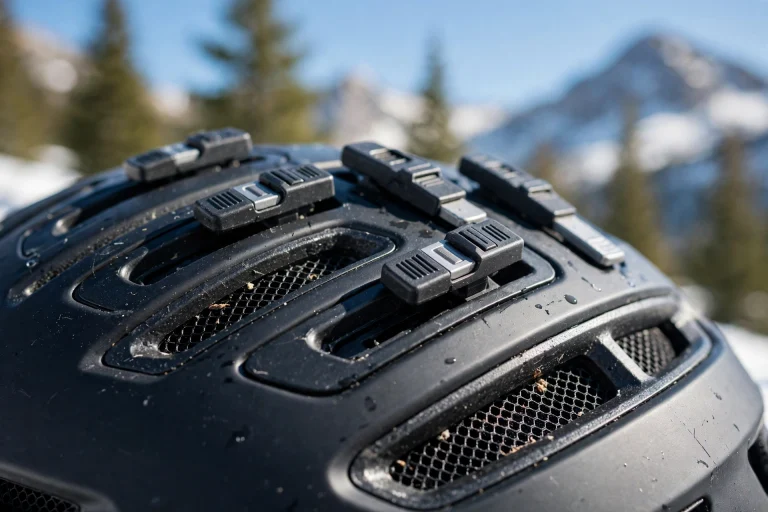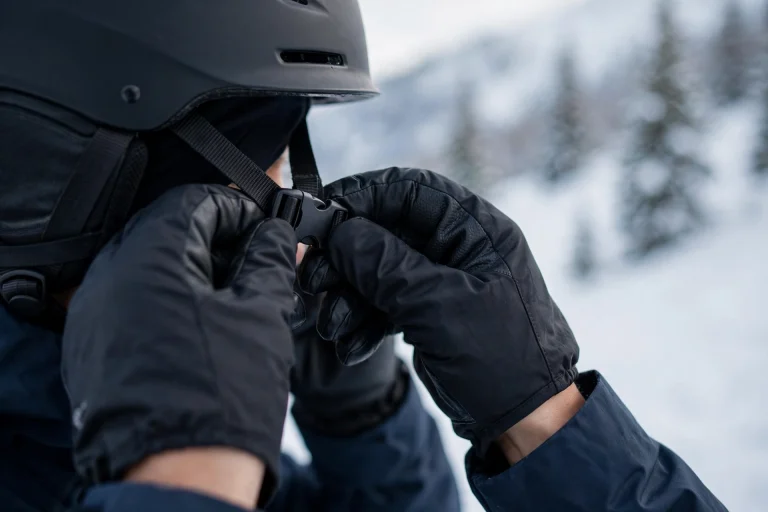
Yes — ski helmets do effectively expire. The impact-absorbing foam slowly degrades with age, sweat, sunlight, and everyday knocks, so manufacturers in general terms suggest replacing a ski helmet after roughly five years of use, and always immediately after any crash or hard impact, even if it looks fine. The date printed on the sticker inside your helmet is its manufacture date, and it is the starting point for judging how old the helmet really is.
Unlike a lift pass, a helmet does not stop working on one specific day. It loses protection gradually and invisibly, which is exactly why the question catches people out: a six-year-old helmet can look brand new on the outside while its foam has quietly hardened. This guide explains why helmets age out, how to find and read the date, and how to judge whether yours still has life in it.
Why Do Ski Helmets Wear Out Over Time?
The working part of a ski helmet is the foam liner — usually expanded polystyrene, the same family of material as a foam cooler. It protects you by crushing in a crash, absorbing energy that would otherwise reach your head. That foam is designed to do its job once, and it ages whether it gets the chance or not.
Sweat, sunscreen, and hair products slowly attack the foam and the comfort padding from the inside. Ultraviolet light and heat age the outer shell and can make it more brittle. Everyday handling matters too: drops onto concrete in the parking lot, being sat on in a packed car, and seasons spent rattling around in a gear bag all add up to small compressions of the foam that no one notices at the time.
The adhesives and resins holding everything together also break down slowly over the years. None of this happens on a schedule you can see, which is why manufacturers use a simple time-based rule instead: in general terms, plan on about five years of use from the manufacture date before the helmet is due for replacement, sooner if it has had a hard life.
How Do You Check the Date on Your Ski Helmet?
Look inside the helmet. Nearly every certified ski helmet has a sticker or stamped label under the comfort liner, usually on the foam itself or the shell, showing the month and year it was manufactured along with its certification marks. You may need to gently peel back or remove the removable liner to see it — the liner is designed to come out for washing, so this does no harm.
Read the date as the helmet’s birthday. A helmet made five or more seasons ago is at or past the point where most manufacturers would tell you to retire it, even if it spent part of that time on a shop shelf. If there is no readable date anywhere — because the sticker fell off or the print has worn away — treat that as a warning sign in itself: a helmet with no traceable age is a helmet to replace.
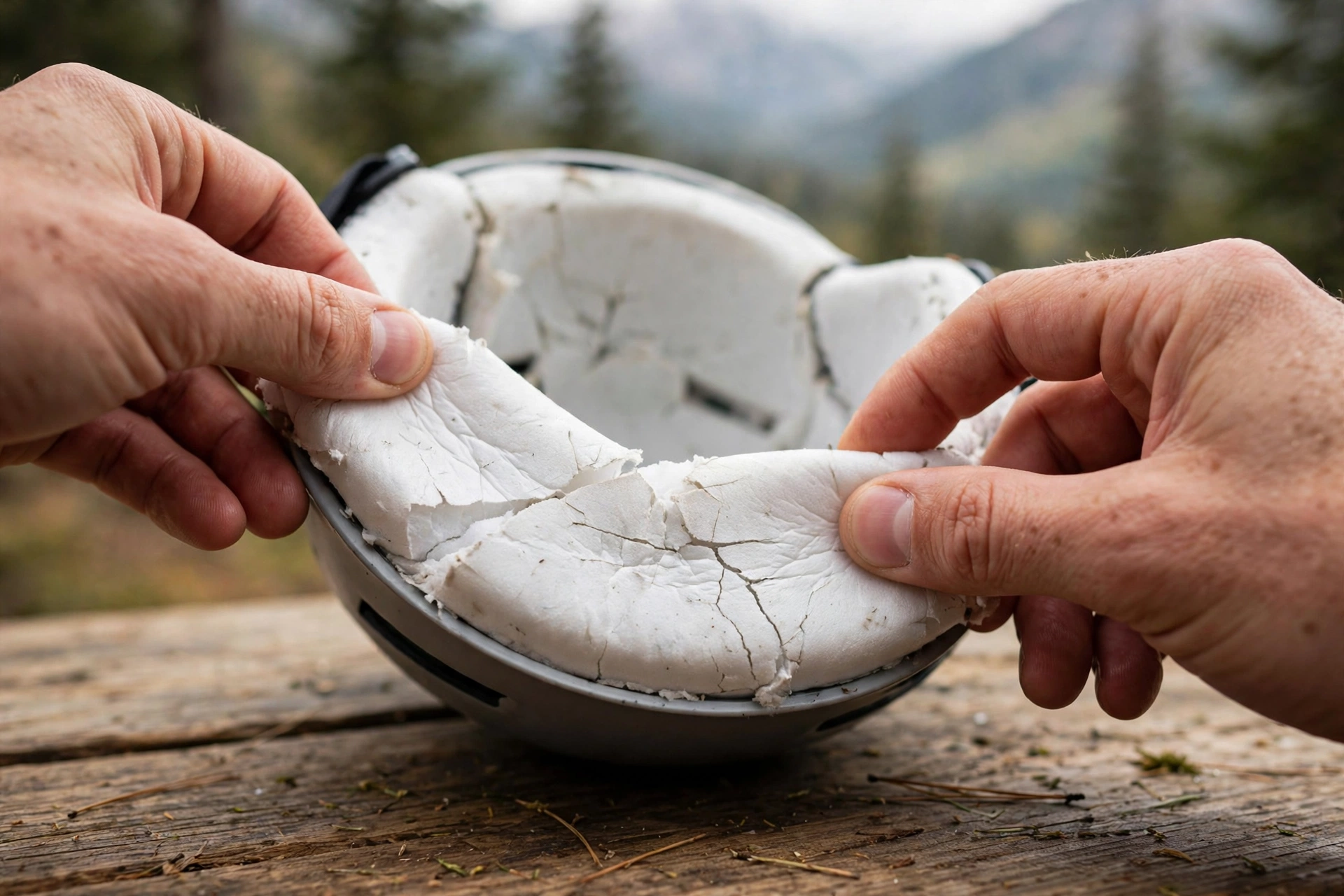
While you have the liner out, inspect the foam. Look for cracks, dents, crumbling edges, or areas that feel noticeably harder or compressed compared with the rest. Any of those findings means the helmet should be retired now, whatever the date says.
Does a Crash Mean You Must Replace the Helmet?
Yes — always. A helmet that has taken a real impact has done its job by crushing its foam, and crushed foam does not recover. The damage is often completely invisible because the outer shell springs back and hides the compressed foam underneath, which is why “it looks fine” is not a test anyone should trust after a crash.
The same applies to a hard drop onto concrete or a helmet that has been run over, sat on heavily, or damaged in transit. If you cannot honestly say the helmet has never taken a significant hit, the safe answer is to replace it. Manufacturers are blunt about this in their manuals, and many offer crash-replacement programs with a discount on a new helmet if you send the damaged one in.
When you replace a crashed helmet, choose the new one for fit and current safety technology first — our explainer on what MIPS is and why it matters covers one widely used rotational-impact system — rather than simply buying the same model again out of habit.
How Can You Make a Ski Helmet Last Its Full Life?
Store it cool, dry, and out of direct sunlight — a closet shelf at home beats a car trunk or a sunny windowsill every time. Heat is the quiet enemy: a helmet that spends summers in a hot garage will age faster than one stored indoors, even if it is only skied in a few weeks a year.
Handle it like the safety device it is. Carry it in its bag or clipped to your pack rather than swinging it by the strap, do not sit on it, and do not use it as a bucket for gloves and goggles. Clean the liner and ear pads with mild soap and water only, and let everything air dry; harsh chemicals and machine washing can break down foam and padding alike.
Write the purchase date on a piece of tape inside the helmet if the manufacture date is hard to read, and make a habit of checking the foam every season opener. A helmet that is stored well, never crashed, and inspected regularly can serve its full expected life — but no amount of care stretches that life indefinitely.
What About a Helmet That Has Barely Been Used?
Low mileage slows aging, but it does not stop it. A helmet that sat in a climate-controlled closet for four winters, was skied in twice, and never took a knock is in far better shape than a daily-driver helmet of the same age — yet its foam, glues, and shell have still been aging since the day it was made.
Use judgment. Inspect it carefully: fresh-looking, resilient foam with no cracks, a sound shell, straps and buckle in good condition, and a manufacture date you can verify. If everything checks out and the helmet is within or only slightly past the general five-year guidance, many skiers would use it; if the date is unknown, the foam feels hard or crumbly, or anything looks tired, replace it and ski with a clear mind.
Be especially cautious with second-hand helmets and old hand-me-downs for kids. You cannot know their impact history, and an invisible crash is precisely the kind of damage that matters. For helmets, unknown history means unknown protection.
Frequently Asked Questions
Q: How long does a ski helmet last?
A: In general terms, manufacturers suggest replacing a ski helmet after about five years of use, counted from its manufacture date, and immediately after any crash or hard impact regardless of age.
Q: Where is the expiration date on a ski helmet?
A: There is no printed “expiration” date as such. The sticker inside the helmet, usually under the removable liner, shows the manufacture date — count forward roughly five years from that date to judge its remaining life.
Q: Can I keep using a ski helmet after a small fall?
A: A gentle tip-over onto soft snow where the helmet barely touched down is different from a real impact. If your head hit hard, the helmet struck a firm surface with force, or you are unsure, replace it — the foam damage is often invisible.

Olivia
Writer at Helmet Today, covering helmet reviews, fit and riding safety.