The kids ski helmet fit mistakes parents make most often are buying a size too big for the child to “grow into,” letting the helmet ride on top of a thick winter hat, leaving the chin strap loose, and skipping the goggle-gap check — every one of which quietly undoes the protection the helmet is supposed to give. A kids ski helmet only works when it fits the head your child has this season: snug, level, strapped, and seated low over the forehead.
None of these mistakes come from not caring — they come from sensible instincts (save money, keep them warm, don’t pinch their chin). This guide walks through each mistake, why it matters, and how to check the fit properly in about a minute before you head to the lift.
Why Is Buying a Size Too Big the Biggest Mistake?
It is the most common mistake because growing into things works for jackets and boots. A helmet is different. It protects by staying in exactly the right position during an impact and by having its foam in contact with the head all the way around. A helmet with growing room can shift, tilt back off the forehead, or in the worst case partially come off in a tumble — and the fall happens in a split second, long before the helmet “settles.”
The extra space creates a second problem: the head travels before it meets the foam. That gap turns one controlled impact into two — the head hits the inside of the helmet, then the helmet hits the snow. Snug, even contact is what the design assumes, and it is what you are paying for.
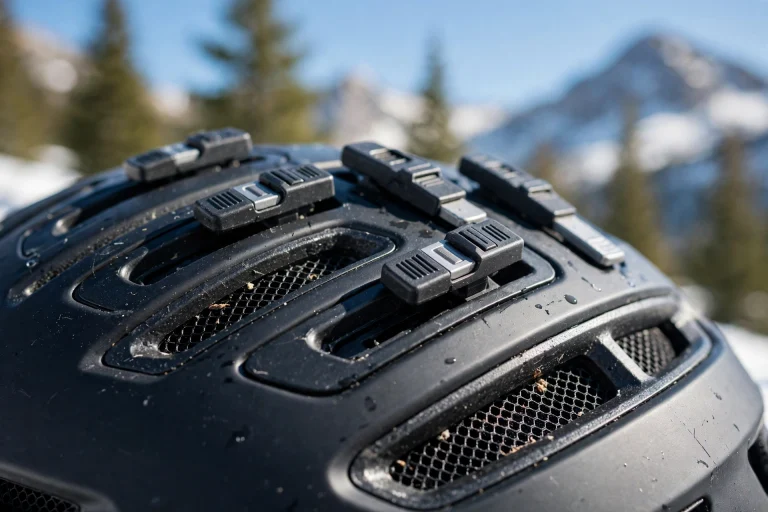
The good news is that most kids ski helmets have a rear adjustment dial that covers a few centimeters of growth, which usually gets a child through a season or two in the correct size. When the dial is fully open and the helmet still will not sit snug, your child has genuinely outgrown it — that, and not the start of the season, is when to buy the next size.
Should a Hat Go Under a Kids Ski Helmet?
Not a thick one. A bulky knit hat underneath lifts the helmet so it perches on top of the head instead of cupping it, creates a slippery layer that lets the helmet slide around, and pushes the helmet up and back so the forehead — exactly where goggles need to seal — is left exposed. Parents add the hat for warmth, but most ski helmets are already built as winter gear, with insulated liners and ear pads designed to keep a child warm on their own.
If your child genuinely runs cold, the fix is a thin, close-fitting balaclava or helmet liner made for the purpose. It adds warmth without changing the helmet’s position — but fit the helmet with that layer on, because even a thin layer changes how a small head fills the shell.
Do the fit check with whatever your child will wear under the helmet that day — a helmet perfect over bare hair in the shop can sit differently over a balaclava.
How Tight Should the Chin Strap and Dial Be?
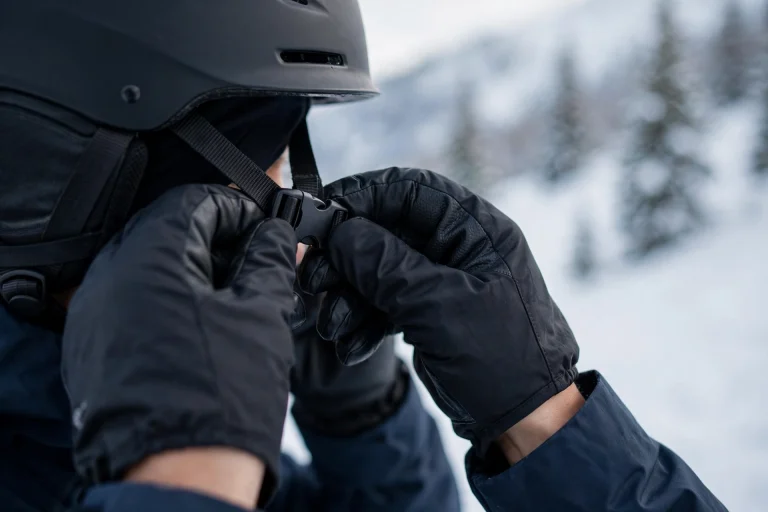
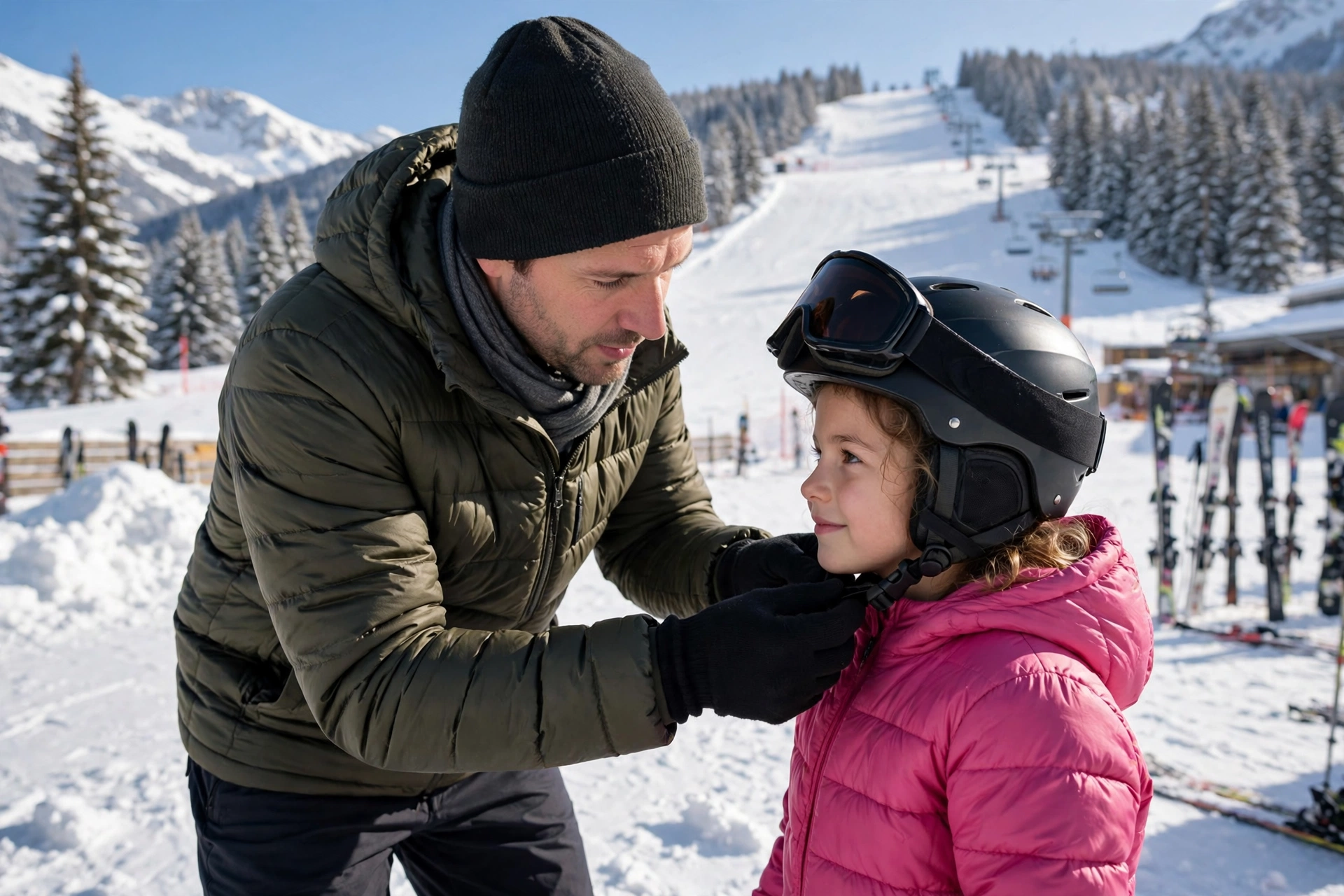
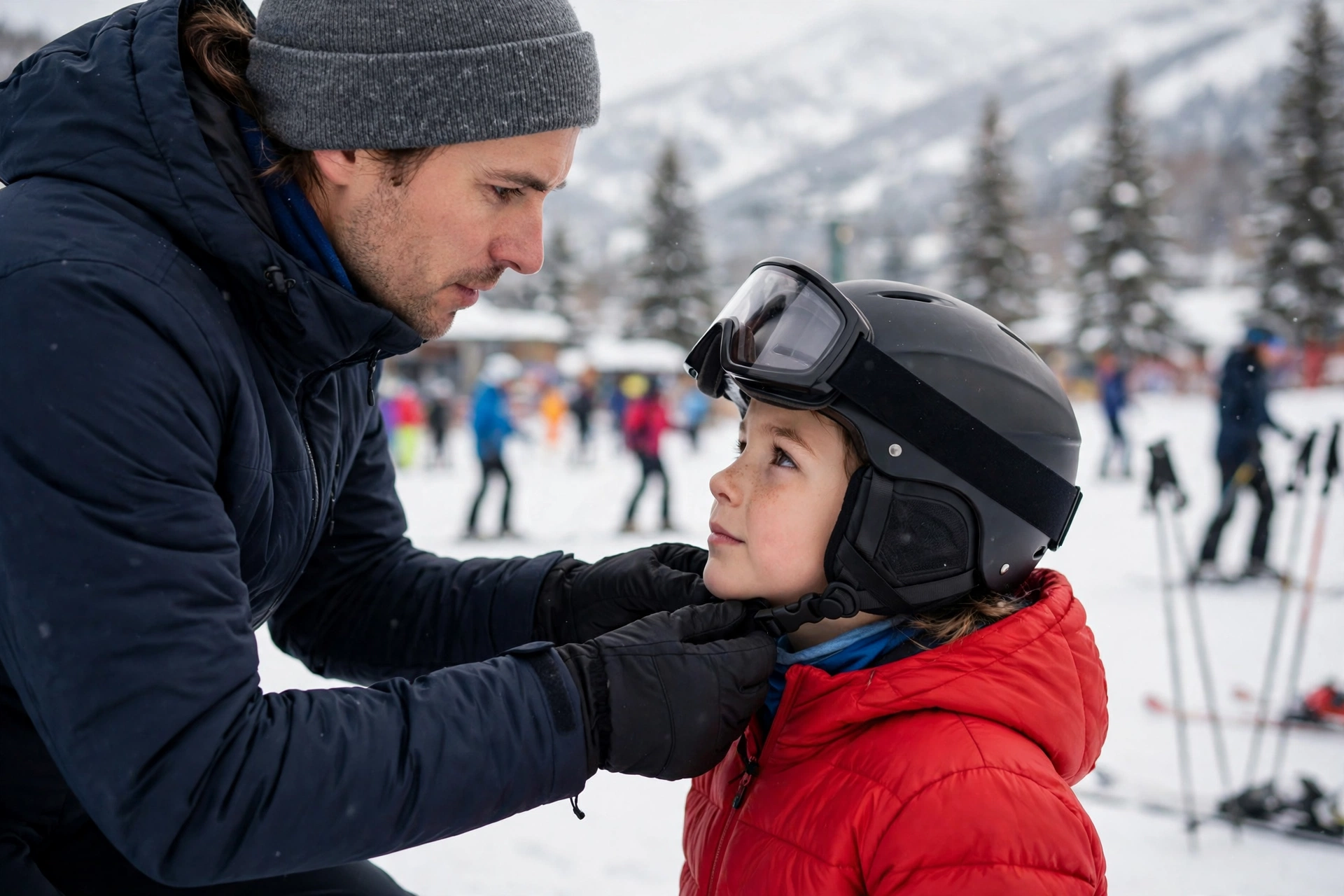
Snug — and this is where many parents under-tighten out of kindness. The side straps should form a V that meets just below each ear, and the chin strap should be tight enough that only about one finger fits between strap and chin. A strap you can slide two or three fingers under lets the helmet roll or lift in a fall, and a helmet that comes off protects nothing.
Use the rear adjustment dial as well. With the helmet on, turn the dial until the fit feels like a firm, even hug all around — snug without a headache. Then run the shake test: ask your child to shake their head side to side and nod. The helmet should move with the head, not wobble independently, and the skin on the forehead should move slightly with it.
Recheck through the day. Straps loosen, dials get bumped in the lodge, and kids fiddle. A ten-second check each time the helmet goes back on — level, snug, strap clicked and tight — is a habit worth building into the family’s routine.
How Do You Check the Goggle Fit and Forehead Gap?
Put the helmet on first, then the goggles, the way your child will actually ski. There should be no strip of bare forehead skin between the top of the goggles and the edge of the helmet — that exposed band is nicknamed the “gaper gap,” and besides inviting a very cold stripe of skin and a sunburn line, it is a visible sign the helmet is sitting too high or the goggles too low.
The goggle strap goes over the helmet, held by the clip or retainer at the back, and the goggles should sit comfortably on the face without the helmet pushing them down onto the nose or cheeks. If the helmet forces the goggles uncomfortably low, or the goggles push the helmet up and back, the two are not a good match — and since your child will fight anything uncomfortable all day, comfort here is a safety issue too.
Also check that the helmet sits low and level on its own: the front edge should rest about one to two finger widths above the eyebrows, not tilted back like a baseball cap worn in reverse. Rotational-protection designs — explained in our article on how MIPS works in helmets — only do their job when the helmet starts from the right position, which is one more reason the level, low fit matters.
What Other Fit Mistakes Catch Parents Out?
Sizing by age instead of measurement is a quiet one. Two children of the same age can differ by several centimeters in head size, so always measure with a soft tape just above the eyebrows and match the number to that brand’s chart — size labels are not standardized between makers.
Trusting a crash-worthy hand-me-down is another. A helmet passed down from an older sibling may carry invisible foam damage from a crash nobody remembers, and helmets have a limited service life even without impacts. If you cannot vouch for its history and age, a new helmet in the right size is the safer call.
Finally, watch the small details: ponytails bunched high under the helmet and hoods worn up underneath. Anything bulky between head and helmet changes the fit, so keep what goes under it thin and smooth, and re-run the shake test whenever something changes.
Frequently Asked Questions
Q: Should I buy a kids ski helmet a size bigger so it lasts longer?
A: No. An oversized helmet can shift or come off in a fall and leaves gaps that reduce protection. Buy the size that fits snugly now; the adjustment dial in most kids helmets provides a season or two of growing room.
Q: Can my child wear a winter hat under their ski helmet?
A: A thick hat should not go under a ski helmet — it lifts and loosens the fit. The helmet’s own liner and ear pads provide the warmth; if your child needs more, use a thin balaclava or helmet liner and re-check the fit with it on.
Q: How do I know if my child’s ski helmet fits correctly?
A: It should sit low and level, about one to two finger widths above the eyebrows, feel snug all around with the dial adjusted, stay put during a head shake, have the chin strap tight to about one finger’s width, and leave no bare forehead gap above the goggles.

Olivia
Writer at Helmet Today, covering helmet reviews, fit and riding safety.