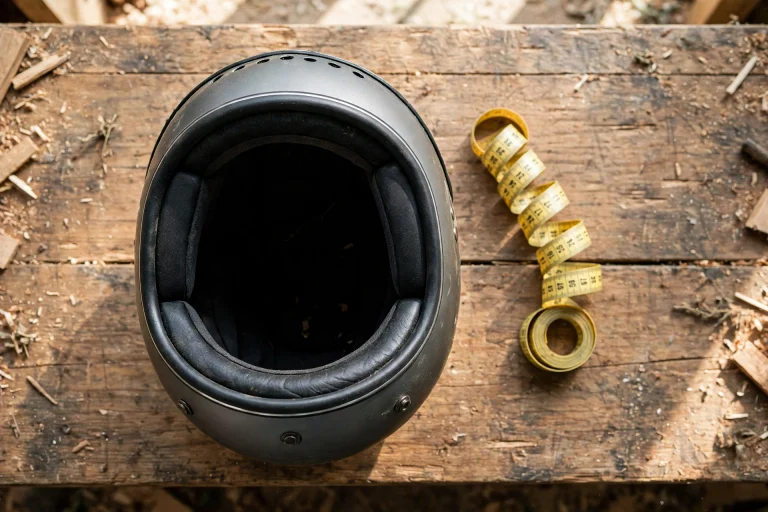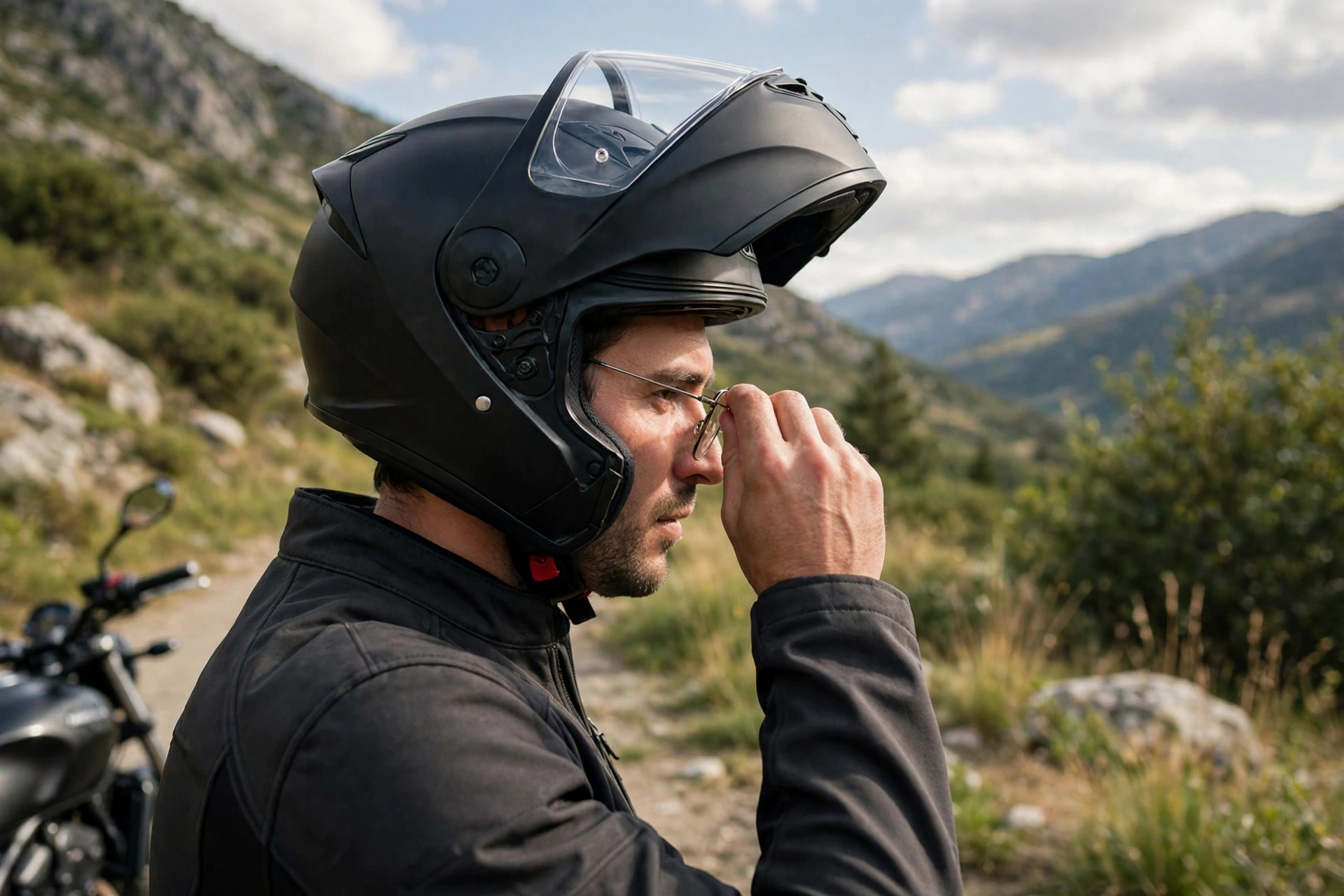
If you wear glasses, choose a helmet with eyewear-friendly features: grooves or soft channels in the cheek pads for glasses arms, a fit that does not squeeze your temples, and room to slide your frames on after the helmet. The right helmet goes on first, glasses slide in straight and sit level, and there is no pressure on the arms or behind your ears — even after an hour of riding.
Glasses wearers abandon helmets that fight their frames, and the problem is rarely the glasses. It is padding that clamps the arms against the head, or an internal shape that presses exactly where the frames sit. This guide shows what to look for, how to test it in the shop, and how to handle sunglasses once the helmet fits.
Why Do Glasses and Helmets Clash?
A helmet holds itself on with even pressure around your head, and glasses arms pass through exactly that pressure zone at your temples. On many helmets the arms get pinched between the padding and your head, which bends the frames, tilts your lenses, and creates a dull ache that builds until you stop to fix it.
Tight cheek pads create a second problem: they can push up under the arms and lift the glasses off your nose, or press the arms down so the frames slide forward. Full-face helmets are the tightest squeeze because the eye port is smaller, but even open helmets can fight chunky frames.
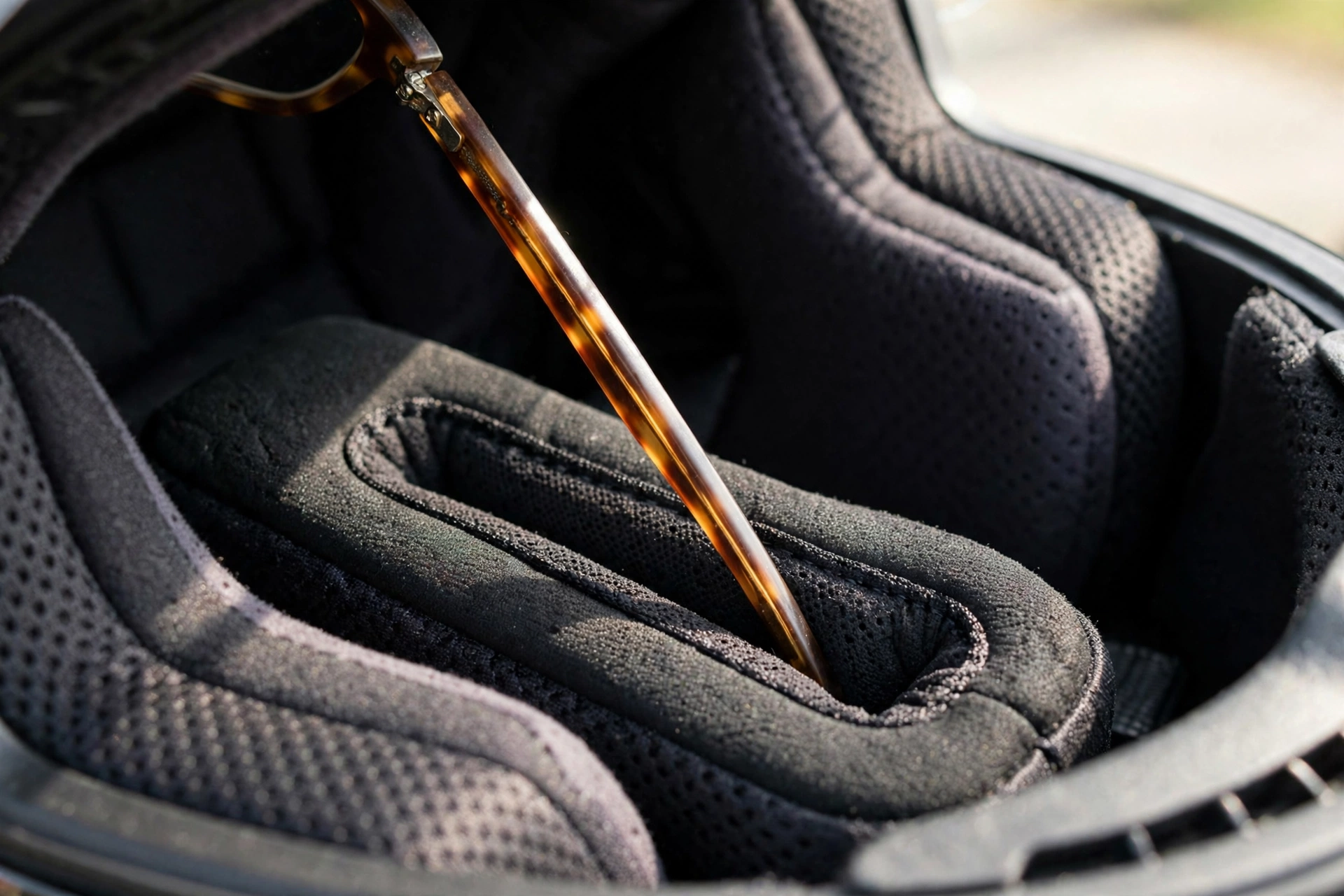
The fix is not a looser helmet — a loose helmet is an unsafe helmet. The fix is a helmet designed or shaped so the frames pass through a low-pressure path. Several manufacturers cut a dedicated groove into the padding for exactly this reason.
What Features Should Glasses Wearers Look For?
Look for these specifics when you shop:
- Glasses channels. Many helmets list “eyewear compatible” or grooved cheek pads — a soft channel where the arms sit without being clamped.
- Removable pad sections. Some liners have small cut-outs or thinner inserts you can swap near the temples.
- Generous eye port. On full-face and flip-up helmets, a taller, wider port leaves more room for larger frames.
- Flip-up designs. A modular helmet lets you put the helmet on with the chin bar raised, slide your glasses on without threading them through a tight opening, then close the bar — one of the easiest routines for glasses wearers.
- Drop-down sun visor clearance. If the helmet has an internal sun visor, confirm it lowers without clipping the top of your frames.
Frames matter too. Straight, slim arms slide into helmets far more easily than thick or heavily curved arms, and flexible frames tolerate snug helmets better. If you ride daily, a dedicated pair of riding glasses with straight arms is a genuinely useful purchase.
How Should You Try a Helmet On With Glasses?
Always fit the helmet with the exact glasses you ride in — not a similar pair from the shop counter. Put the helmet on first without the glasses, check the basic fit (level, snug, no rocking, no forehead hotspot), then slide the glasses on.
The arms should slide in with light, even resistance and end up straight. If you have to force them, wiggle them, or they land crooked, that helmet will hurt within the hour. Once on, the frames should sit level on your nose, the lenses should not touch the helmet, and looking left and right should not shift them.
Wear the combination for a full ten to fifteen minutes in the shop. Glasses pressure is sneaky — it feels like nothing at minute two and like a vice at minute thirty. Nod, shake your head gently, and simulate a shoulder check. Everything should move as one unit.
Do Head Shape and Size Change for Glasses Wearers?
The rules are the same, with one adjustment: never solve glasses pressure by sizing up. A bigger helmet stops pinching the arms but starts moving on your head, which is both uncomfortable and unsafe. Solve pressure with shape and padding design instead.
If a helmet fits your head well but pinches your frames, try the same model with the manufacturer’s glasses-friendly pads if offered, or try another model family. Internal shapes differ enough between brands that glasses wearers often find one brand’s temple area dramatically kinder than another’s.
Remember the technology inside does not change the fit test. Features explained in our guide to what MIPS is and how it works sit under the liner and do not interfere with glasses arms — but only buy them in a helmet that already fits you and your frames properly.
What About Sunglasses and Sun Visors?
Once your prescription glasses fit comfortably, sun protection has three routes. Prescription sunglasses with straight arms can swap one-for-one with your clear glasses. A drop-down internal sun visor works over most glasses as long as you verified clearance in the shop. A tinted or photochromic main visor avoids the glasses question entirely for daytime riding.
Clip-on shades and fit-over sunglasses are the least reliable option under a helmet — they add a second frame fighting for the same temple space. If you go that route, test the full stack (helmet, glasses, clip-ons) for the full ten minutes, not just for a quick look in the mirror.
Whatever you choose, keep a microfibre cloth in your jacket. Glasses under a helmet fog and gather dust differently, and cleaning them at a stop is part of the glasses-wearer’s routine.
Frequently Asked Questions
Q: Can I wear glasses with a full-face helmet?
A: Yes. Choose a model with glasses channels in the cheek pads and a generous eye port, and slide the glasses on after the helmet. Many glasses wearers find flip-up helmets easiest of all, because the raised chin bar gives open access for the frames.
Q: My helmet pushes my glasses down my nose. What fixes it?
A: Usually the cheek pads are pressing on the glasses arms. Try a model with padded channels, thinner temple inserts, or straighter-armed frames. Do not fix it by buying a larger helmet — the loose fit creates a bigger problem than the one it solves.
Q: Are there helmets made specifically for glasses wearers?
A: There is no separate category, but many helmets are marketed as eyewear compatible, with grooved pads designed for glasses arms. That feature, plus a proper in-shop fit test with your own frames, is what to look for.

Olivia
Writer at Helmet Today, covering helmet reviews, fit and riding safety.