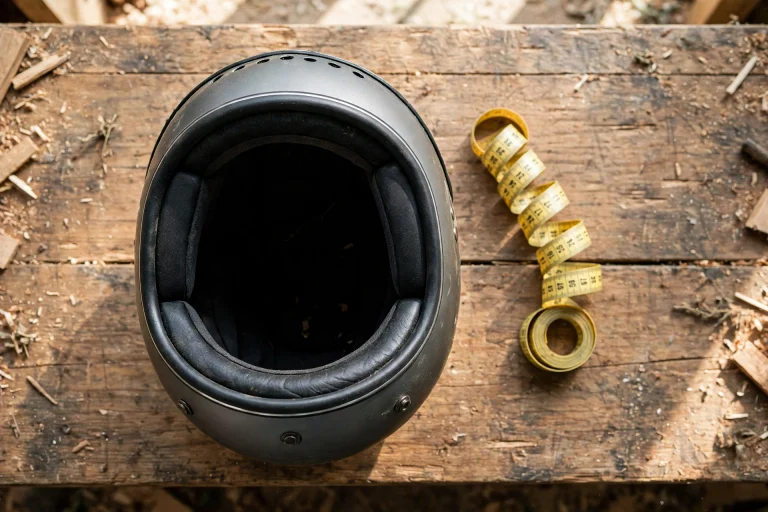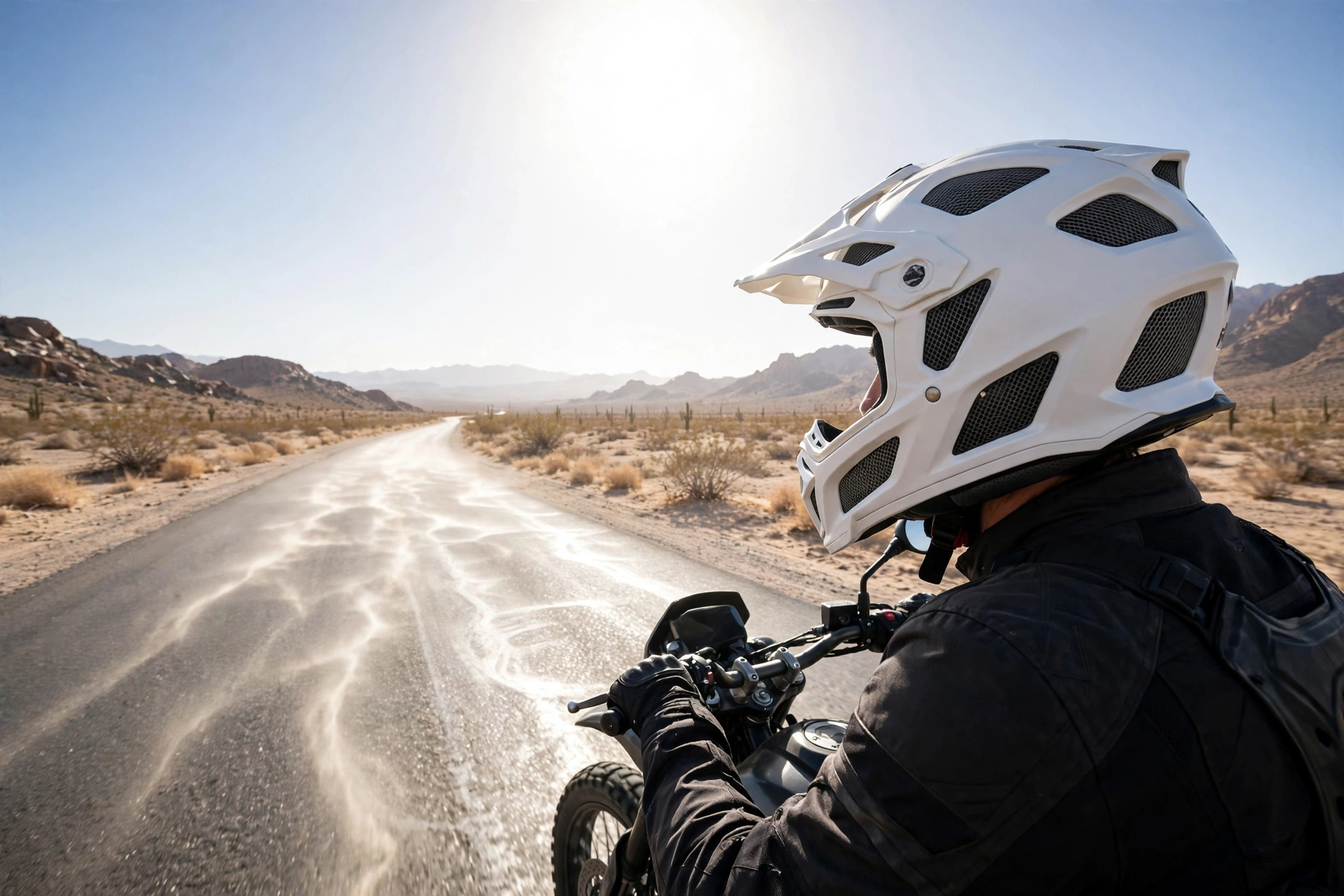
For hot climates, look for a helmet with large front intake vents connected to deep internal air channels and rear exhaust ports, a light-colored shell, and a removable moisture-wicking liner. Airflow design matters more than raw vent count, and the coolest helmet is still only a good choice if it is certified and fits snugly — heat is no reason to ride unprotected.
Hot weather is when riders are most tempted to skip the helmet or grab the thinnest novelty lid they own. That temptation is understandable: a badly ventilated helmet in tropical or desert heat is genuinely miserable. The good news is that modern vent design works. Here is what actually keeps a helmet cool, and what is mostly marketing.
How Does Helmet Cooling Actually Work?
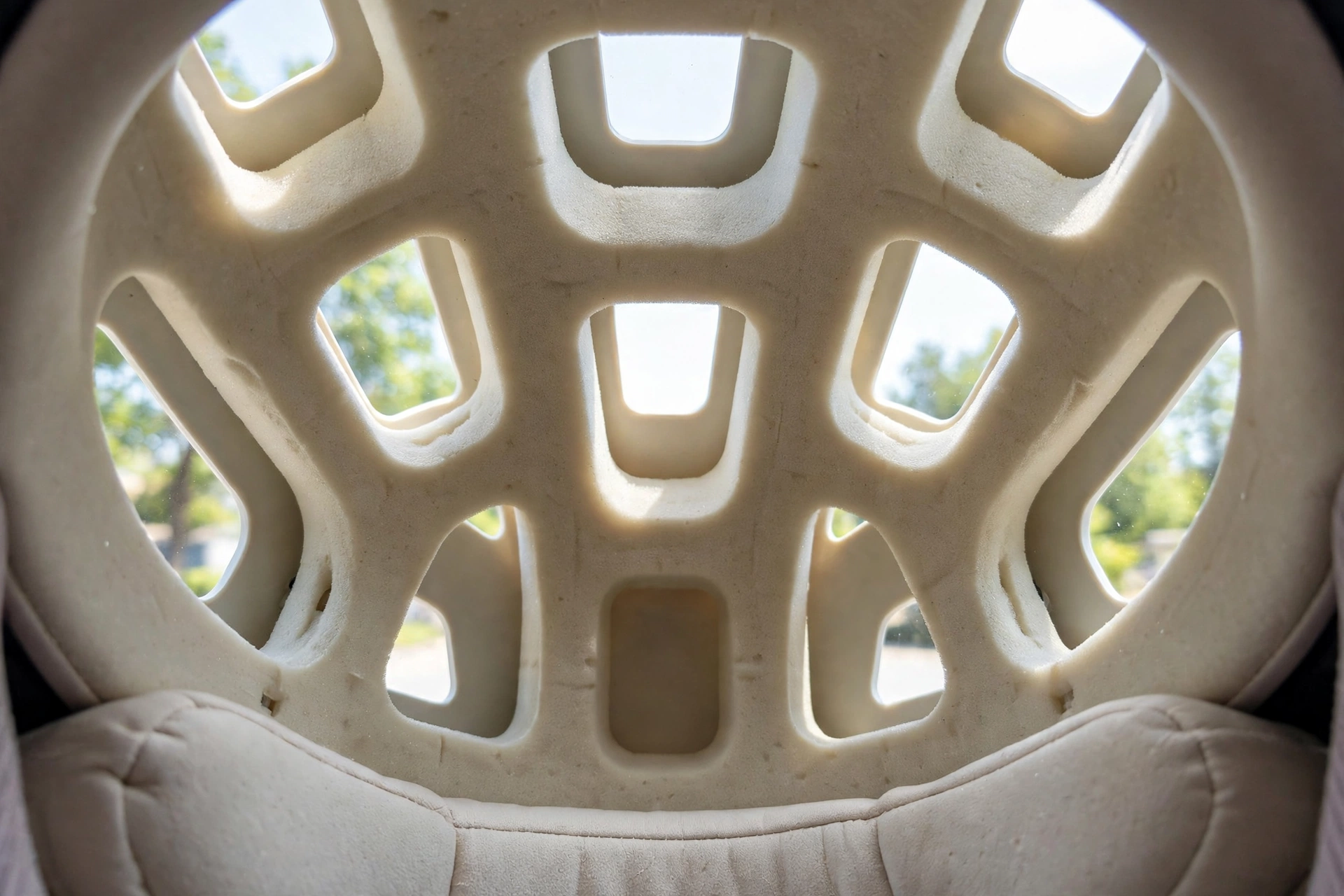
A helmet cools you by moving air across your scalp, not by simply having holes in the shell. Front vents scoop air in as you ride, channels molded into the foam liner carry that air over your head, and exhaust ports at the back let the warmed air out. It is the connected path — intake, channel, exhaust — that does the work.
This is why vent count alone misleads. A helmet with many small vents but a smooth, unchanneled liner can run hotter than one with fewer, larger vents and deep grooves in the foam. When you shop, look inside the helmet: you want to see obvious channels running front to back, and pads that do not block them.
Speed helps. Even modest airflow at city pace moves meaningful air through a well-channeled helmet, and the effect strengthens as speed rises. The hardest case is slow, stop-start traffic — exactly where hot-climate riders spend their time — which is why channel design and liner choice matter so much for commuters.
What Ventilation Features Should You Look For?
Prioritize these features, in this order:
- Big front intakes positioned to catch air head-on, ideally with simple sliders you can operate in gloves.
- Deep internal channels in the foam, visible when you look inside the helmet.
- Rear exhaust ports that let the low-pressure area behind the helmet pull warm air out.
- A brow vent or forehead intake, which cools the area where heat feels worst.
- A removable, washable, wicking liner — sweat-soaked padding stops wicking and starts smelling fast in the heat.
For motorcycle helmets, a chin vent matters too: it directs air up inside the visor, cooling your face and reducing fogging at stops. For bicycle and e-bike helmets, more of the scalp is worked by the main vents, and a visor or short brim that shades your face without blocking the front intakes is the better addition.
Does Helmet Color Really Make a Difference?
Yes, in direct sun. A white or light-colored shell reflects more sunlight, so the shell surface — and the air layer next to your head — stays cooler than under a black shell of the same design. The difference is modest in shade or at night and most noticeable on exposed roads under a midday sun.
Light colors bring a second benefit in hot climates, where riders are often on the road at dawn and dusk: visibility. A white or bright helmet is simply easier for drivers to pick out than a dark matte one.
Color never outweighs ventilation and fit, though. A well-channeled dark helmet will usually feel cooler than a poorly vented white one, because moving air does more work than reflected light. Treat color as a tiebreaker between helmets that otherwise match your needs.
Which Helmet Styles Run Coolest?
Open-face and three-quarter helmets move the most air across your face, which is why they dominate hot-climate city riding — but they leave your chin and face exposed in a fall, and that trade-off is yours to weigh honestly. Venting cannot fix a coverage decision.
Modern full-face helmets with serious channeling run cooler than most riders expect, and they keep their protection. For bicycle use, heavily vented road-style helmets are the coolest option, while skate-style helmets with few vents are the hottest — the opposite of what their casual image suggests.
Rotational liners and other internal tech do not have to cost you airflow. Systems like those explained in our guide to what MIPS is and how it works sit under the pads; on well-designed helmets the channels remain open. Check the specific model rather than assuming a feature means a hotter helmet.
How Do You Stay Comfortable on Long Hot Rides?
Gear is half of it; habits finish the job. Start with a clean, dry liner — a salt-stiffened liner from yesterday wicks poorly and irritates skin. Rinse or rotate liners through the week if you ride daily, and let the helmet air-dry fully, out of direct sun, after every ride.
On the road, crack vents before you feel hot rather than after, and take shaded breaks with the helmet off on the longest, hottest stretches. A thin, smooth helmet liner cap can help manage sweat and sun through open vents, but fit the helmet over it exactly as you will ride — never size up to make room, and never wear a thick hat underneath.
Finally, store the helmet indoors and cool. Heat and UV are the enemies of foam and straps: a helmet that lives in a hot car, a sunny window, or a sealed top box in a hot climate ages far faster than its calendar age. Cool storage is free service life.
Frequently Asked Questions
Q: How many vents does a hot-climate helmet need?
A: There is no magic number. Look for large front intakes, deep internal channels you can see in the foam, and rear exhaust ports. A well-channeled helmet with fewer vents usually cools better than a smooth-lined helmet with many small holes.
Q: Is an open-face helmet the best choice for hot weather?
A: It is the coolest-feeling option, but it leaves your face and chin unprotected. A well-ventilated full-face or a heavily vented bicycle helmet keeps much more protection while staying comfortable. Choose based on your riding and risk, not temperature alone.
Q: Can I make my current helmet cooler?
A: Partly. Wash or replace the liner so it wicks properly, keep vents clean and fully open, and store the helmet out of heat and sun. You cannot add real channeling to a helmet that lacks it — if heat is a daily problem, a better-vented helmet is the real fix.

Olivia
Writer at Helmet Today, covering helmet reviews, fit and riding safety.