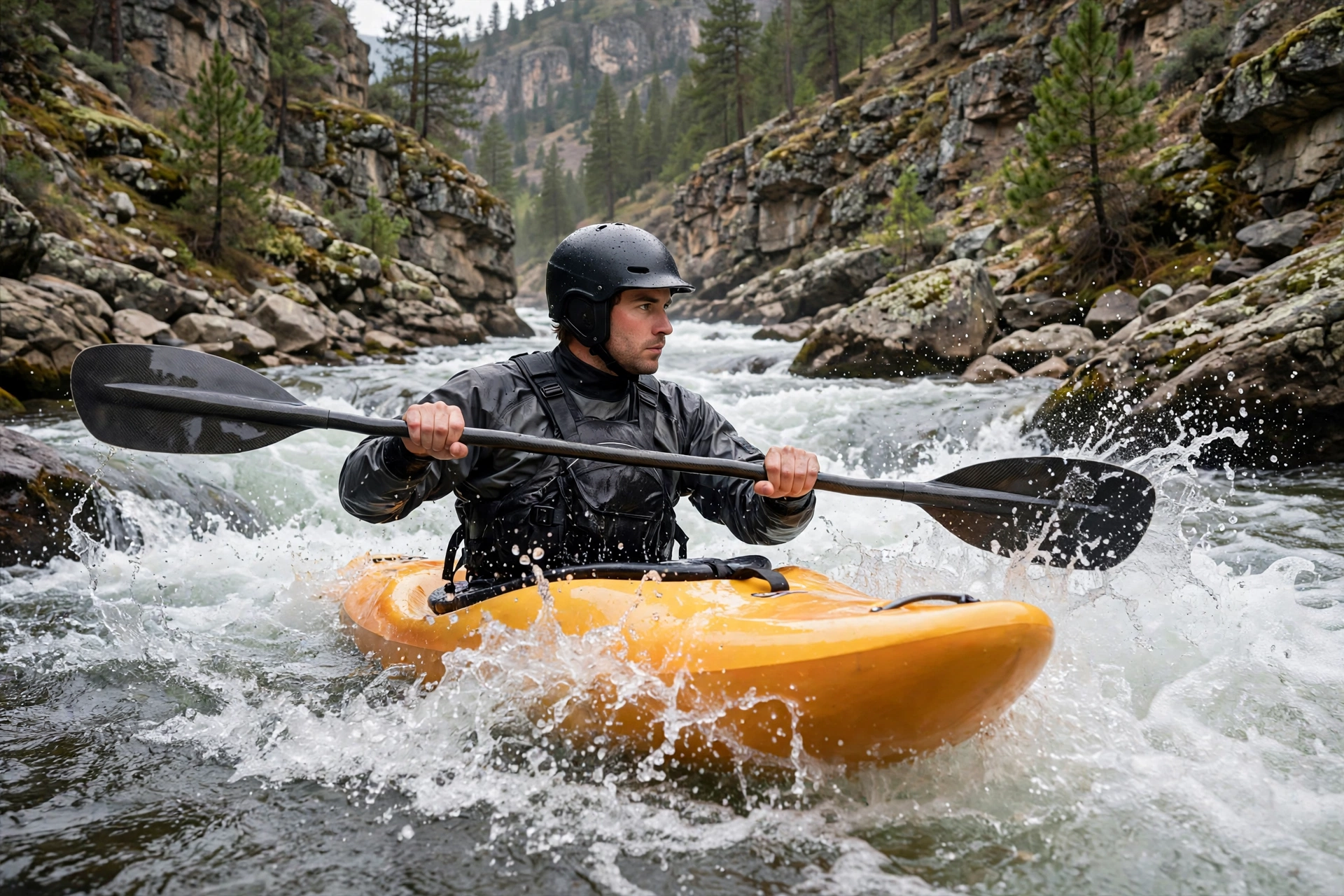
Choose a whitewater helmet that is certified to EN 1385, covers the forehead, temples, ears area, and back of the head, and stays locked in place with a snug, adjustable retention system. Whitewater helmets are built for repeated knocks against rocks in moving water, so a bicycle or skate helmet is not a substitute — the standards, shell design, and drainage are all different.
A river helmet works in a hostile environment: cold water, submerged rocks, strong current, and swims where your head is at water level among obstacles. The right choice depends on certification, coverage, fit, and a handful of design details that matter only on the river. Here is what to check, in order.
What certification should a whitewater helmet carry?
The standard written for this sport is EN 1385, the European specification for helmets for canoeing and whitewater sports, in general terms. A helmet certified to EN 1385 has been tested for impact protection in water environments, for buoyancy behaviour, and for a retention system that stays effective when wet — requirements that land-based standards simply do not cover.
That is why borrowing across sports is a mistake. Bicycle helmets are certified to cycling standards and skate helmets to theirs; neither is tested for repeated impacts in current or for staying put during a swim. Some whitewater helmets are dual-rated for other sports, which is fine — but look for the EN 1385 mark specifically before the helmet goes on a river.
Also check the label for the helmet’s size range and the manufacturer’s care and replacement guidance. A helmet with no legible certification label should not be trusted on whitewater, however rugged it looks.
How much coverage does a river helmet need?
More than most beginners expect. Rocks do not only strike the top of the head: in a capsize or swim, impacts arrive at the forehead, temples, sides, and back of the skull. A good whitewater helmet uses a full-coverage shell that comes low over the forehead — close above the eyebrows — wraps the temples, and protects the occipital area at the back.
Ear coverage deserves a decision. Many models offer full ear coverage or removable ear pads. Covering the ears protects against direct rock strikes and reduces the risk of a disorienting blast of cold water; some paddlers prefer open ears for hearing on the river. In general terms, fuller coverage is the safer default for rocky rivers and for anyone still building their roll and rescue skills, while experienced paddlers on familiar water sometimes choose lighter coverage deliberately.
Avoid long peaks and brims. On land, a brim sheds sun; in current, in general terms, a protruding brim can catch moving water and wrench the helmet — and your neck — when you are upside down or swimming. Choose a smooth, close profile with at most a very short, flexible lip.
Why does the retention system matter so much in moving water?
On the river, a helmet only protects while it is on your head and in position — and moving water is constantly trying to remove it. Current pressing against the shell during a roll or swim can peel a loosely fitted helmet backward or off entirely, which is why whitewater retention systems are tested as part of the standard.
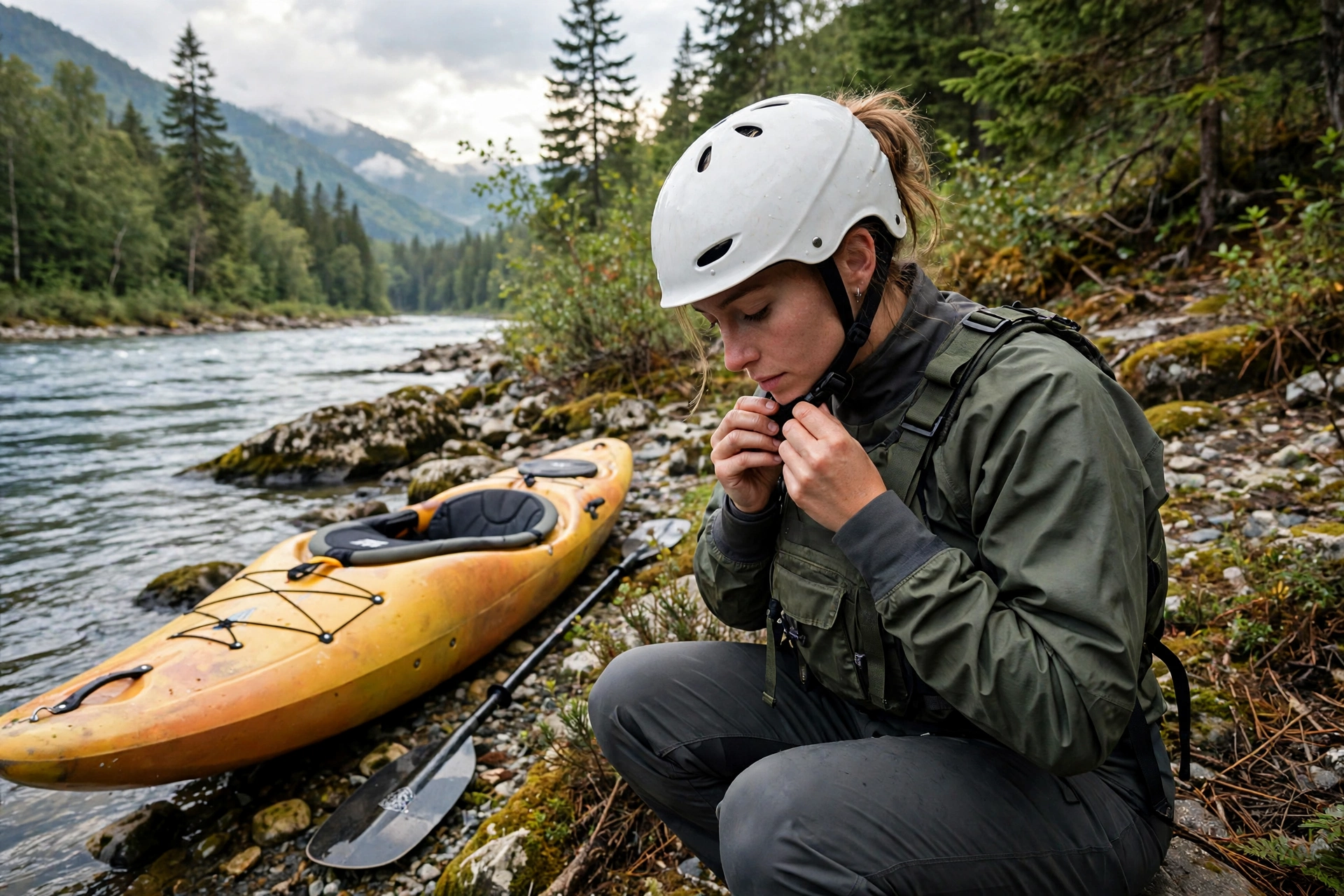
Look for a system that combines a properly adjusted chin strap with an occipital stabilizer — the cradle or strap arrangement that cups the back of the skull and stops the helmet tipping forward or back. The chin strap buckle should be simple enough to fasten, adjust, and release deliberately with cold, wet, gloved hands, while never releasing accidentally under load: quick to operate when you intend it, immovable when you do not.
Before every trip, do the pull test: with the strap fastened, push and pull the helmet firmly in all directions. It should resist rolling forward over your forehead and backward off your head. If it moves substantially, adjust the straps or try a different size or model — on the river, there is no second chance to fix it.
What fit checks should you do before paddling?
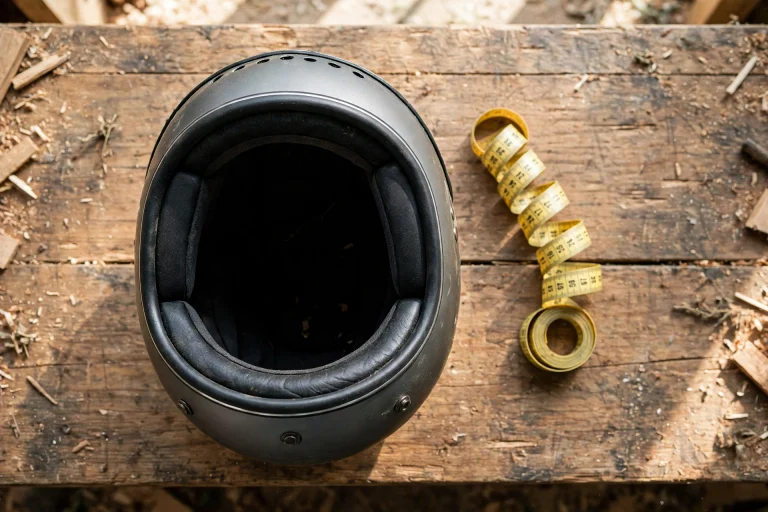
Measure your head circumference above the eyebrows and ears and match it to the manufacturer’s sizing, then fine-tune with the fit pads many whitewater helmets include. The helmet should feel snug and even all around, without a painful pressure point, and sit low — front edge close above the eyebrows, not perched high like a cap.
Fit it wearing anything you will paddle with: a neoprene hood or skull cap worn under the helmet in cold water changes the fit, so size and adjust with your cold-water setup in place. A helmet fitted bare-headed in a warm shop can become painfully tight — or be abandoned — in February.
Shake your head hard, nod, and simulate a roll by tilting your head down and to each side. The helmet should track your skull with minimal independent movement. Finish by checking that the shell does not block your vision upward or to the sides; you need to see the river, your group, and rescue signals at all times.
Which extra features are worth having on the river?
Drainage is the unglamorous essential. Whitewater helmets include drain holes or channels so the shell does not hold a load of water after every wave or roll; check that drainage is built in and that it does not come at the cost of big gaps in coverage.
A closed-cell foam liner that does not absorb water is the other river-specific detail: it keeps the helmet light when wet, dries fast between sessions, and maintains its fit. Removable fit pads are worth having for dialing in seasonal changes with and without a hood, and a goggle or headlamp strap retainer can help for low-light or helmet-camera users, as long as attachments stay within the manufacturer’s guidance. You may also see rotational-impact features borrowed from cycling helmets — our explainer on what MIPS is and how it works describes that technology — but on the river, full coverage and a retention system that cannot shift remain the priorities.
Finally, plan for replacement. Replace a whitewater helmet after any hard impact against rock, if the shell cracks or the foam shows compression, or when straps and buckles wear. River helmets live a hard life of knocks and sun; when in doubt about an ageing helmet, retire it — the river will test it more honestly than you can.
Frequently Asked Questions
Q: Can I use my bike or skate helmet for kayaking?
A: It is not a good substitute. Those helmets are certified to land-sport standards and are not tested for retention in current, buoyancy, or repeated wet impacts. Choose a helmet certified to EN 1385 for whitewater, in general terms, and keep each helmet for its own sport.
Q: Should a whitewater helmet have ear coverage?
A: For most paddlers, yes — full coverage or ear pads protect against rock strikes and cold-water shock during swims. If you choose open ears for hearing, make the decision deliberately and keep the rest of the coverage full and the fit exact.
Q: How tight should the chin strap be?
A: Snug enough that the helmet cannot roll forward or backward when you push it firmly, while still letting you talk, breathe, and swallow comfortably. Recheck it at the put-in with cold hands and your river clothing on — that is the fit that counts.

Olivia
Writer at Helmet Today, covering helmet reviews, fit and riding safety.