To store a motorcycle helmet long term, clean it first, let it dry completely, then keep it in its breathable bag in a cool, dry, dark place — sitting on a shelf, not hanging by its strap, and well away from heat, sunlight, and fuel or solvent fumes. Follow those basics and a helmet can sit through a winter, a deployment, or a year off the bike and come out ready to wear. Ignore them, and you can quietly age a good helmet into retirement without it turning a single wheel.
Helmets deteriorate in storage for boring reasons: trapped sweat rots the padding, heat and UV break down materials, and chemicals in the air attack the foam. None of it shows on the outside. The goal of long-term storage is simply to remove every one of those factors before you close the cupboard door.
How Should You Prepare a Helmet for Long-Term Storage?
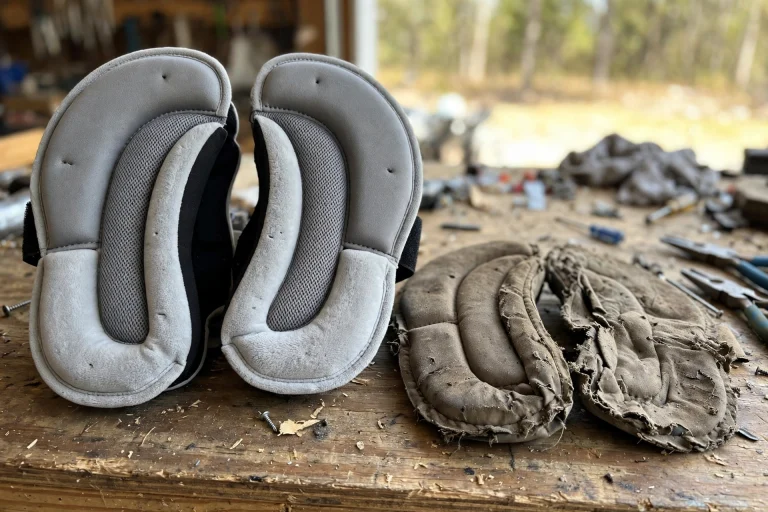
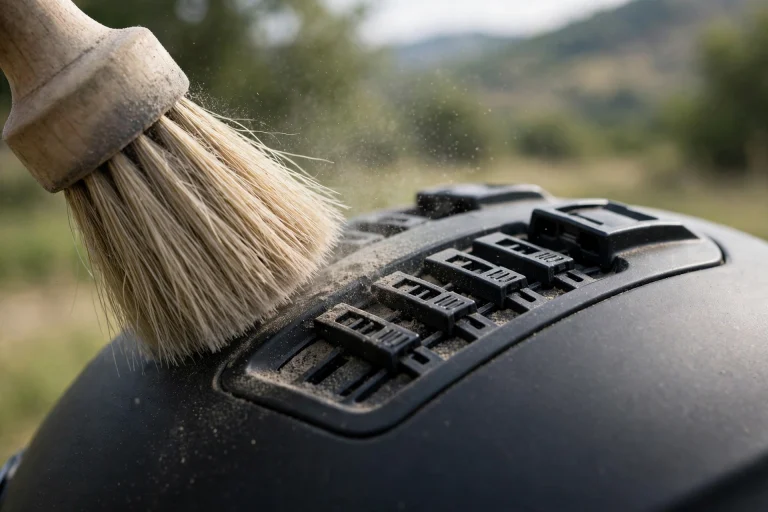
Never store a dirty helmet. Sweat left in the pads keeps working for months — it feeds bacteria, breaks down fabric and foam, and can leave a smell no wash fully removes. Before storage, remove the liner and cheek pads and wash them in lukewarm water with mild soap, rinse thoroughly, and air-dry completely. Wipe the shell with a damp cloth and mild soap solution, clean the visor, and wipe out the interior surfaces of the shell.
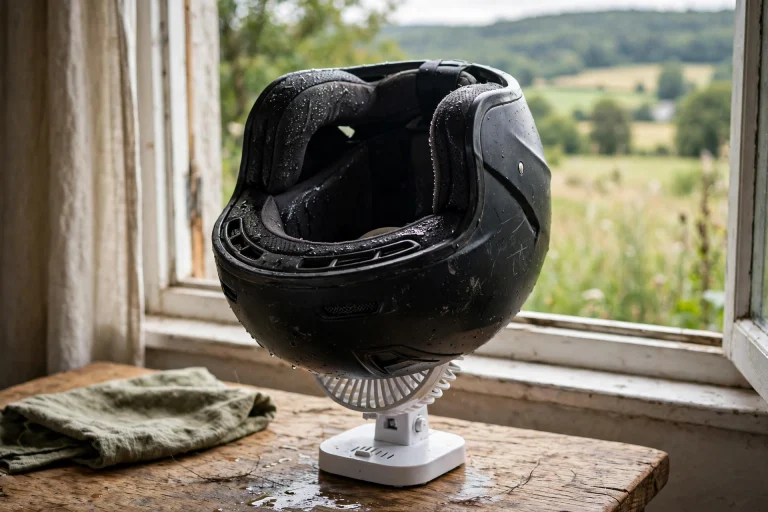
Then give the whole helmet time — a full day or two in a ventilated room — to dry to the core, not just to the touch. Thick cheek pads and neck rolls hold moisture long after they feel dry on the surface. Sealing damp padding into a bag for months is how mildew happens. While it dries, inspect everything: strap webbing and stitching, buckle function, pad condition, and the shell for cracks. Storage is also your best moment to spot wear that decides whether the helmet should be retired instead of shelved.
Make final decisions before it goes away. Remove communication units and their batteries if you have a system fitted, since batteries left for months can leak or swell; store them separately per the maker’s guidance. Close the vents and visor to keep dust and insects out, and if the visor has a protective film or you kept the original visor bag, use it — long-stored visors get scratched by casual contact, not by riding.
Where Is the Best Place to Store a Helmet for Months?
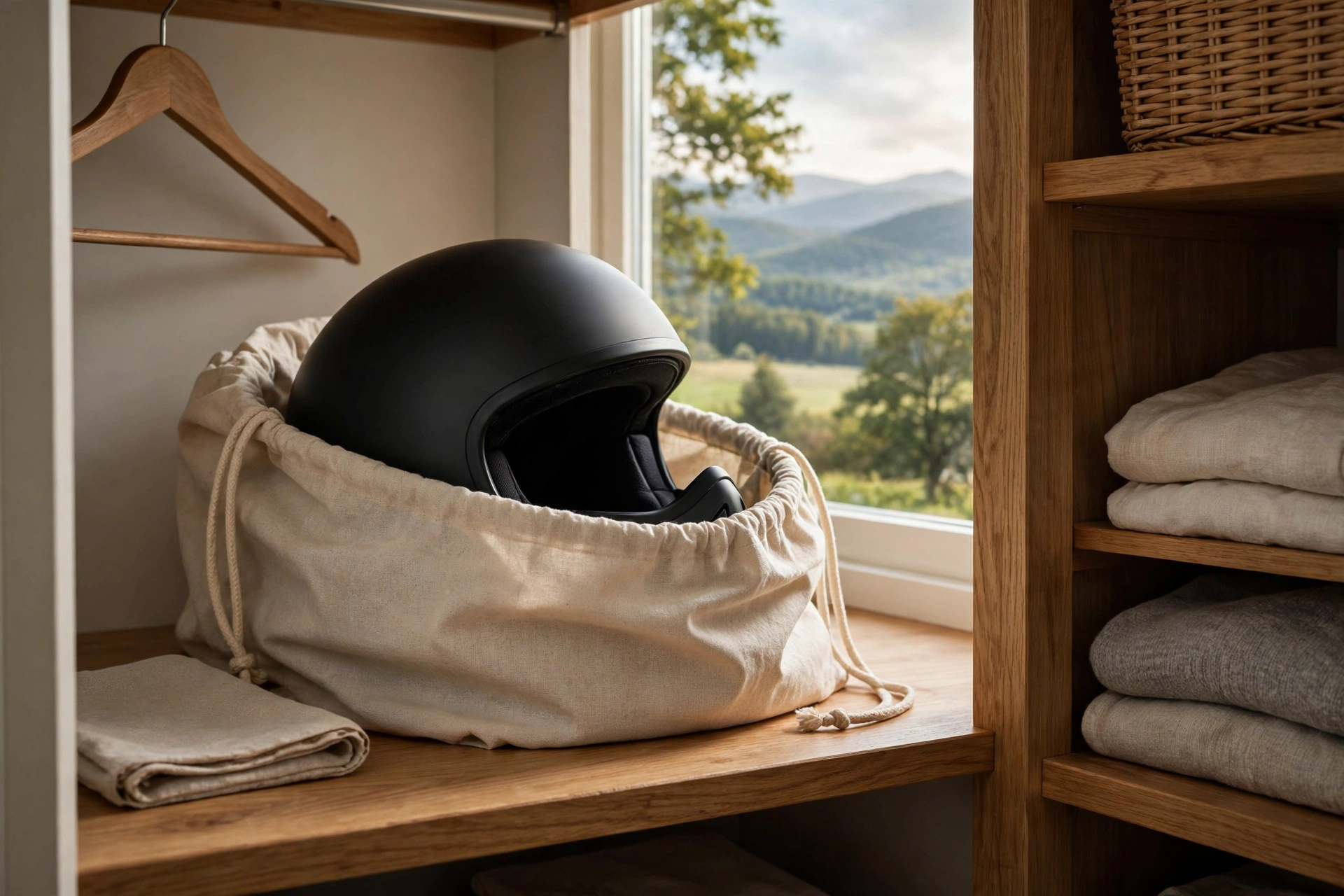
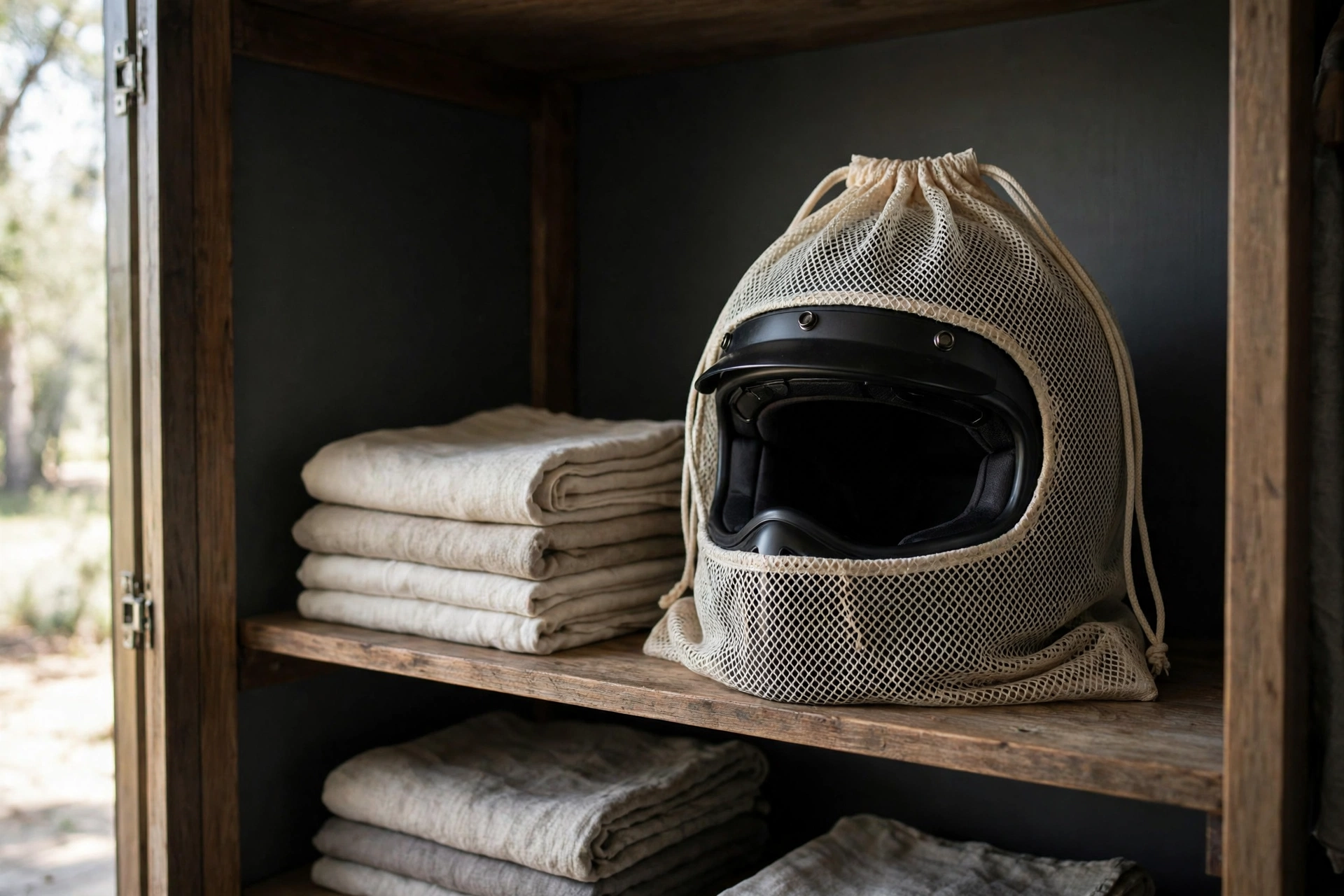
The ideal spot is boring: a shelf inside the house, in a room that stays at a comfortable, stable temperature — a closet, a spare room, a cabinet. Cool, dry, and dark is the target. The helmet’s own cloth bag, or any breathable fabric bag, protects it from dust and light while still letting air move; that is the right container for the duration.
Places to avoid are just as specific. Garages and sheds swing between hot and cold, and often store the worst company a helmet can keep: fuel cans, paints, thinners, and cleaning solvents, whose fumes can attack EPS foam over time. Attics bake in summer. Car trunks combine heat, fumes, and hard knocks. A helmet stored in any of these can come out looking perfect and performing worse.
Sunlight deserves its own mention because it works even through a window. Months of UV exposure fade and embrittle shell finishes and degrade strap webbing. If your only available spot gets light, the bag plus a closed cabinet solves it. And wherever the helmet lives, keep it somewhere it cannot fall: a two-meter drop onto concrete can damage a helmet as surely as a season of heat, and it happens in a second.
How Should the Helmet Sit — and What Should You Never Do?
Sit the helmet on a flat, stable surface on its base, the way it sits on your head, ideally on a shelf or a padded stand. That position puts no stress on any part of it and the bag keeps dust off. A helmet stand or a simple shelf hook designed for helmets is fine too, provided the support touches the crown lining area broadly rather than poking one point into the EPS.
Never hang a helmet by its chin strap for long periods. The strap and its anchor points carry the helmet’s full weight on two small areas of webbing and stitching for months on end, which can stretch and stress exactly the components that must hold in a crash. Never store it balanced on a mirror stalk, a door knob, or a hook through the eye port either — a fall from head height onto a hard floor can crack a shell or compress foam invisibly.
Also avoid stacking anything on top of it, wedging it between boxes, or storing it under pressure from luggage. EPS foam that spends months compressed does not reliably spring back, and helmets with systems such as MIPS rotational protection rely on their liners sitting exactly as designed. Give the helmet its own space, unloaded, for the whole storage period.
What Should You Check When You Take It Out of Storage?
Bring the helmet back into service with the same care you stored it. Air it out for a day. Inspect the shell under good light for cracks, crazing, or fading. Check the EPS liner you can see for dents, cracks, or crumbling edges — foam that feels brittle or sheds particles has aged out. Work the buckle and ratchet repeatedly, pull the straps firmly at every anchor, and look closely at all stitching.
Refit the washed pads if you stored them separately, confirm every snap seats, and try the helmet on. Storage can compress padding over time, so judge the fit honestly: it should be snug and even, with no rocking. If it has gone loose and fresh pads do not restore it, the helmet is done, however clean it looks.
Finally, do the age check. Manufacturers, in general terms, suggest replacing helmets after around five years of use, and materials age whether the helmet is worn or shelved — a helmet that went into storage already old does not come out younger. Count total age from when it was first put into service, check the date label inside if you are unsure, and let that number, plus the condition checks above, make the call.
Frequently Asked Questions
Q: Can I store my helmet in the garage over winter?
A: It is not ideal. Garages swing in temperature and usually hold fuel, paints, and solvents whose fumes can degrade EPS foam over months. A cool indoor closet is far better. If the garage is truly the only option, keep the helmet bagged, on a shelf, and as far from chemicals as possible.
Q: Should I store my helmet in a sealed plastic box?
A: No. A sealed box traps any residual moisture and air with the helmet, encouraging mildew and odor. Use the breathable bag the helmet came with, or any fabric bag, in a dry room. The helmet must be completely dry before it goes away, whichever container you use.
Q: Does a helmet expire if it just sits in storage unworn?
A: Materials age with time as well as use, though a helmet stored cool, dry, dark, and clean ages far more slowly than one worn daily. Follow the manufacturer’s guidance on total service life, inspect the foam, straps, and fit carefully when it comes out, and retire it if anything feels brittle, loose, or degraded.

Olivia
Writer at Helmet Today, covering helmet reviews, fit and riding safety.