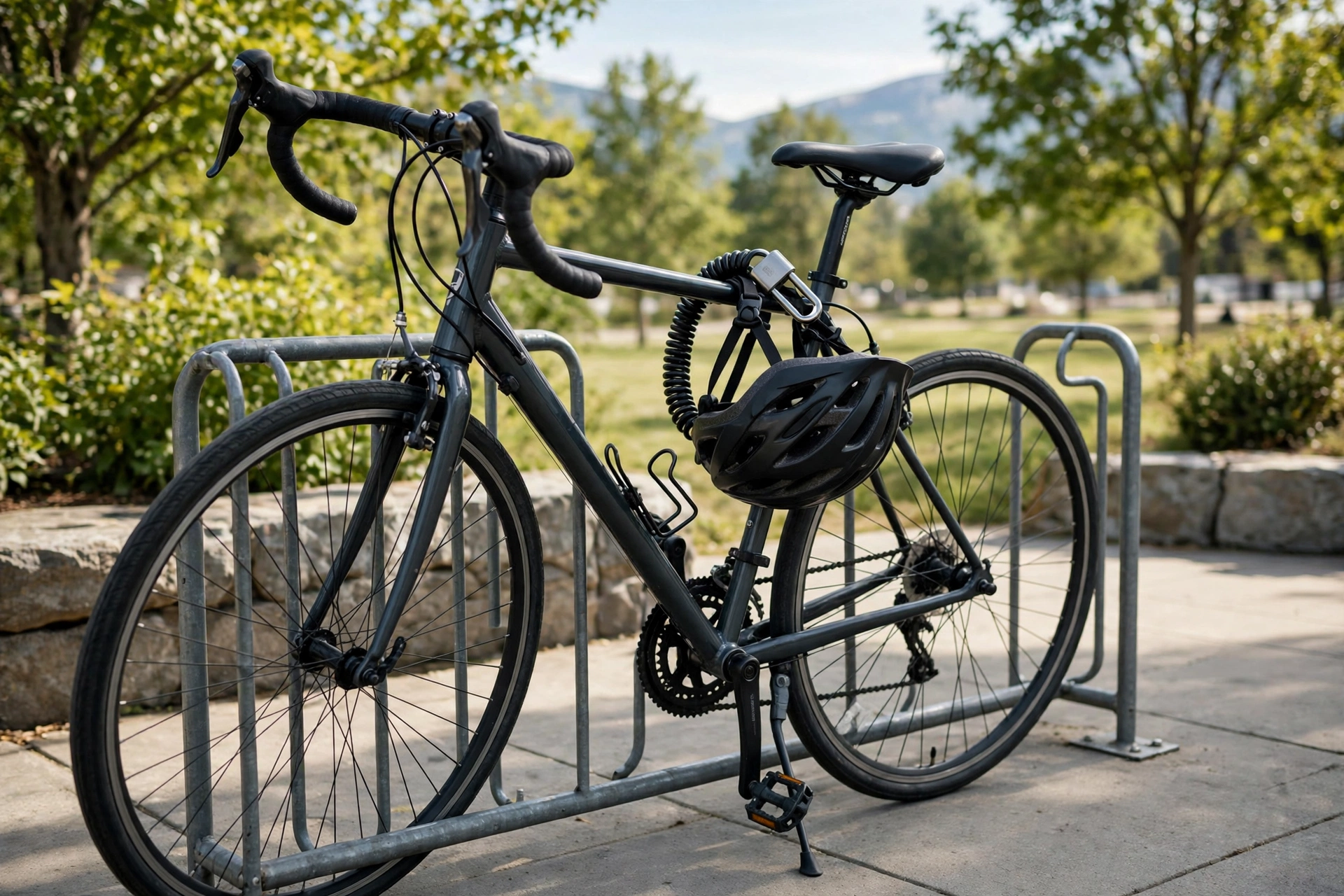
The most reliable way to prevent bicycle helmet theft is to take the helmet with you whenever you leave the bike. If you must leave it behind, thread your bike lock through the helmet straps and lock it to the frame so it cannot simply be lifted off — and never leave a helmet just hanging from the handlebars.
Helmets get stolen more often than most riders expect. They are light, valuable, easy to carry away, and often left completely unsecured next to a bike that is locked up tight. A thief does not need tools or time — just a few seconds and an unattended helmet. The good news is that helmet theft is one of the easiest gear losses to prevent. A few simple habits make your helmet a far less attractive target.
Why Do Helmets Get Stolen So Easily?
Most helmet theft is opportunistic. Riders lock the bike carefully, then drape the helmet over the handlebars or hang it from a brake lever, where anyone walking past can grab it without breaking stride. There is nothing to cut, nothing to force, and usually nobody watching closely.
Helmets also hold their value. A quality helmet costs real money, is easy to resell, and has no serial registration in most cases, so it is hard to trace. Riders who use advanced features — a rotational liner, for example, like the system covered in our explainer on how MIPS helmet technology works — have even more value sitting unsecured on the bike.
The fix starts with recognizing that a helmet left loose is not really parked; it is displayed. Every prevention method below works by removing either the opportunity or the easy access.
How Can You Lock a Helmet to Your Bike?
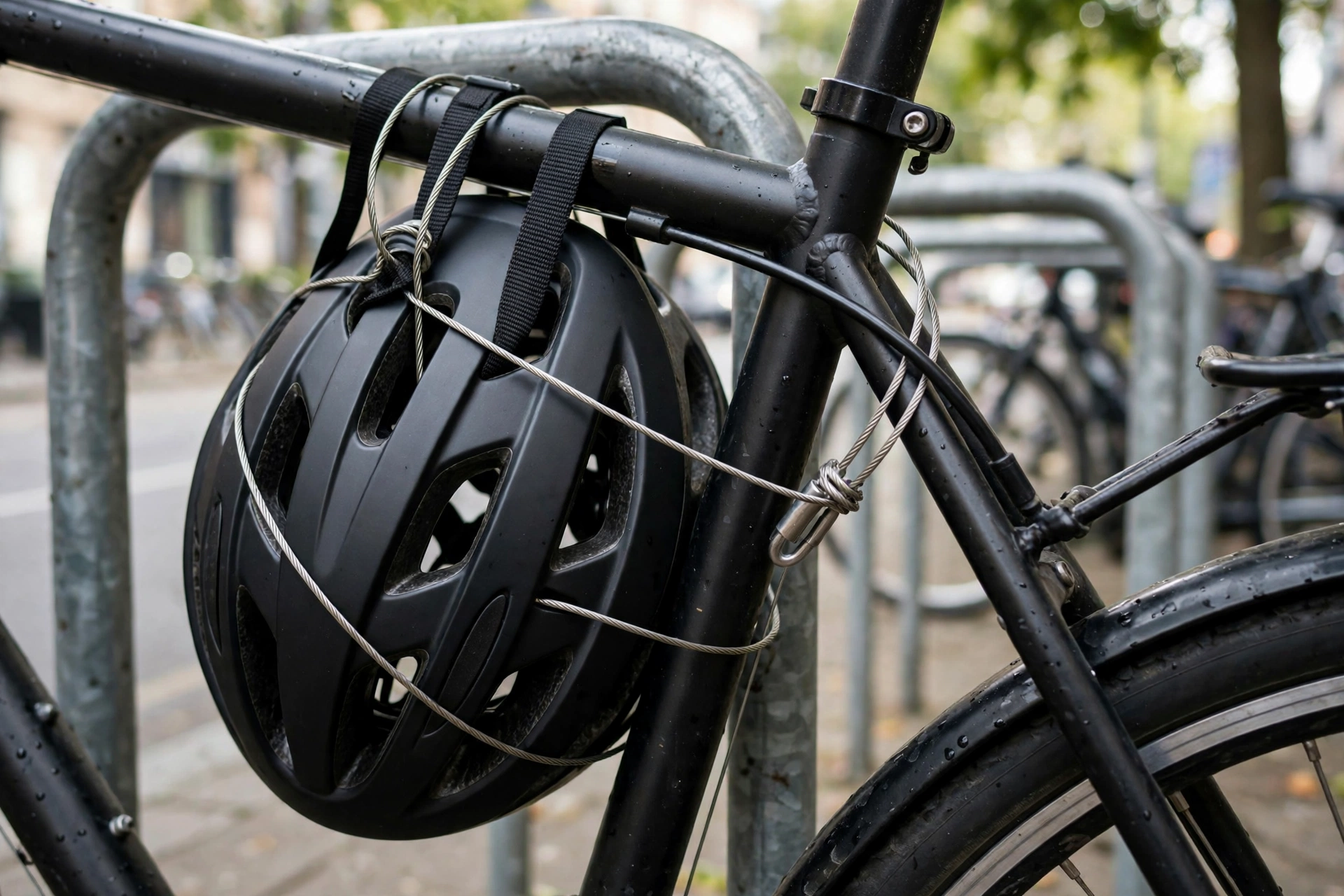
If you cannot take the helmet with you, lock it. The simplest method is to run your existing bike lock through the helmet. Most helmets have vents, a rear retention system, or strap triangles that a U-lock or cable can pass through. Thread the lock through the straps and a solid part of the helmet, then lock it to the bike frame or rack along with the wheel.
A thin cable lock works especially well for this job. It is light enough to carry daily, flexible enough to thread through vents or straps, and strong enough to stop the grab-and-go theft that accounts for most helmet losses. In general terms, no cable will stop a determined thief with cutters, but that is true of the lock on the bike itself, too — the goal is to make your helmet harder to take than the next one.
When you lock a helmet, position it so the lock passes through something structural rather than just a loose strap loop. A strap can sometimes be unbuckled or slid free. Through the vents or the retention dial housing is more secure. Also tuck the helmet close against the frame so it does not swing, bang around, and get damaged while you are gone.
Is It Better to Just Carry Your Helmet With You?
Yes — carrying the helmet is the only method that removes the risk almost entirely. It takes a few seconds to unclip, and modern helmets are light enough to carry by the strap, clip to a backpack, or hang from a bag. Many commuters simply clip the helmet to their backpack strap with a small carabiner and forget about it.
Carrying has a second benefit: protection. A helmet left on a parked bike can be knocked to the ground, rained on, or baked in direct sun for hours, all of which age the materials. A helmet that travels with you stays out of the weather and out of harm’s way.
If you regularly stop at the same places — an office, a gym, a campus — it is worth setting up a permanent spot for the helmet: a locker, a desk hook, or a shelf. The easier it is to bring the helmet in, the more consistently you will do it, and consistency is what actually prevents theft.
Where Should You Never Leave a Helmet?
Avoid leaving a helmet anywhere it is visible, reachable, and unsecured. Hanging from the handlebars is the classic mistake. Resting on the saddle, dangling from a mirror, or sitting on top of a rear rack are all invitations, because each takes a thief less than five seconds to exploit.
Be especially careful in high-traffic public areas: transit stations, shopping districts, school racks, and event venues, where crowds give thieves cover. In quieter spots, a locked helmet may be fine; in busy ones, carry it.
Also avoid leaving a helmet locked to a bike that is itself in a hidden or overnight location. The longer a bike sits unattended, the more time a thief has to work on both the bike lock and the helmet cable. For overnight storage, the helmet belongs indoors with you, full stop.
What Else Makes a Helmet Less of a Target?
A few small habits reduce your risk further:
- Mark your helmet. A name or unique marking inside the shell makes it harder to resell and easier to identify if recovered.
- Keep a record. Photograph the helmet and note the brand, model, and size. This helps with insurance claims and police reports.
- Remove add-ons. Lights, cameras, and mounts raise the helmet’s value and appeal. Take detachable accessories with you.
- Park smart. Lock your bike in well-lit, visible places where a thief would be noticed lingering.
- Don’t advertise. A helmet bag hides what you have and adds a small layer of hassle for anyone eyeing it.
None of these steps takes more than a moment. Combined — lock it or carry it, park visibly, and remove the extras — they make helmet theft unlikely rather than inevitable.
Frequently Asked Questions
Q: Can I lock a helmet with the same lock as my bike?
A: Yes. Thread your U-lock or cable through the helmet’s vents or straps and around the frame as you lock the bike. The lock should pass through something structural on the helmet, not just a loose strap, so it cannot be slid or unbuckled free.
Q: Is a cheap cable lock enough for a helmet?
A: For stopping opportunistic theft, generally yes. Most helmet theft is a quick grab of an unsecured helmet, and any lock defeats that. A determined thief with tools can cut a thin cable, so for expensive helmets or long stops, carrying the helmet with you is safer.
Q: What should I do if my helmet is stolen?
A: Report it to local police and check nearby resale listings if you have photos and details recorded. Then replace it with a properly certified helmet — and do not ride unprotected in the meantime if you can avoid it. Never buy a used helmet of unknown history as a replacement, since you cannot verify it has not been crashed.

Olivia
Writer at Helmet Today, covering helmet reviews, fit and riding safety.