The safest way to pack a helmet for a flight is to carry it on board with you in a padded helmet bag or backpack. If the helmet has to go in checked luggage, place it in the center of a hard-shell suitcase, fill the inside with soft clothes, wrap the shell in padding, and protect the visor separately so nothing presses against it during the trip.
A helmet is built to absorb one hard impact, and checked baggage handling is unpredictable. Bags get dropped, stacked, and squeezed, and a helmet buried under heavy suitcases can take damage you cannot see. The EPS foam inside can be compromised even when the outer shell looks fine. That is why how you pack matters almost as much as where you pack. This guide covers the carry-on option, the safest checked-baggage method, visor protection, and what to check when you land.
Is It Better to Carry a Helmet On or Check It?
In general terms, carrying your helmet on board is the safer choice. In the cabin, you control how it is handled: it sits in the overhead bin or under the seat in front of you, away from conveyor belts, cargo holds, and heavy stacked luggage. Many riders simply carry the helmet by its strap or use a helmet backpack designed to hold one securely.
Checked baggage is the riskier option. Baggage systems involve drops onto belts, bins sliding in the hold, and weight from other bags resting on top of yours. A hard-shell suitcase reduces the risk considerably, but a soft duffel offers almost no protection. If checking is unavoidable, treat the helmet like fragile electronics and pack it using the method below.
Also keep in mind that airline rules and cabin baggage allowances vary, and in general terms a helmet usually counts as part of your personal item or carry-on allowance rather than a free extra. Checking the airline’s current policy before you fly avoids surprises at the gate.
How Do You Pack a Helmet in Checked Luggage Safely?
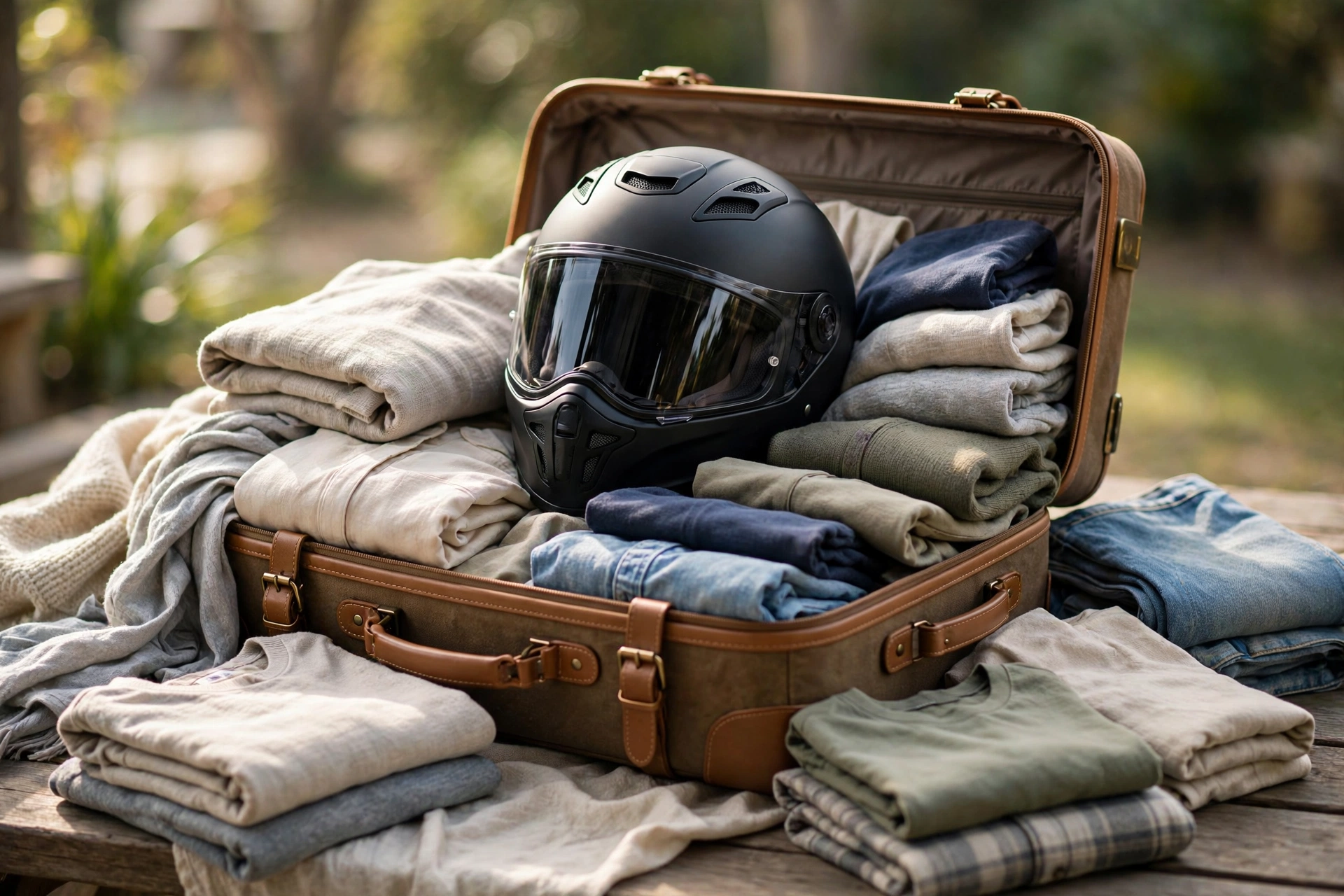
Start with the right suitcase. A hard-shell case is strongly preferred. Place the helmet in the middle of the case, never against the edges or corners where impacts land first. Surround it on all sides with soft clothing that acts as a cushion.
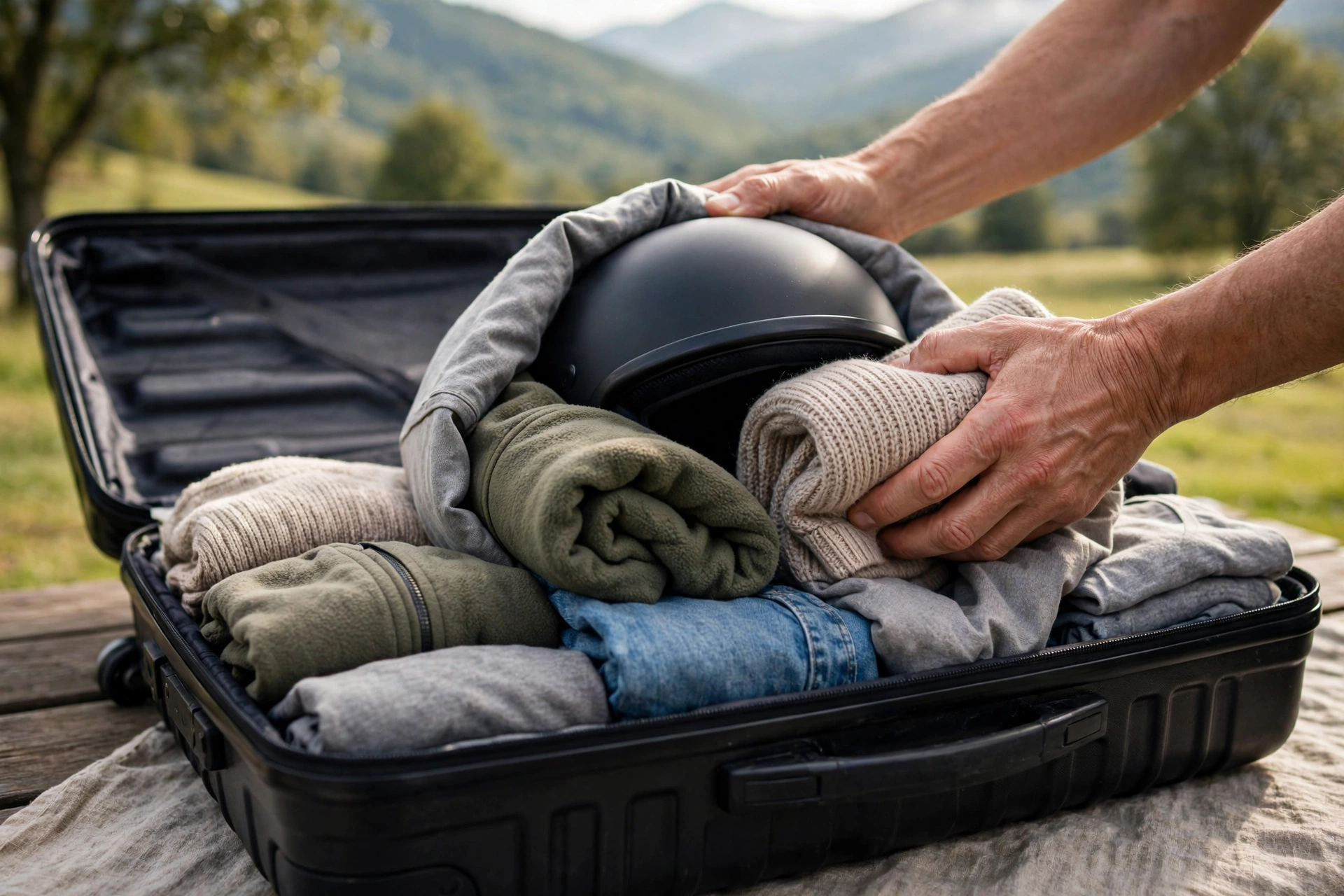
- Stuff the inside of the helmet completely with soft items like T-shirts, socks, or a fleece. This stops the shell from flexing inward and supports the foam.
- Wrap the outside of the helmet in a soft layer, such as a hoodie or towel.
- Position the helmet in the center of the suitcase with clothes packed firmly around it so it cannot shift during transit.
- Keep hard or heavy items — shoes, bottles, chargers, tools — away from the helmet entirely.
- Close the visor or shield before packing, and avoid putting pressure directly on the visor area.
Pack the surrounding clothes snugly rather than loosely. A helmet that can move around inside the case can still strike the case walls when the bag is dropped. Firm, even packing is what actually protects it.
How Should You Protect the Visor When Flying?
The visor is the most fragile part of most helmets. It scratches easily and can crack if something presses or bends against it. If your visor is removable, the safest approach is to take it off, wrap it in a soft microfiber cloth, and pack it flat in a protected spot — for example inside a book, a laptop sleeve, or a rigid document folder in your carry-on.
If you leave the visor attached, keep it closed and make sure nothing hard sits against the front of the helmet. Some riders place a soft cloth between the visor and the shell for extra protection. Never pack loose items like keys, chargers, or toiletry bottles near the visor, since even small hard objects can leave permanent scratches as the bag moves around.
Carrying a spare visor or at least a microfiber cloth in your hand luggage is also a good habit. Dust, fingerprints, and small scuffs picked up in transit are easier to deal with when you can clean the visor properly on arrival instead of wiping it with whatever is at hand.
What About Helmet Bags and Cases?
A padded helmet bag is worth using whether you carry on or check the helmet. Soft helmet bags protect against scratches, dust, and minor knocks, and most have a fleece lining that keeps the shell and visor from rubbing against other items. They are the minimum protection you should use in the cabin.
For checked baggage, a soft bag alone is not enough. The bag protects the finish, but the suitcase packing method above is what protects the structure. Some riders use semi-rigid helmet cases, which add a layer of crush resistance and work well inside a larger checked bag.
If your helmet has electronics — a communication unit, for example — check whether it contains a lithium battery. In general terms, airlines require lithium batteries to travel in the cabin rather than in checked baggage, which is one more reason many riders keep the helmet with them on board. Rules on this vary by airline and country, so verify before you travel.
What Should You Check After You Land?
Unpack the helmet as soon as you can and inspect it before your first ride. Look over the shell for cracks, dents, or deep scratches. Check the visor for cracks and make sure it opens, closes, and locks properly. Press gently around the inside foam: it should feel firm and even, with no soft or crushed spots. Make sure the straps, buckle, and any liner or tech inside — including rotational systems like the one explained in our guide to what MIPS is and how it works — are sitting correctly and undamaged.
If anything feels off, do not ride in the helmet until you are confident it is undamaged. Hidden foam damage is exactly the kind of problem that will not announce itself until a crash. When in doubt, have the helmet inspected or replace it.
Finally, let the helmet air out after a long trip, especially if it traveled in a warm cargo hold, and refit the liner and pads if they shifted in transit.
Frequently Asked Questions
Q: Can I take a motorcycle helmet as carry-on luggage?
A: In general terms, yes. Most airlines allow a helmet in the cabin as part of your carry-on or personal item allowance, either carried by hand, worn onto the plane, or stowed in a helmet bag. Policies vary by airline, so confirm the size and item limits before you fly.
Q: Will going through airport security damage my helmet?
A: No. X-ray screening does not damage helmet foam or electronics in any meaningful way. The main risks to a helmet when flying are physical impacts and crushing during baggage handling, which is why padding and placement matter more than the security process.
Q: Should I remove the visor before packing a helmet?
A: If the visor removes easily, yes. Wrapping it separately in a soft cloth and packing it flat protects it from scratches and cracking. If you leave it on, keep it closed, pad around it, and make sure nothing hard presses against the front of the helmet.

Olivia
Writer at Helmet Today, covering helmet reviews, fit and riding safety.