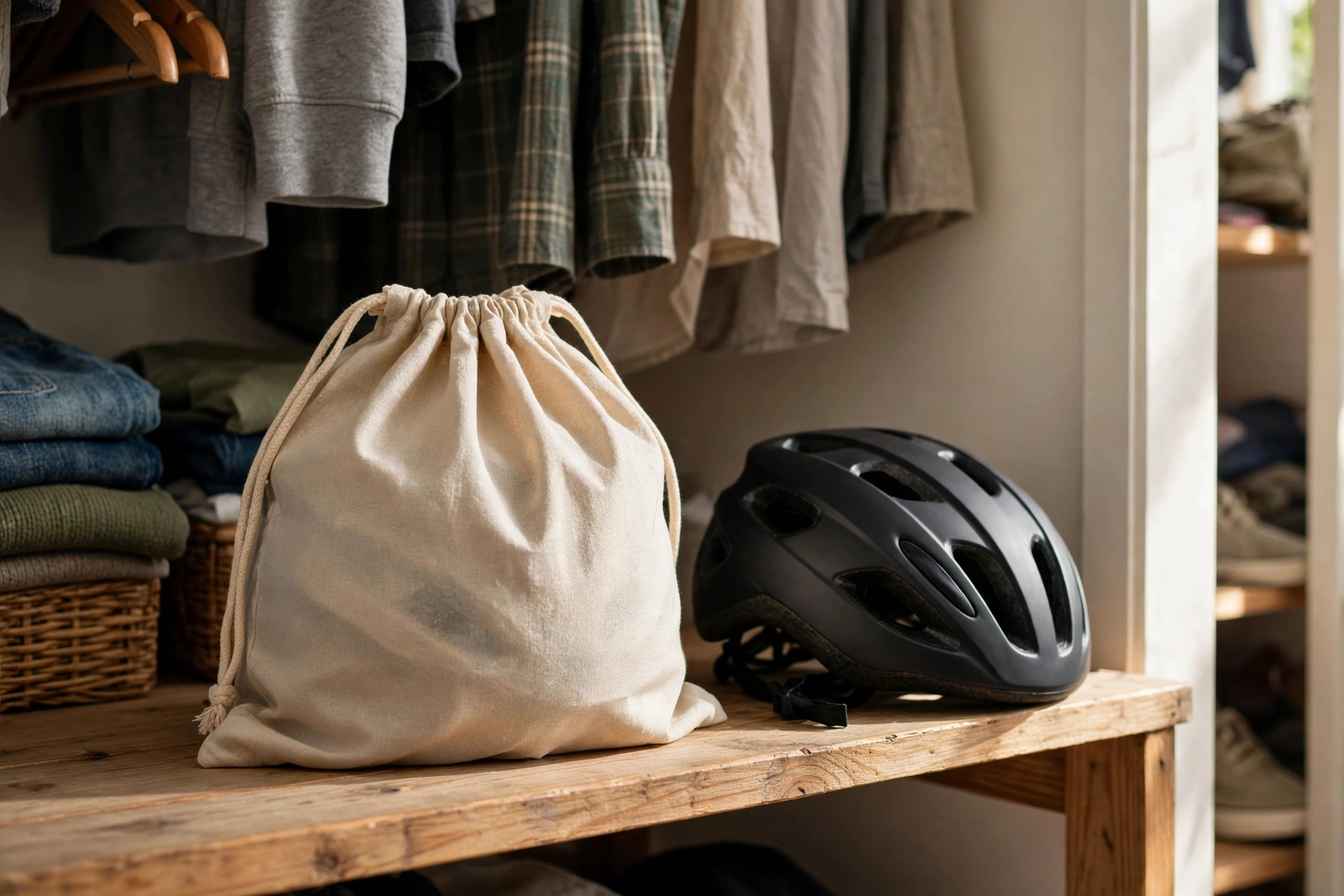
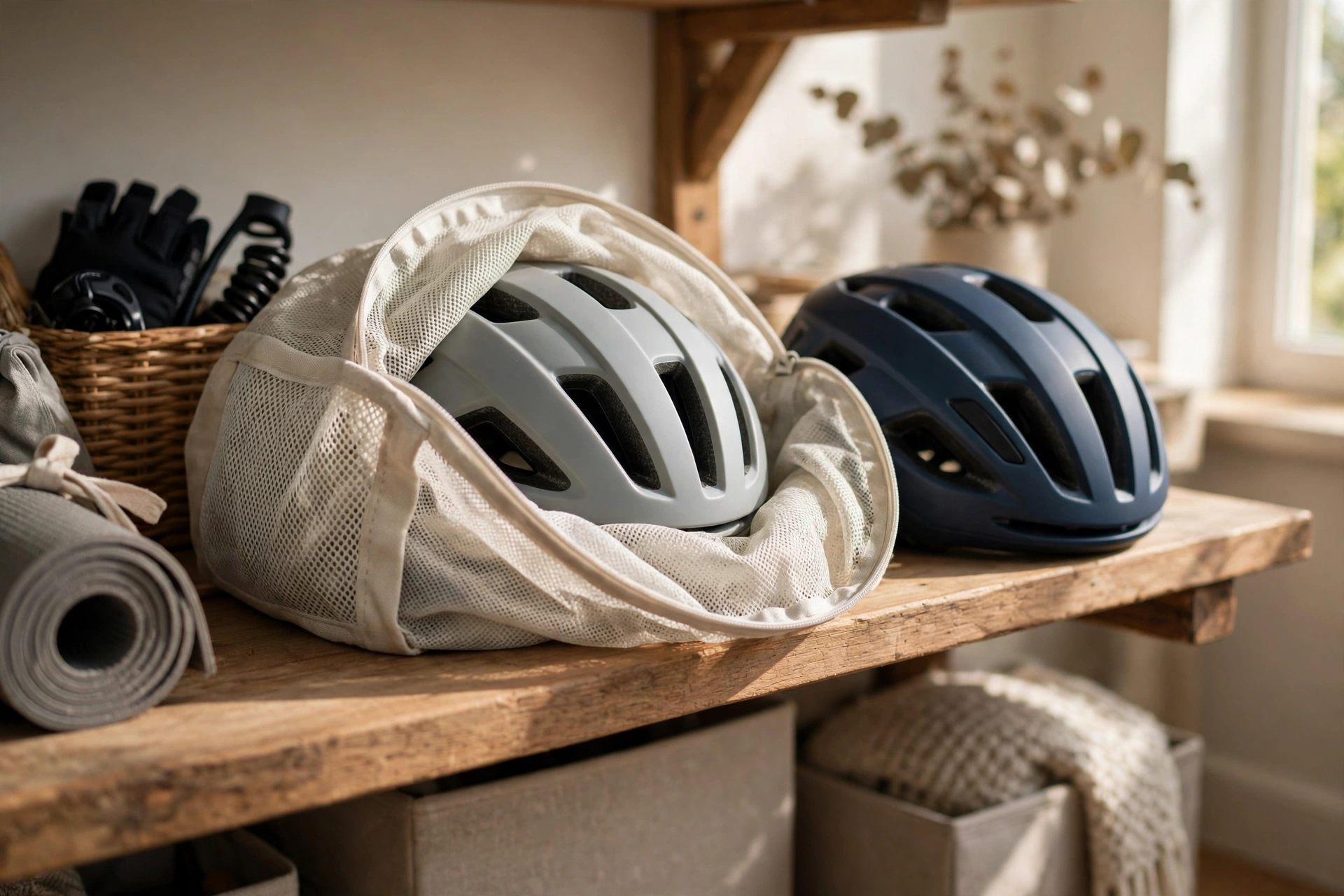
Storing a helmet in a breathable soft bag protects it from dust, scratches, sunlight, and everyday knocks, while storing it without a bag is perfectly fine on a clean shelf indoors — the bag matters most for transport, garages, and anywhere the helmet might get bumped or left in the sun. The one arrangement to avoid either way is sealing a damp, sweaty helmet inside an airtight bag.
Most helmets arrive with a simple drawstring bag, and plenty of riders never use it. Others buy padded helmet cases and swear by them. This guide looks at what a bag genuinely does, when it earns its keep, and how to store a helmet well with or without one.
What Does a Helmet Bag Actually Protect Against?
Four everyday enemies, mostly. The first is abrasion: a helmet stored loose in a garage, car boot, or hallway gets scuffed by everything that brushes past it — other gear, tools, zips, buckles. A bag takes those scratches instead of the shell and visor.
The second is sunlight. UV ages helmet plastics and fades and weakens strap webbing over time, and a helmet that lives on a sunny windowsill or a bright workshop shelf takes that exposure daily. A bag blocks it completely. The third is dust and grime, which work into vents, mechanisms, and pads — trivial to prevent, tedious to clean out. The fourth is small knocks: the bag’s soft padding will not save a helmet from a real drop, but it cushions the minor bumps of being moved around, stacked with other kit, or carried in a larger bag.
None of this is dramatic, which is exactly the point. Helmet damage is usually the accumulation of small mistreatments, and a bag quietly removes most of them.
When Is a Bag Worth Using — and When Is a Shelf Enough?
A shelf at home, indoors, away from sun and heat, is completely respectable storage without a bag. If the helmet sits on its own shelf or hook in a closet, gets picked up by its shell rather than its straps, and is not sharing space with heavy or sharp objects, a bag adds little. Many riders prefer it visible and aired out, which is a legitimate advantage of no bag at all.
The bag earns its place the moment the helmet travels or shares space. In a car, a gym bag, a pannier, checked luggage, or a crowded garage, the helmet is surrounded by things that scratch, press, and bump it — bag it. The bag also helps during long off-season storage, when months of dust and incidental contact add up.
A padded hard or semi-rigid case is the step up for frequent travelers and anyone carrying a premium helmet in luggage. In general terms, the more the helmet moves around in the world, the more protection its storage should have; a helmet that lives in one quiet closet needs the least.
What Are the Downsides of Storing a Helmet in a Bag?
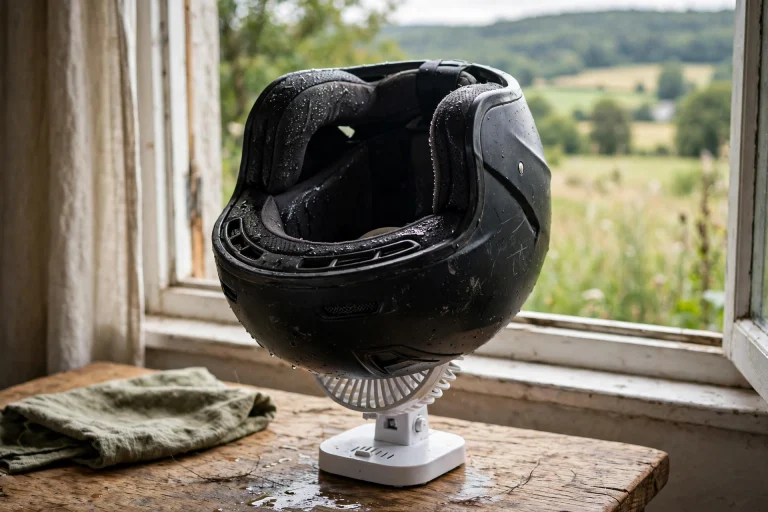
Moisture is the main one. Put a helmet away damp — after a rainy or sweaty ride — inside a closed bag, and you have built a small incubator for mildew and smell. The rule is simple: the helmet goes into the bag dry. Air it out first, pads fully dry, and if the bag itself is synthetic and barely breathes, leave the drawstring slightly open for the first day.
Compression is the second risk. A bag invites stacking — it looks like a soft parcel, so other things get piled on it in cupboards and car boots. The foam liner does not care that the pressure came from luggage rather than a crash; sustained crushing is bad for it. Store the bagged helmet where nothing heavy rests on it, and never let it be the bottom layer of a pile of gear.
Finally, out of sight can mean out of mind. A helmet that lives zipped in a bag gets inspected less often, so build the habit of a quick look — foam, straps, buckle — each time you take it out. Storage should never be where damage hides unnoticed for a season.
How Should You Store a Helmet Well Without a Bag?
Choose the spot first: indoors, cool, dry, and out of direct sunlight. A closet shelf, a dedicated hook, or a helmet stand all work. Avoid the top of a hot radiator, a boiler cupboard, or anywhere solvents, fuels, and strong chemicals are stored, since their fumes can attack the foam in general terms.
Position matters too. Rest the helmet on its shell or hang it by a hook under the shell rim — never hang it by its straps for long periods, which stretches the webbing, and never store it balanced somewhere it can be knocked to the floor. A fall onto concrete is a fall, even in your hallway.
Keep the inside healthy: loosen nothing, leave the straps untangled, and if the helmet has accessories — a visor, ear pads, a liner system like the ones described in our article on how MIPS liners sit inside a helmet — leave them fitted as designed rather than stuffed separately into the crown. The helmet keeps its shape best stored exactly as it is worn.
How Do You Choose a Good Helmet Bag?
Fit comes first: the bag should take the helmet without forcing or squeezing, with a little room to spare. A drawstring soft bag suits home and light travel; look for a breathable fabric or mesh panel so air can move, and avoid fully waterproof, airtight bags for storage (they are fine for a rainy ride home, not for the closet).
Padding is the second consideration. A fleece-lined or lightly padded bag protects a visor and glossy shell from scratches far better than a thin sack, and a separate soft pouch for a spare visor is a useful extra. Handles or a shoulder strap make the bag genuinely usable as the helmet’s carry method, not just its dust cover.
Finally, washability. The bag collects the sweat smell and road dust so the helmet does not — it should be machine washable or easy to hand wash, and it needs its own occasional clean, or it becomes the dirtiest part of the system it was meant to protect.
Frequently Asked Questions
Q: Can I store my helmet in the bag it came with?
A: Yes — the manufacturer’s drawstring bag is made for exactly that. Just put the helmet away clean and fully dry, and store the bag somewhere nothing heavy will be stacked on top of it.
Q: Is a hard case better than a soft bag?
A: For travel and luggage, yes, a padded or hard case protects against crushing and knocks a soft bag cannot. For a helmet that lives on a closet shelf, a soft breathable bag gives all the protection that situation needs.
Q: Should I leave the helmet out to air instead of bagging it?
A: Do both, in order: air the helmet until the pads are completely dry after each ride, then bag it if it is stored anywhere dusty, sunny, or crowded. Airing handles moisture; the bag handles everything else.

Olivia
Writer at Helmet Today, covering helmet reviews, fit and riding safety.