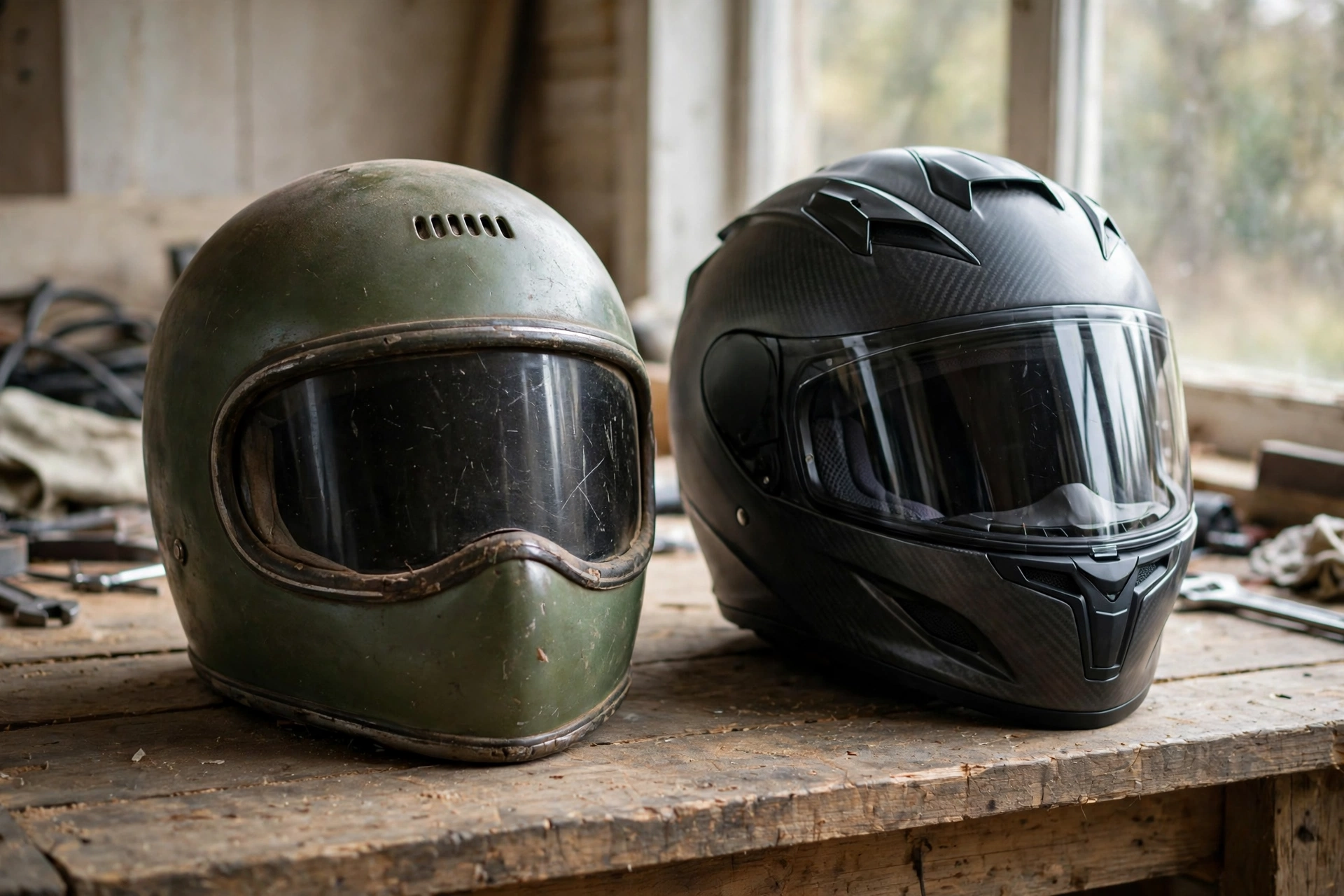
ECE 22.06 is the newer, tougher European motorcycle helmet standard that replaced 22.05 for new approvals — it adds rotational (oblique) impact tests, more impact points on the shell, and stricter tests for visors and accessories. Helmets already certified to 22.05 and sold before the changeover are still legal to wear in most places, so you do not need to throw away a good 22.05 helmet today.
Both standards come from the same UN regulation that governs motorcycle helmets across Europe and many other countries. The difference is how thoroughly a helmet is examined before it earns the approval label sewn inside. Here is what changed, what stayed the same, and how it affects your next purchase.
What Is the ECE Helmet Standard in the First Place?
The ECE regulation is the legal baseline for motorcycle helmets sold in Europe and in many countries that follow the same system. A helmet cannot be sold as road-legal protective headgear in those markets unless it passes the regulation’s tests and carries the approval label.
The testing is done on production samples, not prototypes. Helmets are dropped onto anvils at set points around the shell, the retention system (the chin strap and buckle) is loaded and checked, the visor is tested for optical quality and strength, and the shell is checked for penetration resistance and abrasion behavior. In general terms, the pass limits are about how much energy reaches the headform inside the helmet during those impacts.
ECE 22.05 was the previous version of that regulation and served riders well for many years. ECE 22.06 is simply the updated rulebook: the same idea, with a wider and more realistic set of tests.
What Did ECE 22.06 Add That 22.05 Did Not Have?
The headline change is rotational impact testing. Under 22.05, helmets were mainly tested with straight-on (linear) impacts. Under 22.06, helmets also face oblique impacts — angled drops onto a rough, tilted surface designed to mimic the way a head often strikes and slides along the road. These tests measure how much twisting force reaches the head, because rotational motion is closely linked to certain brain injuries.
22.06 also tests more points around the shell. Instead of a handful of fixed impact sites, the newer standard samples a wider selection of positions, including points chosen during the test itself. That makes it harder to design a helmet that is strong only where the tester is expected to strike.
Other additions in general terms include:
- Impact tests at both higher and lower speeds than before, not just one energy level
- A stricter test for the shell’s resistance to sliding friction on rough surfaces
- Formal testing of accessories such as sun visors, and rules for how visors must behave
- Checks that flip-front (modular) helmets stay closed and protective during impacts
Does a 22.06 Helmet Protect Better Than a 22.05 Helmet?
In general terms, yes — a helmet that passes 22.06 has demonstrated protection across more kinds of impacts, including the angled, rotating kind that 22.05 never measured. That broader test coverage is the standard’s main safety argument.
Two honest caveats matter, though. First, a standard sets a minimum bar, not a ranking: some 22.05 helmets passed with generous margins, and some 22.06 helmets pass more narrowly. Second, fit still dominates everything. A perfectly certified helmet that is the wrong size or shape for your head protects you worse than an older-standard helmet that fits like it was made for you.
Riders interested in rotational protection often also look at add-on liner technologies; our guide to how MIPS works inside a helmet explains one approach manufacturers use to manage twisting forces. Note that a helmet does not need any specific brand-name liner to pass 22.06 — the oblique test measures the result, however the manufacturer achieves it.
Can You Still Buy and Wear a 22.05 Helmet?
You can still wear one. The changeover worked in stages: new helmet models first had to be approved to 22.06 to enter the market, and shops were later required to stop selling remaining 22.05 stock, but helmets already bought and in use stayed legal. Nobody is required to replace a 22.05 helmet just because the standard moved on.
That said, natural replacement timing makes the decision easy for most people. Helmets wear out over a few years of use — the foam ages, straps fray, and comfort padding compresses. When your 22.05 helmet reaches the end of its service life, or after any crash, its replacement will be a 22.06 model, and you will get the improved test coverage automatically.
If you are shopping right now and choosing between old stock at a discount and a current model, weigh the price difference against the broader testing. For a helmet you will wear daily for years, most riders reasonably pick the newer standard.
How Do You Check Which Standard Your Helmet Meets?
Look for the approval label, usually sewn onto the chin strap or inside the liner. It shows a circle with an “E” and a number (the country that granted the approval), followed by the regulation series: the digits after the approval number reveal the version. Labels showing the 22.06 series begin with “06” in the relevant part of the number, while older ones show “05”.
Check for the label in person rather than trusting a product listing. A genuine approval label is a specific woven tag with a complete approval number; a plain sticker saying “ECE approved” with no number is a warning sign. Also confirm the label matches the helmet in your hands, especially when buying discounted or imported stock.
Keep in mind that ECE approval does not replace other markets’ rules. A helmet sold for the US market needs DOT certification, and many helmets carry both approvals — but each label only counts where that system is recognized.
Frequently Asked Questions
Q: Is my ECE 22.05 helmet now illegal to wear?
A: In general terms, no. The phase-out applied to new approvals and then to retail sales of old stock. Helmets already purchased remain legal to use in most places that follow the ECE system.
Q: What is the single biggest difference between 22.05 and 22.06?
A: Rotational impact testing. Version 22.06 adds oblique drops that measure twisting forces on the head, plus more impact points and tighter visor and accessory rules, while 22.05 tested mainly straight-on impacts.
Q: Should I replace a good 22.05 helmet right away?
A: Not solely because of the standard. Replace it when it is worn out, damaged, or has been in a crash — and when you do, your new helmet will be certified to 22.06 and tested more broadly.

Olivia
Writer at Helmet Today, covering helmet reviews, fit and riding safety.