In general terms, there is no single moped helmet law in the United States — whether you must wear a helmet on a moped depends entirely on your state’s rules, and the answer varies by state, by how your state defines a “moped,” and sometimes by your age. Some states fold mopeds into their motorcycle helmet law, some set helmet rules only for younger riders, and some have no helmet requirement for adult moped riders at all. Because this varies by state and the laws change, this overview explains the patterns — always confirm your own state’s current law before you ride.
Why Do Moped Helmet Rules Differ From Motorcycle Rules?
Mopeds sit in a legal gray zone between bicycles and motorcycles, and each state draws that line differently. In general terms, states define a moped using some combination of engine size and a top-speed limit — a small-displacement, lower-speed machine qualifies as a moped, while something faster or more powerful is classified as a motorcycle. That classification decision drives everything else: licensing, registration, insurance, and whether the state’s helmet law reaches you. Two riders on visually identical machines in different states can face completely different legal duties.
Motorcycle helmet laws provide the backdrop. Some states require helmets for all motorcycle riders, many require them only below a certain age or experience level, and a few leave the choice to adults entirely. Whether moped riders are swept into those rules — or handled under their own separate moped or motor-driven cycle provisions — is precisely what varies by state, which is why no honest summary can give you one national answer.
What Are the Common Patterns Across States?
Without pinning rules to specific states, the landscape generally falls into a few patterns. In some states, moped riders are treated the same as motorcyclists for helmet purposes, so whatever the motorcycle rule is — universal, or age-based — it applies to you on a moped. In others, the law is keyed to age: riders under a set age must wear a helmet on a moped, while adults may choose. And some states have no helmet requirement for moped riders at all, even while requiring one, or an age-based rule, for motorcycles — a gap that reflects how quietly moped provisions were written into older vehicle codes.
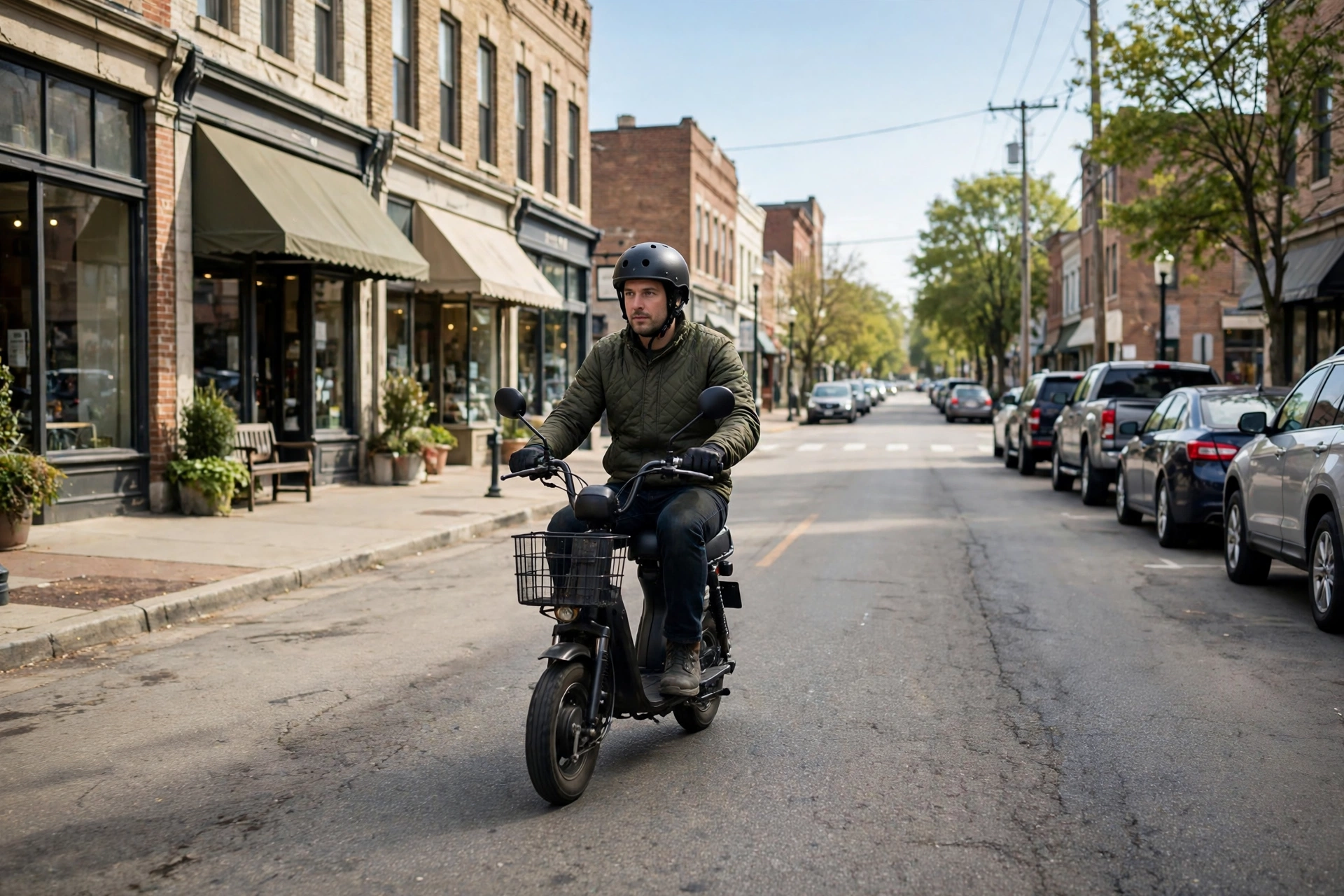
Definitions can surprise you, too. Some states fold mopeds into broader categories like “motor-driven cycles” or “motorized bicycles,” each with their own helmet clauses, and some separate mopeds from scooters in ways that matter legally. A machine sold as a “scooter” with a slightly larger engine or higher top speed may be a motorcycle in the eyes of your state — with a motorcycle helmet rule attached — even though it looks like a moped and was marketed as one.
How Can a Helmet Rule Depend on the Moped Itself?
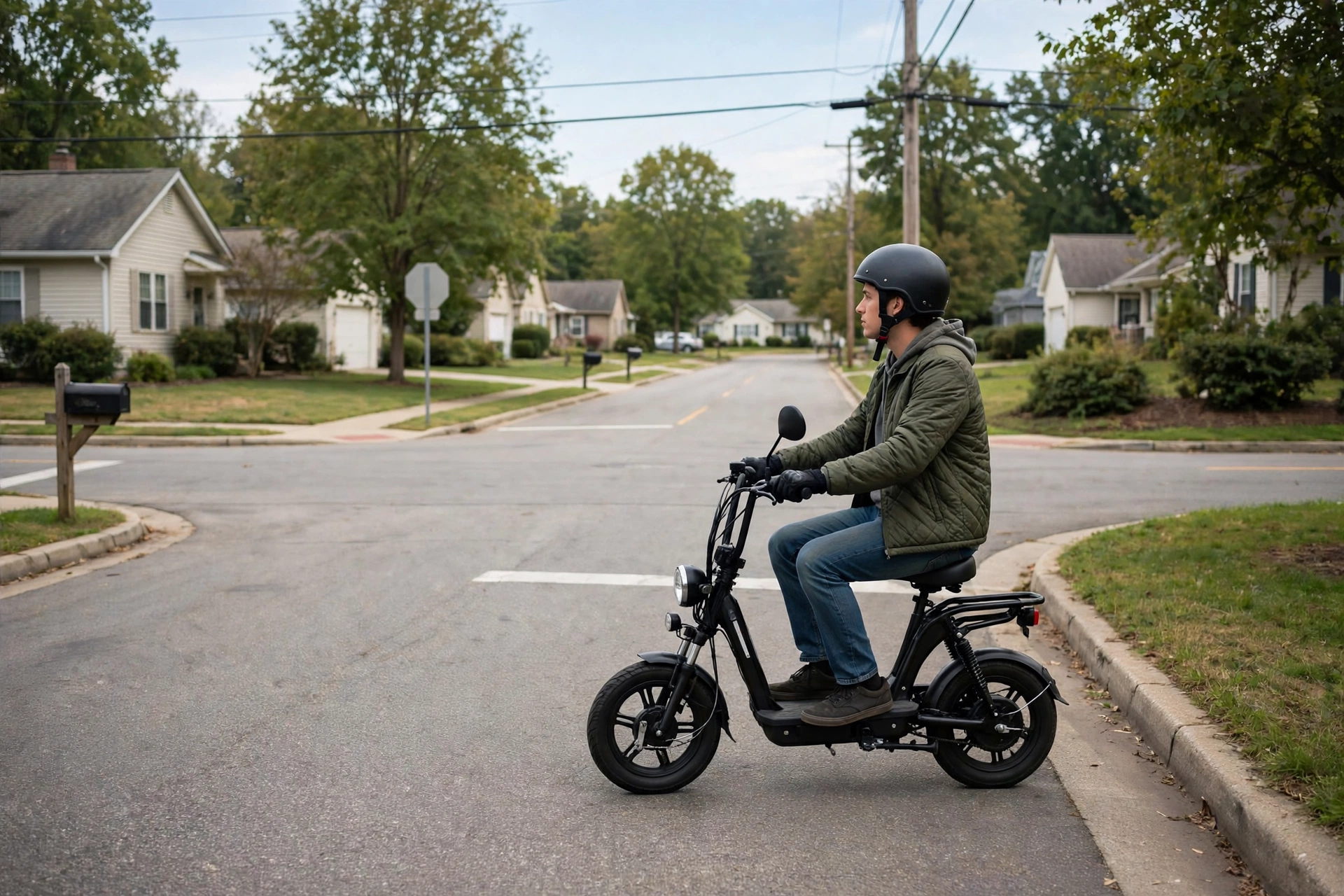
Because the helmet rule follows the classification, the machine’s specifications decide which law you are under. In general terms, states typically draw the moped line with a maximum engine displacement and a maximum design speed; exceed either threshold and the vehicle is registered and regulated as a motorcycle. That means modifications matter: a derestricted or tuned moped that now exceeds its class limits may legally become a motorcycle, changing your helmet, licensing, and registration obligations along with it.
Electric machines add another wrinkle. States are still updating codes written for gasoline mopeds to cover electric scooters and e-mopeds, and the categories do not always map cleanly. If you ride an electric two-wheeler that is faster than a bicycle but slower than a motorcycle, check your state’s current classification carefully — which is not to say the rules are unclear once found, only that you must find the rule for your specific vehicle type rather than assuming “moped” covers it.
How Do You Check Your Own State’s Current Moped Helmet Law?
Go to primary sources. Your state’s department of motor vehicles, state police, or official legislature website publishes the current vehicle code, and state motorcycle safety program pages usually summarize helmet requirements in plain language. Search for your state’s definition of “moped” first, confirm your machine falls inside it, then find the helmet provision attached to that class — and note any age conditions, because those are common and easy to miss. If you bought the moped locally, a dealer or your state safety course provider can also point you to the current rule.
Check again when things change: if you move states, lend the moped to a younger rider, or replace it with a more powerful model, the answer may change with you. Laws are also amended from time to time, so a rule you learned years ago is worth a fresh look — this varies by state, but legislative changes to micromobility and helmet rules have been frequent in recent years as states catch up with new vehicle types.
Should You Wear a Helmet on a Moped Even If Your State Does Not Require One?
Yes — the legal minimum and the safety reality are two different things. A moped travels at traffic speeds, offers no protective structure, and a fall from one at its normal cruising pace strikes the pavement with the same physics as a fall from a motorcycle at the same speed. A certified helmet is the single most effective piece of protective gear you can wear on any two-wheeler, and choosing a well-fitted model with modern safety features — the kind described in our explainer on what MIPS is and why it matters — costs little compared with the protection it offers.
Practical advice: buy a helmet that genuinely meets a recognized standard for your vehicle class, be skeptical of lightweight “novelty” helmets that meet no standard, and wear it on every ride, not just the ones where a rule forces the issue. Wherever you live, “varies by state” describes the law. It does not describe the pavement.
Frequently Asked Questions
Q: Is there a federal moped helmet law?
A: No. Helmet requirements are set by individual states, not the federal government, which is why the rules differ across state lines. Federal standards govern how helmets themselves are tested and labeled, not who must wear one.
Q: I am visiting another state with my moped. Whose helmet rule applies?
A: In general terms, the law of the state you are riding in applies to you while you are there. If you travel with a moped, check the destination state’s rule before the trip — a quick look at that state’s DMV or safety program page is enough.
Q: Does my bicycle helmet meet a moped helmet requirement?
A: Usually the requirement, where one exists, points to a helmet meeting a recognized motorcycle-level standard, and a bicycle helmet is not built or certified for motorized speeds. Check your state’s exact wording, and for safety choose a helmet certified for your vehicle class.

Olivia
Writer at Helmet Today, covering helmet reviews, fit and riding safety.