We may earn a commission when you buy through links on this page, at no extra cost to you. Learn more
For most electric scooter commuters, the best helmet is a certified bicycle or skate-style helmet with good rear and side coverage — and you step up to a fuller, higher-rated helmet as your scooter’s speed climbs. At the speeds most shared and commuter scooters travel, a quality bike helmet certified to the US CPSC standard offers the right balance of protection, ventilation, and low weight for daily riding.
The tricky part is that “electric scooter” covers everything from a slow shared scooter in a bike lane to a dual-motor machine that keeps pace with city traffic. Your helmet choice should follow your actual speed and where you ride, not just the fact that the scooter has a motor. This guide walks through how to match helmet type to scooter speed, what features matter for commuting, and when a basic bike helmet stops being enough.
Why Does Scooter Speed Decide the Helmet You Need?
Impact energy rises fast with speed. A fall at walking pace, a fall from a scooter cruising in a bike lane, and a fall from a fast scooter in traffic are three very different events, and helmet standards were written with particular speed ranges in mind. Bicycle helmets are tested for the kinds of impacts typical of cycling, which maps well onto lower-speed scooter commuting in general terms.
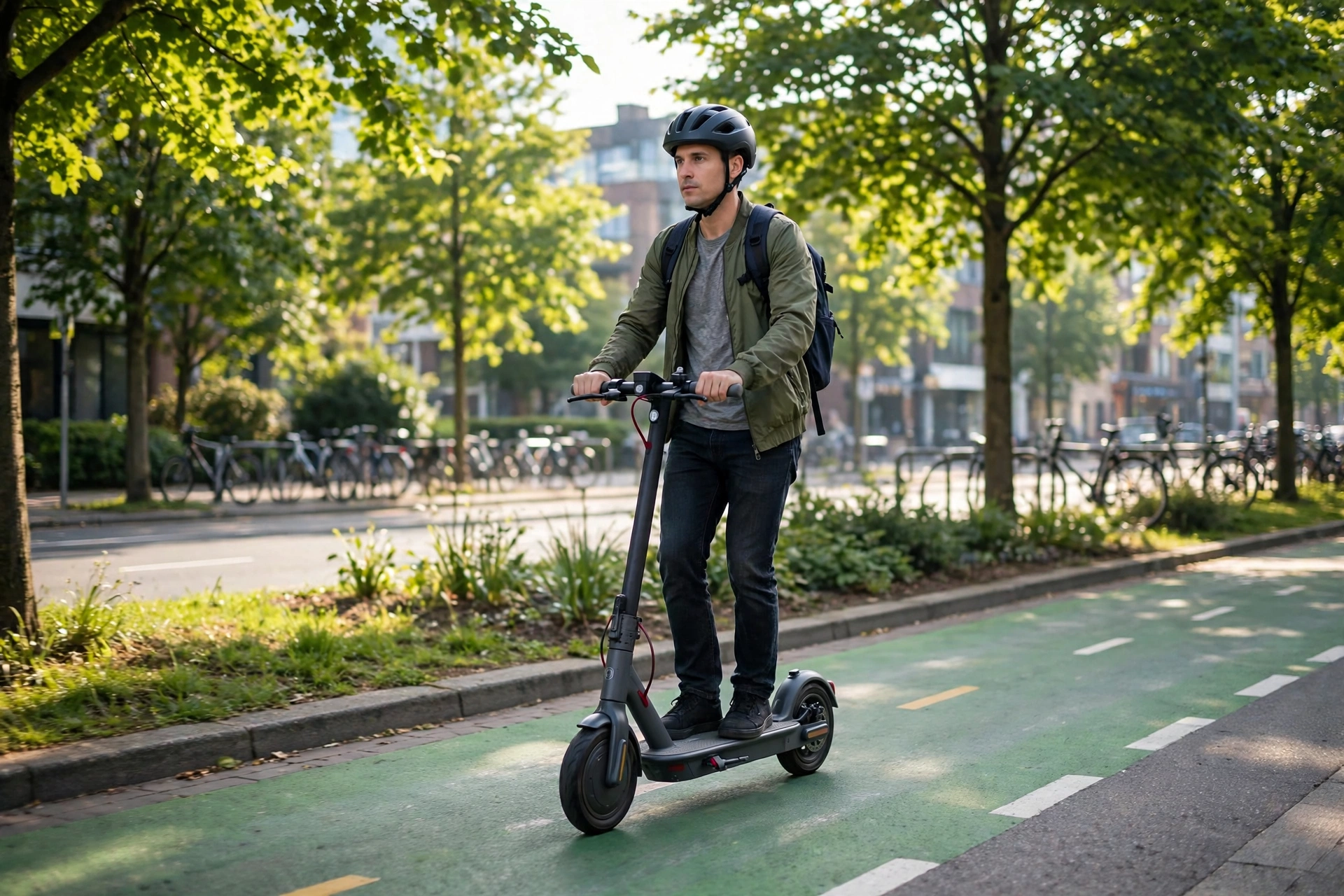
Most commuter and shared e-scooters travel at speeds comparable to a bicycle, and riders fall in similar ways — usually sideways or forward over the handlebars at modest height. That is exactly the scenario bike and skate helmets are designed around. Once a scooter regularly travels at speeds closer to a moped or motorcycle, though, the impact energy moves beyond what a bicycle helmet was designed to manage, and a sturdier helmet class makes sense.
So the real question to ask before buying is simple: how fast do I actually ride, and in what traffic? Answer that honestly and the right helmet category usually becomes obvious.
What Makes a Good Everyday Scooter Commuting Helmet?
Start with certification. In the US, look for a helmet that meets the CPSC bicycle helmet standard; skate-style helmets may instead (or also) carry the ASTM standard for skateboarding, which is designed around repeated lower-energy impacts and offers deeper coverage at the back and sides. Dual-certified helmets exist and are a popular commuter choice because they cover both use cases.
Coverage matters more than many riders realize. Scooter falls often send the rider sideways or backward, so a helmet that extends lower at the back and sides protects more of the head than a minimal road-cycling shell. Skate-style and urban commuter helmets generally offer this fuller coverage, along with a harder outer shell that shrugs off daily knocks in a locker or bag.
Ventilation and weight decide whether you will actually wear it every day. A commuter helmet should be light enough to forget about and vented well enough for summer traffic. If your route is slow and urban, a skate-style helmet’s modest vents are fine; if you ride longer distances at bicycle speeds, a vented bike helmet stays cooler.
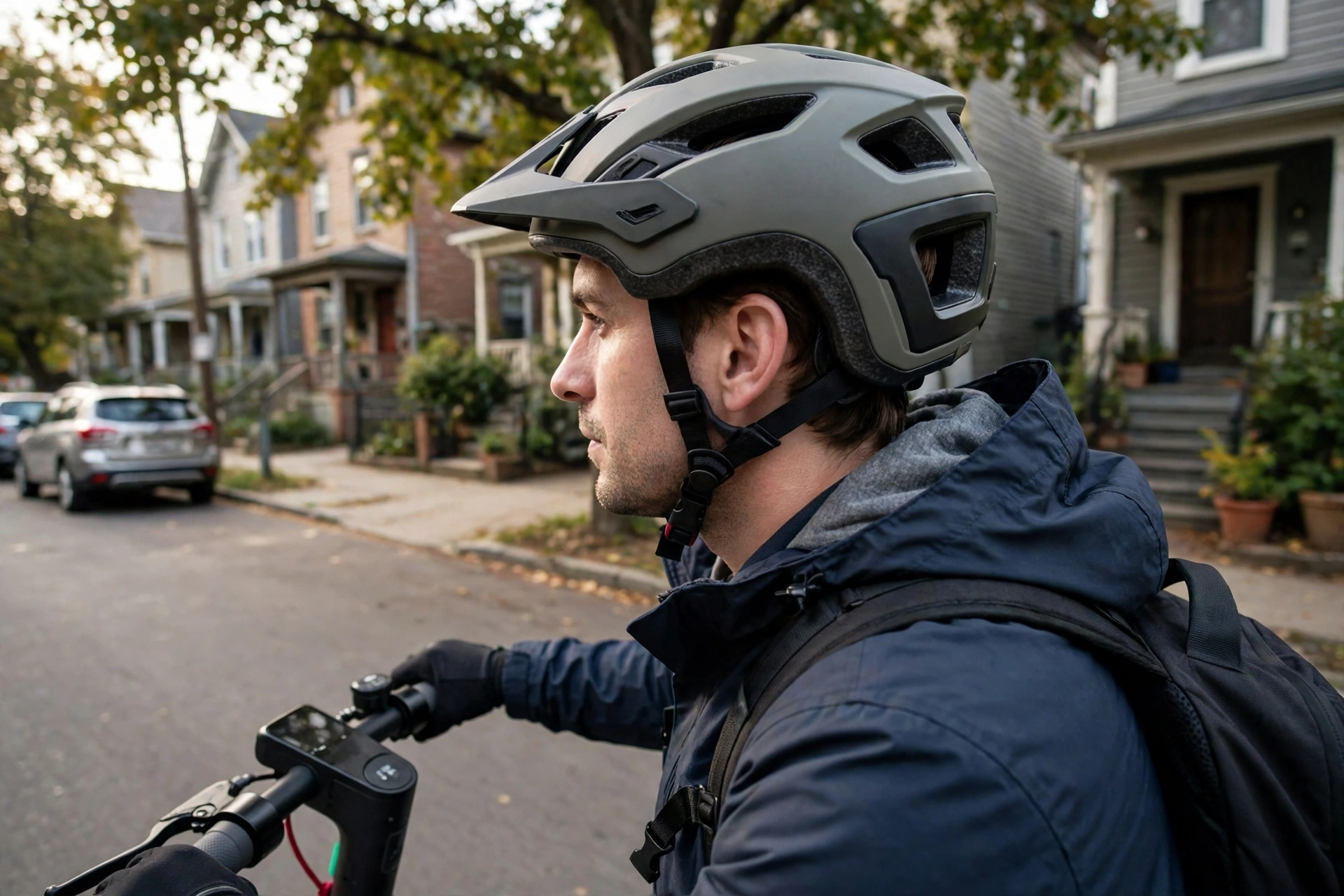
Bike Helmet, Skate Helmet, or Urban Helmet — Which Suits Scooters Best?
Each style has a commuter case. A traditional vented bike helmet is the lightest and coolest option, ideal for longer rides at steady bicycle-like speeds. Its weakness for scooter use is coverage: many road helmets sit higher on the head and protect less of the back and sides.
A skate-style helmet trades a little ventilation for a rounder, tougher shell and deeper coverage, which suits stop-and-go city riding, frequent low-speed tip-overs, and riders who also use skateboards or skates. An urban or commuter hybrid blends the two — bike-helmet venting with skate-helmet coverage — and is arguably the best default pick for a dedicated e-scooter commuter.
Fit and retention features cut across all three styles. Look for an adjustable fit system (usually a rear dial), straps that sit flat, and a secure buckle. Some helmets add rotational-impact liners — the technology behind MIPS and how it reduces rotational forces — which is a reasonable upgrade to consider for any daily commuter helmet.
Which Features Matter Most for Daily Commuting?
Visibility features earn their keep. Integrated rear lights, reflective shell panels, and bright colors all help drivers spot a scooter rider, who sits lower and accelerates differently than drivers expect. A small visor or brim helps with sun glare and light rain, and some urban helmets include a drop-down eye shield.
Practical details add up too: a magnetic buckle you can work with gloves, washable pads, and a shell finish that tolerates being tossed in a basket or hung on the handlebar. If you lock your scooter outside, consider a helmet light enough to carry with you — a helmet left dangling on the scooter tends to get knocked around and aged by the sun.
One caution about add-ons: stick to accessories the helmet maker approves. Gluing mounts or drilling the shell can compromise the structure, and heavy aftermarket additions change how the helmet behaves in a fall.
When Should You Step Up to a Stronger Helmet?
Step up when your speed, traffic exposure, or scooter class does. If your scooter regularly exceeds bicycle speeds, rides in fast mixed traffic, or falls into a moped-like category under your local rules, a helmet certified to higher-speed e-bike standards — such as the Dutch NTA 8776 standard written for faster e-bikes — or even a motorcycle helmet becomes the appropriate choice in general terms.
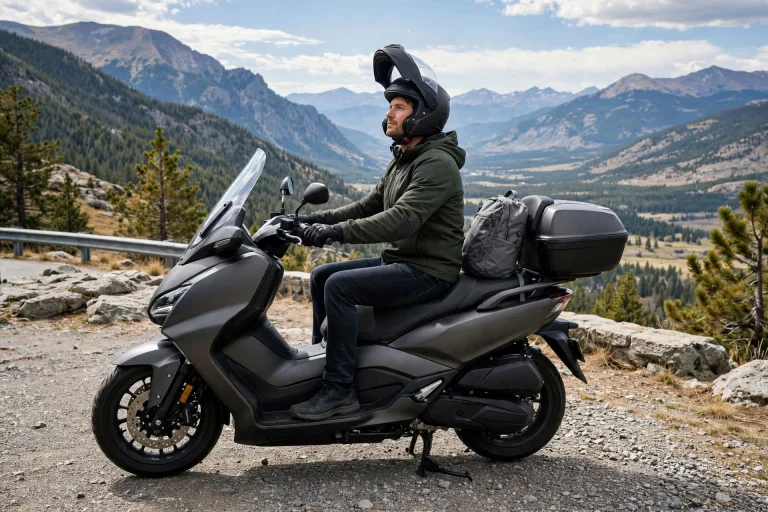
Riders on high-performance scooters should also think about the face and jaw. At higher speeds, a full-face or convertible helmet protects areas that no bicycle helmet covers. The faster and heavier the scooter, the more its crash profile resembles a motorcycle’s, and the helmet should follow.
Finally, replace any helmet after a crash or a hard drop onto pavement, even if it looks fine — the foam inside can be damaged invisibly. And whatever you choose, wear it every ride: the best helmet type is ultimately the certified one that is on your head.
Frequently Asked Questions
Q: Is a regular bike helmet enough for an electric scooter?
A: For typical commuter and shared scooters traveling at bicycle-like speeds, yes — a certified bike helmet is the standard recommendation. For faster, high-performance scooters, step up to a higher-rated or motorcycle-style helmet.
Q: Are skate helmets better than bike helmets for scooters?
A: They offer deeper back and side coverage and a tougher shell, which suits city scooter riding well. Vented bike helmets are lighter and cooler for longer rides. Both are good choices when properly certified and fitted.
Q: Do I need a special e-scooter helmet, or is that just marketing?
A: There is no separate US e-scooter helmet standard, so most riders use certified bike or skate helmets. What matters is matching the helmet’s protection to your scooter’s speed, not a scooter-specific label.

Olivia
Writer at Helmet Today, covering helmet reviews, fit and riding safety.