Weight matters for comfort, but it should never be bought by giving up certification: a lightweight scooter helmet is a good choice for short trips only if it meets the same safety standard as a heavier one. Certified helmets vary in weight because of shell materials, features, and visors — not because the lighter ones skip protection. The trips where a light helmet tempts you most, the short hops near home, are exactly where many crashes happen, so the helmet still has to be a real one.
This guide looks at what helmet weight actually changes on a short ride, what it does not change, and how to pick a light helmet you can trust for the school run, the coffee run, and everything in between.
Does a Lighter Helmet Protect Less?
Not by itself. A helmet protects by how its shell, energy-absorbing foam, and retention system perform in a tested impact, and certification testing is pass-or-fail against the standard regardless of what the helmet weighs. A light helmet that carries the proper certification for its class — DOT for motorcycle and scooter use in the US, for example — has passed the same tests as a heavier one with the same certification.
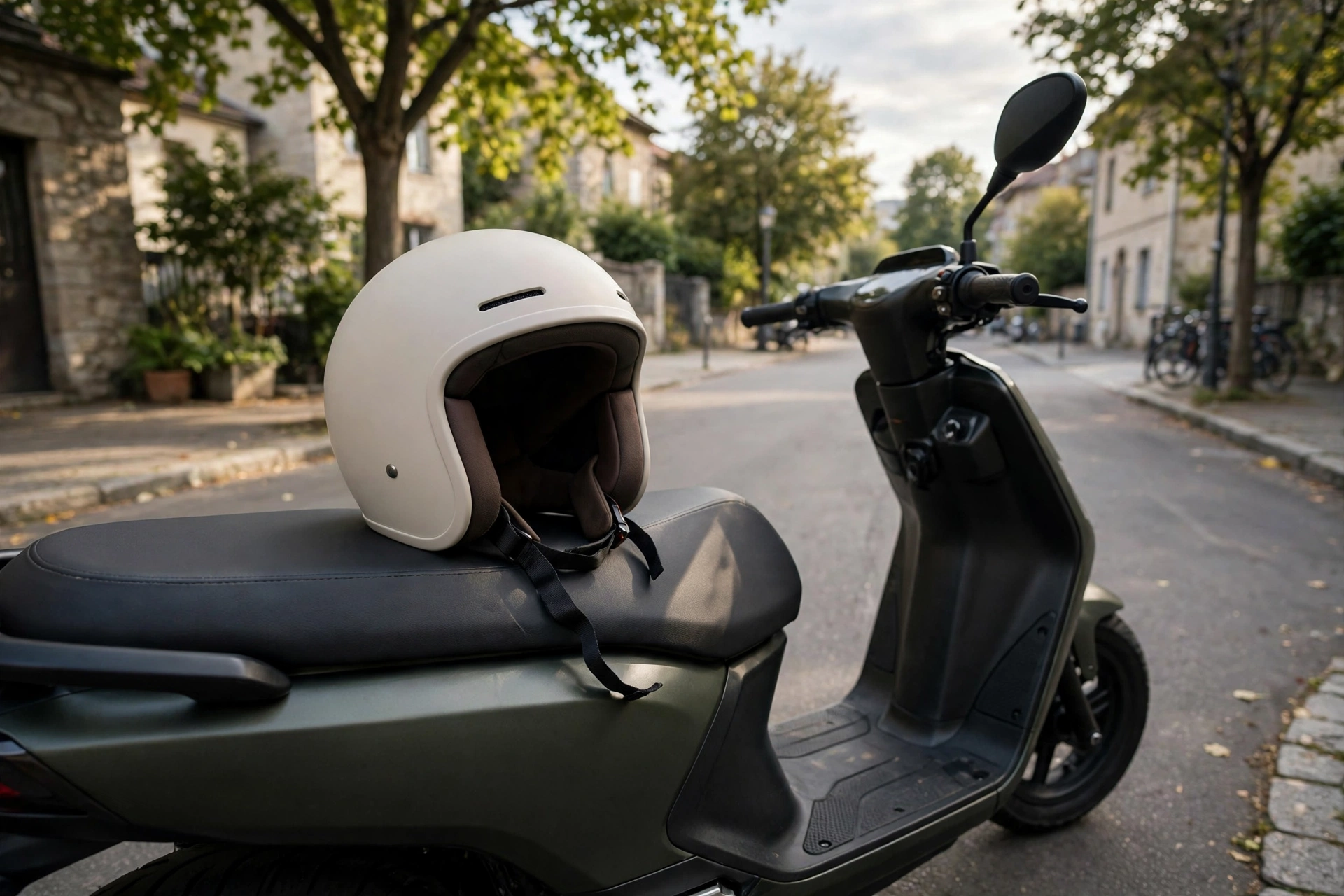
Where weight differences come from is mostly features and coverage. A minimal open-face helmet weighs less than a full-face or a modular with a metal latch mechanism, sun visor, and thick comfort liner. The protection question to ask is not “how many grams?” but “what standard does it meet, and how much of my head does it cover?” An uncertified novelty shell is light because it lacks the foam that does the protecting — that is the kind of light to avoid entirely.
Why Are Short Trips Not Automatically Safe Trips?
It is easy to think of a five-minute hop as barely riding at all, but a crash does not check your trip length. In general terms, riders spend most of their total riding time on the familiar streets near home, which is where a large share of incidents occur — intersections a block away, the junction at the end of your own road, the driveway itself. Familiarity can also lower your guard, which is precisely when a car pulls out.
The speeds are real, too. A short trip on a scooter still means traveling at road speed among cars, and a fall at even modest speed onto pavement is a serious impact for an unprotected head. The practical answer is a helmet light and easy enough that putting it on for a two-minute errand never feels like a production. Convenience is a safety feature when it decides whether the helmet gets worn.
What Should You Check Before Trusting a Lightweight Helmet?
Start with the certification label inside the helmet and confirm it names a real standard appropriate to your scooter and speed. Then check the inside: there should be a substantial layer of firm energy-absorbing foam under the shell, a sturdy chin strap with a proper buckle, and a fit that holds the helmet steady. If the “helmet” is a thin shell with cloth padding, it is a novelty item, not protection.
Fit matters as much as labels. The helmet should sit level, feel evenly snug, and resist being rolled off when you tug it. Some quality helmets also add rotational-impact liners — our guide to how MIPS works explains what those do in an angled fall. Try the helmet with the hairstyle, glasses, or earbuds arrangement you actually ride with, so nothing surprises you on the road.
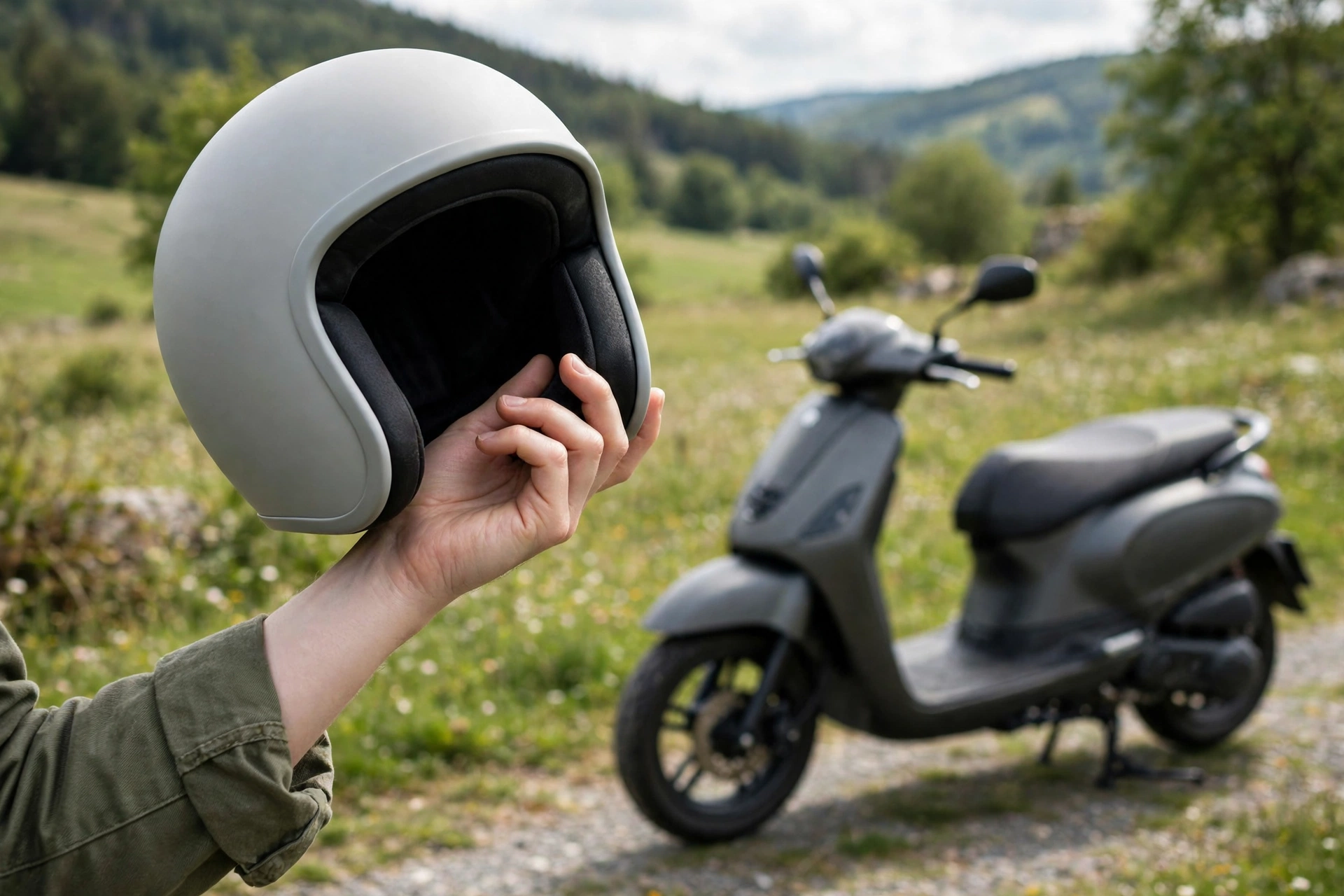
How Much Does Helmet Weight Actually Affect Comfort?
On a short trip, honestly, very little — you are wearing it for minutes. Weight starts to matter on longer rides, in hot weather, and for riders with neck or shoulder issues, where a heavy helmet becomes tiring and a distraction. Fit and balance matter more than raw grams even then: a slightly heavier helmet that sits balanced and snug usually feels lighter in use than a featherweight one that wobbles and presses on your forehead.
For short-trip use, the comfort factors that count most are speed and ease: a buckle you can work with gloves or cold fingers, vents that stop your head cooking while you queue at lights, and a size that accommodates a quick hairstyle without a ten-minute adjustment ritual. Judge weight last, after certification, coverage, and fit — and by trying the helmet on, not by reading a spec sheet.
One more practical point: a helmet you can lock to the scooter, hang on a hook by the door, or drop into a top case without a struggle is a helmet that actually comes with you. Bulky, awkward helmets get left behind “just this once” far more often — and the left-behind trip is unprotected no matter how good the helmet sitting at home is. Small and light genuinely helps here, as long as what is small and light is a properly certified helmet and not a shell-shaped toy.
What Is the Smart Way to Choose a Helmet for Short Trips?
Decide your coverage first. For low-speed urban scooters, many riders choose a light open-face or jet helmet with a visor; for faster roads, a fuller design earns its weight. Then filter by certification, then by fit on your own head, and only then compare weights and prices among the helmets that pass those tests.
Build the habit around the helmet, too. Keep it with the scooter or by the door, store it out of direct sun, and replace it after any crash or when the fit degrades. A light, certified, well-fitting helmet that is always within reach is the one that will be on your head on the short trip that turns out not to be routine.
Frequently Asked Questions
Q: Is a very cheap, ultra-light helmet from an online marketplace safe?
A: Only if it carries genuine certification to a recognized standard and has real energy-absorbing foam and a proper strap system. Many ultra-cheap shells are uncertified novelty items — check the label and construction before trusting one.
Q: Do I really need a helmet for a two-minute ride to the shop?
A: Yes. Trip length does not change the speed of traffic around you or the hardness of the road, and familiar near-home streets are where riders spend most of their time. A light certified helmet makes the habit easy to keep.
Q: How much should a scooter helmet weigh?
A: There is no required weight. Certified helmets range widely depending on style and features. Judge by certification, coverage, and fit first; among helmets that pass those checks, pick the weight that feels comfortable on your head.

Olivia
Writer at Helmet Today, covering helmet reviews, fit and riding safety.