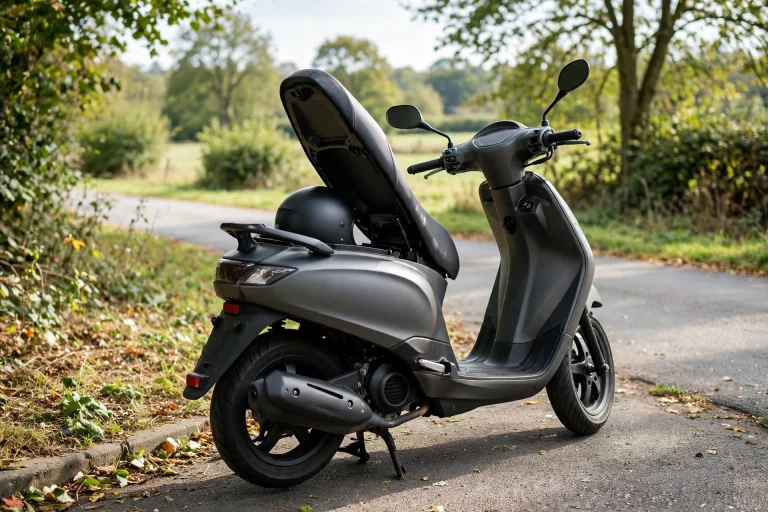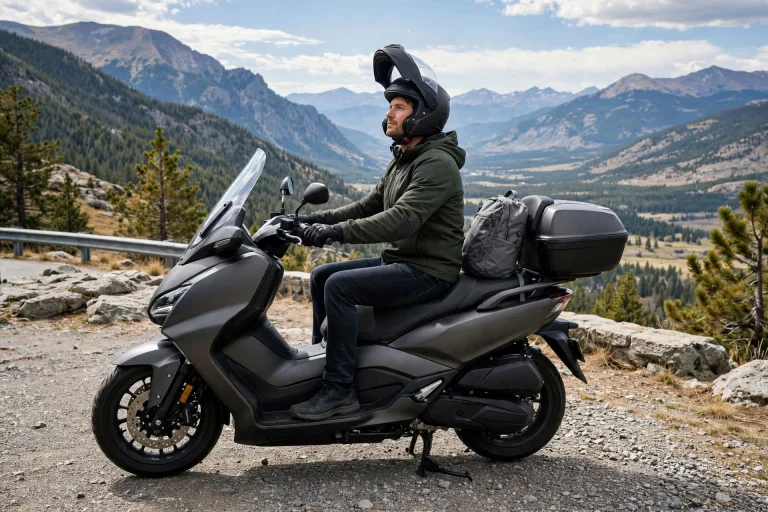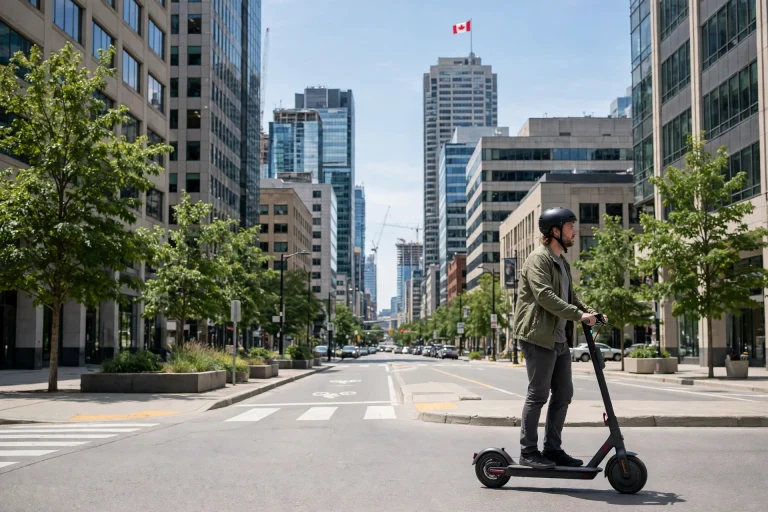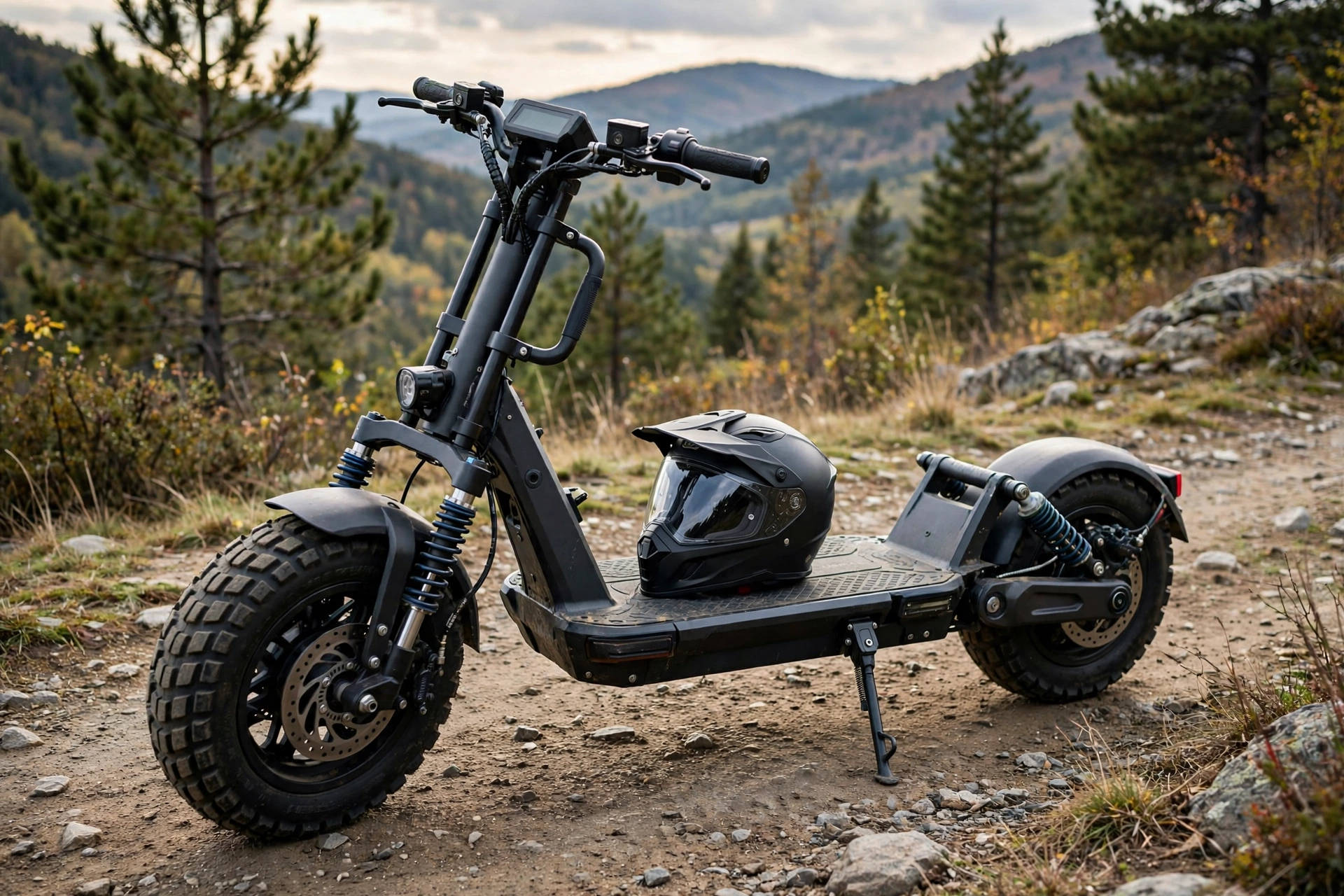
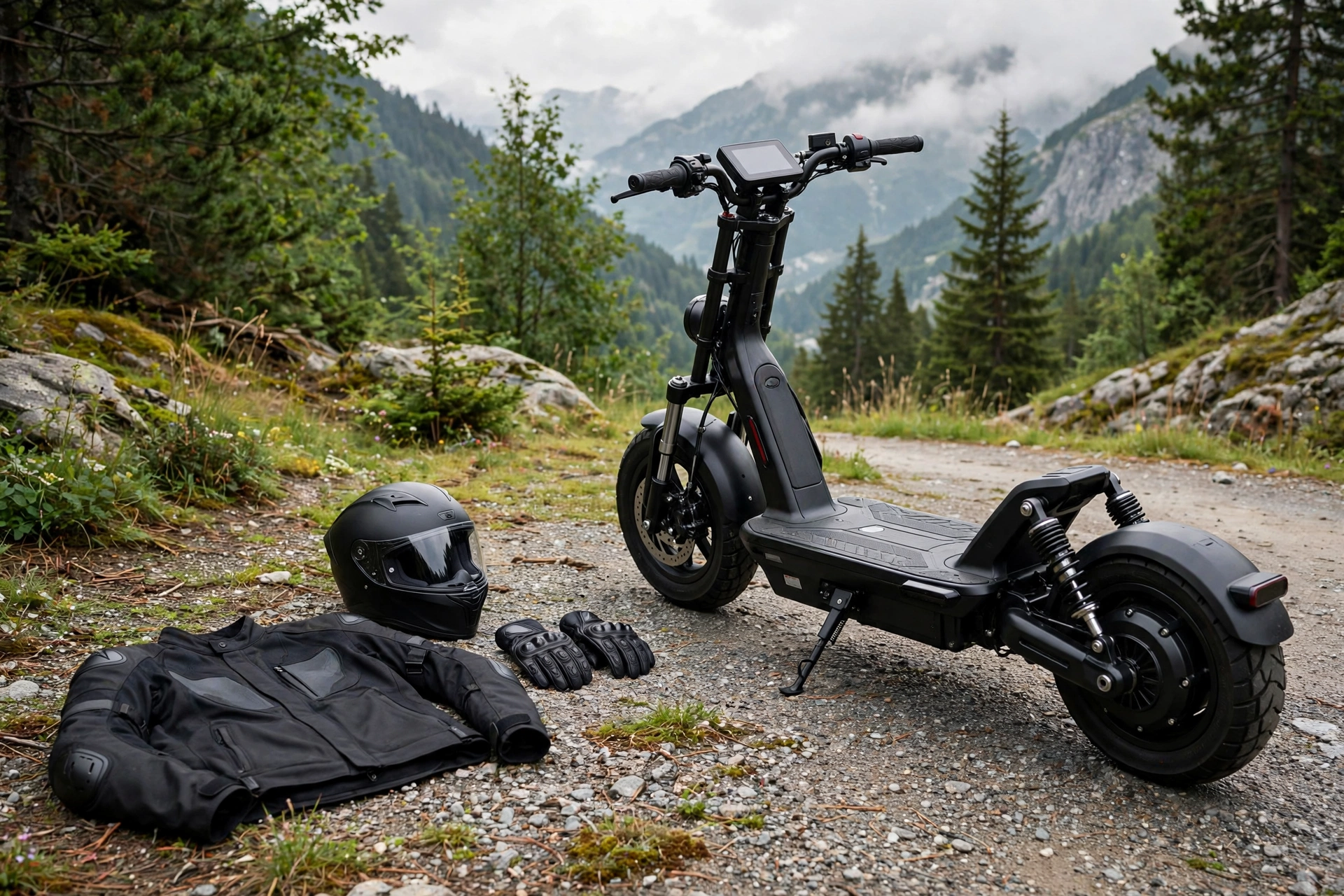
On a high-speed scooter — the dual-motor class that includes Dualtron-style machines — wear a full-face motorcycle helmet certified to DOT or ECE standards, not a bicycle helmet. These scooters cruise at motorcycle speeds, often 40 mph and beyond, and a crash at that speed is a motorcycle crash in every way that matters. What changes versus a casual scooter is everything: the helmet standard, the coverage, and the rest of your gear.
This guide explains why speed rewrites the rules, what a motorcycle helmet does that a bike helmet cannot, and how to choose the rest of your kit when your scooter is this fast.
How fast are high-speed scooters, really?
Flagship dual-motor scooters are built around two powerful motors, large batteries, and top speeds that leave commuter scooters far behind. In general terms, this class cruises comfortably at 40 mph and the most powerful models can go much faster still, with acceleration strong enough to demand both hands and full attention. They come with hydraulic brakes, wide tires, and serious suspension because the speeds demand them.
Many owners ride these machines on open roads and in traffic alongside cars and motorcycles — not in bike lanes. That is the honest way to think about them: a stand-up motorcycle with small wheels, not a toy with a big battery. Small wheels, by the way, are a real factor: they react more sharply to potholes, gravel, and wet patches than large motorcycle wheels, so the chance of a sudden fall is not lower than on a motorcycle. In some conditions it is higher.
Why does a bicycle helmet stop being enough?
Bicycle helmets are tested for bicycle-speed falls — a single impact at the energy level of a rider toppling or crashing at modest speed. At 40 mph, the energy your head carries into the pavement is many times greater, and the crash often includes sliding and secondary impacts, not one clean fall. A bike helmet’s foam is simply not built for that, and its open design leaves your face, jaw, and teeth completely exposed in the forward falls scooters are known for.
Certification tells the story: bike helmets meet bicycle standards, while motorcycle helmets are independently certified to DOT (FMVSS 218) or the stricter ECE standard in general terms, with thicker energy-absorbing liners, stronger shells, chin bars, and retention systems tested to stay on during violent crashes. When the speed crosses into motorcycle territory, the helmet standard has to cross with it.
What should you look for in a full-face motorcycle helmet?
Prioritize certification first: a genuine DOT or ECE label from a reputable maker, bought from a real dealer — bargain “motorcycle-style” helmets without certification are decoration. Then fit: a full-face should be snug all over with firm cheek pads, no rocking, and no pressure point that becomes pain within ten minutes. Try the exact model with any glasses you ride in.
After that, weigh the practicalities. A clear visor with an anti-fog insert keeps your vision sharp; ventilation matters because full-face helmets run warm at low speed and while waiting in traffic; and lower weight is worth paying for on longer rides, since neck fatigue is real when wind blast hits a helmet at 40-plus mph. A drop-down sun visor or a tinted spare visor helps in bright weather, swapped back to clear after dark.
What other gear matters at high scooter speeds?
A helmet alone leaves the rest of the typical crash unprotected. Motorcycle gloves are the next essential — hands go down first in almost every fall, and at speed, pavement removes skin quickly. A proper motorcycle jacket with abrasion-resistant material (and armor at elbows and shoulders, in general terms) protects your torso and arms during a slide, and sturdy footwear that covers the ankle guards a joint that scooters put close to the ground and the deck edge.
- Helmet: certified full-face motorcycle helmet, ECE preferred where available
- Hands: motorcycle gloves with palm sliders or reinforced palms
- Body: abrasion-resistant jacket, long pants — ideally riding gear with armor
- Feet: closed, sturdy shoes or boots with ankle coverage
None of this is about looking the part. It is about matching the protective system to the energy involved, which is exactly what motorcyclists at the same speeds already do.
Leg protection deserves a mention as well. Riders who slide at speed tend to slide on hips, knees, and ankles as well as hands and elbows, and ordinary jeans wear through almost instantly against asphalt. Riding jeans with abrasion-resistant linings, or proper textile motorcycle pants with knee armor, close that gap without much comfort cost. High-speed scooters also reward mechanical sympathy: tire pressure, brake condition, and stem tightness should be checked far more often than on a rental-grade scooter, because at these speeds a loose folding mechanism or an underinflated small tire is a crash looking for a moment to happen.
Does riding technique change with the gear?
Yes — a full-face helmet narrows your peripheral vision slightly and muffles sound compared with open riding, so high-speed scooter riders compensate with more deliberate head checks and mirror awareness. Give yourself longer following distances, since a full-face also encourages the confidence of higher speeds; the scooter’s small wheels and short wheelbase still set hard limits on braking and cornering.
And remember replacement rules: a motorcycle helmet that has taken a crash impact is finished, even if the shell looks fine — the liner has done its one job. High-speed riders should also understand the technology inside modern helmets; our overview of MIPS and rotational impact protection explains the angled-impact science that newer motorcycle helmets increasingly build in.
Frequently Asked Questions
Q: Can I use a downhill mountain bike helmet on a fast scooter instead?
A: It is better than a basic bike helmet but still not the right tool at 40 mph and above. Downhill helmets are certified for bicycle-speed impacts; at motorcycle speeds, a certified full-face motorcycle helmet is the sensible standard in general terms.
Q: Is DOT or ECE certification better for a scooter helmet?
A: Both are legitimate motorcycle standards, and many good helmets carry both. ECE testing is widely regarded as rigorous, in general terms, and ECE-certified helmets often include features tested for rotational impacts. Either is a world apart from an uncertified novelty helmet.
Q: Do I really need gloves and a jacket for scooter riding?
A: At high-speed scooter pace, yes. Most falls put hands down first, and sliding abrasion injures whatever skin is uncovered. Motorcyclists doing the same speeds wear this gear for crash physics, not fashion — and the physics applies to you identically.

Olivia
Writer at Helmet Today, covering helmet reviews, fit and riding safety.