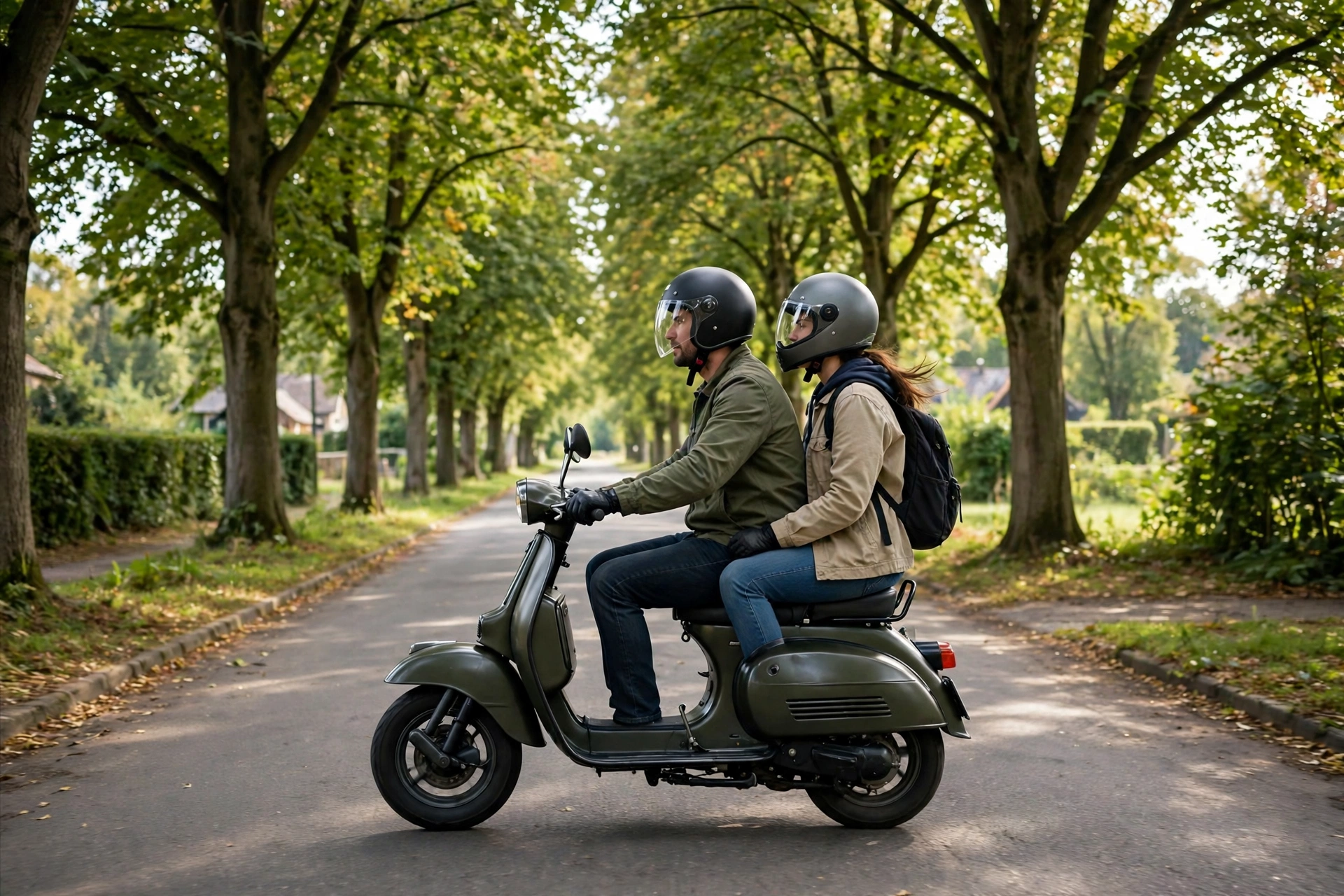
In most places that require the moped rider to wear a helmet, the passenger is required to wear one too — but rules vary by state, and in states with partial helmet laws the requirement often depends on the passenger’s age. Legally or not, the safety answer is simpler: a passenger faces the same road at the same speed with even less control than the rider, so a passenger should always wear a properly fitted, certified helmet.
This overview explains the common patterns in how states treat moped passengers, what kind of helmet a passenger needs, and the checks to run before anyone climbs on the back.
Do Helmet Laws Usually Cover Moped Passengers?
In general terms, yes — where a state requires helmets for moped or motorcycle riders of all ages, passengers are normally included in the same requirement. The law typically applies to anyone riding on the vehicle, not just the person holding the handlebars. If you are legal to carry a passenger and your state has an all-rider helmet law, expect that both of you must be helmeted.
Where it gets more complicated is in states with partial laws. Many states require helmets only up to a certain age, and that age-based rule commonly applies to passengers as well as operators. A state might require helmets for every rider under 18, for example, while leaving adults to choose. Because mopeds are often classified differently from motorcycles — sometimes by engine size, sometimes by top speed — the exact rule that covers your passenger depends on both your state’s helmet law and how it defines your vehicle.
The only reliable way to know is to check your own state’s current law before carrying a passenger. State transportation or DMV websites publish the current requirements, and rules do change.
How Do State Rules Differ for Passengers?
Three broad patterns appear across the country. Some states require helmets for all riders and passengers on motorcycles and mopeds regardless of age. Others require them only for younger riders — commonly minors, and sometimes younger adults. A third group has no general helmet requirement for adults, though rules may still apply to learners or younger passengers.
Passenger-specific wrinkles exist too. Some states tie permission to carry a passenger to the operator’s license type or experience, and the passenger’s equipment can be part of that. Vehicle classification matters as well: a small gas scooter treated as a moped under a 50cc-style class in one state may be registered as a motorcycle in another, pulling it under a different helmet rule entirely. None of these patterns can be assumed — they have to be checked where you live and anywhere you ride across state lines.
What Helmet Should a Moped Passenger Wear?
The same quality of helmet you would wear yourself: a certified helmet — in the US, one meeting the DOT standard for motorcycle helmets — in the passenger’s own correct size. A passenger helmet is not a place for the household’s oldest spare. It needs intact foam, a sound shell, working straps, and a fit that stays put, because the passenger has no handlebars to brace with and is often thrown further in a crash.
Coverage is worth thinking about. Many passengers are occasional riders — a friend, a partner, a visiting relative — who may be less prepared for wind, noise, and sudden braking. A helmet with a face shield helps them stay comfortable and keep their eyes open and watering less, which makes them a calmer, steadier passenger. For background on modern protective features some helmets add, our explainer on MIPS and rotational impact protection is a useful read before you buy a dedicated passenger helmet.
Can a Passenger Just Borrow Any Spare Helmet?
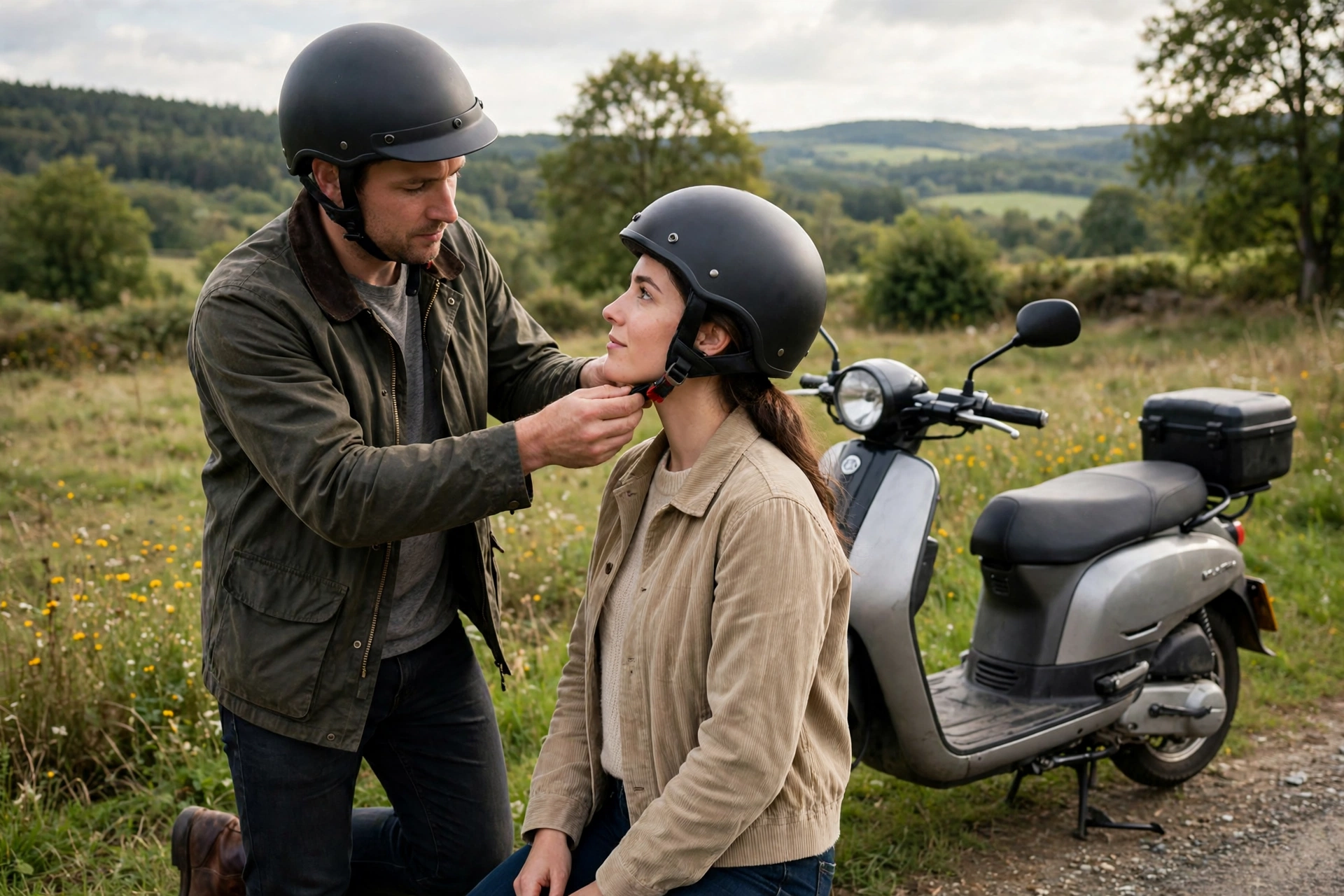
Only if it genuinely fits. Helmet fit is personal: a borrowed helmet that is a size too large can shift or come off in a fall, and one that is too small will be painful enough that the passenger fiddles with it instead of holding on. If you carry a regular passenger — a partner or family member — the right move is a helmet bought for their measured head size, kept with the moped.
For the occasional guest, do a proper fit check before riding: the helmet sits level, snug all around, straps forming a V under the ears, chin strap with a finger or two of room, and no rocking when they shake their head. Skip the ride rather than the fit check if the only spare is the wrong size, crashed, or an uncertified novelty shell. A helmet that does not fit is barely better than none.
Keep the passenger helmet in rotation, too: check its foam, straps, and buckle each season, and replace it on roughly the same schedule you use for your own helmet. A spare that lives in a hot garage for years can look perfectly fine while its foam and strap materials quietly age past their best.
What Should You Check Before Carrying a Passenger?
Confirm your license and your moped actually allow a passenger, and that the vehicle has a proper passenger seat and footrests — riding double on a solo seat is unsafe and, in many places, not permitted. Agree on the basics before moving off: where to hold on, keeping feet on the pegs, leaning with you through turns rather than against them, and a signal for “slow down” or “stop.”
Then adjust your riding. A passenger adds weight high and behind you, which lengthens braking distances and slows steering. Ride more gently than you would solo, brake earlier, and take the first few minutes slowly while your passenger settles. The helmet is one part of passenger safety; how you ride with someone aboard is the other.
Frequently Asked Questions
Q: Is a passenger helmet required if my state has no helmet law for adults?
A: Possibly not for an adult passenger, but age-based rules may still cover younger passengers, and requirements can differ for mopeds versus motorcycles. Check your state’s current law — and remember a passenger needs protection regardless of what the law says.
Q: Can my child ride as a moped passenger?
A: That depends on your state’s rules on passenger age and on whether your moped is equipped for a passenger, and the rules vary widely. Check the law where you live first, and if you do carry a child, they need their own correctly sized certified helmet.
Q: Does a bicycle helmet work for a moped passenger?
A: No. Mopeds travel at road speeds among traffic, and passengers should wear a helmet certified for motorcycle use, such as a DOT-standard helmet, in their correct size — not a bicycle helmet.

Olivia
Writer at Helmet Today, covering helmet reviews, fit and riding safety.