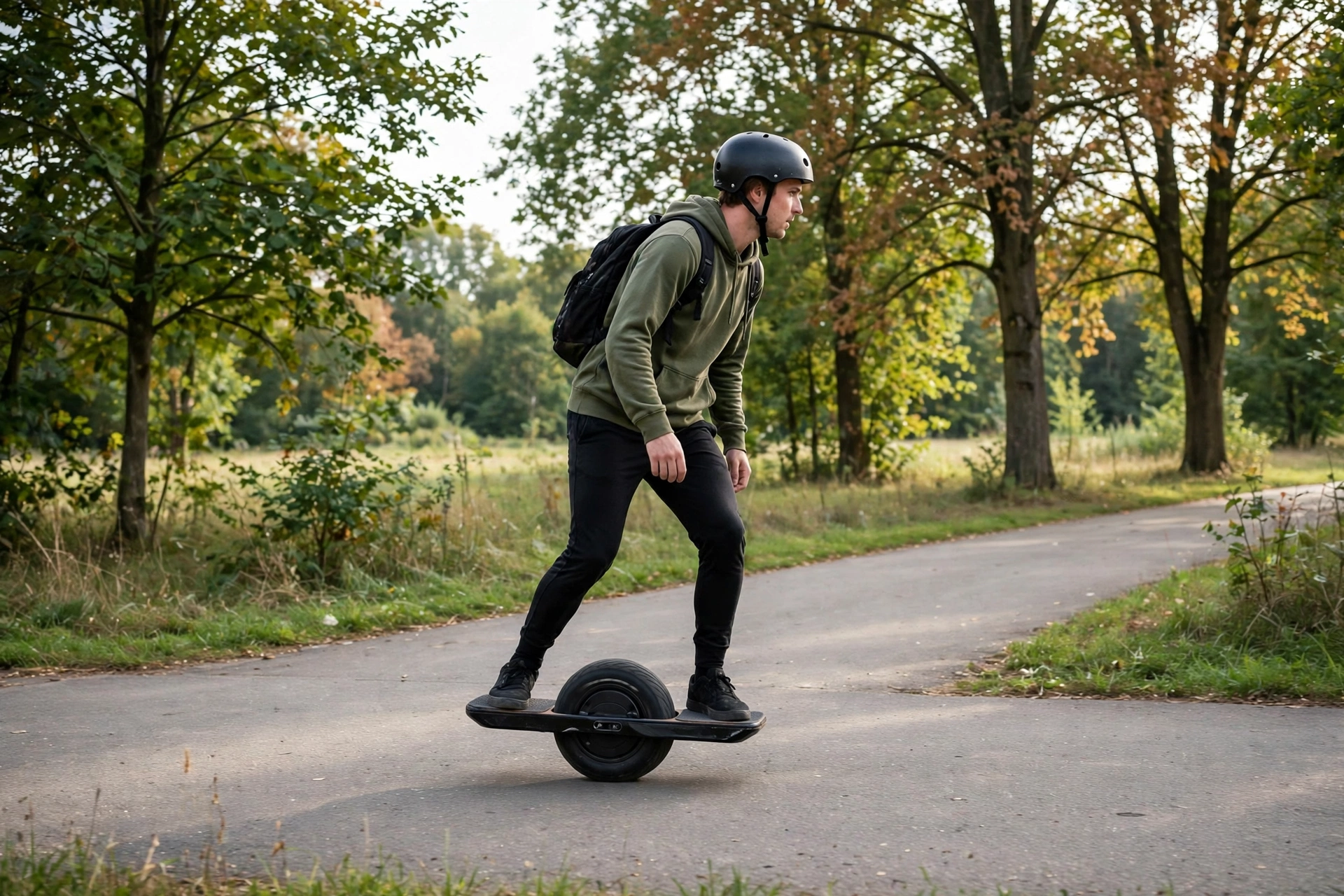
Onewheel riders should wear a skate-style helmet — a hard-shell, multi-impact certified helmet with good coverage over the back and sides of the head — because Onewheel falls are typically forward, fast, and sudden. Add wrist guards as the second essential. In general terms, that pairing is what most experienced riders settle on, and this guide explains why, plus how skate, bike, and full-face helmets compare for this board.
A Onewheel is not a bicycle and not a skateboard; it has its own fall pattern. Choosing a helmet for how you will actually hit the ground is the whole game.
What kind of falls happen on a Onewheel?
The signature Onewheel crash is the nosedive. When the board’s single motor is asked for more than it can give — hard acceleration, a steep hill, a low battery, higher speed — the nose can drop without warning and the rider is pitched forward over the front. Riders describe going from cruising to pavement in a fraction of a second, usually landing on hands, wrists, elbows, and sometimes face and head.
Falls also happen backward when mounting or dismounting, and sideways on loose surfaces. But the forward, sudden, at-speed nosedive is the one that shapes gear choices: it argues for strong coverage low on the head, a helmet that stays put during a violent forward rotation, and serious protection for the wrists that take the first impact.
The board does give warnings — it pushes back against the rider as it approaches its limits — but lean too far past that pushback, hit a bump at the wrong moment, or demand a burst of power the battery cannot supply and the nose drops anyway. New riders are most at risk precisely because everything feels easy and stable right up until it is not. Riding within the board’s limits, respecting pushback instead of fighting through it, is genuine protective equipment in its own right — but no rider is skilled enough to skip the helmet, and that includes the experienced ones who have logged thousands of miles.
Why do Onewheel riders choose skate-style helmets?
Skate-style helmets use a hard ABS shell over foam and are typically certified to the multi-impact skate standard (ASTM F1492), which suits a sport where riders fall often at moderate speeds. The shape helps as much as the certification: skate helmets sit lower, wrap further down the back and sides of the head, and protect more of the skull than a typical vented road-bike helmet — coverage that matters when your head may strike during a forward pitch or a backward slip.
They are also built to be knocked around: kicked across driveways, dropped on concrete, worn daily without the fragility of a lightweight in-mold bike helmet. For a device many riders use for commuting and errands as well as fun, that durability is a genuine feature. Look for dual certification where you can — a helmet certified for both skate and bicycle use gives you verified protection in both worlds.
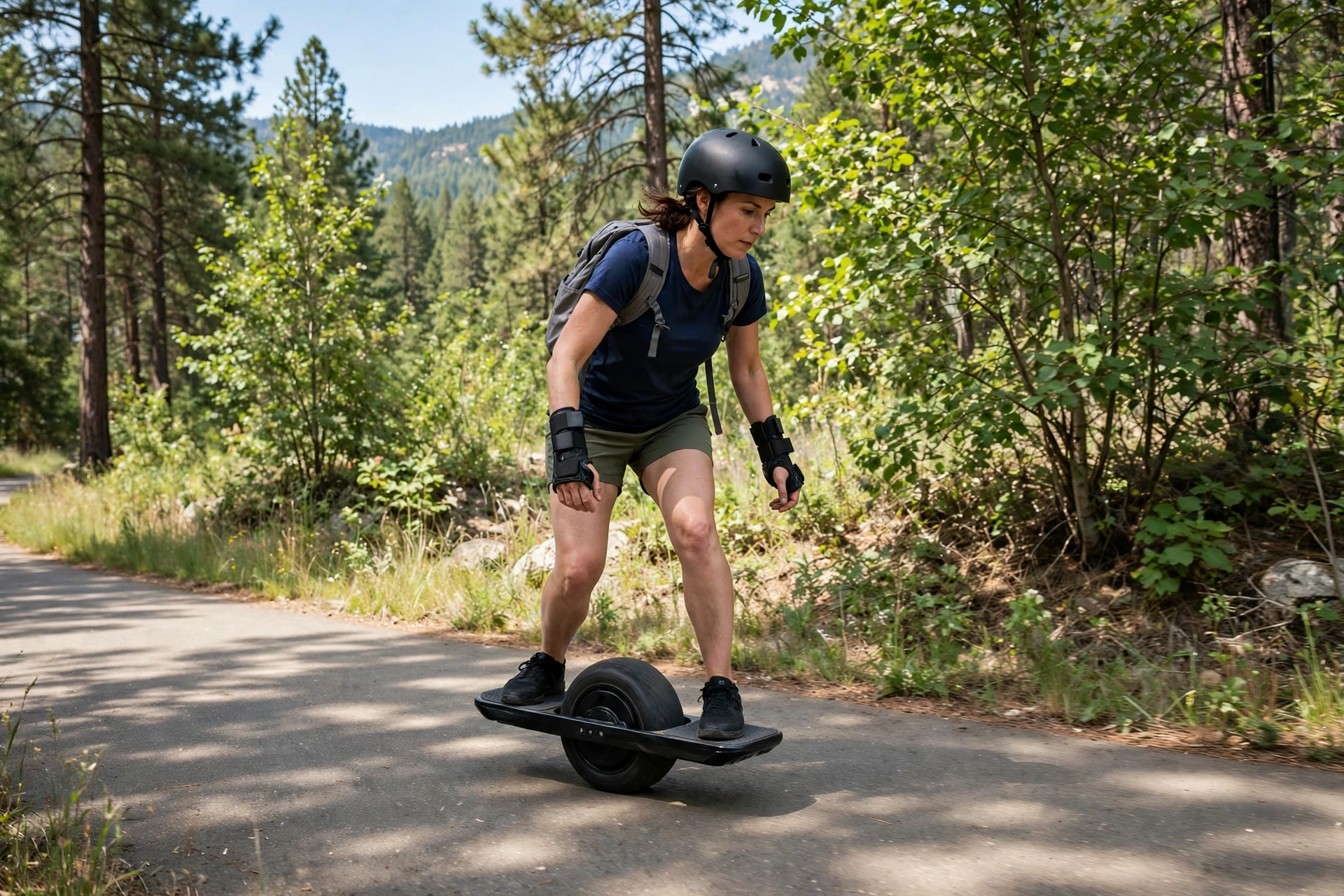
Skate helmet, bike helmet, or full-face — which is best?
For most riders, the skate-style helmet is the sweet spot: right coverage, right impact profile, comfortable enough to wear every ride. A certified bicycle helmet is an acceptable alternative — it protects the head well in a single hard fall — but its higher, more vented shape offers less coverage at the lower back of the head, and it must be replaced after any real impact.
Full-face helmets enter the conversation for riders who push speed on trails or have already taken a face-first fall; a lightweight downhill or convertible full-face adds jaw and face protection that nosedives make easy to appreciate. The trade-offs are heat, weight, and muffled hearing. Rotational liners are available across all three styles — as our guide to MIPS helmet technology explains, these low-friction layers are designed to reduce rotational forces in exactly the angled impacts a forward pitch produces. Whichever style you pick, certification and fit come first; features second.
What other protective gear do Onewheel riders wear?
- Wrist guards: the most important item after the helmet — outstretched hands take the first hit in a nosedive, and wrist injuries are the classic Onewheel injury in general terms.
- Elbow and knee pads: cheap insurance for the joints that meet pavement next; padded gear keeps small falls from becoming ride-ending road rash.
- Gloves: even simple gloves save palms during the slide that follows a fall.
- Flat, grippy shoes: secure footing on the board’s footpads, with no loose laces near the wheel.
- Lights and reflectives for night: a board this small and low disappears in traffic after dark; make yourself visible from the side as well as front and back.
Riders who commute in traffic often add a mirror and treat the board like the vehicle it is. The mindset matters: dress for the fall, not for the photo.
How should a Onewheel helmet fit?
Snug, level, and stable. The helmet should sit low, around two finger-widths above the eyebrows, and it should not rock side to side or slide when you shake your head with the strap open — the shell must fit, with the strap there to keep it in place. With the strap fastened, you want roughly two fingers of room under the chin strap and side straps forming a V below your ears.
Because nosedives are sudden, test the fit the way the fall will: tilt your head sharply forward and back and confirm the helmet does not shift. Replace any helmet after a significant impact, check straps and shell regularly, and retire a skate helmet when its foam feels packed out or the shell is cracked — multi-impact certification does not mean a helmet lasts forever.
Frequently Asked Questions
Q: Is a regular bike helmet okay for Onewheel riding?
A: Yes, a certified bike helmet is genuine protection and far better than none. Many riders prefer skate-style helmets for their lower coverage at the back and sides and their multi-impact rating, which suit Onewheel fall patterns in general terms — but fit and certification matter most either way.
Q: Why do so many Onewheel riders wear wrist guards?
A: Because the typical Onewheel fall is a sudden forward pitch, and the natural reaction is to throw both hands out. Wrist guards with a rigid splint spread that impact and are widely considered the second essential after a helmet for this board.
Q: Do I need a full-face helmet for a Onewheel?
A: Not for most riders. A certified skate-style helmet covers the common risks well. Riders who travel fast, ride rough trails, or want jaw protection after close calls sometimes step up to a lightweight full-face — a personal call based on speed and terrain.

Olivia
Writer at Helmet Today, covering helmet reviews, fit and riding safety.