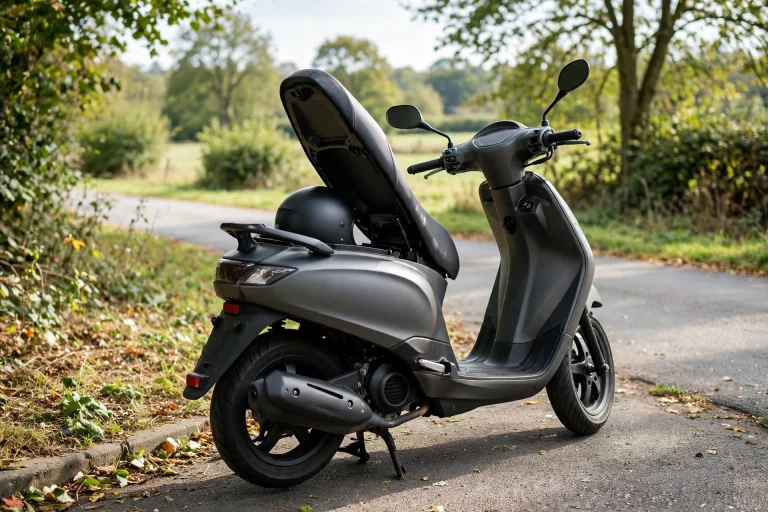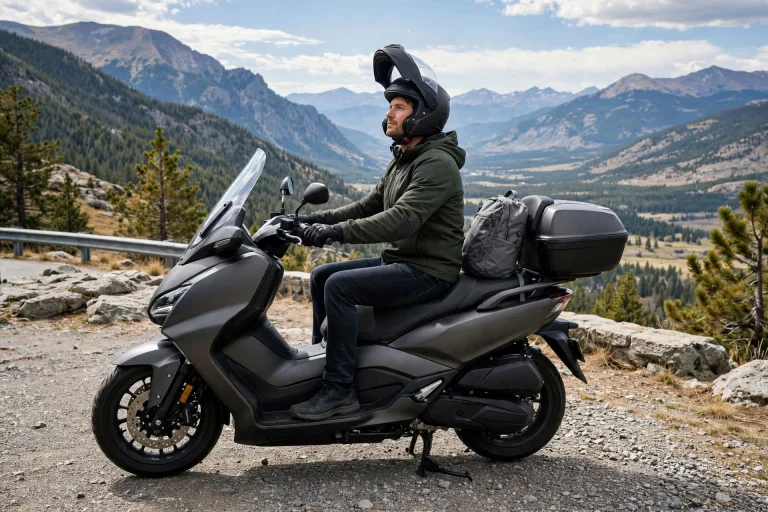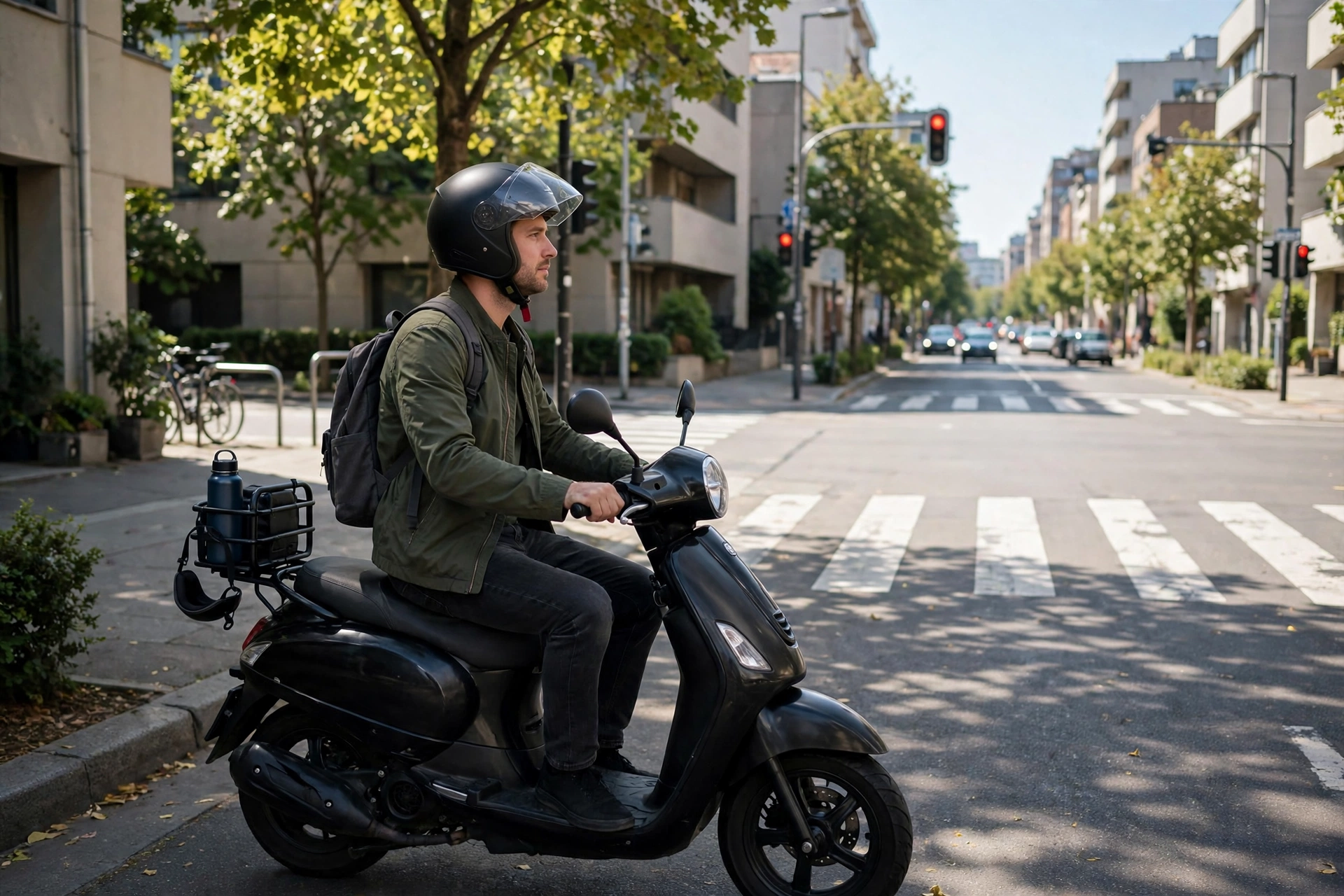
There is no single national rule: whether you must wear a helmet on a gas scooter depends on your state’s helmet law and on how your state classifies your scooter — usually by engine size or top speed. In general terms, states fall into three patterns: helmets for all riders, helmets only for younger riders, or no general requirement for adults. A scooter classed as a moped in one state can be a motorcycle in the next, so classification comes first.
This overview explains the patterns to look for, how engine-size classes work, and how to confirm the current rule where you live. It is a map for your own check, not a substitute for it — always verify against your state’s current published law.
Why Does Engine Size Decide Which Helmet Law Applies?
Most states draw a legal line between a moped and a motorcycle based on the machine, and engine displacement is the most common yardstick. A frequent pattern, in general terms, is that small gas scooters and mopeds — often in a class around 50cc, with limited top speed — sit in a lighter regulatory category, while anything bigger is registered and regulated as a motorcycle. Top speed, pedal equipment, and transmission type also appear in some definitions.
That classification controls everything downstream: whether you need a motorcycle endorsement, registration and insurance, and which helmet rule applies. A rider on a 49cc scooter may fall under a moped rule, while the same rider on a 150cc scooter is, legally, a motorcyclist. Before asking “do I need a helmet,” ask “what is my scooter, legally, in my state?”
What Are the Common Patterns in State Helmet Laws?
The first pattern is the universal law: a group of states requires every motorcycle and moped rider — and usually every passenger — to wear a helmet regardless of age. The second pattern is the partial or age-based law, the most common approach nationally: helmets are required up to a set age, often covering minors and sometimes younger adults, and optional beyond it. Details such as the exact age, and whether learners or new riders are covered separately, differ from state to state.
The third pattern is no general adult requirement, found in a small number of states, though even there, younger riders may still be covered by an age-based rule. Layered over all of this, some states attach conditions to riding without a helmet for adults, such as experience or insurance requirements, in general terms. Because legislatures revisit these laws, any printed list ages quickly — treat patterns as a starting point and confirm the current text.
It is also worth knowing that these laws are amended from time to time: states have both adopted and repealed helmet requirements over the years, which is why a rule you remember from a decade ago, or one a friend quotes from another state, may not be the rule that applies to you today.
How Do States Classify Gas Scooters and Mopeds?
Expect one of three approaches. Some states use a moped definition combining small engine size, a capped top speed, and sometimes pedals or an automatic transmission. Others fold small scooters into a “motor-driven cycle” or similar middle category with its own equipment and licensing rules. Still others regulate nearly everything with two wheels and an engine as a motorcycle once it passes a modest size or speed threshold.
The practical trap is assuming the dealer’s label settles it. A scooter sold as a “moped” for marketing may exceed your state’s moped limits once its actual engine size and top speed are applied, which can change both your licensing and your helmet obligations. Your registration documents and your state’s vehicle code — not the sales brochure — decide the class.
Does a Certified Helmet Satisfy the Requirement Where One Exists?
Where a helmet is required, the law generally expects a helmet that meets a recognized safety standard — in the US, the federal DOT standard for motorcycle helmets is the usual benchmark, and states commonly reference it directly or in substance. A helmet carrying genuine DOT certification, worn properly fastened, is in general terms what compliance looks like across the patterns described above.
That excludes novelty helmets. Thin decorative shells with fake or meaningless stickers do not meet the standard and do not satisfy a helmet law, and they offer little real protection. If you ride in different states, a properly certified helmet also travels well: it meets the equipment side of the strictest rule you are likely to meet. For riders comparing protective features beyond the baseline standard, our guide to MIPS and modern helmet safety technology explains what else is available inside a certified helmet.
How Do You Check the Current Law in Your State?
Start with official sources: your state legislature’s vehicle code, your DMV or state patrol website, or your state’s motorcycle and moped handbook, all of which publish the current helmet requirement and the vehicle definitions it hangs on. Search using your scooter’s legal class — “moped helmet law” and “motorcycle helmet law” can return different answers, and your scooter’s classification decides which one is yours.
Check three things in order: how your state classifies your exact scooter, whether the helmet rule for that class covers all riders or only certain ages, and whether passengers are included. If you ride across a state line, check the other state too — the strictest rule on your route is the one to ride to. And check again each season, because these statutes change.
Rider education materials can help as a plain-language cross-check: state motorcycle and moped handbooks usually restate the helmet rule for each vehicle class and are refreshed as laws change. If a handbook and a website summary disagree, the current statute text is the one that controls.
Frequently Asked Questions
Q: Do I need a helmet on a 50cc gas scooter?
A: It depends on your state. Many states treat a 50cc-class machine as a moped and apply their moped helmet rule, which may cover all riders or only younger ones. Check your state’s current law for its moped class before riding.
Q: My state has no adult helmet law. Can I still be required to wear one?
A: Possibly, in specific situations — age-based rules, learner or licensing conditions, or the law of a neighboring state you ride into can all apply to you. Confirm the details for your age, license status, and route.
Q: Does the helmet law in my state cover my passenger?
A: In most states with a helmet requirement, passengers are included, and age-based rules usually apply to passengers too. Check your state’s wording, and fit your passenger with their own certified helmet regardless.

Olivia
Writer at Helmet Today, covering helmet reviews, fit and riding safety.