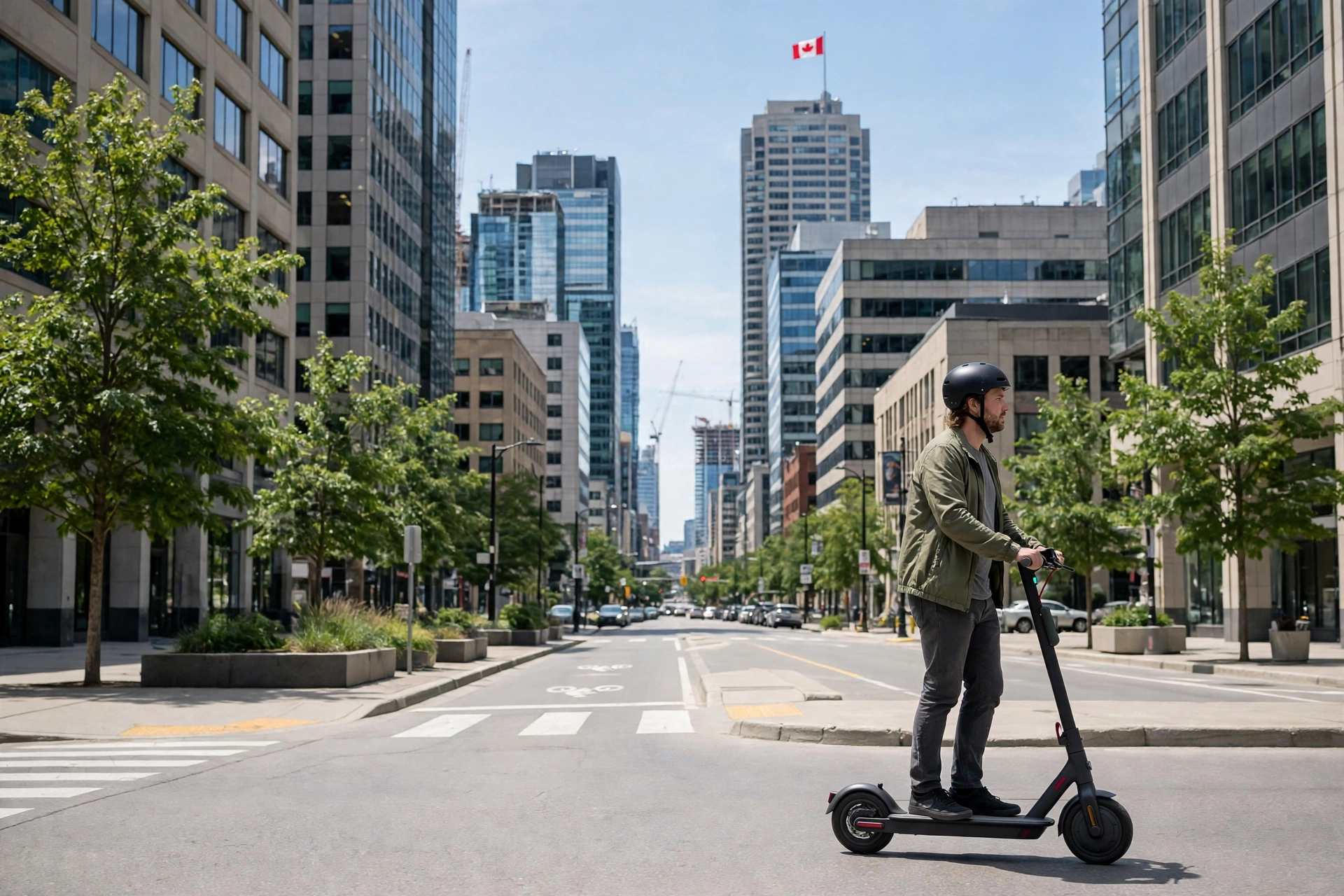
There is no single Canada-wide electric scooter helmet law, because in general terms e-scooter rules are set by provinces and municipalities — and where e-scooters are permitted, a helmet is commonly required, especially for younger riders. Whether you must wear one, and what counts as a legal e-scooter, depends on the province and often the city you are riding in.
Canada regulates most road rules provincially, and e-scooters arrived faster than the rulebooks. The result is a patchwork: some provinces run pilot programs with their own conditions, some cities set their own bylaws, and some places have not formally addressed privately owned e-scooters at all. This overview explains the patterns so you know what to check before you ride — it is not a substitute for your province’s or city’s current rules.
Who Makes the E-Scooter Rules in Canada?
Three levels of government can touch your ride. The federal government sets vehicle safety standards mainly for motor vehicles, which most standing e-scooters do not fall under. Provinces write the highway traffic rules — definitions, where devices may be ridden, minimum ages, and helmet requirements. Municipalities then add bylaws about sidewalks, trails, parks, speed limits, and shared rental fleets, and they can ban e-scooters from certain areas entirely.
Because of this structure, the same scooter trip can be governed by a provincial pilot regulation plus a city bylaw at the same time. Riders crossing provincial lines — or even city lines — can find the rules change with them. When in doubt, the local rules of the place you are physically riding in are the ones that apply.
Are Helmets Required for E-Scooter Riders in Canada?
In general terms, where provinces have formally allowed e-scooters — often through time-limited pilot programs — helmet use has commonly been part of the conditions, at minimum for younger riders and in many cases for everyone. Bicycle helmet rules are also relevant background: several provinces require helmets for all cyclists, and that helmet culture carries over into how e-scooter rules get written locally.
The practical pattern looks like this: under-18 riders are the most consistently required to wear helmets; adult requirements vary more by jurisdiction; and rental or shared-scooter programs may add their own helmet conditions in their user agreements, on top of the law. A certified bicycle helmet is in general terms the type expected for e-scooter use at typical scooter speeds.
Do not treat any of this as a settled rule for your street. Programs are revised, pilots expire or get renewed, and cities join or leave them. Check your province’s transportation ministry and your city’s bylaws for the current position — a two-minute search beats a ticket or, worse, an injury in a crash where an insurer asks what you were wearing.
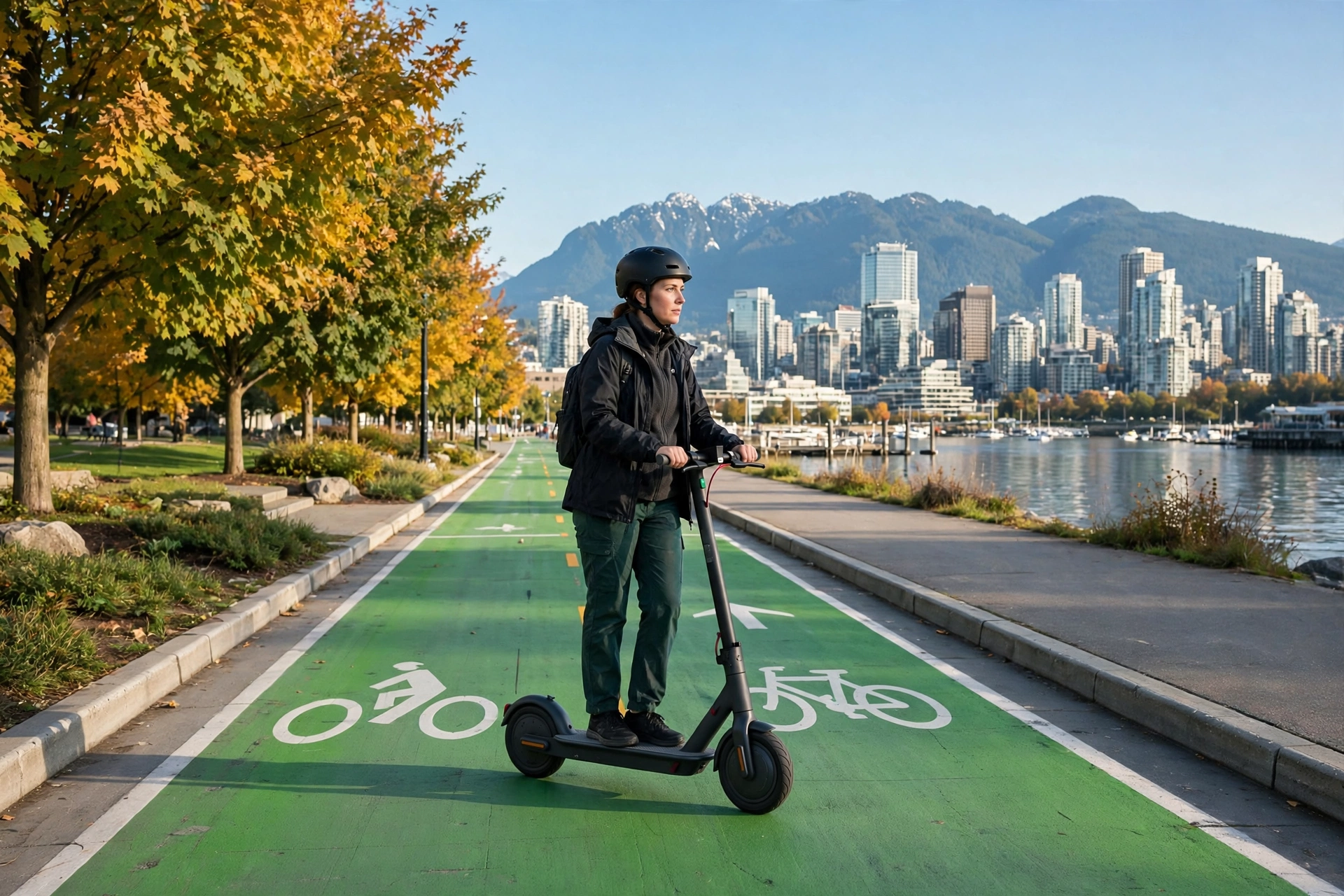
What Counts as an E-Scooter Under Canadian Rules?
Definitions matter because they decide which rules apply to you. Provincial programs in general terms describe e-scooters (often called “power-assisted” or “electric kick scooters”) by features such as a standing platform, two or three wheels, handlebar steering, and a maximum assisted speed — commonly around the mid-20s km/h. Devices faster or more powerful than the definition may be treated as motor vehicles, with registration, licensing, and insurance consequences, or simply not permitted on public roads at all.
Age minimums are another common condition, often set in the mid-teens for pilot programs, and riding on sidewalks is commonly prohibited, with bike lanes and lower-speed roads as the intended spaces. Again, these are patterns across programs, not a national template — your province’s exact numbers govern.
Rules are also evolving quickly. Several provinces first approached e-scooters through pilot projects precisely so the conditions — helmet requirements included — could be tested and revised. That means an answer that was correct two summers ago may not be correct today, and a rule in one province says nothing about the next. Treat anything you read, including general overviews like this one, as a starting point, and treat your province’s current published regulation as the only final word.
Do the Rules Differ for Shared or Rental Scooters?
They can. Cities that host shared e-scooter fleets usually approve the program locally, and operators sign agreements covering parking, speed caps, service areas, and rider conduct. Helmet provisions in these programs vary: some encourage helmets, some require them in the rental terms, and a few fleets have experimented with attached or provided helmets — but in general terms you should expect to bring your own.
Private ownership follows the provincial and municipal rules instead. A city can allow a shared pilot while privately owned scooters remain in a grey area, or vice versa. If you own your scooter, check that it is the ownership rules — not just the rental program — that permit your ride.
What Helmet Should a Canadian E-Scooter Rider Wear?
Where a helmet is required, the expectation in general terms is a helmet certified for bicycle use — look for certification markings such as CPSC, ASTM, or CSA-recognized standards, and buy from a reputable seller so the label is genuine. Fit matters as much as the label: snug, level, straps adjusted, as covered in our guide to how helmet fit and modern liner technology work together. A helmet that slides around in a fall protects far less than its certification suggests.
Even where no rule currently requires one, wearing a helmet is the sensible default. E-scooters put a standing rider at speed on small wheels; the fall risk is real regardless of jurisdiction, and Canadian winters add ice, gravel, and low light to the equation for much of the year. Dress for the fall, not for the bylaw.
Frequently Asked Questions
Q: Is there a federal Canadian helmet law for e-scooters?
A: No. Helmet requirements for e-scooter riders come from provincial rules and municipal bylaws, which is why they differ across the country. Always check the province and city where you ride.
Q: Can I ride my e-scooter anywhere in Canada if I wear a helmet?
A: No. A helmet does not make an otherwise prohibited ride legal. Some areas restrict where e-scooters may be used, some limit speeds or rider ages, and some have not permitted them on public roads at all. Check both the helmet rule and the riding rules.
Q: What type of helmet satisfies Canadian e-scooter requirements?
A: In general terms, a certified bicycle helmet is the standard expected for e-scooter riders. Check that your helmet carries a recognized certification label and fits properly, and confirm any specifics in your local rules.

Olivia
Writer at Helmet Today, covering helmet reviews, fit and riding safety.