For arc welding, a helmet is the right choice in almost every case, because it protects your whole face, neck and ears as well as your eyes — welding goggles protect the eyes only. Goggles still have a genuine place: they suit tight spaces where a helmet will not fit, and certain gas welding, cutting and brazing jobs with the correct shade. The decision is really about how much of you the arc can “see,” because ultraviolet radiation burns exposed skin just as it burns unprotected eyes.
New welders often ask about goggles because they are smaller, cheaper and feel less claustrophobic. Those are fair points — but they answer the wrong question. What matters is the coverage your process demands, and for the most common processes that answer is a helmet. Here is how the two compare and where each belongs.
What Does Each One Actually Protect?
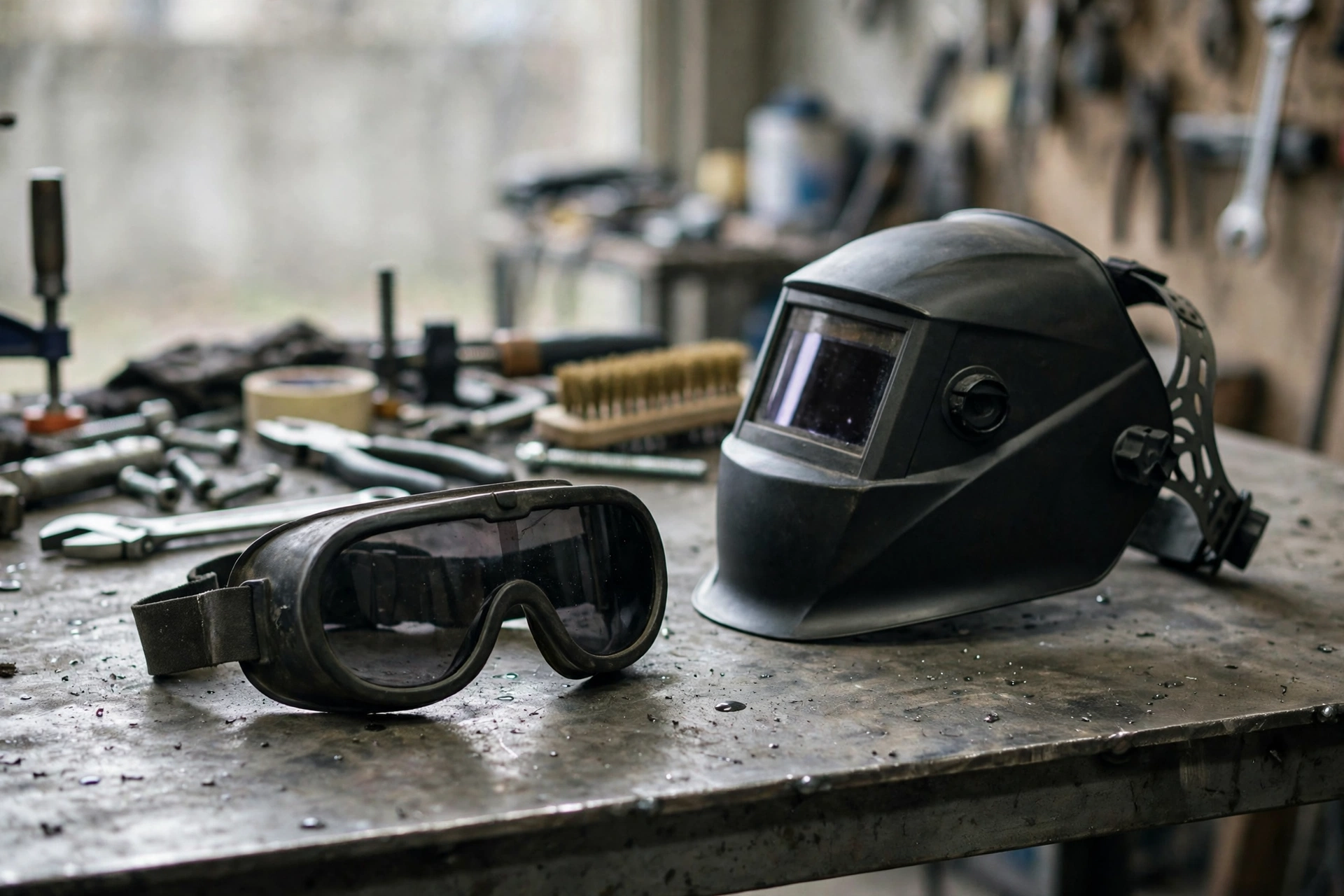
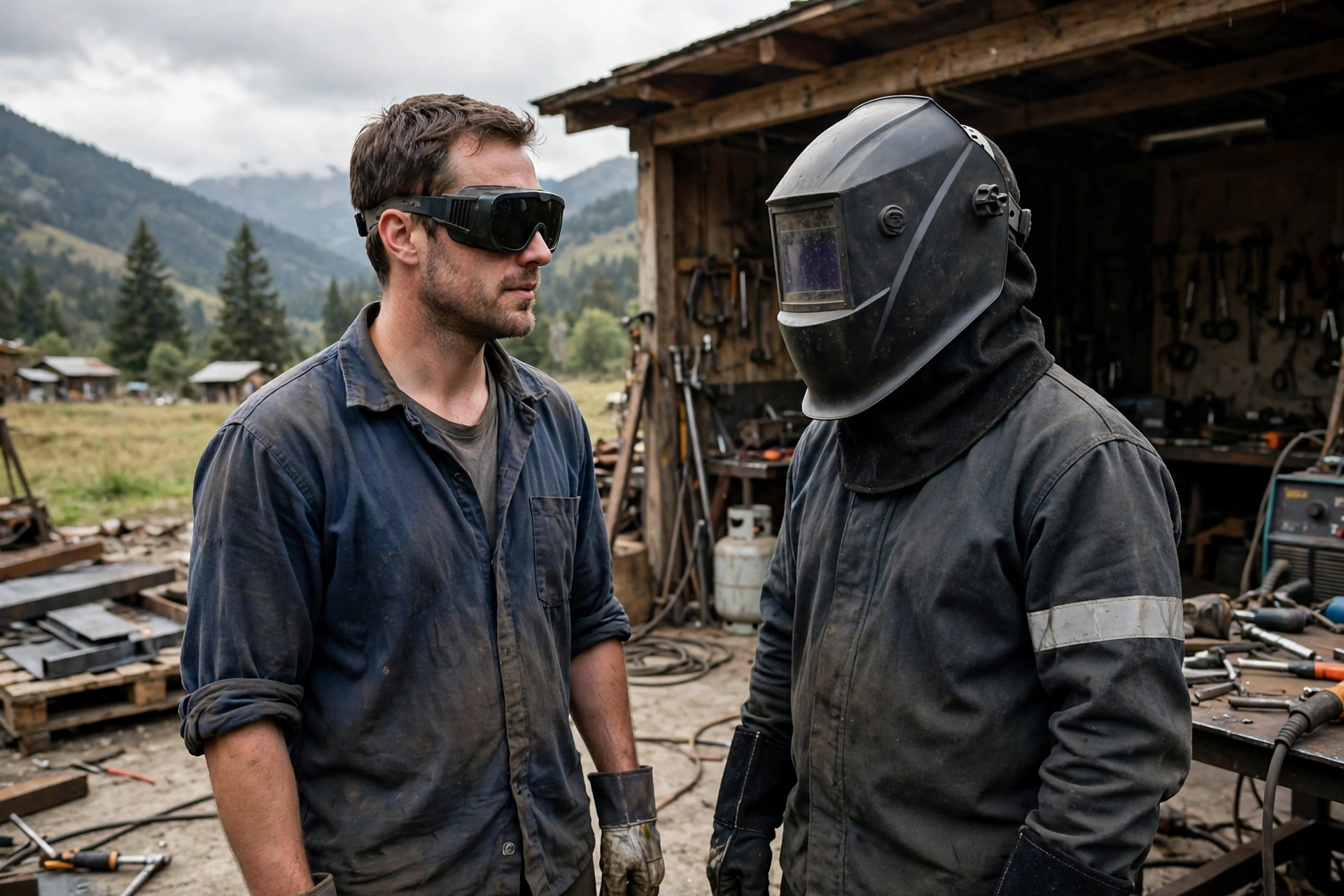
Welding goggles are, in essence, dark-lensed eye protection in a sealed or semi-sealed frame. Their shade filter guards your eyes against the intense light, ultraviolet and infrared of the work in front of you. That is where their protection stops: your cheeks, forehead, chin, neck and ears remain fully exposed to the same radiation and to flying spatter and sparks.
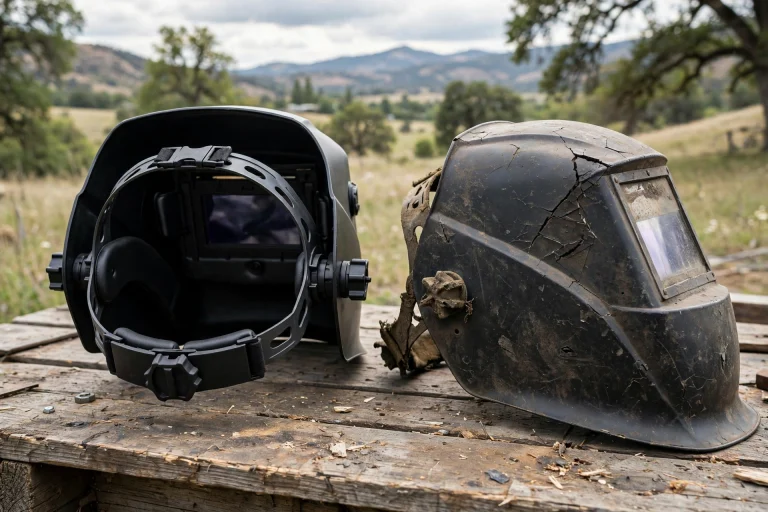
A welding helmet extends the shield to cover the entire face and, on most designs, the sides of the head and the top of the neck. That coverage prevents the painful “sunburn” arc exposure causes on unprotected skin, stops spatter burns on the face and ears, and gives better protection from grinding debris when you flip between tasks. Modern helmets also carry the auto-darkening filters and larger viewing areas that most welders now take for granted.
The eyes-versus-face distinction is the whole story. Radiation does not know which body part it hits. If the arc is in front of you, everything facing the arc needs shielding, and goggles only shield two small circles of it.
When Are Welding Goggles a Reasonable Choice?
Goggles earn their keep where a helmet physically cannot go. Welding or inspection work inside boilers, tanks, pipe runs and other confined spaces sometimes leaves no room for a full hood, and in general terms goggles — used with the other protective coverage described below — are the practical answer there. They are also handy for quick tack-and-check work where a helmet is being shared or is genuinely in the way.
The traditional goggle territory is gas work: oxy-fuel welding, brazing and cutting with the correct lighter shade for the process. These flames are far less intense in ultraviolet terms than an electric arc, and goggle-style protection with the right shade has long been the standard kit for them. Some plasma cutting and torch work is also commonly done in goggles or a shaded face shield, following the equipment maker’s guidance.
Goggles are also popular as a second layer: some welders wear safety glasses or goggles under a helmet for the moments the hood is up while chipping or grinding. That layered habit protects eyes during the in-between tasks when many eye injuries actually happen.
When Is a Helmet Non-Negotiable?
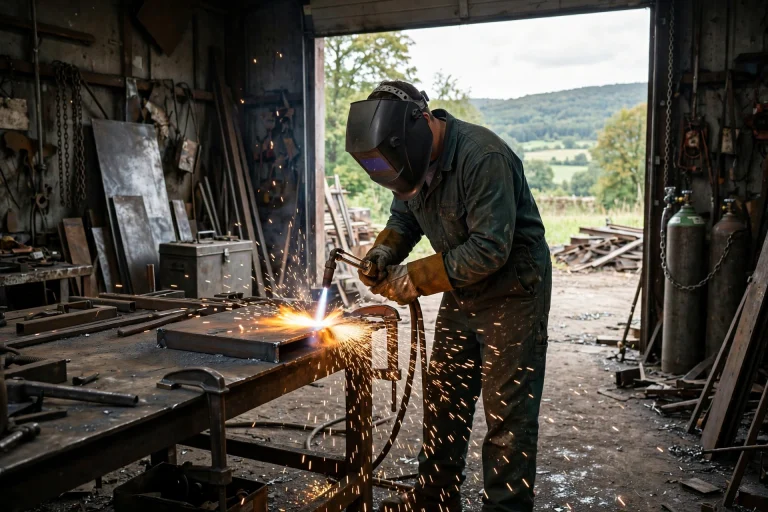
Stick, MIG and TIG welding — the arc processes most people mean by “welding” — call for a helmet. The arc is intensely rich in ultraviolet, spatter flies unpredictably, and a serious session can leave exposed skin burned in a surprisingly short time. In general terms, a helmet is considered the standard protection for arc welding, and workshops and training programs equip welders with helmets for exactly this reason.
Position matters too. Welding overhead, out of position, or anywhere sparks and slag can rain down makes face and neck coverage essential rather than optional. A helmet also stays put and hands-free; goggle straps can slip, and a moment of readjusting goggles mid-weld leaves eyes and skin exposed at the worst time.
Duration is the final factor. A thirty-second tack with correct eye protection is one thing; an afternoon of production welding is another. The longer the arc time, the more the cumulative skin exposure adds up, and the stronger the case for full helmet coverage becomes.
What Else Do You Need If You Wear Goggles?
Because goggles leave skin exposed, goggle users need to build the missing coverage from other gear. In general terms, that means a face shield or a protective hood or balaclava arrangement to shield the face and neck, plus the usual welding clothing: a flame-resistant jacket or sleeves, gloves, and coverage for the top of the head. A standard clear face shield worn over shaded goggles is a common combination for cutting and grinding-type work, since the shield stops flying debris while the goggles supply the shade.
Ears are easy to forget and commonly burned. If your setup leaves ears exposed to the arc, cover them — a welding cap or hood that comes down over the ears makes a real difference, and it also stops the classic problem of a spark finding its way into an ear canal while you work overhead.
The honest summary is that once goggles are properly supplemented, the setup is no longer obviously simpler or lighter than a helmet. For most people, most of the time, the helmet remains the easier route to complete coverage — which is why it is the default in nearly every shop.
How Do You Decide for the Work You Actually Do?
Start with the process. Arc welding points to a helmet; gas welding, brazing and lighter cutting work can suit goggles with the right shade and supplementary face coverage. Then look at the space: if the work is in a genuinely confined spot where a hood will not fit, goggles plus coverage may be the only workable answer.
Then be honest about duration and position. Long sessions, overhead work and heavy spatter all push toward the helmet. Short, low-intensity tasks in awkward spaces are where goggles hold their value. Many experienced welders simply own both: a good auto-darkening helmet as the daily standard, and goggles in the toolbox for the gas torch and the tight-access jobs.
Whichever you choose, the shade must match the process and the fit must be secure. Eye protection that slips, fogs or shades incorrectly will be taken off — and protection sitting on the bench protects nothing.
The same principle runs through all head protection: coverage and certification come first, comfort decides whether you actually wear it. It is the thinking behind modern riding helmets too, where understanding what MIPS is and how it works matters far less than choosing a helmet that genuinely covers and fits your head. Match the protection to the hazard in front of you, and the gear will do its job.
Frequently Asked Questions
Q: Can I arc weld in goggles if I wear sunscreen?
A: No. Sunscreen is not rated protection against arc ultraviolet and does nothing against spatter burns. Arc welding calls for solid physical coverage of the face and neck, which is what a helmet provides.
Q: Are shaded safety glasses the same as welding goggles?
A: No. Ordinary tinted safety glasses are far too light for welding and do not carry the proper filter shade. Only goggles fitted with the correct welding shade for your process count as welding eye protection.
Q: Do I need a helmet for plasma cutting?
A: Many cutters use a helmet or a shaded face shield, since cutting throws sparks and the arc is bright. Follow your cutter maker’s shade guidance, and make sure your face is covered as well as your eyes, especially for longer cuts.

Olivia
Writer at Helmet Today, covering helmet reviews, fit and riding safety.