The difference between an ATV helmet and a dirt bike helmet is smaller than most riders expect: a dirt bike (motocross) helmet is built for high-exertion, high-speed riding with maximum airflow and a large eyeport for goggles, while a helmet sold for ATV use is essentially the same off-road design — the real differences are in ventilation, weight and features, not in a separate ATV-only standard. In general terms, most ATV riders wear a motocross-style helmet, and it is the right tool for both machines.
Confusion comes from the labels. Shops sell “ATV helmets” and “dirt bike helmets” side by side, often in the same style, which raises the obvious question of what actually separates them. Here is how they compare and how to choose.
Are ATV Helmets and Dirt Bike Helmets Built Differently?
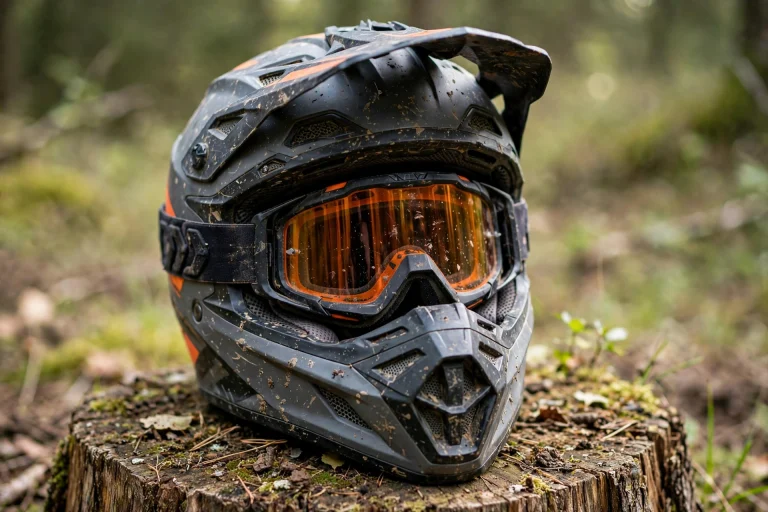
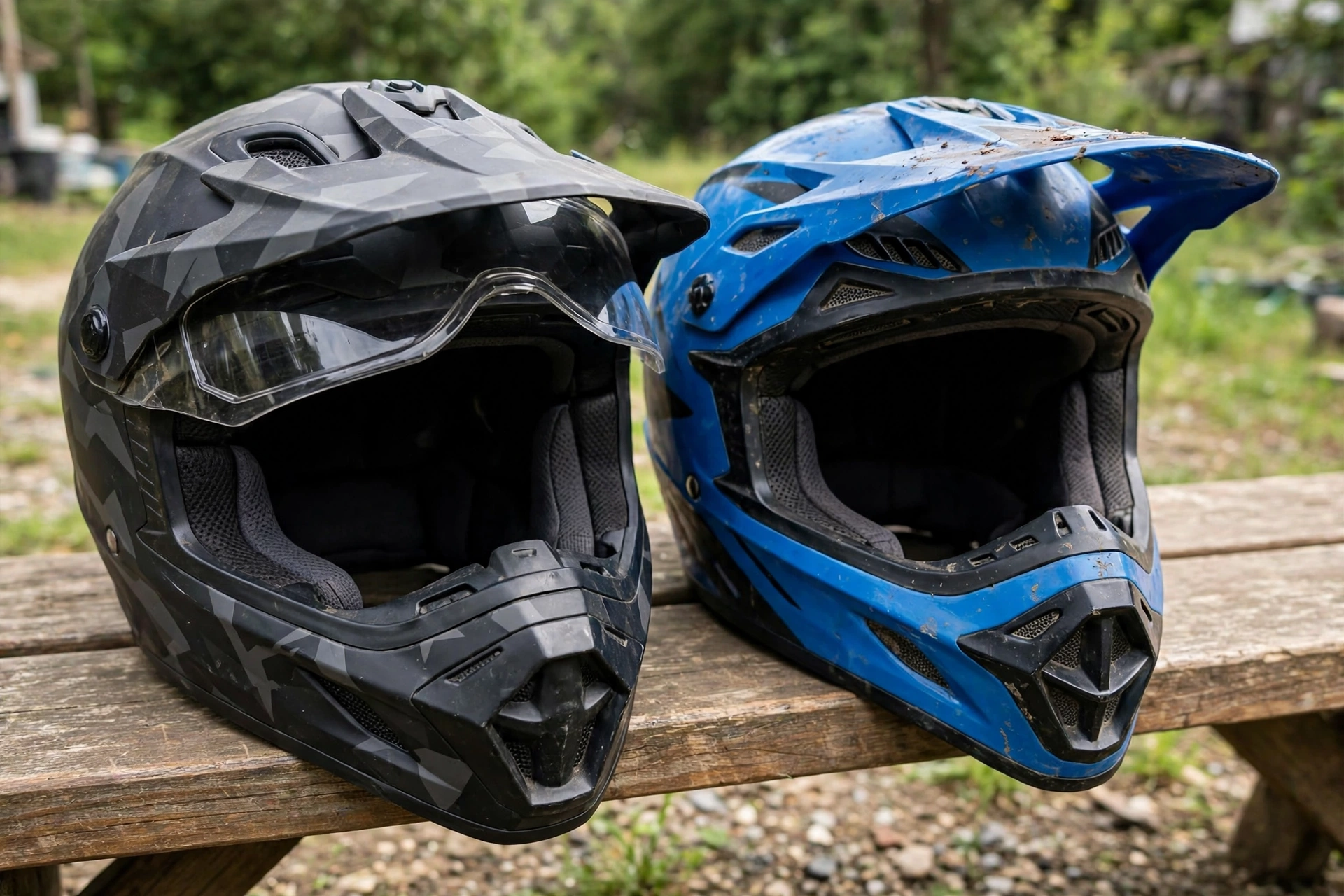
In construction, barely. Both are full-face off-road helmets with an extended chin bar, a peaked visor, a wide eyeport sized for goggles, and no built-in face shield. Both are built around a hard shell and an energy-absorbing foam liner, and in general terms both are certified to the same on- and off-road helmet standards rather than separate ones for each vehicle.
Where they can differ is emphasis. A pure motocross helmet is designed for a rider who is working hard — standing, moving, breathing heavily — at widely varying speeds, so it pushes airflow and light weight hard. A helmet marketed for ATV riders may trade a little of that race focus for comfort features, a slightly quieter ride, or styling aimed at trail and utility riders.
Think of them as the same family with different tuning, not different categories of protection.
How Do Ventilation and Weight Compare?
Motocross helmets usually have the most aggressive venting: big open ports, minimal sealing, and a liner designed to move air because a racing rider generates a lot of body heat. The cost is more dust, noise, and cold air getting in — fine on a track, less welcome on a slow, dusty trail.
ATV riding is often slower and longer: trail cruising, farm work, hunting access, and stop-start riding where you are not working as hard physically. Helmets aimed at this use sometimes have vents you can close, a slightly more sealed fit, and comfort padding suited to hours in the saddle rather than a twenty-minute moto.
Weight follows the same pattern. Race helmets chase the lightest shell; ATV-oriented helmets may be a touch heavier in exchange for features. Over a long day, fit and balance matter more than the small difference on the scale.
Can You Use a Dirt Bike Helmet on an ATV?
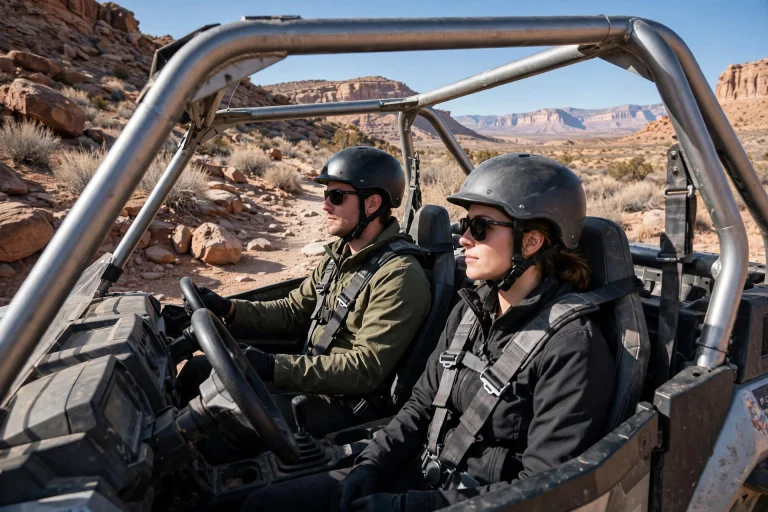
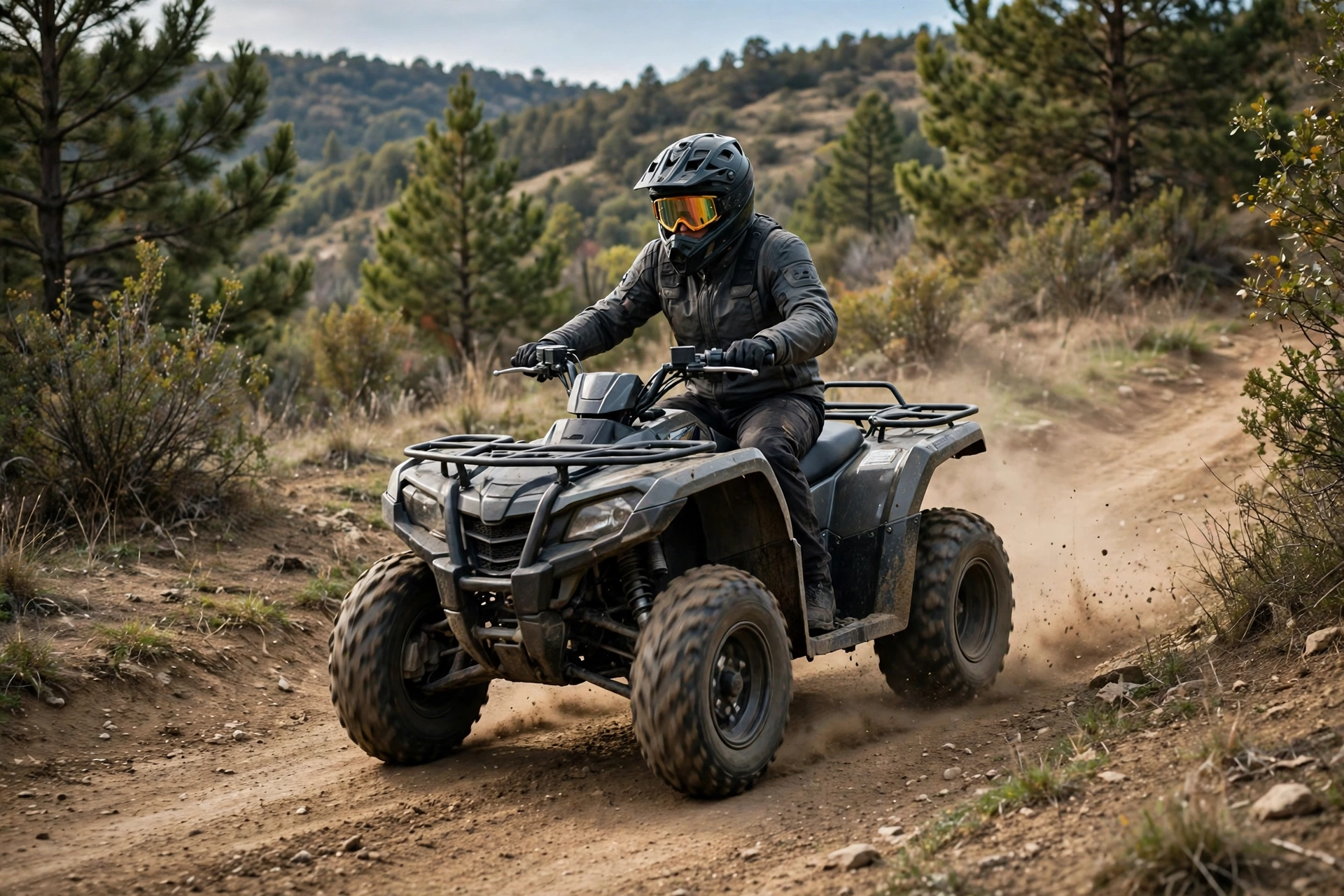
Yes — and most ATV riders do exactly that. A certified motocross helmet is a completely sensible choice for ATV riding, because the riding positions, speeds, and hazards (falls, roost, branches, rollovers) overlap heavily between the two machines.
The reverse is also true: a helmet sold for ATV use is fine on a dirt bike, provided it fits well and is certified. What matters in both directions is the fit on your head, the certification on the label, and that the helmet is in sound condition — not which vehicle is pictured on the box.
The only real mismatch is comfort tuning. A very open race helmet can be cold and dusty on winter trail rides, and a heavily comfort-focused helmet can feel hot in a summer moto. Match the features to how you actually ride most of the time.
What About Dedicated ATV and Dual-Sport Alternatives?
Some ATV riders choose different formats entirely. Open-face helmets appear on slow utility and farm work, though they give up chin and face protection. Dual-sport (adventure) helmets add a flip-up face shield over the off-road shape, which helps for riders who mix gravel roads with trails and want eye protection without goggles.
Modular helmets, whose chin bar flips up, are another road-biased option some UTV and ATV tourers like for talking and cooling down at stops. Each of these trades some off-road purity for convenience, and the right pick depends on speed, terrain, and how much face protection you want.
Whatever the format, look for sound construction and energy management. Features like rotational-impact liners such as MIPS appear across motocross, ATV and dual-sport helmets alike, because the angled falls that twist the head happen on every kind of off-road machine.
Which One Should You Buy for ATV Riding?
Start with a certified full-face off-road helmet that fits your head shape snugly — that single decision covers most riders on both machines. Then tune by your riding: mostly slow trails and work use, choose comfort, closable vents, and easy cleaning; faster, harder riding, choose the lighter, freer-breathing motocross end of the range.
Do not pay for a label. If two helmets are both certified, fit equally well, and one is called “ATV” while the other is called “motocross,” the difference is marketing and small features, not safety. Buy the one whose venting, weight, and price suit your riding.
Plan on goggles either way: neither style normally includes eye protection, and a good pair of goggles that fit the eyeport is part of the helmet purchase, not an extra.
One more practical difference worth knowing is sizing and head shape. Motocross lines often come in more shell sizes and a racier, narrower fit because small fit differences matter at race pace, while ATV-oriented lines sometimes run a more relaxed fit aimed at all-day trail comfort. Neither is better in the abstract — the better helmet is the one whose internal shape matches your head, with no pressure points and no looseness at the crown. Try both styles on if you can, wear each for several minutes in the shop, and let your head, not the category label, make the final call.
Frequently Asked Questions
Q: Is there a separate safety standard for ATV helmets?
A: In general terms, no separate ATV-only standard exists for these helmets — ATV and dirt bike helmets are certified to the same familiar road and off-road helmet standards. Check the certification label inside the helmet, whichever style you buy.
Q: Why do ATV helmets have a peak, like motocross helmets?
A: The peak (sun visor) blocks sun glare and deflects roost — the mud and stones thrown up by the machine ahead — and it is part of the shared off-road design both helmets use.
Q: Can I wear a street motorcycle helmet on my ATV instead?
A: You can, and it protects well, but a smooth street helmet has no peak, a smaller eyeport with a shield that can fog and dust up off-road, and venting tuned for speed. Most trail riders prefer the off-road design for dust, airflow, and goggles.

Olivia
Writer at Helmet Today, covering helmet reviews, fit and riding safety.