Yes, ATV helmets do expire. The foam liner inside the shell slowly ages, hardens, and loses its ability to absorb impact, even if the helmet has never been crashed. In general terms, most makers treat a helmet as a wear item with a service life of several years from first use, and a helmet that is well past that point, or showing visible wear, should be replaced rather than trusted.
ATV helmets live a hard life: dust, mud, sweat, heat, and sun all work on the materials every ride. This guide explains why helmets age, how to spot one that is past its best, and how to get the most life out of the helmet you own.
Why Do ATV Helmets Expire Over Time?
The protective heart of an ATV helmet is its energy-absorbing liner, usually made of expanded polystyrene foam. That foam is designed to crush in a crash and soak up energy before it reaches your head. Over time, the foam can become brittle and less able to compress, which quietly reduces the protection it offers.
The rest of the helmet ages too. The comfort padding compresses and stops holding the helmet snug, straps fray and stretch, and the shell itself can be weakened by years of ultraviolet exposure, heat in a garage or truck bed, and contact with fuel, solvents, and cleaning chemicals. None of this happens on a single fixed date, which is why “expiry” is really about condition and age together.
Off-road use speeds the process up. An ATV helmet that is ridden in every weekend, dropped on tailgates, and left in the sun will age faster than one used a few times a year and stored indoors.
What Are the Signs an ATV Helmet Is Too Old?
Fit is the first clue. If a helmet that once sat snug now feels loose, rocks side to side, or lifts at the back, the comfort liner has compressed and the helmet no longer sits where it should. A loose helmet can shift or come off in a roll, so looseness alone is a good reason to replace it.
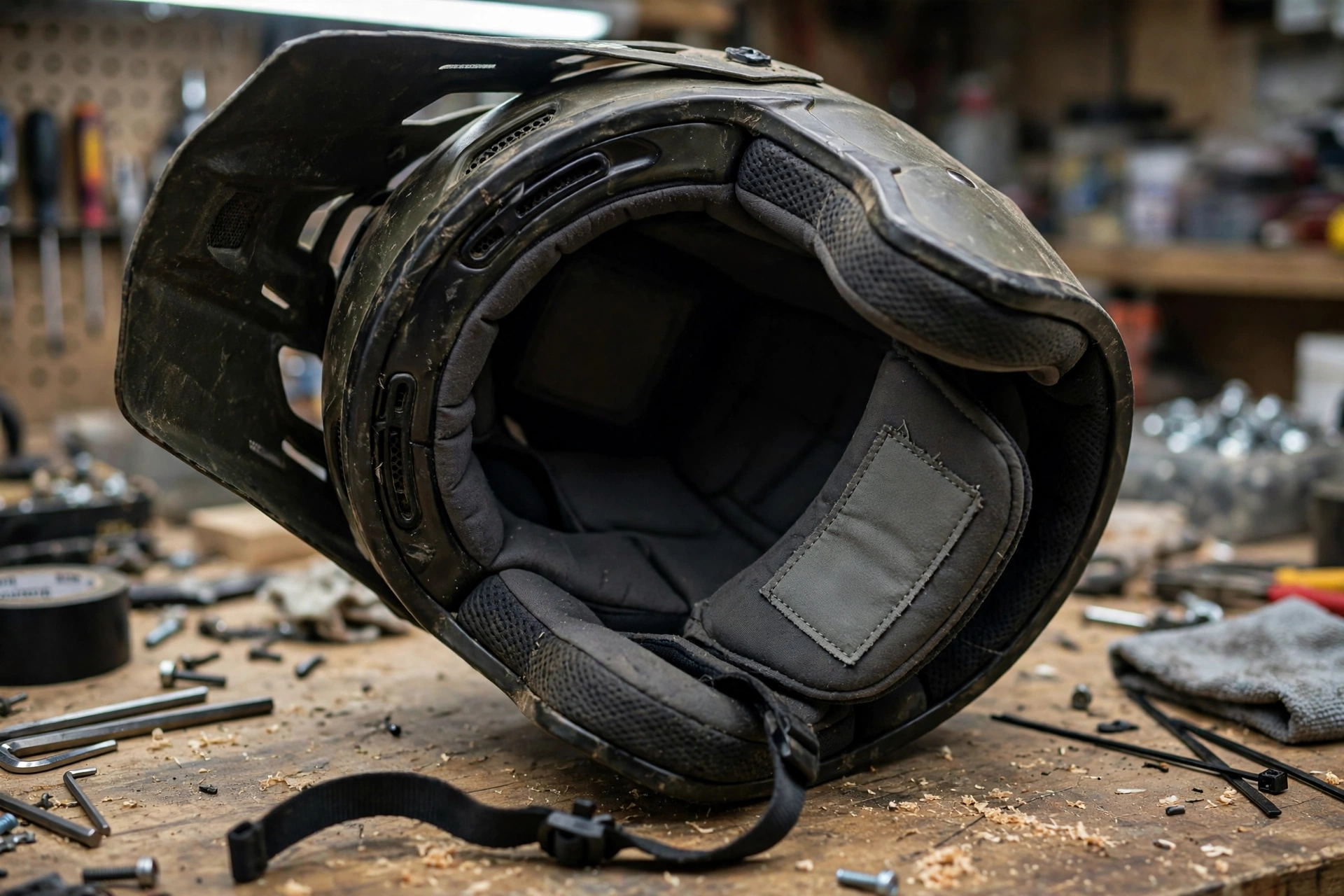
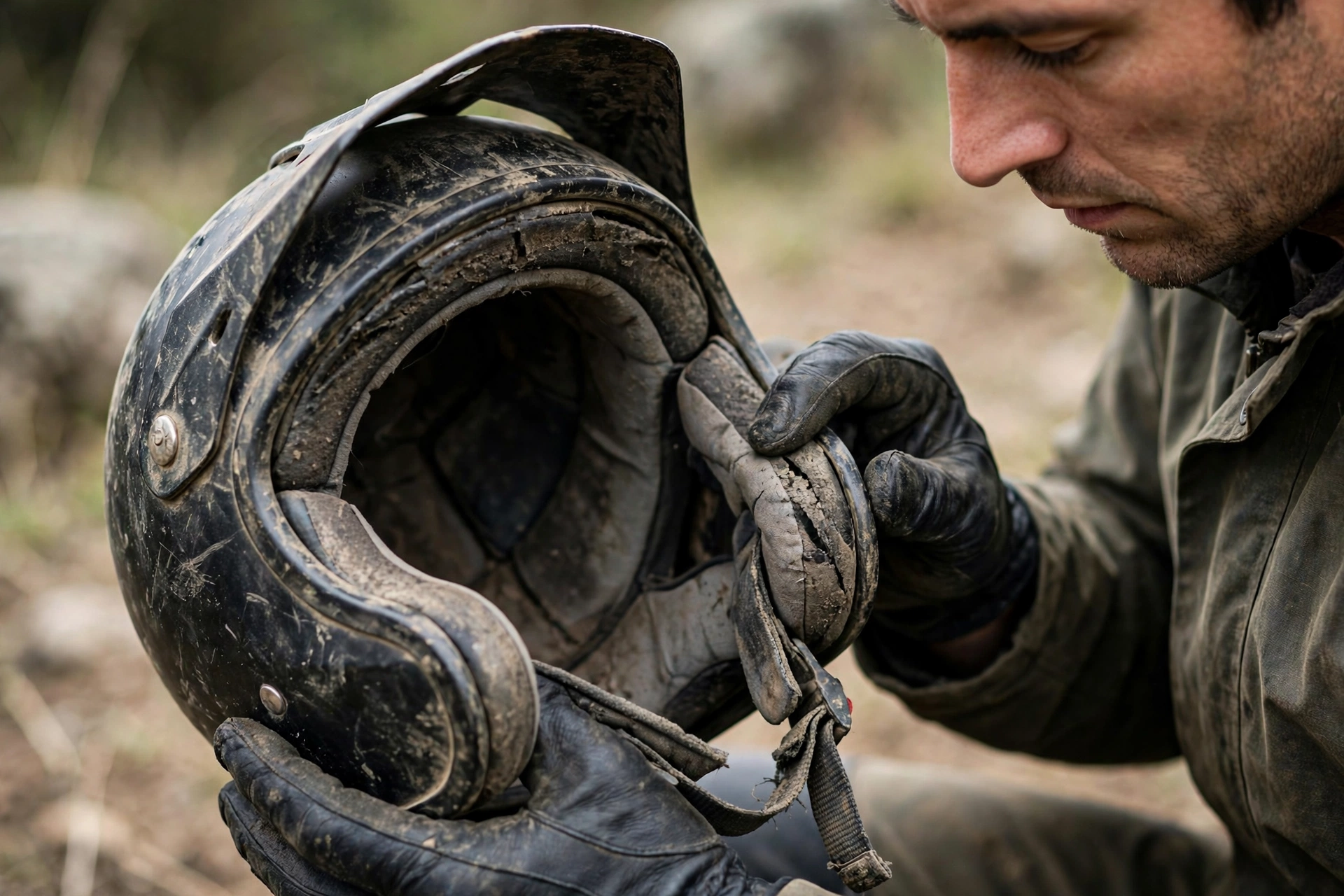
Visible damage is the second clue. Look for cracked or brittle foam under the comfort liner, flaking or chalky liner material, frayed straps, a damaged or stiff buckle, and cracks or deep gouges in the shell. Faded, brittle plastic on vents and peaks also suggests the materials have aged.
The third clue is history. Any helmet that has taken a real impact — a crash, a roll, or a hard drop onto concrete — should be replaced even if it looks fine, because the foam may have crushed in one spot without showing it.
Does an ATV Helmet Expire If It Just Sits in Storage?
Mostly, yes — just more slowly. Foam and plastics age with time and environment even when a helmet is never worn. A helmet stored for many years in a hot garage, in direct sunlight, or near fuels and solvents will not be the same helmet it was when it was put away.
Storage conditions make a real difference. A helmet kept indoors, in a cool, dry, dark place, away from chemicals, will hold its condition far longer than one baked in a shed. When you pull an old helmet out of storage, judge it by the checks above — fit, foam condition, straps, shell — rather than assuming it is fine because it was barely used.
If you cannot remember how old a stored helmet is, that is itself a signal to be cautious. A helmet of unknown age and history is hard to trust with your head.
How Can You Make an ATV Helmet Last Longer?
Store it properly: indoors, out of direct sun, away from heat sources, fuel, and solvents, ideally in its bag or on a shelf rather than hanging by its strap or sitting on a hot dashboard. How a helmet is stored between rides does a lot to decide how long it stays sound.
Keep it clean the gentle way. Sweat, mud, and dust break down padding and straps over time, so wash removable liners as the maker directs, wipe the shell with mild soap and water, and let everything dry fully before storage. Avoid harsh solvents and petroleum-based cleaners on the shell and foam.
Handle it like protective equipment, not luggage: do not drop it, sit on it, or use it as a bucket for gloves and tools. Small knocks add up, and the helmet that is treated carefully is the one that reaches the end of its natural service life instead of an early one.
When Should You Replace an ATV Helmet Instead of Keeping It?
Replace it when any of the warning signs appear: a loose fit that new padding does not fix, cracked or brittle foam, damaged straps or buckle, shell cracks, or any known impact. Replace it also when it is simply old in general terms — several seasons of regular use — even if it still looks presentable, because liner ageing is not always visible.
When you shop for the replacement, look beyond age ratings to how the helmet manages impact energy. Modern liners and systems such as rotational-impact liners like MIPS are designed to reduce the twisting forces that reach your head in an angled crash, and a fresh, well-fitting certified helmet is cheap insurance next to the riding you do on it.
The honest rule is simple: if you find yourself wondering whether an old helmet is still good enough, it has usually already answered the question.
Frequently Asked Questions
Q: How many years does an ATV helmet last?
A: In general terms, makers commonly suggest replacing a helmet after several years of use, often around five, sooner if it is crashed, damaged, or no longer fits snugly. Condition matters more than the calendar alone.
Q: Can I keep using an ATV helmet after a crash if it looks fine?
A: No. The foam liner is designed to crush once to absorb energy, and that damage is often hidden under the shell. A crashed helmet should be retired and replaced.
Q: Does a helmet expire from the date it was made or the date I start using it?
A: Mainly from use and storage conditions, though materials age slowly on the shelf too. A helmet stored for years in heat or sunlight should be inspected carefully and judged by its fit and foam condition before you trust it.

Olivia
Writer at Helmet Today, covering helmet reviews, fit and riding safety.