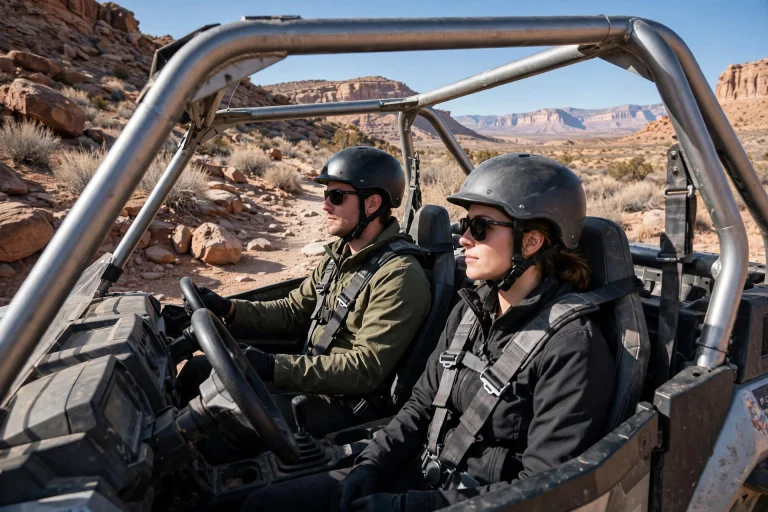
To stop dust getting inside your ATV helmet, attack it at the three places it enters: seal your goggles properly against the eyeport, close or filter the helmet’s open vents and chin area, and add a dust mask or neck gaiter under the helmet so the air you breathe is filtered too. Dust will always be part of trail riding, but with the seal, the vents, and your own breathing covered, the inside of the helmet stays dramatically cleaner.
Anyone who has finished a ride with gritty eyes, a dry throat, and a brown outline of their goggles on their face knows the problem. Here is where the dust gets in, and what actually works against it.
Why Does So Much Dust Get Inside an ATV Helmet?
Off-road helmets are designed to breathe. The open eyeport, the large chin bar area, and generous venting that keeps a working rider cool also give dust an open invitation — and unlike a street helmet, there is no shield or seal to close the system off.
Riding conditions do the rest. Your own front tires throw up a constant stream of fine dust, the machine ahead adds its plume, and at trail speeds the low-pressure swirl behind your helmet pulls dusty air in around the neck roll and up under the chin bar. Fine dust behaves almost like smoke: it finds every gap.
That is why no single trick fixes it. The riders who stay cleanest treat dust as a sealing problem across the whole helmet, not a matter of one product.
How Do Goggles and Fit Stop Most of the Dust?
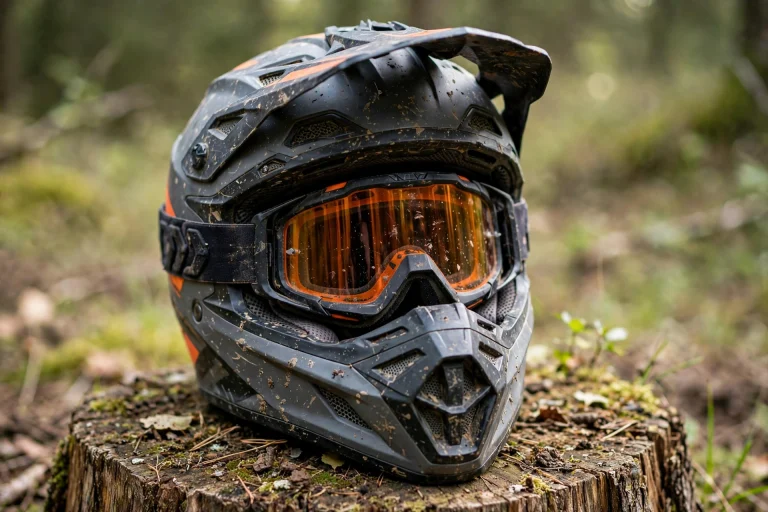
The biggest single entry point is the eyeport, and the fix is a proper goggle seal. The goggle foam must press evenly against your face all the way around, inside the eyeport, with the strap tensioned around the helmet rather than over it. Any gap at the nose or corners becomes a dust jet aimed at your eyes.
Helmet fit matters too. A helmet that is too big rocks on your head, breaking the goggle seal and opening the neck gap with every bump. A snug, correctly sized helmet stays put, keeps the seal, and keeps the bottom edge close to your neck and shoulders where a gaiter can close the remaining gap.
Check the combination before the ride, not during it: helmet on, strap fastened, goggles on and seated, then look for daylight and feel for gaps around the frame. Replace goggle foam that has gone flat or torn — a worn seal leaks dust no matter how good the helmet is.
What Can You Do About Vents and the Chin Area?
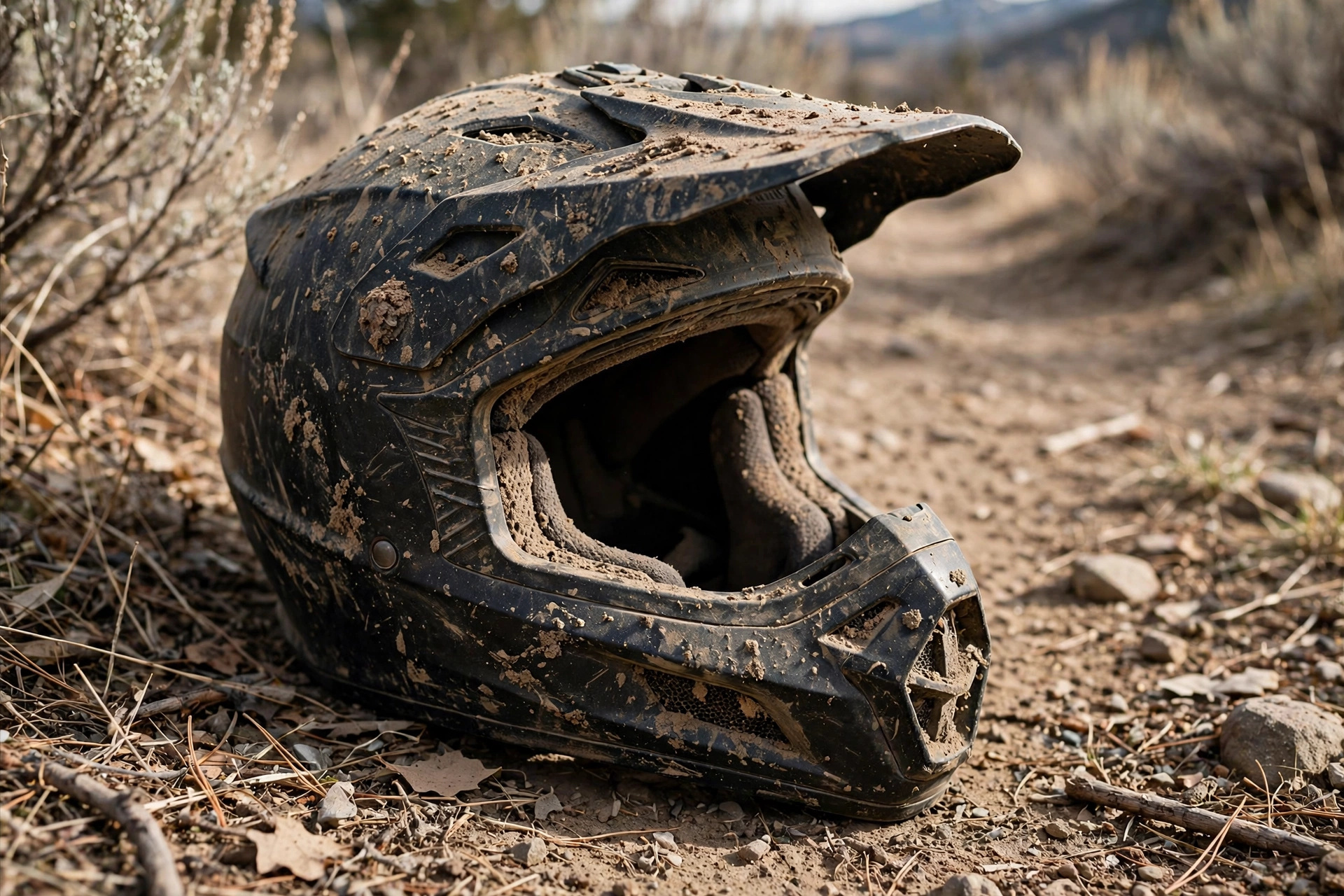
Start with the vents. Many off-road helmets have fixed open venting with foam behind it; that foam is a coarse filter, and keeping it clean keeps it working — a vent clogged with caked dust both stops cooling air and lets fine particles sift through. Some helmets offer closable vents, and shutting the top vents in the worst dust sections makes a noticeable difference, at the cost of some cooling.
The chin area is the other big opening. A chin curtain — a fabric or mesh piece across the bottom of the chin bar — cuts the updraft of dust from below, and some off-road helmets include or accept one. A breath box or deflector that routes your breath down and away also reduces the dusty air swirling up into the goggles.
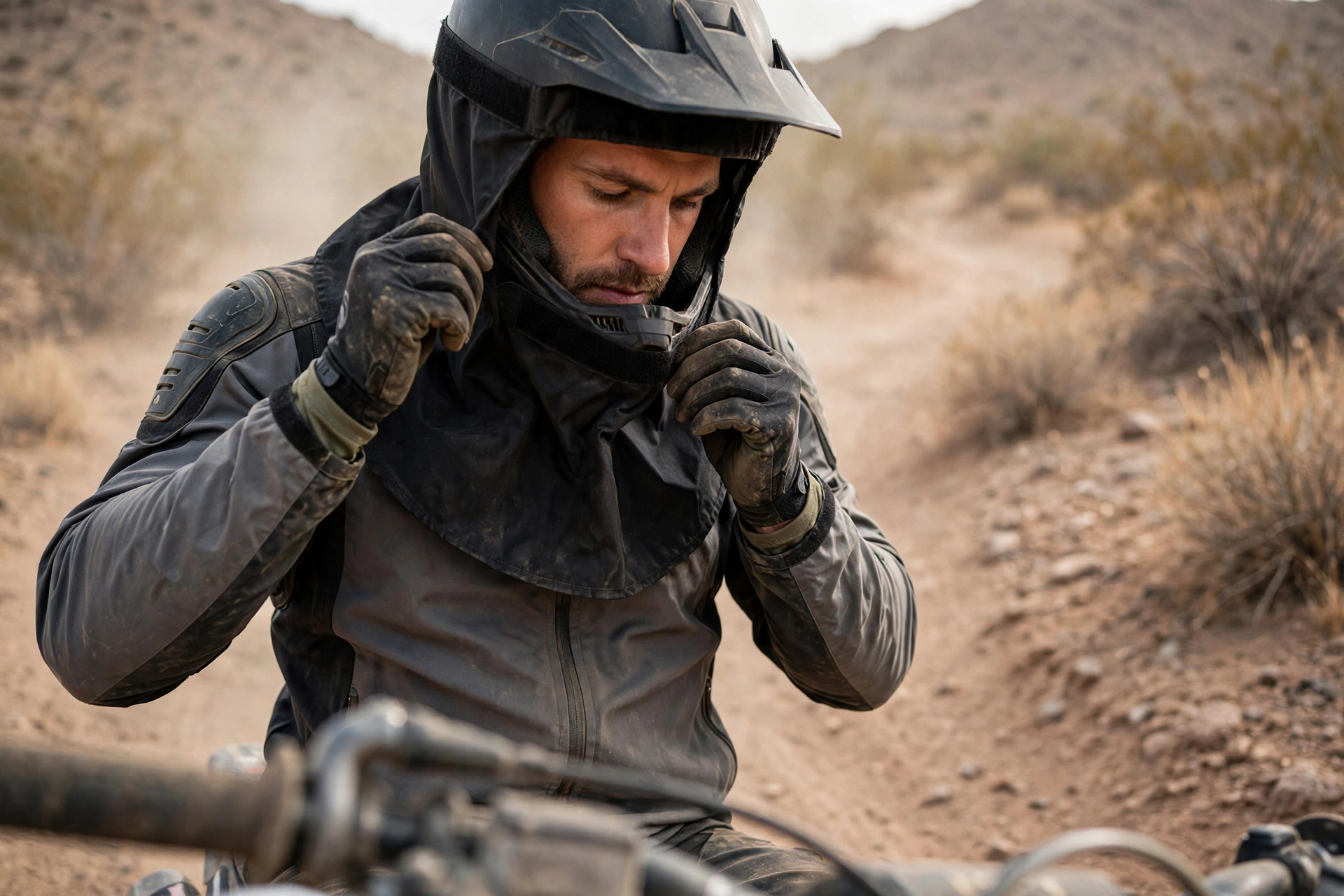
Under the helmet, a simple dust mask, bandana, or neck gaiter pulled up over your nose and mouth filters what you breathe and blocks the neck gap in one move. It is the cheapest upgrade on this list and many desert and trail riders consider it essential kit, with the bonus of sun protection for your neck.
How Do Riding Habits and Cleaning Help?
Position is free protection. In a group, the dust is worst directly behind another machine, so offsetting your line, dropping back out of the plume, and avoiding the center of a silty track all reduce what reaches your helmet in the first place.
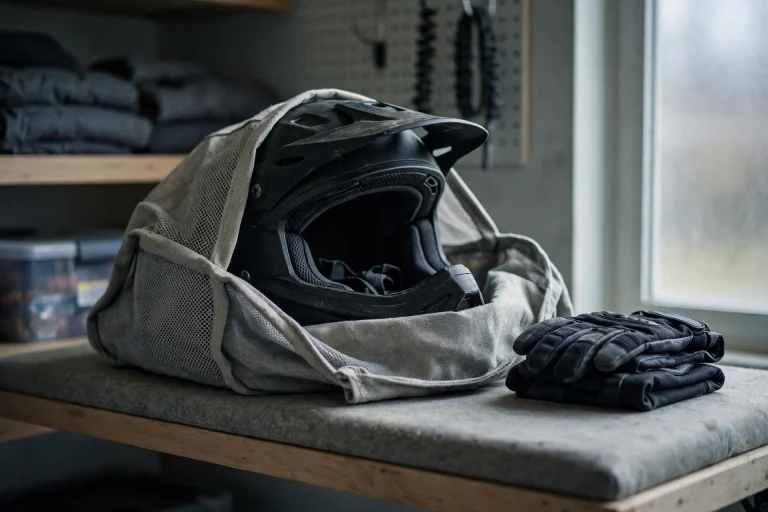
Stopping habits help more than riders expect. When the group halts in dusty country, the air stays full of fine particles for a while — keep your goggles on and your gaiter up until it settles, rather than pulling everything off the moment the engine stops. If you do take the helmet off at a stop, set it somewhere clean with the opening facing down, so dust does not settle into the liner while it sits. And put the helmet back on before the group moves off, not after the first machine has already thrown its plume over you: the dustiest seconds of any ride are the starts, stops, and regroups, and they are exactly when protective habits tend to lapse.
After the ride, empty the helmet out. Shake and tap out loose dust, vacuum the liner gently, wash removable padding as directed, and clean the vent foam and goggle foam so the seals work next time. Dust left in the foam grinds away at seals and comfort padding, so regular cleaning is part of keeping dust out, not just tidiness.
Treat the whole setup as one system: fit, seal, filters, and cleaning. It is the same mindset that applies to the helmet’s crash protection — everything works as designed only when it fits and is maintained, which is exactly why systems like rotational-impact liners such as MIPS are paired with careful fit checks. Dust sealing rewards the same attention to detail.
Frequently Asked Questions
Q: Will a full-face helmet with a shield keep dust out better?
A: Somewhat — a shield closes the eyeport, but dust still enters around the neck and through vents, and the shield fogs and coats with dust off-road. Sealed goggles plus a gaiter usually beat a shield in genuinely dusty conditions.
Q: My eyes still get gritty even with goggles. What is wrong?
A: Usually the seal: worn or compressed goggle foam, a frame that does not match your helmet’s eyeport, or a helmet loose enough to break the seal as it moves. Check for gaps with the helmet on, and replace tired foam or mismatched goggles.
Q: Is breathing trail dust actually harmful?
A: In general terms, long days breathing fine dust is hard on your throat and lungs and no fun at all, which is why experienced riders wear a mask or gaiter. If you ride in very dusty conditions often, a proper dust mask under the helmet is a sensible habit.

Olivia
Writer at Helmet Today, covering helmet reviews, fit and riding safety.