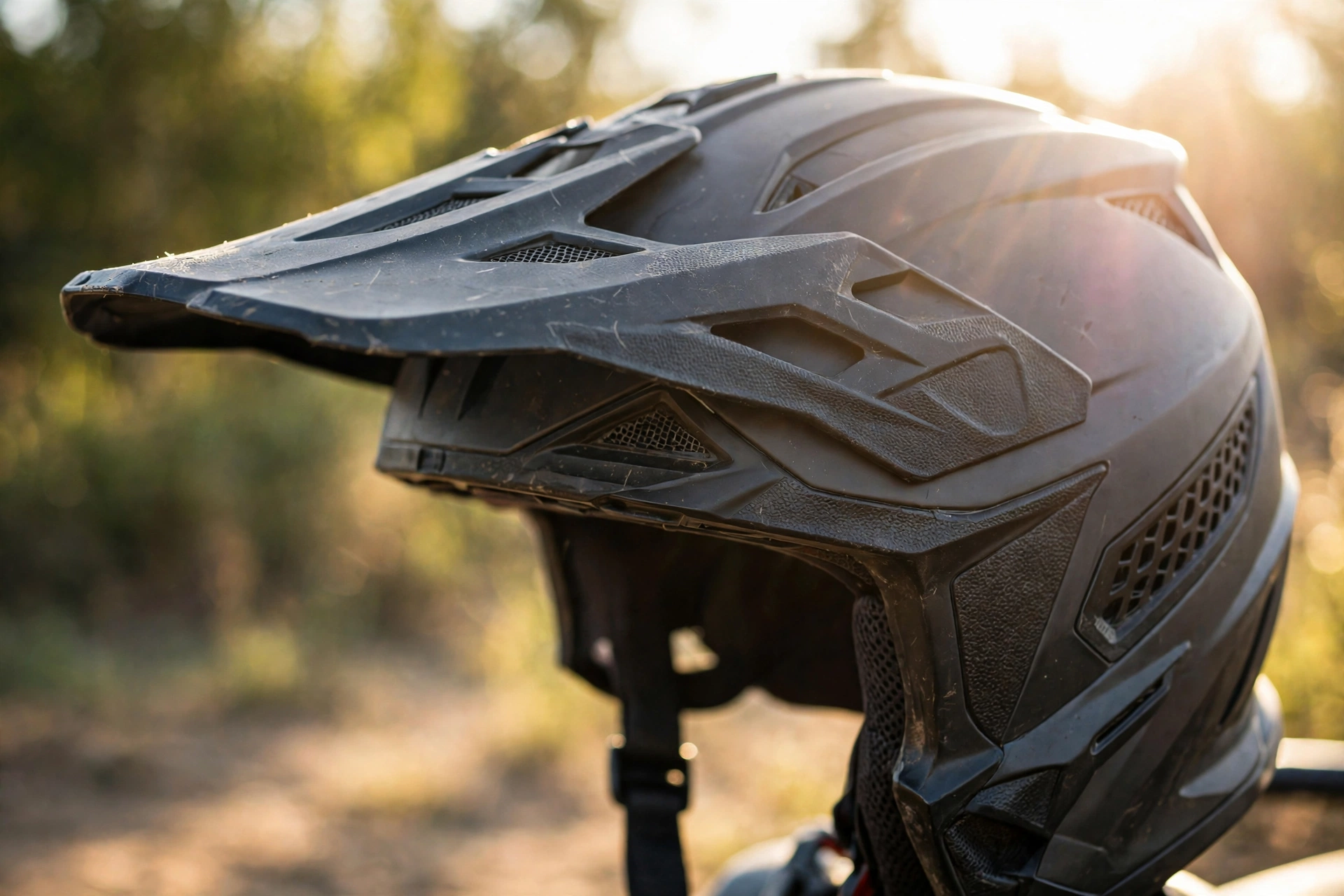
The peak visor on an ATV helmet does three jobs: it shades your eyes from the sun like the brim of a cap, it deflects roost — the mud, stones and dirt thrown up by the machine ahead of you — and when you dip your head it helps shield your goggles from rain and spray. It is not decoration; it is one of the defining working parts of the off-road helmet design, and riding without it on a bright, dirty trail quickly shows why it is there.
Riders sometimes ask whether the peak can come off, why it is shaped the way it is, and whether it causes problems at speed. Here is what the peak actually does and how to live with it.
How Does the Peak Block Sun and Glare?
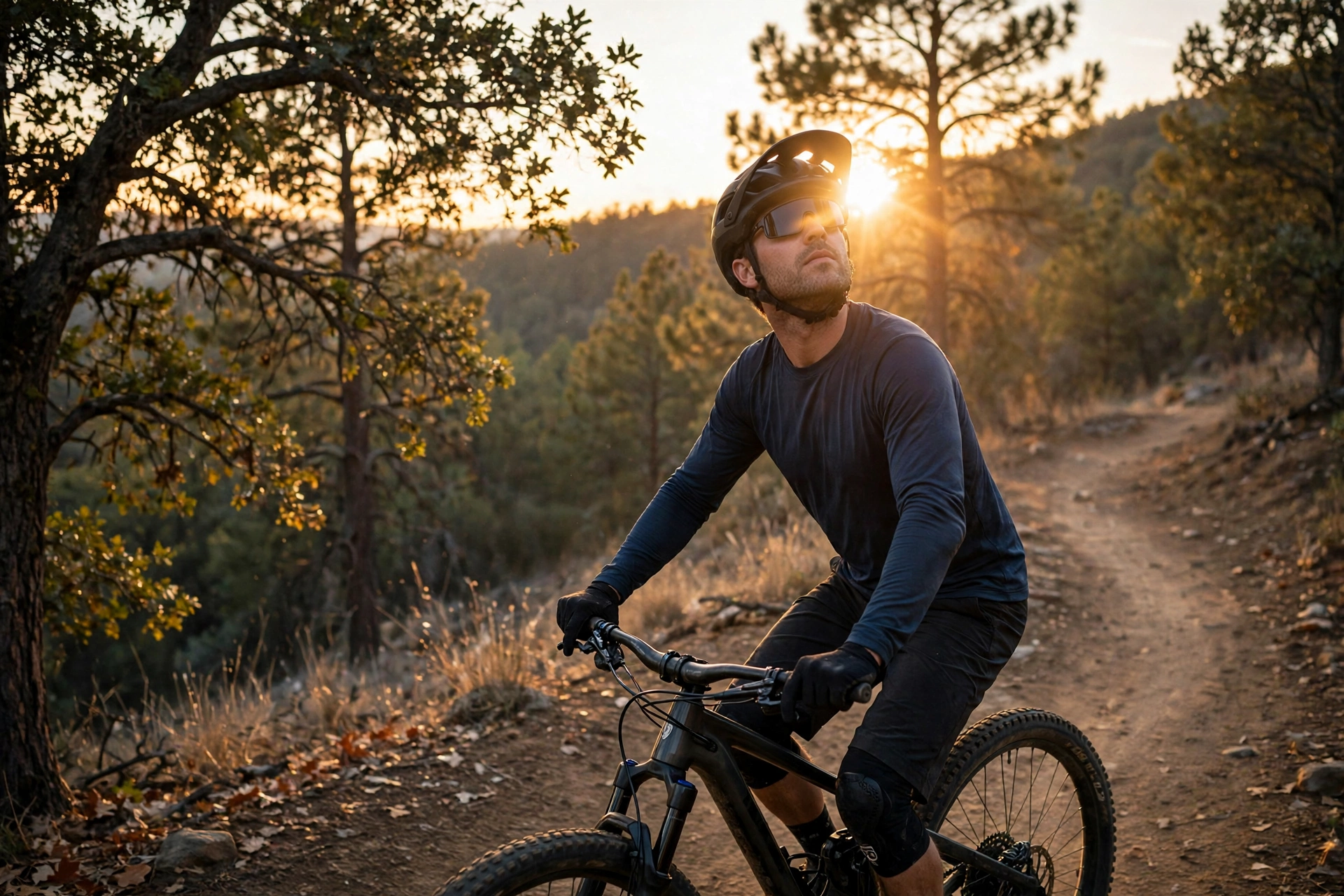
The sun job is the simplest: the peak extends forward above the eyeport and casts a shadow over your eyes and goggles, exactly as a cap brim does. On trails that run in and out of tree cover, and on early or late rides when the sun sits low, that shade is the difference between reading the trail and squinting into glare.
Riders use it actively. A small dip of the head brings the peak down to cut a band of low sun out of your view, a technique off-road riders use constantly on climbs and open sections. Tinted goggles still help, but the peak handles the direct, blinding angles that lenses alone struggle with.
Because it shades rather than tints, the peak works just as well in flat, overcast light where dark lenses would leave you unable to see the trail’s details.
How Does the Peak Deflect Roost and Debris?
Roost is the stream of dirt, mud, stones, and water thrown backward and upward by the tires of the machine in front. On an ATV trail in a group, that stream is aimed roughly at your face. The peak catches the top of the stream and deflects it up and over, while your goggles handle what gets underneath.
The classic technique pairs with it: as roost comes at you, a slight nod drops the peak into the stream, in the same way you would duck behind a shield. Riders following a faster machine learn this reflex in their first muddy group ride.
The peak also takes hits from above your eyeline — overhanging twigs and brush on tight trails, and clods thrown high that would otherwise land on top of your goggles. It is a sacrificial part, made of flexible plastic designed to flex or break away rather than lever the helmet in a crash, and replacements are cheap when it eventually cracks.
Does the Peak Cause Problems at Speed?
It can, and this is the honest trade-off. The peak catches air, and at higher speeds — fast open sections, gravel roads, or trailering speeds in an open vehicle — the wind gets under it and tries to lift the front of the helmet. At ATV trail speeds this is rarely an issue, but the faster and longer the open running, the more you notice it.
Designers blunt the effect with vent slots and slats in the peak that let air pass through, an angled mounting that presents less of a scoop, and flexible materials. A correctly fitted helmet with a snug strap also resists lift far better than a loose one.
If your riding mixes in a lot of fast road work, that is one reason dual-sport helmets — with a shield and a smaller, more aerodynamic peak — exist. For pure trail riding at trail speeds, the full-size peak earns its place.
Can You Adjust or Remove the Peak?
On most off-road helmets, yes. Peaks typically mount with screws or clips at the sides and center, and many allow a few positions of height or angle adjustment. Setting the peak a little lower improves shade and roost deflection; a little higher improves airflow under it and your upward view on steep climbs.
Removing it entirely is possible on most models too, though the helmet looks and performs oddly without it — you lose the shade and deflection, and the mounting points and top venting were designed assuming it is there. Riders most often remove a peak temporarily for transport or for a fully road-based trip on a dual-sport helmet that allows it.
Whatever you do with it, keep the peak’s fixings sound: check the screws or clips when you clean the helmet, since a peak that tears loose at speed is a distraction you do not need. Replace a cracked peak rather than taping it — it is a cheap, model-specific part, and a broken edge near your goggles helps nobody.
Is the Peak Part of the Helmet’s Crash Protection?
Not really — and it is deliberately designed that way. The peak is made to flex, and on many helmets to shear off, if it catches the ground in a fall, precisely so it does not dig in and twist the helmet. The protection lives in the shell and the energy-absorbing liner underneath, not in the trim bolted on top.
That design philosophy runs through the whole helmet: everything is about managing energy and rotation in a crash, which is why modern helmets add systems like rotational-impact liners such as MIPS inside the shell while keeping external parts free to bend or break away. A peak that survives a big hit intact is not tougher — it may simply not have taken the hit.
So treat the peak as hardworking equipment rather than armor: it earns its keep against sun, roost, and brush on every ride, and steps aside in the moments when the real protection underneath takes over.
Frequently Asked Questions
Q: Can I ride without the peak on my ATV helmet?
A: You can on most helmets, but you lose sun shade and roost deflection, and the helmet will catch dust and spray straight onto your goggles. For off-road riding the peak is worth keeping fitted.
Q: Why does my helmet lift at speed?
A: Air getting under the peak is the usual cause, worse with a loose-fitting helmet. Check your fit and strap, look for the peak’s vent slots being blocked, and slow the fastest open sections — persistent lift means the fit or the helmet style does not suit the speeds you ride.
Q: Are replacement peaks expensive?
A: No. Peaks are inexpensive, model-specific wear parts on most helmets. Match the replacement to your exact helmet model so the mountings line up and it sits at the right angle.

Olivia
Writer at Helmet Today, covering helmet reviews, fit and riding safety.