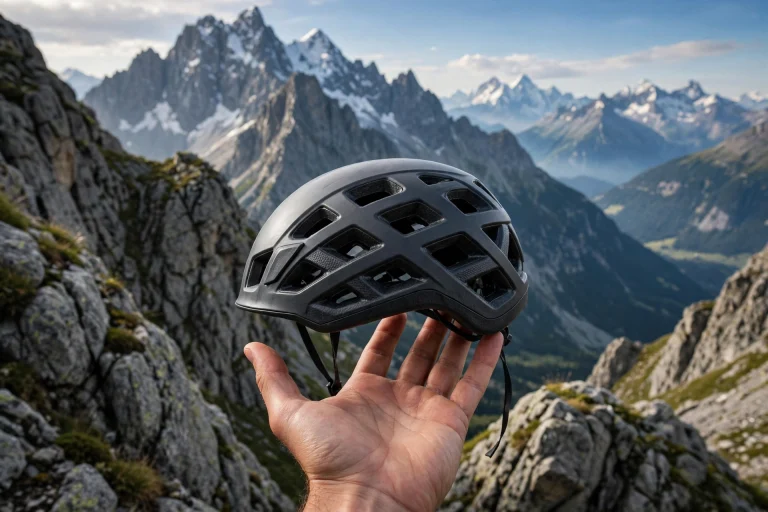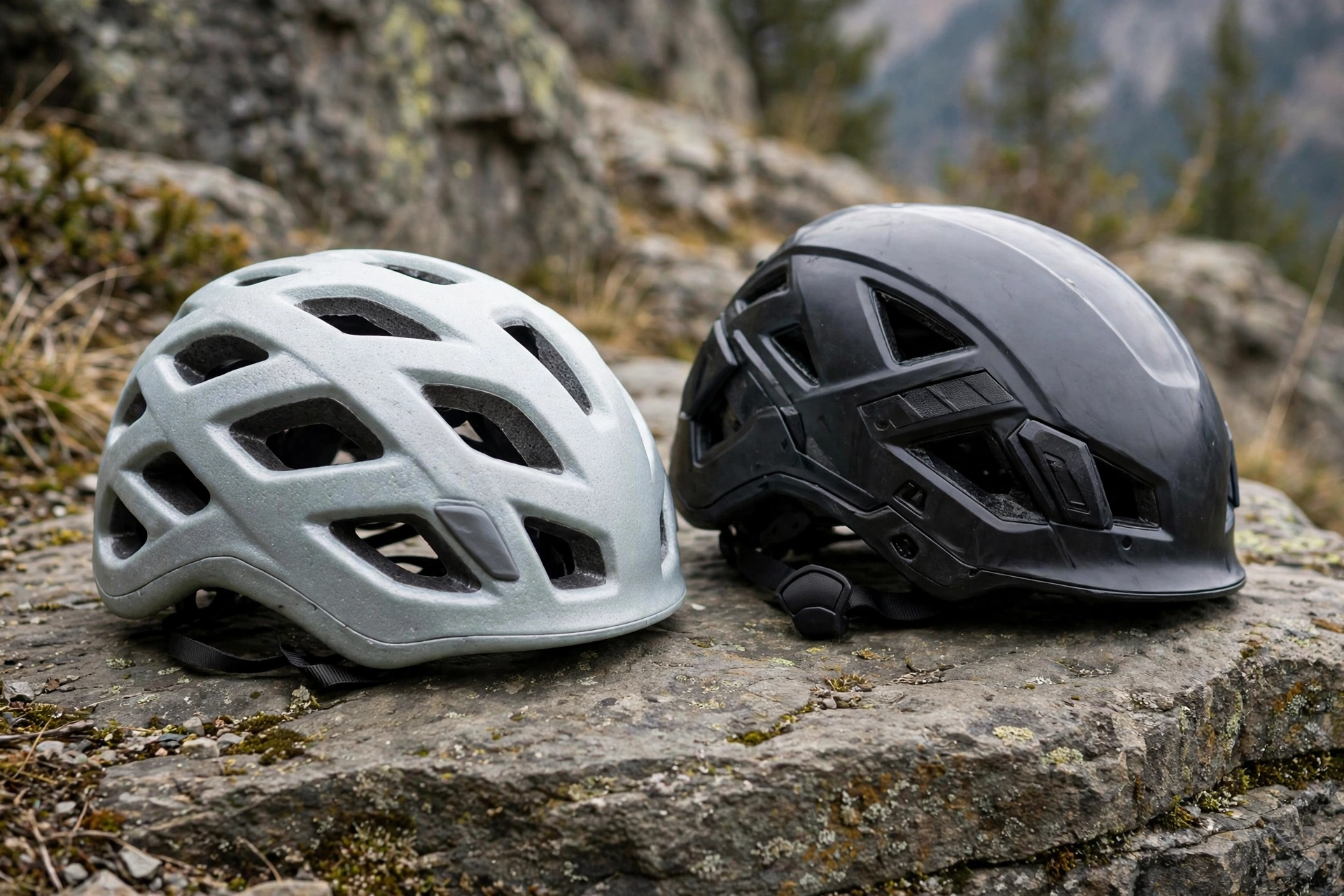
The difference is the outer layer, and what it trades away. A foam climbing helmet is mostly crushable EPS foam with a thin bonded skin — very light, excellent at absorbing one big impact, but easy to dent and finished after a major hit. A hard shell helmet puts a thick, tough plastic shell over its energy-absorbing layer — heavier, but it shrugs off years of knocks, scrapes, and glancing rockfall. Many modern helmets are hybrids that sit between the two. Both types must pass the same climbing standard; they differ in durability, weight, and feel, not in certification.
Walk into any climbing shop and the wall splits visibly into feathery foam models and chunky hard shells. This guide explains how each construction works and how to choose between them.
How Does a Foam Climbing Helmet Work?
A foam helmet — often called in-mold — is essentially a shaped block of expanded polystyrene, the same family of foam used in bike helmets, with a thin plastic skin bonded over it to hold it together and give it a finish. In an impact, the foam crushes permanently, and that crushing is what absorbs the energy before it reaches your head.
It is the same energy strategy as most sports helmets: a sacrificial foam liner does the work in one serious event, and some foam climbing helmets add refinements on top, including models with rotational-impact systems like MIPS intended to reduce twisting forces in angled falls. The catch is built into the physics — crushed foam does not spring back, so the helmet’s biggest protection is spent in its biggest impact.
The rewards for that trade are weight and air. Foam helmets are dramatically lighter than traditional hard shells and can be molded with generous vents, which is why they dominate sport climbing and fast, light alpine use, where a helmet you forget you are wearing is a helmet that stays on.
How Does a Hard Shell Climbing Helmet Work?
A hard shell helmet starts with a thick, rigid plastic shell — tough enough to spread a point load, like the edge of a falling rock, across a wide area instead of letting it concentrate. Under the shell sits the energy-absorbing layer: foam in most modern designs, sometimes a rebounding foam type, and in traditional models a webbing cradle suspension.
That shell is the durability story. It resists the punctures, abrasion, and repeated small impacts that climbing life delivers: being dropped on rock, rattling in a pack against hardware, scraping through a chimney. Where a foam helmet records every insult as a dent, a hard shell mostly shrugs and carries on.
The costs are equally plain: more weight on your neck over a long day, less ventilation because the shell limits vent size, and a bulkier profile. Rental fleets, climbing schools, and guides have historically chosen hard shells because they survive seasons of different heads and hard knocks; weight-conscious climbers have voted the other way.

Which Handles Rockfall and Everyday Knocks Better?
For the small stuff, hard shell wins clearly. Falling pebbles, ice chunks, dropped carabiners, and the daily grind of transport all land on the shell, which spreads and sheds them. A foam helmet exposed to the same routine collects dents, and a dent is compressed foam — a small piece of protection already spent, in exactly the spot it happened.
For the one big impact, both constructions are built to the same standard, and either can be the right answer: the foam helmet absorbs through its whole crushable body, the hard shell spreads the load into its liner. What neither survives is reuse after that event. In general terms, any helmet of either type that has taken a significant impact should be retired, however it looks.
Hybrids deserve mention here: many current helmets combine a substantial shell over the crown — where rockfall lands — with lighter foam construction at the sides. If your climbing mixes falling-object exposure with long approaches, a hybrid is often the honest middle answer rather than a compromise.
Which Is More Comfortable for Long Days?
Foam, usually — and comfort is a safety feature, because an uncomfortable helmet gets left in the pack. The weight difference is obvious within an hour on a steep approach, and foam helmets’ bigger vents matter on hot crags and summer alpine starts. Their fit systems also tend to be borrowed from sports helmets: dial adjusters and shaped padding that suit long wear.
Hard shell comfort has improved — better liners, better adjustment — but the fundamental physics remain: more material overhead, less airflow. Where hard shells claw comfort back is fit stability: the rigid shell holds its shape, and many climbers find a well-adjusted hard shell sits securely without pressure points on featured, technical ground.
Head shape settles arguments that specifications cannot. Both constructions are molded differently by every brand, so try before you buy, with the layers and headlamp you actually climb with.
How Do You Choose Between Foam and Hard Shell?
Match the helmet to your dominant day. Sport climbing and redpoint sessions, with falls onto bolts as the main risk and weight at a premium: foam. Trad and alpine routes under loose rock, winter climbing with falling ice, instructing, or a helmet that will live in a haul bag: hard shell or hybrid.
Then match it to your handling. If the helmet will travel in checked luggage, get lent to partners, and be dropped at belays, durability is not a luxury — it is the difference between a helmet that is still protective in year three and one quietly dented into retirement.
Whichever you choose, certification comes first — a proper climbing standard on the label — and replacement discipline comes last: inspect the foam or liner after any knock, and retire the helmet after a significant impact or when the maker says its life is done. Construction style is a preference; those two rules are not.
Frequently Asked Questions
Q: Are hard shell climbing helmets safer than foam ones?
A: Not in a simple ranking — both must pass the same climbing standard to be certified. They differ in durability against small knocks, weight, and ventilation. Choose for your climbing style, and retire either type after a major impact.
Q: Can a foam helmet survive small knocks and dents?
A: Small cosmetic marks happen, but any dent is foam that has already compressed. Inspect after knocks; if you find cracks, deep dents, or the foam feels crushed in a spot, replace the helmet rather than trusting that area again.
Q: What is EPP foam, and where does it fit in?
A: EPP is a foam type that can rebound from minor impacts instead of crushing permanently, and it appears in some hard shell and hybrid designs to improve durability. It improves tolerance of small knocks, but a significant impact still means retirement, in general terms.

Olivia
Writer at Helmet Today, covering helmet reviews, fit and riding safety.