Neither a fixed brim nor a removable visor is safer — both are flexible peaks fitted to certified helmets that pass the same standards — so choose on practicality: a fixed brim gives a clean, traditional, nothing-to-lose look, while a removable visor can be swapped, replaced after damage, or taken off for disciplines and covers that call for a peakless profile. The visor type should never be the reason you pick one certified helmet over another; fit is.
This guide compares the two honestly — what each does, where each suits, and the safety details worth knowing about peaks in general.
What Is a Fixed Brim on a Riding Helmet?
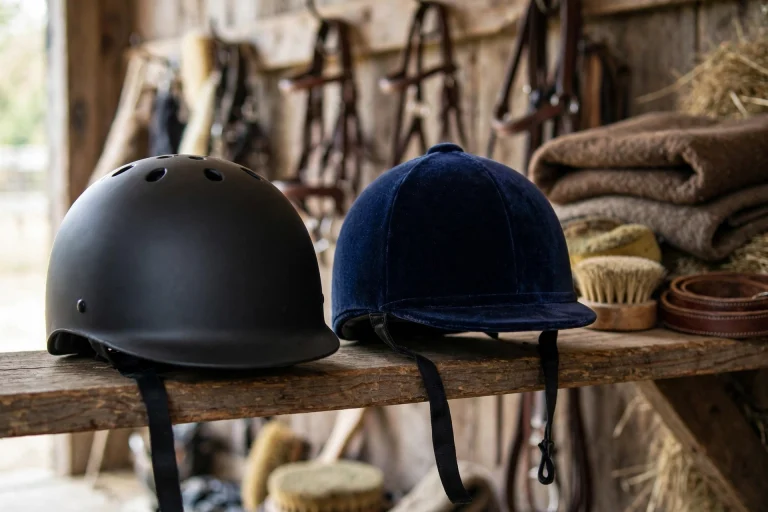
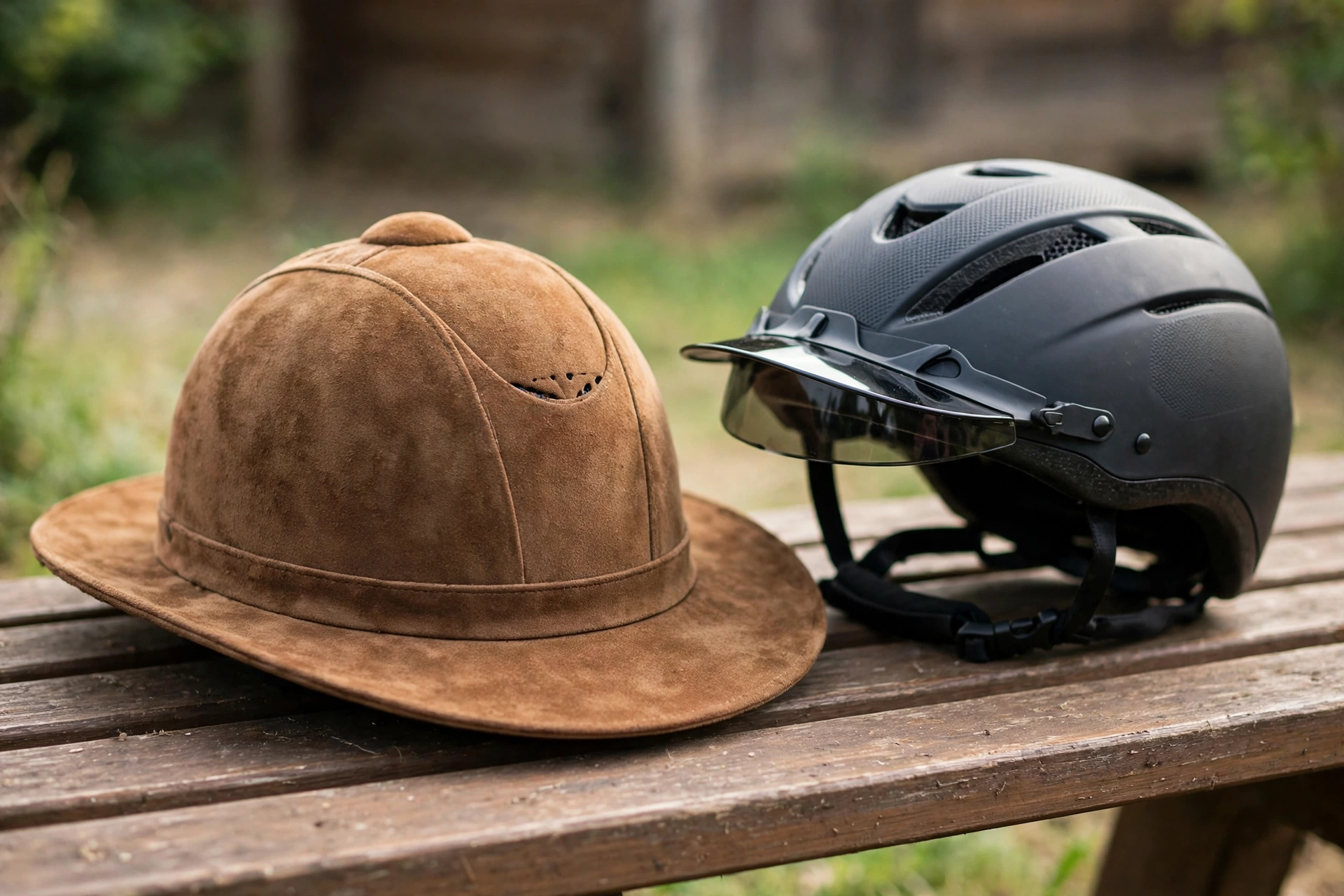
A fixed brim — often just called a peak — is built into the helmet as one piece with the shell. It cannot come off, be swapped, or be adjusted. Most traditional velvet show helmets and many modern schooling helmets are made this way, and the brim is part of the finished design: shaped, finished, and proportioned to that model.
Because it is integral, a fixed brim is designed with the helmet’s certification testing as part of the whole unit. On certified helmets, peaks are made to flex, bend, or break away under load rather than act as a lever — a peak that snapped off or folded in an impact has done its job as intended. If a fixed brim is damaged in a fall, that is part of the bigger fact: the helmet itself must be replaced after any significant impact anyway.
The fixed design’s virtues are simplicity and looks: nothing to misplace in the tack room, nothing to fit wrongly, and the classic silhouette that dressage and showing favour.
What Is a Removable Visor, and How Does It Attach?
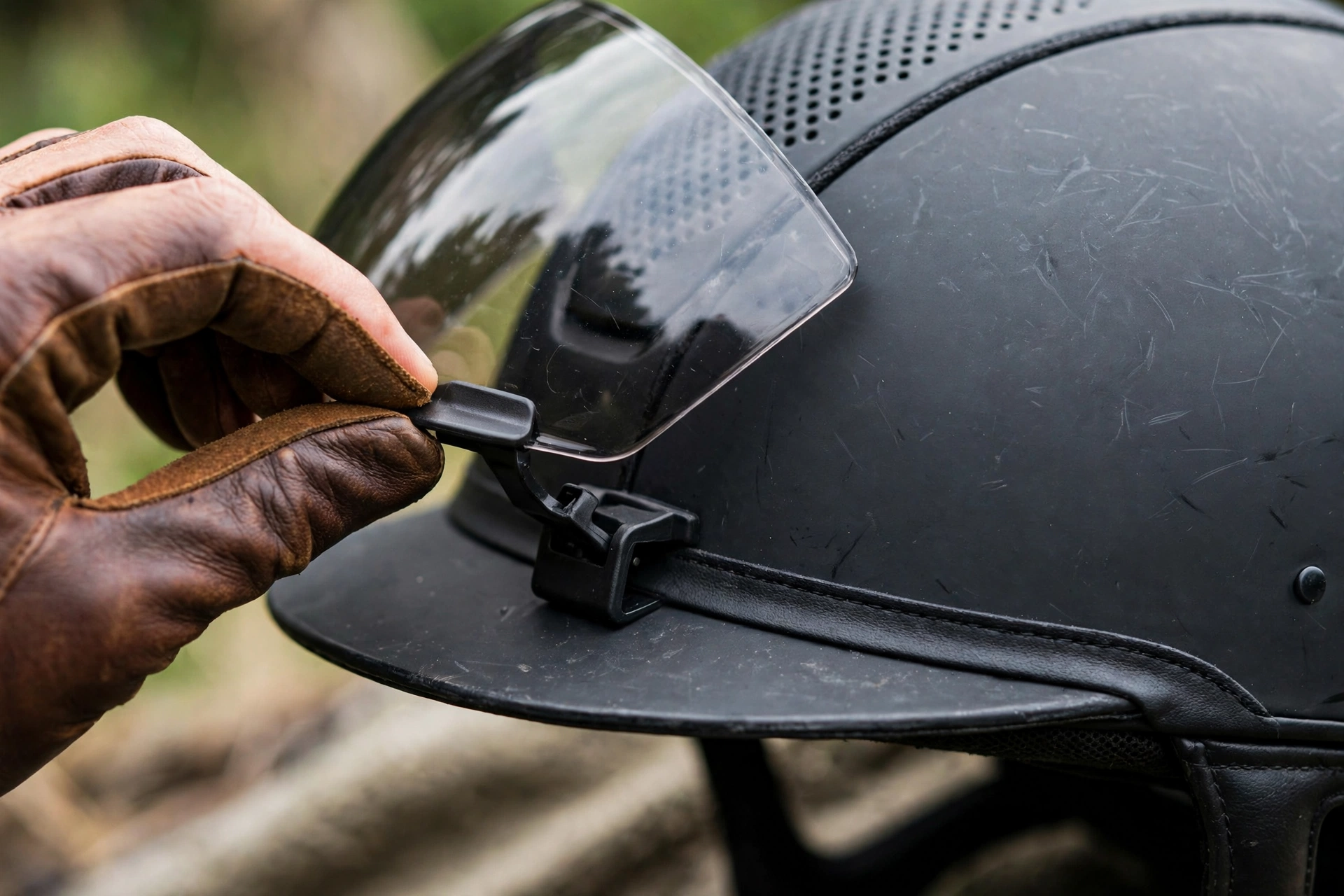
A removable visor is a separate peak that clips, snaps, or slides onto the front of the helmet and can be taken off again. It is common on modern schooling and sport helmets, and on helmets designed to be worn with or without a peak for different disciplines. Attachments vary by brand — press studs, a channel the visor slides into, or a moulded socket — and are specific to the model, so visors are rarely interchangeable between brands.
The point of removability is flexibility. Riders can replace a scuffed or sun-faded visor instead of living with it, swap a wide sun visor for a standard one, remove the peak to fit certain covers or silks, or take it off entirely for disciplines that prefer a peakless profile. Wide removable sun visors are popular with trail riders for shade, in a way fixed-brim helmets cannot match.
The trade-off is that a removable part can be lost, fitted badly, or bought wrong. A visor should click on with a definite, secure feel; one that wobbles, sits crooked, or pops off when brushed is the wrong visor for that helmet or a worn fitting, and should not be ridden in.
Is One Safer Than the Other in a Fall?
No — and it is worth understanding why, because peak safety worries many riders. The concern is that a peak could catch the ground and lever the helmet, twisting the head. Certified helmet design answers it directly: peaks and visors on certified helmets are flexible and designed to give way — bending, folding, or detaching under the kind of load that would otherwise lever. A removable visor detaching in a fall is the design working, not failing.
What actually determines protection is unchanged by the visor question: certification to a recognised standard, a snug level fit, a fastened harness, and extras such as rotational liners — the technology explained in this piece on what MIPS is for helmets — if you choose them. None of those is affected by whether the peak unclips.
The one real safety rule about peaks is about add-ons: never fit a rigid third-party visor, a GoPro-style mount arrangement, or any stiff accessory that was not supplied or approved for the helmet. A hard, unyielding projection changes how the helmet behaves in an impact in ways the certification testing never covered. Use the peak the helmet came with, or the maker’s own replacement.
Which Suits Which Discipline?
Show rings run on tradition. Dressage, showing, and hunter classes favour the fixed-brim look — velvet or matte peaked helmets as a single finished unit — and in general terms, dress rules in those disciplines expect a conventional peak. A removable visor worn correctly looks identical from the judge’s box, but check your discipline’s rules if you plan to remove it, since some expect a peak to be worn.
Eventing splits the difference: jumping phases in a peaked helmet, cross country traditionally in a peakless skull cap with a silk — where a removable visor is simply left at home, or a cover supplies a soft peak. Schooling and everyday riding are a free choice, and this is where removable visors earn their keep: shade in summer, off for a lesson under lights, swapped when scuffed.
Trail and endurance riders lean removable for the wide sun visors and easy replacement after brush knocks. Riders in one formal discipline lean fixed for the clean look and zero fuss.
How Do You Care for Brims and Visors?
Fixed brims need gentle treatment: they are finished surfaces, and velvet marks with rough handling, so lift the helmet by the shell rather than by the peak — carrying a helmet by its brim stresses the join and, on removable visors, the clips. Check the brim line when you inspect the helmet: cracks where the peak meets the shell after a knock are damage, and a helmet with impact damage is replaced, not repaired.
Removable visors need their fittings checked. Pop the visor off occasionally, clean grit out of the channel or sockets — arena sand works into every fitting on a yard — and confirm it still clicks on firmly. A fitting worn loose by grit and use is a reason to replace the visor. Keep the removed visor somewhere it will not be sat on in the tack room; a cracked spare helps no one.
Whichever type you own, store the helmet out of direct sun, let it dry before putting it away, and remember the peak is the most fragile-looking part of a helmet whose real life is governed by the foam inside: replace the helmet after a fall, and in general terms after about five years of use.
Frequently Asked Questions
Q: Can I remove the visor from a fixed-brim helmet?
A: No. A fixed brim is part of the shell’s construction — forcing or cutting it off would damage the helmet and void any sense in using it. If you want a peakless option, that is a skull cap; if you want both looks from one helmet, buy a model designed with a removable visor.
Q: My removable visor fell off in a fall. Did it fail?
A: No — detaching under load is what it is designed to do, so it does not lever the helmet. But the fall itself is the important event: a helmet that has taken a real impact should be replaced, visor or no visor, because the foam may be compressed invisibly.
Q: Can I buy a bigger sun visor for my helmet from another brand?
A: Only if it is made or approved for your exact helmet model. Visor fittings are brand- and model-specific, and a rigid or badly fitting third-party visor can change how the helmet behaves in an impact.

Olivia
Writer at Helmet Today, covering helmet reviews, fit and riding safety.