Yes, there is a difference, but it is smaller than the labels suggest: kayak and rafting helmets are built for the same kind of impacts in moving water, and many models suit both, with kayak helmets usually cut lower and closer for repeated rolling and rafting helmets usually offering a slightly higher, simpler fit for guided trips. In general terms, fit and condition matter more than which word is printed on the box.
This guide explains where the two designs differ, where they are the same, and how to choose one helmet for how you really paddle.
What Is the Main Difference Between a Kayak Helmet and a Rafting Helmet?
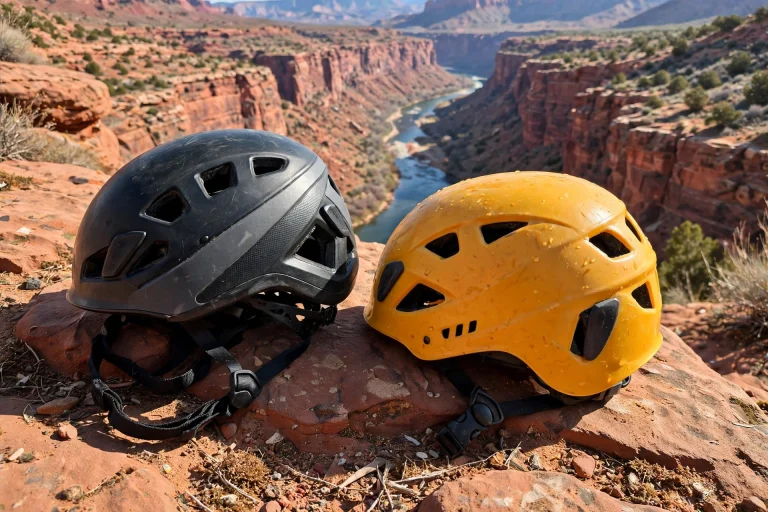
The core job is identical. Both are watersport helmets designed to protect your head from rocks, riverbed, and boat hardware in moving water, both use impact-absorbing foam under a hard or reinforced shell, and in general terms both are made to handle repeated wetting, drain water, and stay on in current. Neither is a dry-land helmet adapted for the river; a bike or climbing helmet is not a substitute.
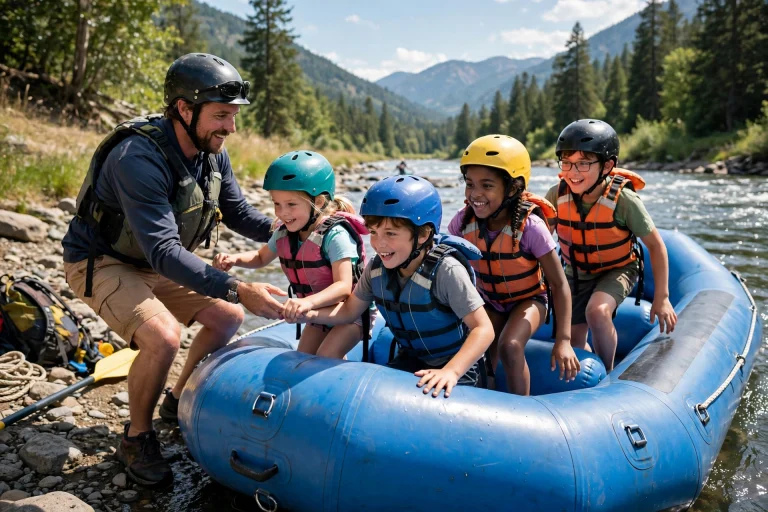
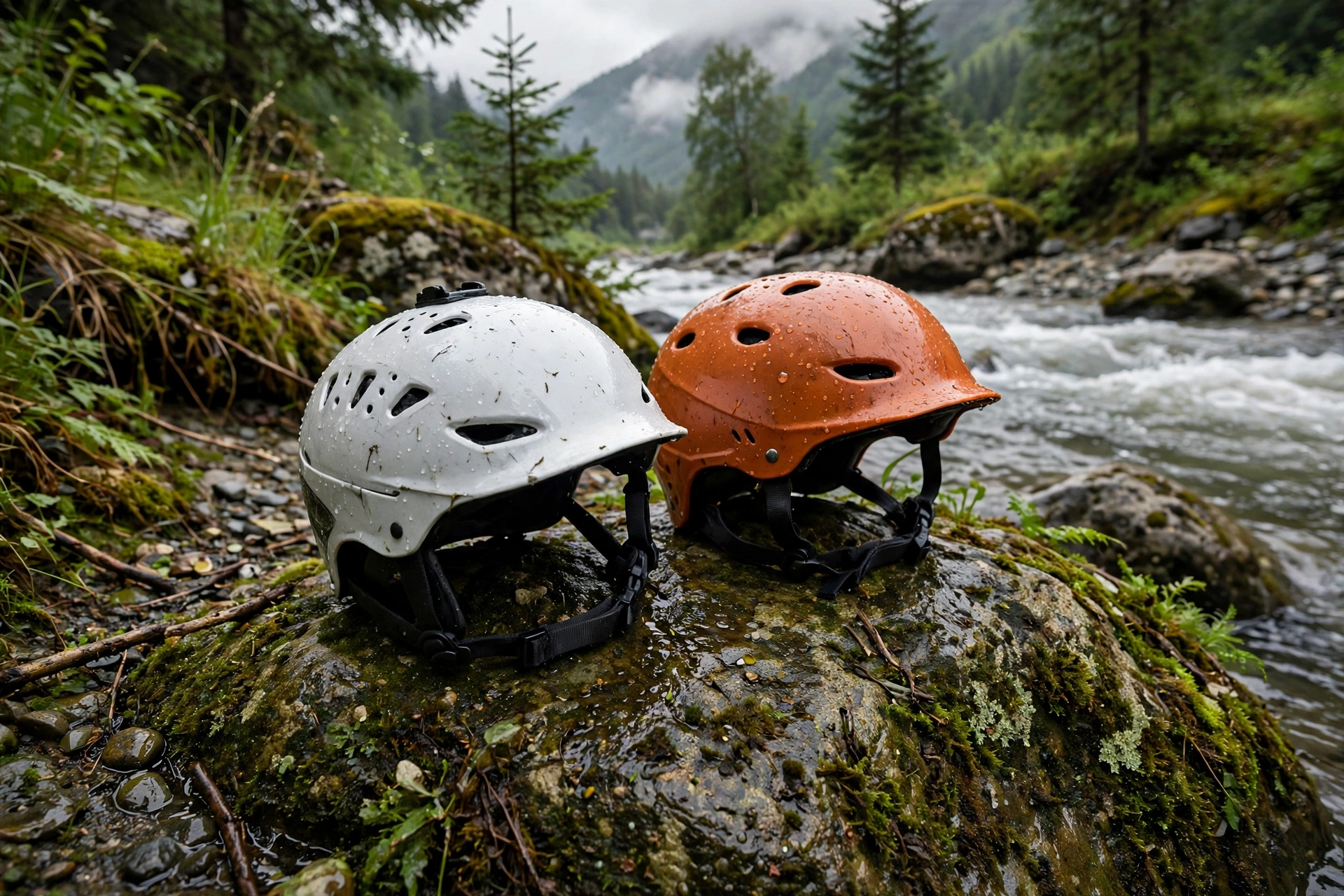
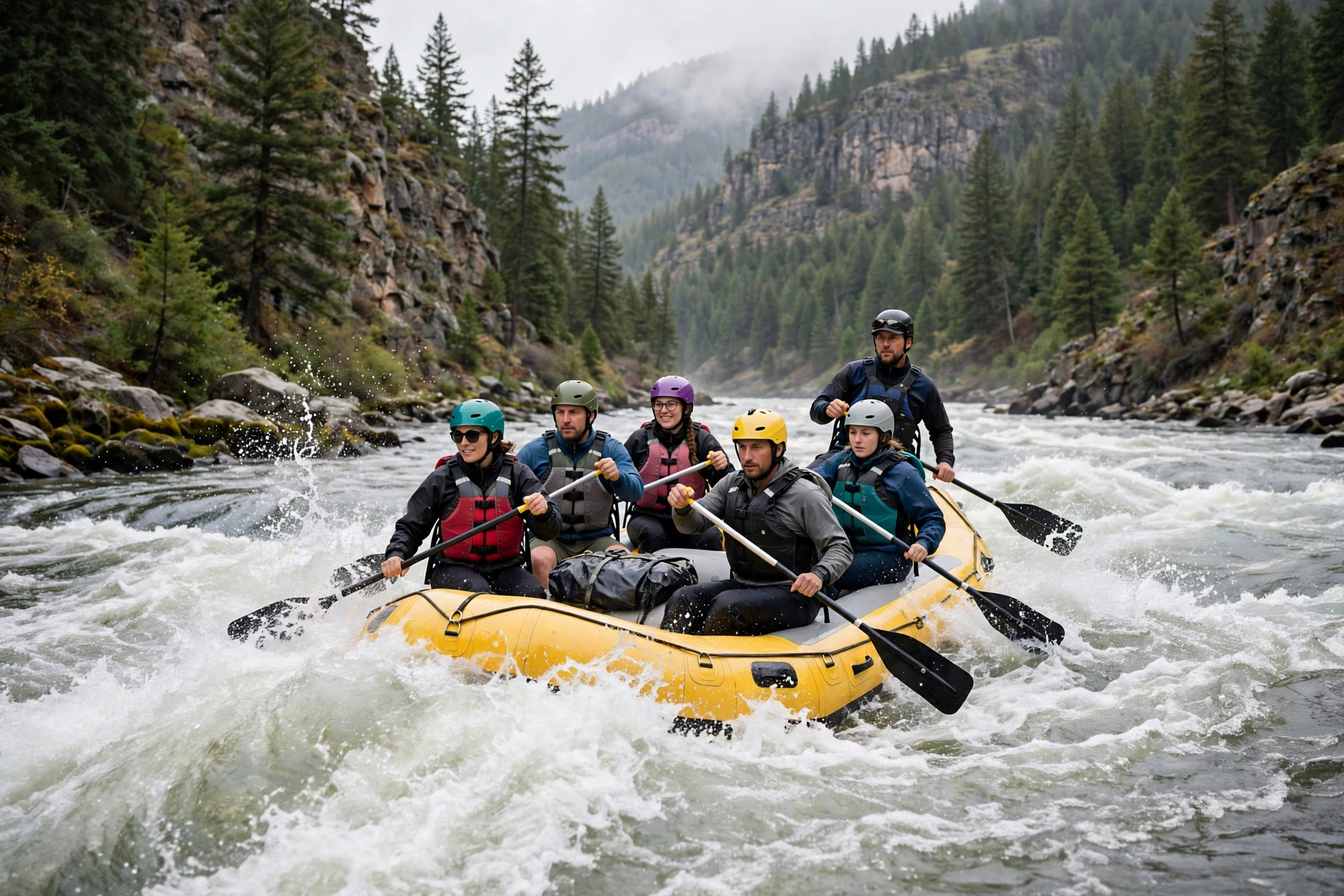
The differences are about emphasis. Kayak helmets tend to sit lower over the ears and back of the head, with a close, locked-in fit, because a kayaker may roll, brace, and spend time upside down close to rocks. Rafting helmets tend to be a little simpler and more adjustable, because outfitters hand them to many different heads in a day and rafters usually stay upright in a larger boat.
Think of it as a spectrum rather than two separate products. Plenty of mid-range helmets sit in the middle and are sold for kayaking, rafting, canoeing, and packrafting all at once.
Does Fit Differ Between Kayaking and Rafting Helmets?
Yes, and fit is where the label matters most. A kayak helmet should feel secure with your head in any position, because rolling and swimming put force on it from every angle. The chin strap and any rear retention system should keep it from tipping forward over your eyes or sliding back off your forehead, even when you shake your head hard on dry land.
A rafting helmet still needs a snug, level fit, but the demands are slightly different. You are seated higher, less likely to roll repeatedly, and more likely to share helmets within a group. Wide adjustment ranges and simple strap systems are useful there, while a kayaker who owns one helmet for one head can choose a more exact, less adjustable size.
- Kayak priority: close fit, low coverage, stays put during rolls and swims
- Rafting priority: easy adjustment, comfort for a full day, fits a range of heads
- Both: level position, no rocking, chin strap snug under the chin
Whichever label you choose, try it on, fasten it, and move. A helmet that shifts in the shop will shift far more in a rapid.
Can You Use One Helmet for Both Kayaking and Rafting?
For most recreational paddlers, yes. If you kayak on moderate rivers and join rafting trips in the same season, one good whitewater helmet in good condition, fitted to your head, will serve both well. Buying two near-identical helmets adds cost without adding much protection, and a familiar helmet you have adjusted properly is safer than a second one you rarely wear.
The exceptions are at the extremes. Creek boaters and playboaters inverted near rocks may want the lower coverage and tighter hold of a dedicated kayak model. Commercial rafting guests simply wear what the outfitter provides, chosen for durability and adjustment rather than personal performance.
What you should not do is stretch one helmet across very different sports. A whitewater helmet is built for relatively low-speed impacts in water, with foam and drainage chosen for that job. It is not designed for cycling speeds, motor traffic, or winter sports, and those helmets are not designed for the river either.
How Does Impact Protection Compare Between the Two?
In general terms, comparable kayak and rafting helmets offer comparable impact protection, because they are designed around the same kind of hazards: glancing and direct blows from rock, usually at paddling and swimming speeds rather than road speeds. Construction is similar too, with an outer shell spreading the force and a foam liner crushing to absorb energy.
Where designs vary is in how they handle repeated and angled hits. Some liners are made to take one hard impact and then be replaced, while others are made from foams that tolerate smaller knocks better. Angled impacts also create rotational forces on the head, and some modern helmets add low-friction layers for that; if that idea is new to you, this overview of what MIPS is for helmets explains the principle in plain terms. Coverage helps too: a helmet that covers more of the sides and back protects more area, provided it still fits well.
Standards are best read in general terms as well. Watersport helmets are commonly made and tested to a recognised watersport helmet standard, and a helmet that claims that kind of testing, from a known maker, is a better bet than an unlabelled novelty helmet, whichever paddling label it carries.
Which Helmet Should You Choose for Your Kind of Paddling?
Start with your hardest regular use, not your easiest. If you mostly kayak, with rafting as an occasional trip, choose the kayak fit. If you mostly raft, volunteer as a safety boater, or need a helmet that several family members might wear, choose the more adjustable rafting style. If you do both equally, choose the helmet that fits your head best and covers your ears and the back of your head well.
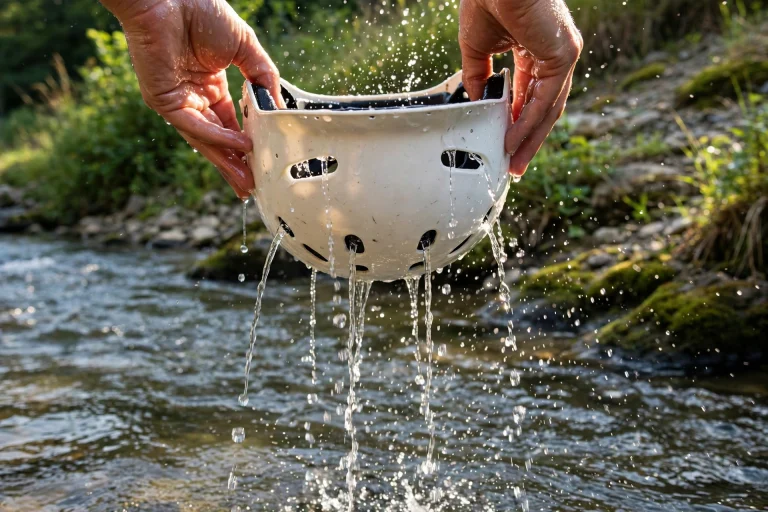
Check the practical details before you buy: drainage that clears quickly, a strap you can adjust with cold hands, a finish that will not soak up water, and ear coverage that suits your water. Try it with anything you wear under it, such as a neoprene hood.
Finally, buy condition as well as design. A well-fitting mid-range helmet with no crash history beats a premium helmet that has taken a hard hit, has cracked foam, or has straps worn thin. Replace any helmet after a significant impact, and inspect shell, foam, and straps at the start of each season.
Frequently Asked Questions
Q: Is a rafting helmet safe to wear in a kayak?
A: In general terms, yes, if it fits your head securely, sits level, covers the back and sides well, and does not shift when you move or shake your head. A rafting helmet that is loose or rides high is the problem, not the label, so test the fit for rolling and swimming, not just for sitting upright.
Q: Why do kayak helmets cover the ears more often?
A: Kayakers spend more time upside down and close to rocks at head level, so lower coverage protects the ears and the side of the head during rolls and swims. Ear coverage also helps in cold water. Rafters, who usually stay upright, have historically used simpler helmets with less coverage.
Q: Can I use a whitewater helmet for other sports too?
A: It is not a good idea. Helmets are designed and tested for the speeds, impacts, and conditions of one kind of activity. A whitewater helmet is not a substitute for a bike, ski, or climbing helmet, and those helmets are not made for moving water. Use each helmet for the job it was built for.

Olivia
Writer at Helmet Today, covering helmet reviews, fit and riding safety.