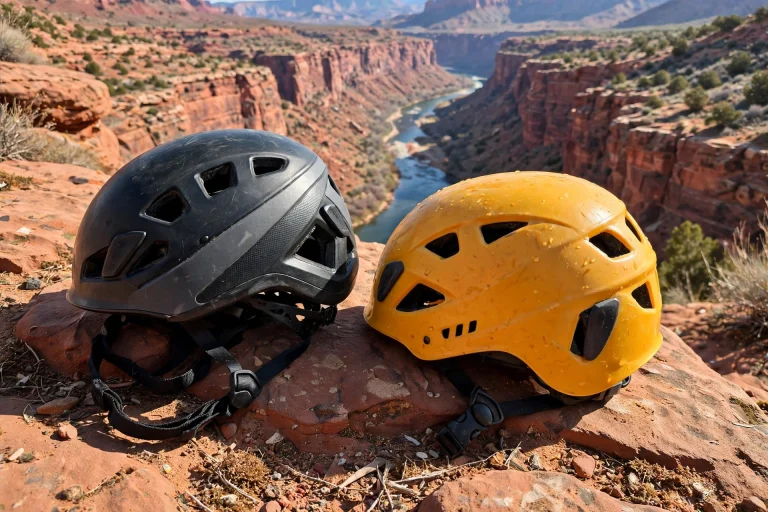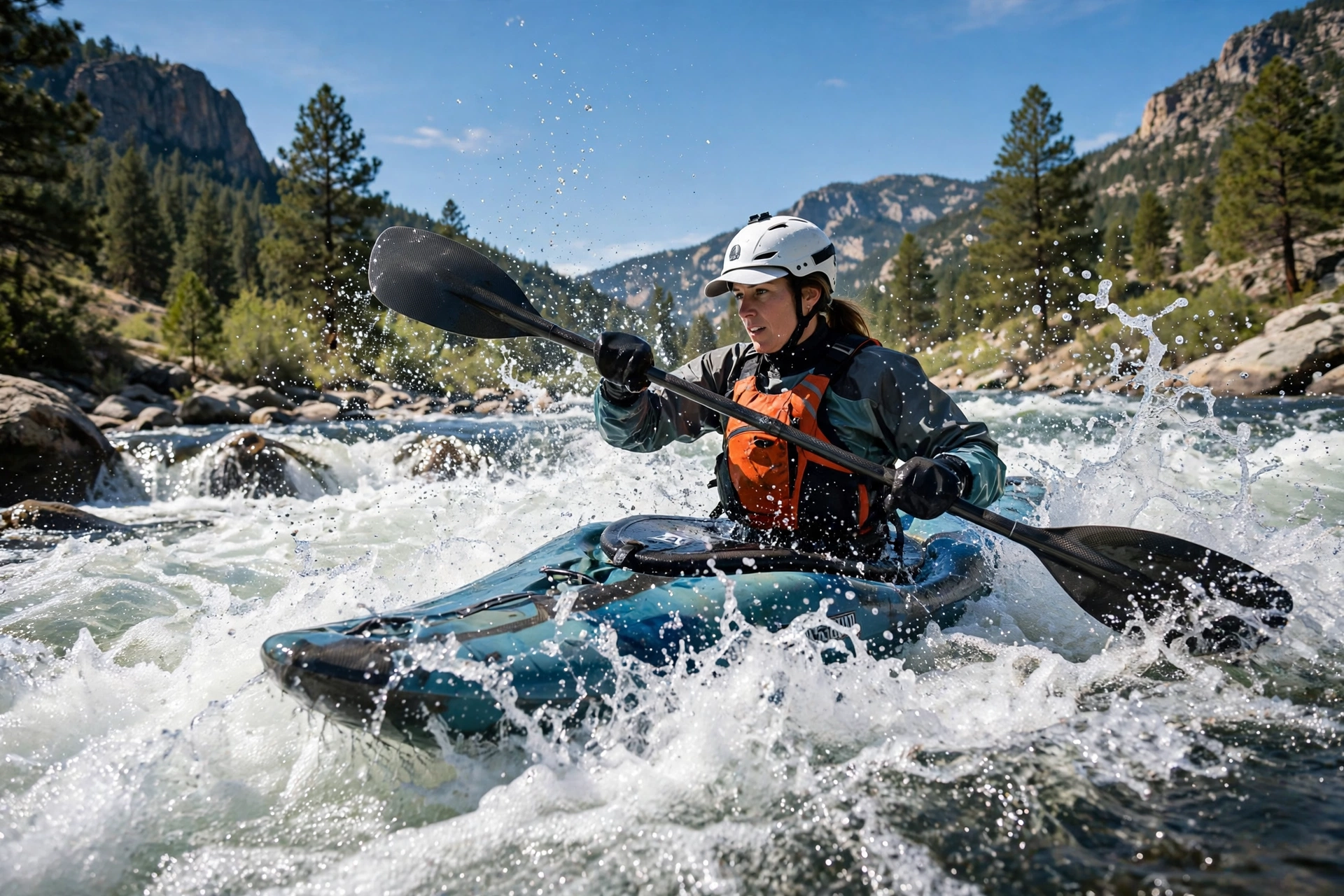
A brim or visor on a water helmet shades your eyes from sun and glare, sheds dripping water away from your face, and can deflect light spray and rain — but it does not add impact protection, and on whitewater helmets it is kept small and flexible so it cannot catch the current or lever the helmet out of place. It is a comfort and vision feature, chosen to suit the water you paddle.
This guide explains what brims and visors actually do, how the designs differ, and the trade-offs to weigh before you choose one.
What Does a Brim on a Water Helmet Actually Do?
Its main job is shade. On open water — a wide river, a reservoir, a sea kayak crossing — you face hours of direct sun and of glare bouncing off the surface. A brim cuts both, reducing eye strain and squinting, which matters because reading the water ahead is your primary safety tool. Tired, dazzled eyes miss the rock, the pour-over, or the other boat.
The second job is water management. After a roll, a ducking, or a wave over the head, a helmet sheds a surprising amount of water down your face. A front brim or peak catches that run-off and throws it forward, away from your eyes, so your vision clears a moment sooner. In rain it does the same work continuously, which paddlers who wear glasses especially appreciate.
What a brim does not do is protect. It is a soft or lightly stiffened extension, not part of the impact system of shell and foam. Treat it as you would the peak of a cap: genuinely useful for comfort and vision, irrelevant to how the helmet performs in a hit.
How Do Brims and Visors Differ Between Paddling Helmets?
Whitewater helmets carry the smallest brims, when they carry one at all — usually a short, flexible front peak. Kayakers roll, swim, and meet strong current at head level, so anything sticking out must be unable to catch the water and wrench the helmet. Many whitewater designs skip a brim entirely for exactly that reason.
Sea kayaking, touring, and recreational helmets — and the soft caps worn under or instead of helmets on calm water in some settings — often have wider, cap-style brims, because the user faces long sun exposure with little chance of rolling in fast current. Surf and wake helmets sit in between, with short peaks stiff enough to shade but designed for repeated wipeouts.
- Whitewater: tiny flexible peak or none — must not catch current
- Touring and sea: wider cap-style brim — sun and glare are the problem
- Surf and wake: short peak — shade plus quick water shedding after falls
Some visors are fixed, some are detachable, and some helmets take a removable peak as an accessory. Detachable designs let one helmet serve both kinds of water, provided the attachment is the maker’s own and sits flush.

Can a Brim or Visor Cause Problems in Moving Water?
It can, which is why whitewater brims are so restrained. Moving water exerts real force on anything it catches. A wide, rigid brim meeting fast current during a roll or swim can push against the helmet, and in the worst case work against the fit you rely on. That is the reason no serious whitewater helmet wears a big stiff peak.
A long rigid visor raises a second concern in a face-first impact: it is the first thing to meet rock, and while a flexible peak simply folds away, a stiff one transmits a levering force to the helmet’s front edge. This is one more reason the peaks fitted to river helmets are short and designed to flex or break away rather than resist.
None of this makes brims dangerous in normal use; it defines where they belong. Match the brim to the water. On the slow, open water where glare is the hazard, a brim is all benefit. In powerful whitewater, choose small and flexible, or none — your helmet’s fit, shell, and foam do the protective work, including managing the angled, rotational side of impacts described in this overview of what MIPS is for helmets.
What Should You Look for in a Helmet Visor?
Start with flexibility and length. You should be able to bend the peak easily with one hand, and it should shade your eyes without reaching so far forward that it dominates your upward view of the river ahead — remember you often look up at rapids, cliffs, and the paddler signalling above you.
Check the attachment. A fixed or maker-fitted visor that lies flush against the shell is preferable to anything that wobbles, sticks up at an angle, or relies on adhesive in a sport built on immersion. If it is detachable, confirm it locks positively and cannot float off mid-rapid the first time you roll.
Finally, test it as a system: put the helmet on, fasten it, and shake, nod, and look up and down. The visor should not push the helmet back, rattle, or intrude into your vision when you tilt your head. Wear it with sunglasses or a hood if that is how you paddle — sunglasses under a brim are a common and comfortable combination on bright water.
Can You Add a Brim to a Helmet That Has None?
Sometimes. Some makers sell their own clip-on or rivet-on peaks for specific models, and those are the only additions worth considering, because the maker has judged the size and flexibility safe for that helmet. Fit only the accessory made for your model, and follow its fitting instructions exactly.
Avoid improvising. Never drill a shell to fit an aftermarket visor, never glue a large rigid peak from another sport onto a paddling helmet, and do not wear a wide-brimmed hat over a helmet to make up for the lack of shade — anything strapped over the helmet changes how it sits and can help it shift or come off in the water.
If shade is essential to how you paddle and your helmet has no maker option, the cleaner solution is to choose your next helmet with the brim built in for your kind of water, and meanwhile manage glare with sunglasses and sunscreen. Comfort features are worth having; they are just never worth compromising the helmet itself for.
Frequently Asked Questions
Q: Does a visor make a water helmet safer?
A: Not in impact terms. A brim improves safety only indirectly, by keeping sun, glare, spray, and rain out of your eyes so you can see hazards sooner. The protection itself comes from the shell, foam, fit, and retention system, not from the peak.
Q: Why do whitewater helmets have such small brims compared with sea kayak helmets?
A: Because whitewater paddlers roll and swim in strong current, and a large or rigid brim can catch the water and lever against the helmet’s fit. Sea kayakers face long sun exposure in conditions where rolling in fast current is unlikely, so a wider shade brim is safe and useful there.
Q: Can I wear a cap under my helmet instead of a brim?
A: In general terms, only a very thin, flat cap or liner made to be worn under helmets, and only if the helmet still sits level, snug, and stable with it on. A normal peaked cap under a helmet lifts it, changes the fit, and puts a hard button on top of your head — if it changes the fit at all, do not wear it.

Olivia
Writer at Helmet Today, covering helmet reviews, fit and riding safety.