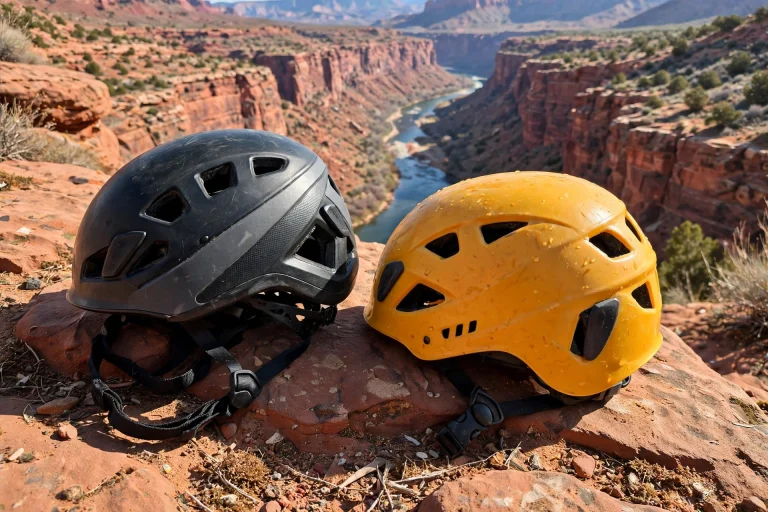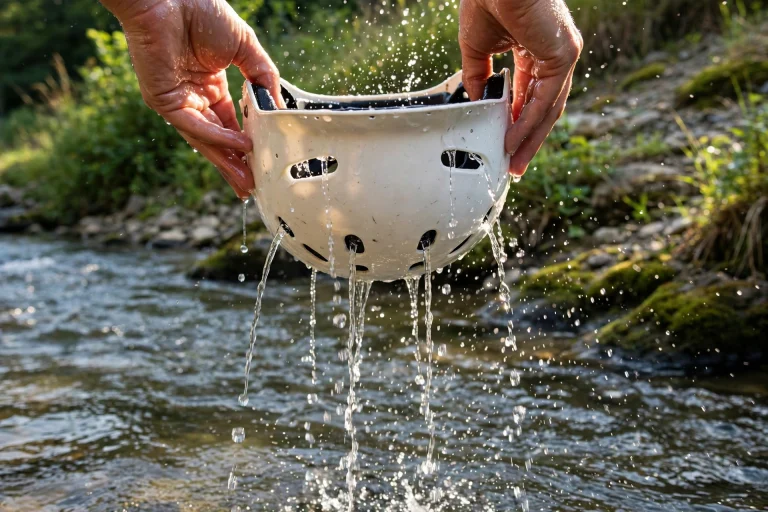
To stop a kayak helmet from slipping in rapids, fix the fit in this order: confirm you have the right size and head shape, use the rear retention adjuster and any fit pads the maker supplies, set the chin strap snug under the chin with the side straps meeting correctly below the ears — and if it still tips forward or slides back after all that, the helmet is the wrong size or shape and should be replaced. A helmet that moves in the shop will move far worse upside down in current.
This guide explains why helmets slip, how to adjust one properly, and how to tell an adjustment problem from a wrong-helmet problem.
Why Does a Kayak Helmet Slip in Rapids?
Because moving water finds every weakness in a fit. On dry land a slightly loose helmet feels fine: it sits where you put it and gravity is gentle. In a rapid you roll, brace, and get pushed by current from several directions at once, and each push works the helmet a little further out of the position your hands last set it in.
The most common root cause is simply the wrong size — often one size too big, bought for comfort or to fit over a hood that is not always worn. The second cause is shape: heads are oval in different proportions, and a helmet moulded for a rounder head will rock fore-and-aft on a longer, narrower one however tight the straps are.
The third cause is setup. Straps loosen gradually through a season, rear adjusters get left wherever they were last set, and fit pads stay in the box. Slipping that crept up on you over months is often one careful refit away from being fixed.
How Should You Set the Straps and Retention System?
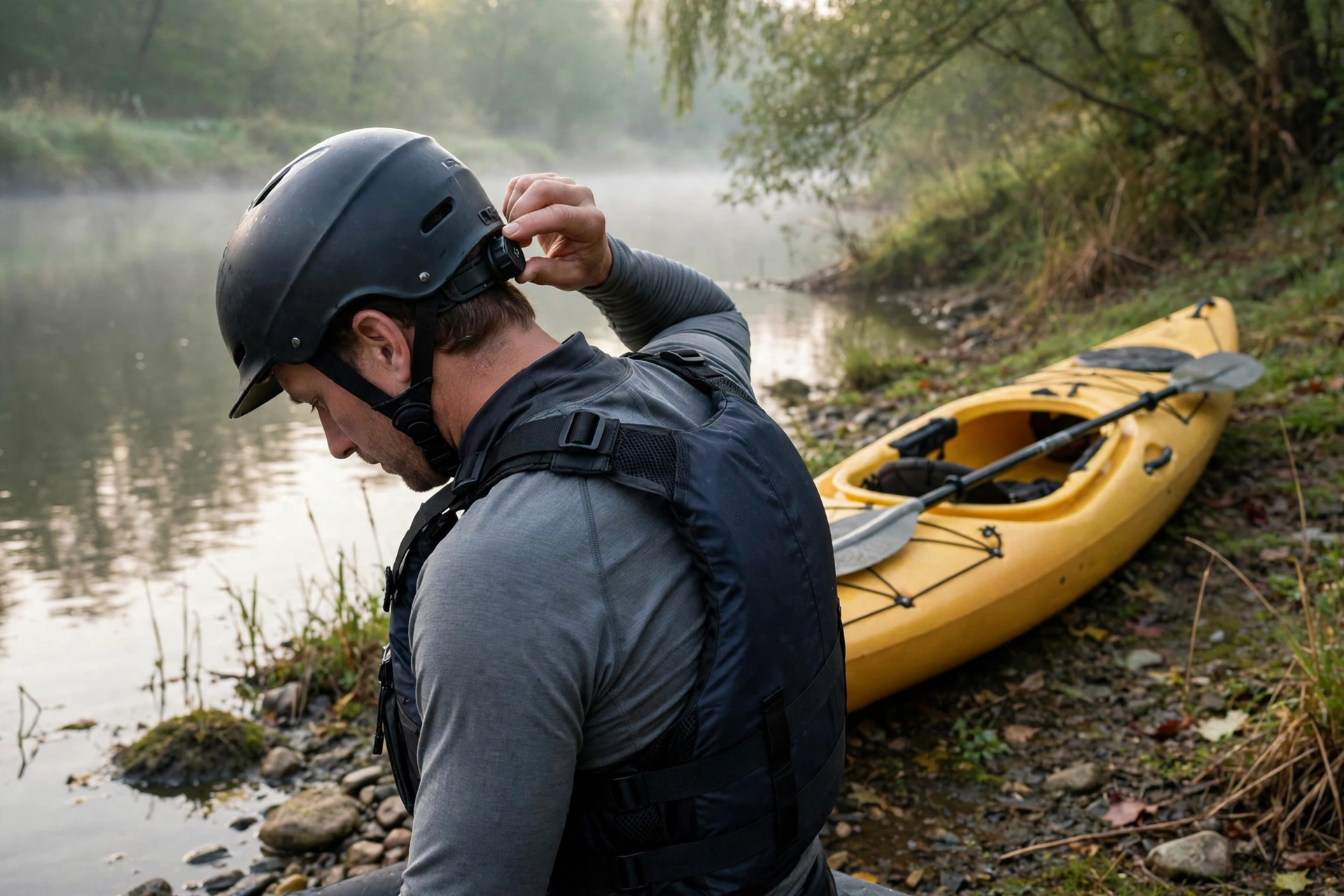
Start without straps. Put the helmet on level, roughly a sensible distance above your eyebrows, and use the rear retention system — a dial, cradle, or adjustable band at the back — until the helmet grips your head evenly and does not rock when you shake. The retention system is the foundation; straps are there to keep the helmet on, not to drag a loose helmet into place.
Then set the side straps. In general terms, the straps from front and back should meet just below and slightly in front of your ears, forming a neat Y on each side, so the helmet is held evenly rather than pulled forward or back. Adjust both sides to match; uneven side straps are a classic cause of a helmet that sits crooked and slips one way.
Last, the chin strap. Fasten it snugly under the chin — you should be able to fit roughly a finger or two between strap and chin, and opening your mouth wide should pull the helmet down slightly rather than letting the strap slide. A chin strap you can push off your chin with your tongue is decoration, not retention.
What Role Do Fit Pads and Helmet Size Play?
Most watersport helmets are tuned with pads. Makers commonly include shims or pads of different thicknesses that stick or clip inside to fine-tune the fit — thicker at the sides for a narrower head, at the front or back for a shorter one. Used as the maker intends, they turn a close fit into an exact one, and they are the correct fix for small amounts of movement.
There are limits. Pads refine a fit; they cannot rescue a helmet that is a full size too big, because the shell itself sits too far from the head and will still rotate in a tumble, with the pads merely along for the ride. If you have padded a helmet heavily and it still moves, the verdict is the size, not the padding.
Equally, do not pad a helmet smaller by force. A helmet that only stays put because the strap is cranked painfully tight, or that presses hard points into your skull, is the wrong size in the other direction — and a helmet that hurts gets loosened, pushed up, or left in the car.
How Do Hoods, Hair, and Wet Conditions Change the Fit?
Fit your helmet in the configuration you actually paddle. A neoprene hood or skull cap worn for cold water adds real thickness, and a helmet fitted over it in the shop will flop around on a warm day without it. Many paddlers effectively have two fits — summer and winter — and adjust pads seasonally to match.
Hair matters more than people expect. Long hair worn in a high bun or thick plait inside the helmet creates a smooth, shifting mass that lets the helmet ride up and slide; worn low or flat, the same hair causes no trouble. Wet hair, sunscreen on the forehead, and a soaked liner all reduce friction further — one more reason the shake test should be done as you will actually paddle, at the water’s edge, not once at home.
Strap webbing itself behaves differently wet, and buckles can creep a fraction under repeated load. Recheck strap tension after your first swim or roll of the day; a ten-second tug at the eddy is the cheapest insurance in the sport.
How Do You Test a Helmet Fit Before Trusting It in Rapids?
Use the full routine, fastened and configured as you will paddle:
- Shake test: shake and nod hard — the helmet should not tip, slide, or rock
- Push test: push up at the front brim and back edge — it should resist, not peel away
- Mouth test: open wide — the chin strap should pull the helmet down slightly
- Roll test: in safe, flat water, roll or capsize and feel whether it stays in position
If a helmet passes all four, its fit is sound and slipping in rapids is unlikely. If it fails the flatwater roll test, it will certainly fail in a rapid, where the consequences arrive faster and the forces are bigger — sort it on the bank, not in the current.
Remember what a stable fit is protecting. A helmet shields you only where it stays, and its design — shell, foam, and the angled-impact principles explained in this guide to what MIPS is for helmets — assumes it is sitting in position when the hit comes. Fit is not a comfort detail; it is the first component of the protection itself.
Frequently Asked Questions
Q: My helmet only slips when I roll. What is the likely cause?
A: Rolling loads the helmet from below and behind, so the usual suspects are a rear retention system left loose, a chin strap with too much slack, or a helmet one size too big. Work through size, rear adjuster, side straps, then chin strap, and confirm with a flatwater roll test in safe water.
Q: Is it okay to tighten the chin strap very tight to stop slipping?
A: No. The chin strap keeps a well-fitting helmet on; it should not be the thing creating the fit. A painfully tight strap usually signals the wrong size or a slack rear retention system, and it tends to get loosened mid-trip. Fix the foundation fit first.
Q: Can I add foam or tape inside a helmet to make it fit better?
A: Only the fit pads and shims the maker supplies for your model, fitted as directed. Improvised foam, tape, or padding from another product changes how the helmet sits and can interfere with the liner’s job. If maker pads cannot make it fit, the helmet is the wrong size or shape.

Olivia
Writer at Helmet Today, covering helmet reviews, fit and riding safety.