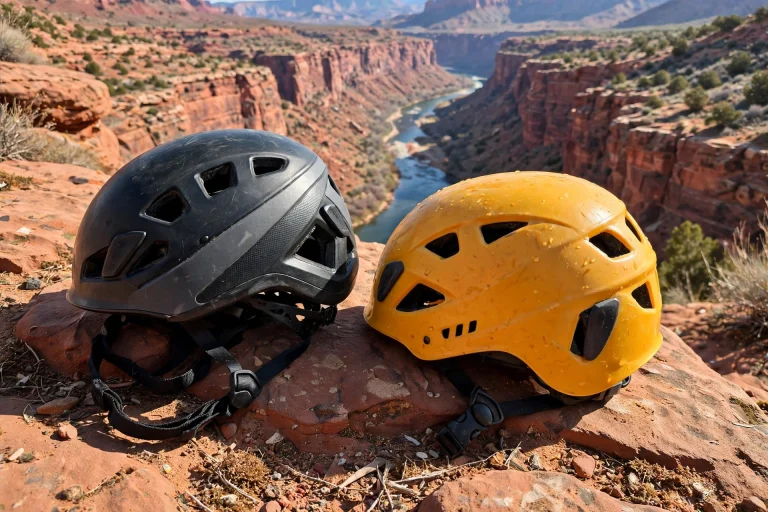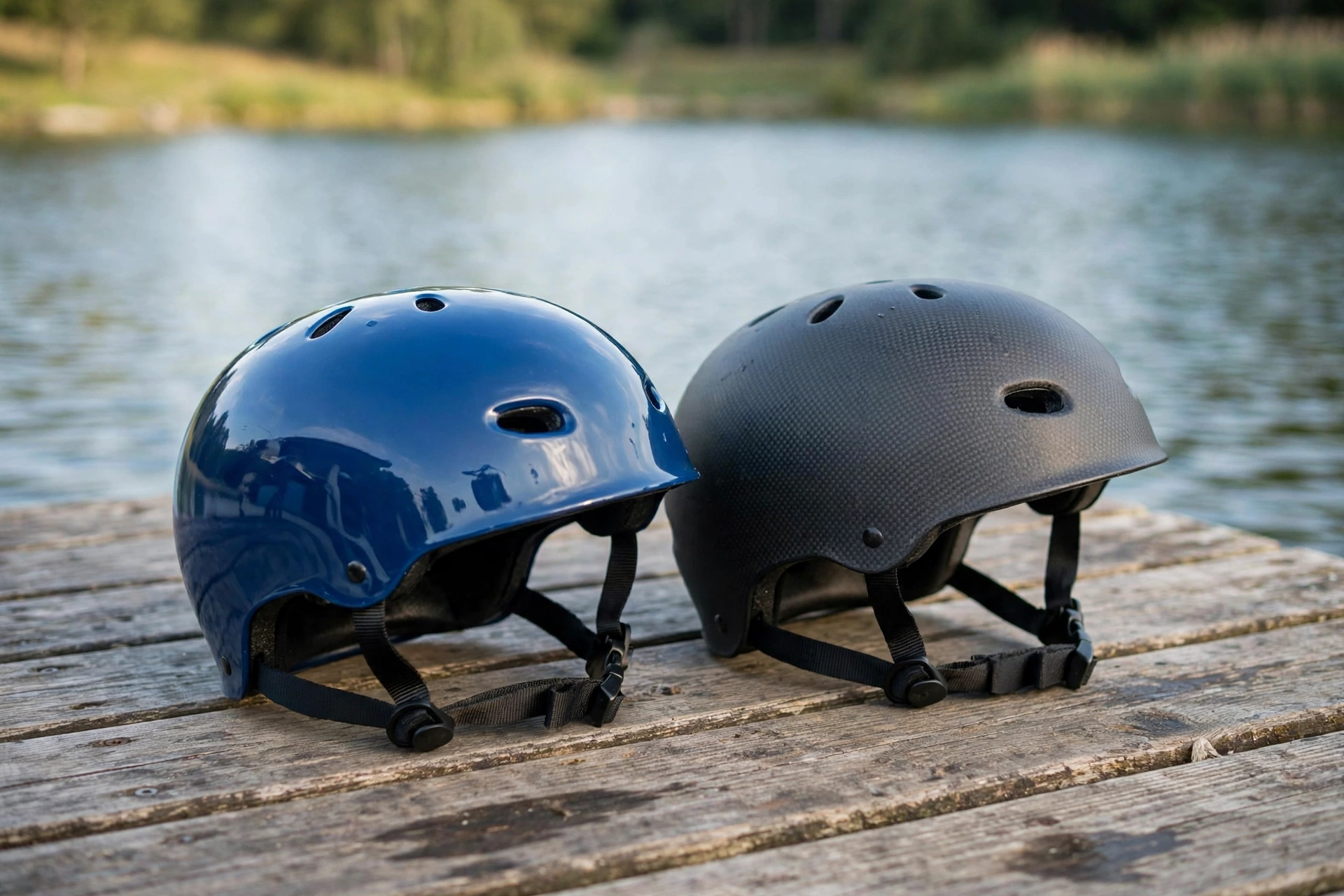
In general terms, an ABS shell water helmet is tough, affordable, and tolerant of everyday knocks, while a composite shell — fibreglass or carbon blends — is lighter and stiffer for its weight and usually costs more; for most paddlers, fit, condition, and the foam liner underneath matter more than which shell material is on top. The shell spreads the impact; the liner does most of the absorbing.
This guide explains how each material behaves, where each suits best, and how to choose without overspending on the wrong thing.
What Does the Shell of a Water Helmet Actually Do?
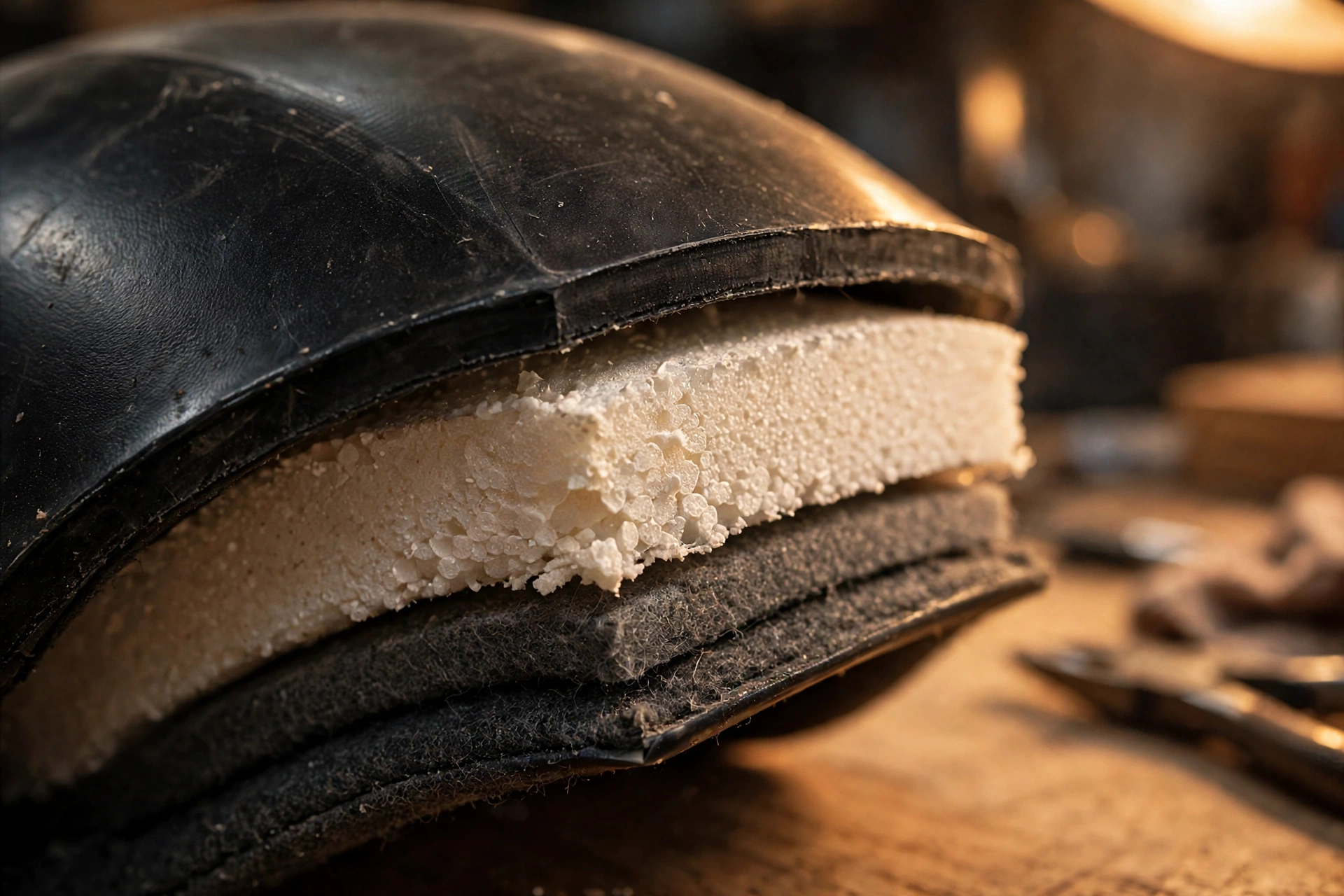
The shell has three jobs. First, it spreads a point impact — the edge of a rock — across a wider area of foam, so the liner crushes progressively instead of being punched through at one spot. Second, it protects the foam itself from abrasion, cuts, and the everyday scrapes of riverbanks, roof racks, and kit bags. Third, it helps the helmet slide rather than grab on rock and water, which affects how glancing blows behave.
The absorbing is done underneath. Energy-absorbing foam liners — the paddling world uses several types, including foams suited to repeated smaller knocks and foams suited to one big hit — crush or compress to slow the head’s stop. That is why two helmets with the same shell can protect differently, and why condition of the liner matters at least as much as the shell material printed on the box.
Modern designs sometimes add layers aimed at angled impacts, which twist as well as strike; if that side of protection interests you, this overview of what MIPS is for helmets explains the rotational-force idea in plain terms. Whatever extras a helmet carries, they all sit between shell and head, and both parts have to be sound.
What Are the Strengths of an ABS Shell?
ABS is a hard plastic, usually formed as a one-piece shell over the liner. Its great virtue in a river helmet is toughness in the everyday sense: it shrugs off being dropped on concrete, knocked in the car, and scraped along rocks, and it tends to show wear honestly as scuffs and scratches rather than hiding damage.
It is also the economical choice. ABS helmets sit at the more accessible end of the price range in general terms, and they dominate rental fleets, school programmes, and club kit — settings where helmets are used hard by many heads and replaced on a budget. For a beginner buying a first helmet, or a family buying several, ABS delivers sound protection without the decision becoming a major purchase.
The trade-offs are weight and stiffness. An ABS shell is generally a little heavier and less rigid than a composite shell of similar coverage, which shows up on long days and in how precisely the helmet can be shaped. Those are refinements, though, not disqualifications: a well-fitting ABS helmet in good condition is a genuinely protective helmet.
What Do Composite Shells Do Differently?
Composite shells are built from fibres — glass fibre, carbon fibre, or blends, sometimes with aramid — set in resin. Pound for pound they are stiffer and lighter than ABS, so makers can give a helmet generous coverage without the same weight penalty, or hold the weight down on a helmet designed for all-day wear.
That stiffness spreads a point load widely and keeps the shell’s shape under stress, and composites can be moulded into more complex shapes — the deep, sculpted coverage of high-end creek helmets is often composite work. The materials and hand-laid construction cost more, and composite helmets live at the upper end of the market in general terms.
Their weakness is damage behaviour. A hard impact can crack or delaminate a composite shell in ways that are sometimes subtle — a soft spot, a faint line, a changed sound when tapped — where ABS more often dents and scuffs visibly. A composite helmet deserves a more careful inspection after any knock, and less casual treatment in the kit bag.
How Do the Two Compare for Weight, Durability, and Care?
- Weight: composite usually lighter for the same coverage; ABS a little heavier
- Everyday toughness: ABS shrugs off drops and scrapes; composite dislikes careless knocks
- Damage signs: ABS shows scuffs and dents openly; composite damage can hide — inspect carefully
- Price: ABS generally more accessible; composite generally premium
- Care: both want rinsing, air-drying, and cool dry storage away from solvents and heat
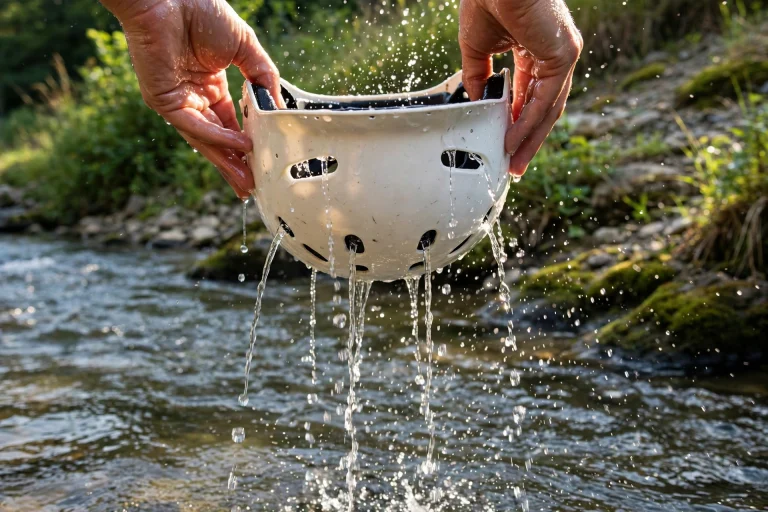
One care point applies equally: keep solvents, strong detergents, and sticker glues away from both, and never leave either baking in a hot car, because heat and chemicals attack foams and resins quietly. The liner you cannot see ages faster in bad storage than the shell you can.
Durability over seasons is more about treatment than material. An ABS helmet dropped weekly on the car park will show it; a composite helmet carried in a padded bag and inspected after knocks can serve for years within its maker’s guidance.
Which Shell Material Should You Choose?
Choose by your paddling, then by your head. If you are learning, paddling moderate water, buying for a family, or equipping a group, ABS gives you dependable protection and easy replacement, and your money is better balanced toward good fit and a course or two. If you paddle hard whitewater often, value low weight over long days, and want maximum coverage without the weight, composite earns its price.
Either way, apply the order that actually decides protection: fit first, because a helmet that moves protects nothing; condition second, because no shell material survives being spent; the liner and design third; and the shell material last, as a refinement. Never let a premium shell talk you into a mediocre fit, and never let a budget shell talk you out of a helmet that fits perfectly.
And whichever you buy, inspect it as its material demands — ABS for dents and deep scuffs, composite for cracks and soft spots — and retire it after a significant impact without debating which shell it wore.
Frequently Asked Questions
Q: Is a composite helmet safer than an ABS helmet?
A: In general terms, not automatically. Both shell types sit over energy-absorbing liners and both can be built into sound, standards-tested watersport helmets. Composite is lighter and stiffer for its weight; safety in practice depends far more on fit, condition, and coverage than on the shell material alone.
Q: Why are rental and school helmets almost always ABS?
A: Because ABS tolerates the life rental helmets lead: constant knocks, many different heads, tight budgets, and easy inspection for visible wear. It protects well and is cheap to replace on schedule, which is exactly what a fleet needs.
Q: How can I tell if a composite shell is damaged?
A: Look for fine cracks, pale lines, or areas that feel soft or flex differently when pressed gently, and listen for a dull or changed sound when you tap around the shell with a fingertip. Any of those after a knock means retire the helmet — and if you cannot be sure, treat it as damaged.

Olivia
Writer at Helmet Today, covering helmet reviews, fit and riding safety.