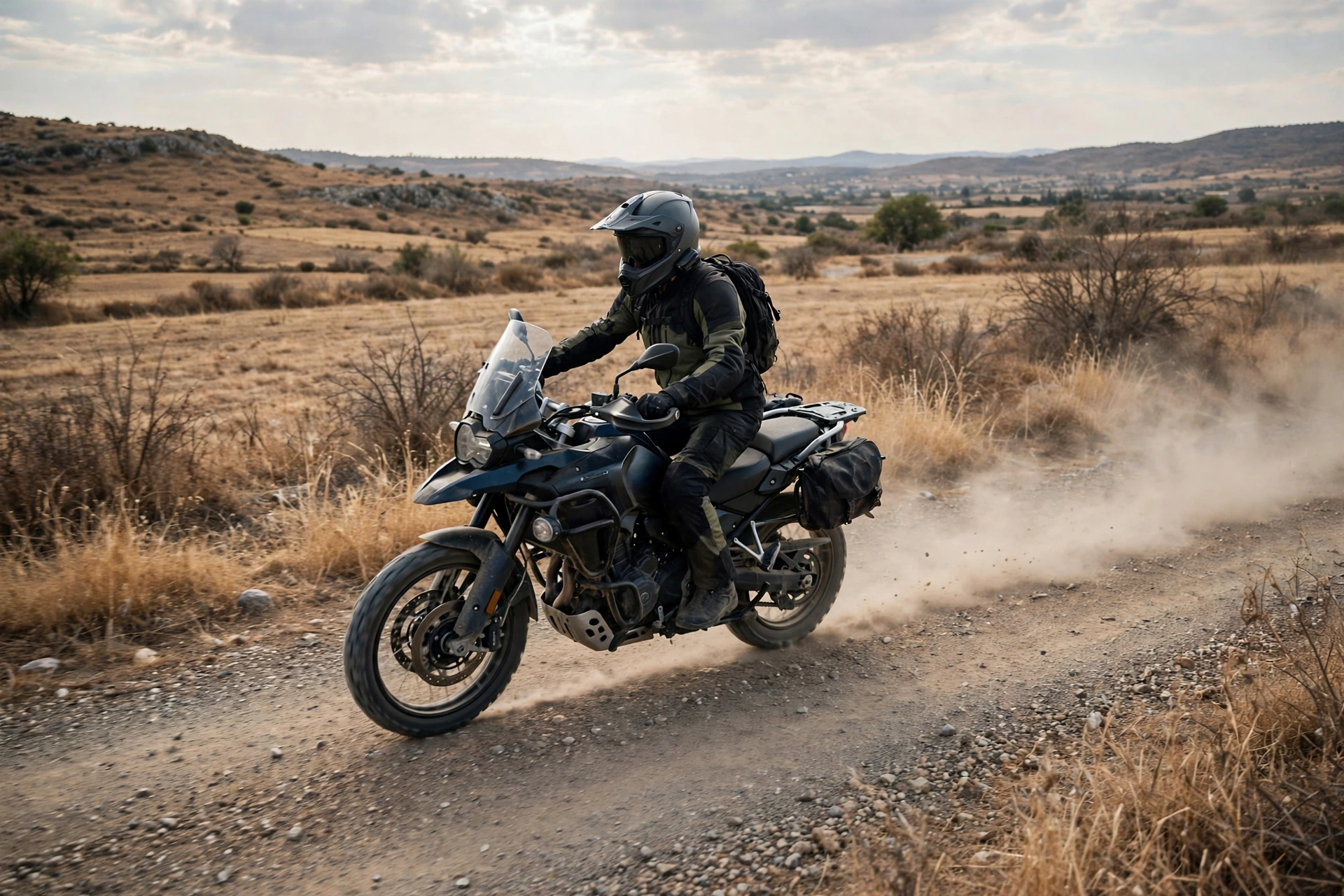
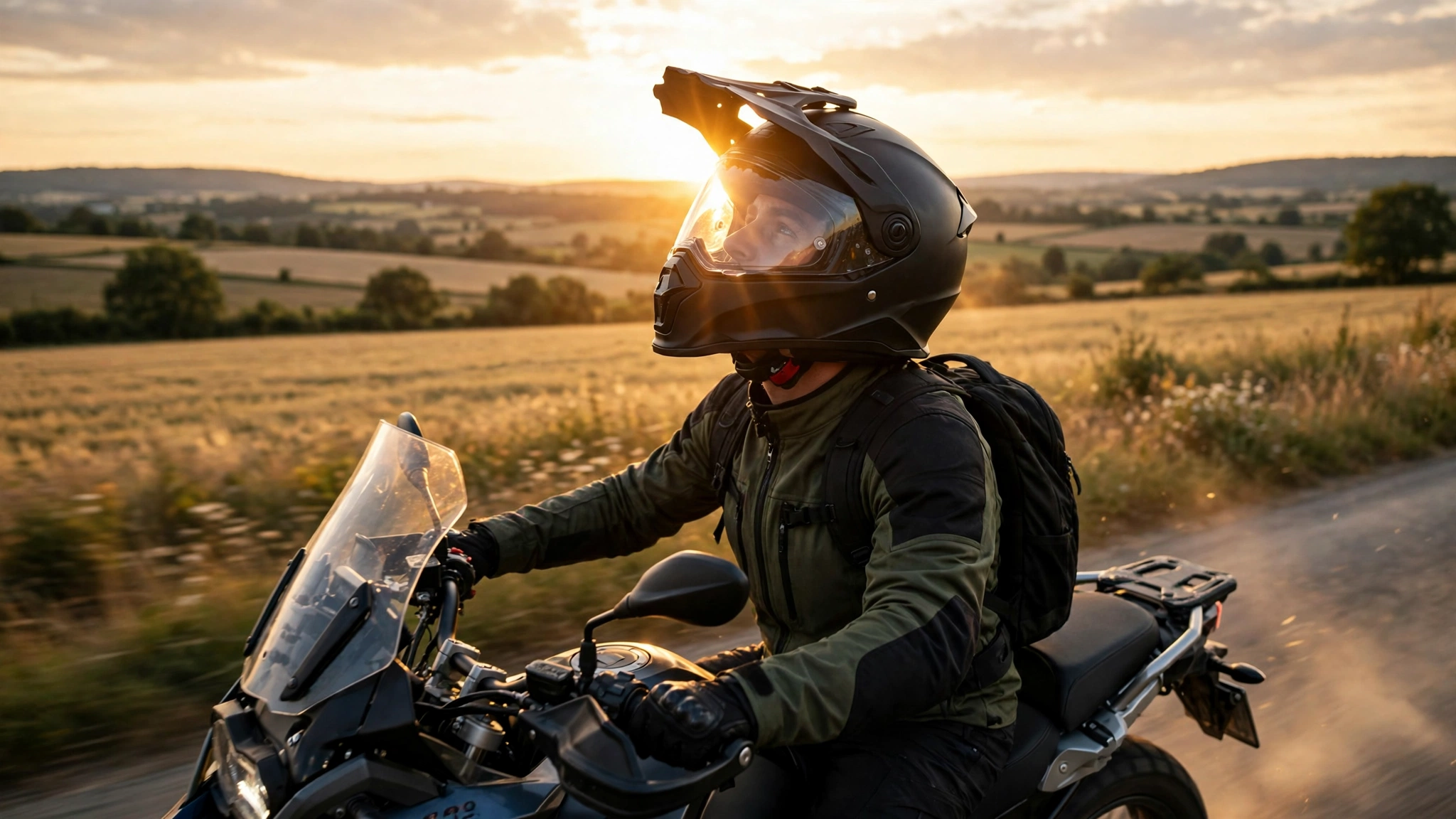
Adventure helmets have a peak visor mainly to shade the rider’s eyes from low sun and glare, and to deflect roost — the dirt, stones, and branches thrown up off-road — while still allowing goggles or a full face shield to be used underneath. The peak is borrowed from motocross helmets, adapted for riders who split their time between road and trail.
This guide explains what the peak actually does, where it helps most, and the honest downsides it brings at road speeds.
Where Did the Adventure Helmet Peak Come From?
The peak comes straight from off-road racing. Motocross and enduro helmets have worn peaks for decades, because riders on dirt face low sun across open ground, mud and stones kicked up by the bike ahead, and branches at head height — all while wearing goggles rather than a sealed shield. When dual-sport and adventure bikes grew popular, riders wanted one helmet that could tour on the road and still work on the trail, and the peak came with the package.
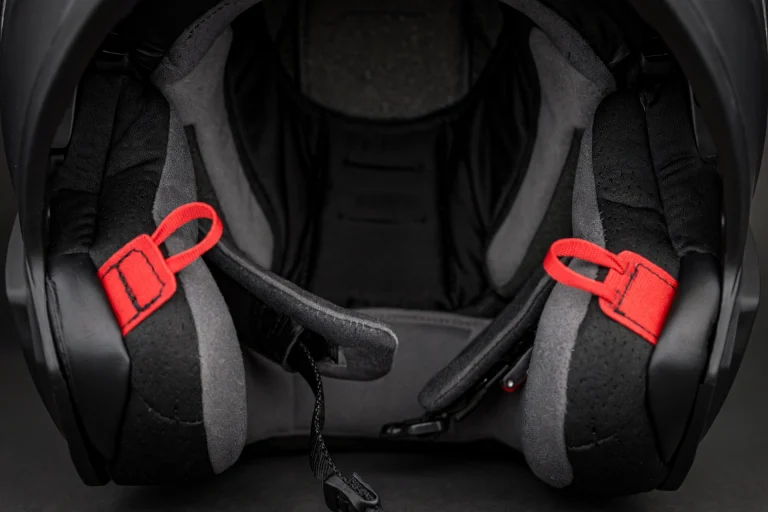
An adventure helmet is therefore a deliberate hybrid: a road-style full-face shell with a flip-up face shield, ventilation meant for slow, hard work, room for goggles with the shield raised or removed, and the off-road peak on top. Each of those features is a compromise made visible, and the peak is simply the most obvious one.
It is also, admittedly, part of the look. The peak signals the adventure style riders like. But unlike pure styling touches, the peak does real jobs — the question is whether those jobs matter on the rides you actually do.
How Does a Peak Visor Help With Sun and Glare?
Sun shade is the peak’s main everyday job. A tinted shield or internal sun visor darkens everything, but a peak blocks the sun itself when it is low and ahead of you — early morning and evening riding, winter sun, and long straight roads into the light. Tilting your head slightly dips the peak into the glare, restoring a clear view of the road without darkening shadows, potholes, and junctions the way a dark visor can.
That distinction matters off-road even more. Trails run in and out of tree cover, alternating bright clearings with deep shade, and a rider needs full, natural vision in the shadows to read ruts and roots. A peak lets you block the bright part and keep the detailed part, which is why trail riders value it far beyond fashion.
On the road, the peak works best alongside, not instead of, proper eye protection: the face shield still guards your eyes from wind, insects, and debris, and a sun visor or sunglasses can join in when the light is strong all around rather than from one direction.
How Does a Peak Protect Against Roost and Branches?
Roost is the spray of dirt, gravel, and stones thrown backward by a spinning rear tyre, and on group trail rides it arrives at face height constantly. A peak angled down in front of the shield or goggles deflects a good share of that spray before it reaches your eyes, and gives you something to duck behind when the rider ahead accelerates out of a muddy patch.
Branches and brush are the second job. Trail riding puts vegetation at head height, and a peak takes the first contact with twigs and leaves, pushing them up and over rather than letting them slap the shield or catch on its top edge. Combined with the habit of dipping your head slightly toward obstacles, the peak becomes a small, constant shield for the face area.
Be clear about its limits, though: a peak is a shade and deflector, not impact protection. The certified shell and liner do the crash work — including managing rotational forces, as described in this guide to what MIPS is for helmets — and a peak is typically designed to flex or break away in a serious impact rather than lever against the helmet. Judge it as a comfort and visibility aid, not armour.
- Sun: blocks low, direct glare while keeping shadows fully visible
- Roost: deflects dirt and stones thrown up by bikes ahead
- Brush: takes first contact with branches and vegetation at head height
- Not a job: crash protection — that belongs to the shell and liner
What Are the Downsides of a Peak at Road Speed?
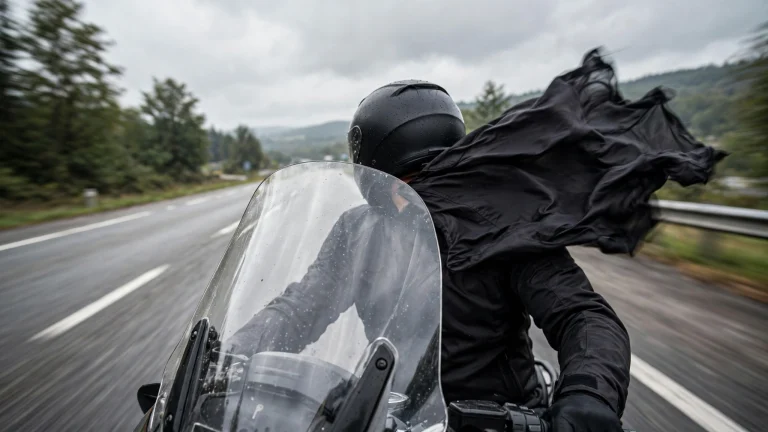
Wind is the honest cost. A peak catches air, and at motorway speeds that can mean extra lift, noise, and pressure on your neck — especially when you turn your head for a shoulder check and the airflow grabs the peak from the side. Adventure helmet makers fight this with vented, sculpted peaks that let air pass through, and modern designs are far better than early ones, but few riders would call a peak an advantage at sustained high speed.
The effect depends heavily on the bike. Behind a tall touring screen, the helmet may sit in calm air and the peak causes no trouble at all. On a naked bike in clean airflow, the same peak may drum and pull. If your riding is mostly fast road work, test any adventure helmet at your real cruising speed before deciding it suits you.
Some peaks are removable, and that flexibility is the practical answer for many owners: peak on for trail days and low-sun commutes, peak off for a long motorway tour. If you plan to do both, check how the peak attaches and whether removal leaves the helmet looking and sealing as intended.
Should Your Next Helmet Have a Peak?
Choose an adventure helmet with a peak if your riding genuinely mixes road and trail, if you ride into low sun regularly, or if you tour in places where gravel roads are part of the fun. For that rider, the peak earns its place daily, and its road-speed compromises are modest and manageable — especially on a bike with a screen.
Skip the peak if your riding is almost entirely fast road, track, or city work. A smooth road helmet will be quieter, calmer in the wind, and easier on your neck over long distances, and a drop-down sun visor handles glare in a cleaner package. A peak that never meets dirt is mostly drag in exchange for a look.
As always, decide the style after the fundamentals: the helmet must fit your head properly, meet the safety standard required where you ride, and be comfortable enough that you never resent wearing it. Peak or no peak is the last question on the list — but for the riders it suits, it is a feature they would not give up.
Frequently Asked Questions
Q: Can I wear goggles with an adventure helmet peak?
A: Yes — that is part of the design. Adventure helmets are shaped to accept goggles with the face shield raised or removed, and the peak sits above them just as it does on a motocross helmet. Check that your goggles’ strap and frame fit the eye opening of the specific helmet.
Q: Does a peak visor make a helmet less safe?
A: In general terms, peaks on certified adventure helmets are designed to flex, vent, or detach in an impact rather than add force, and the helmet is certified as sold. What matters is buying a properly certified helmet that fits well, and not adding aftermarket peaks to helmets not designed for them.
Q: Can I remove the peak for motorway riding?
A: On many adventure helmets, yes — the peak unclips or unscrews, and riders commonly remove it for long high-speed trips. Check your model’s instructions, keep the fittings safe, and confirm the helmet seals and vents correctly with the peak off before a long ride.

Olivia
Writer at Helmet Today, covering helmet reviews, fit and riding safety.