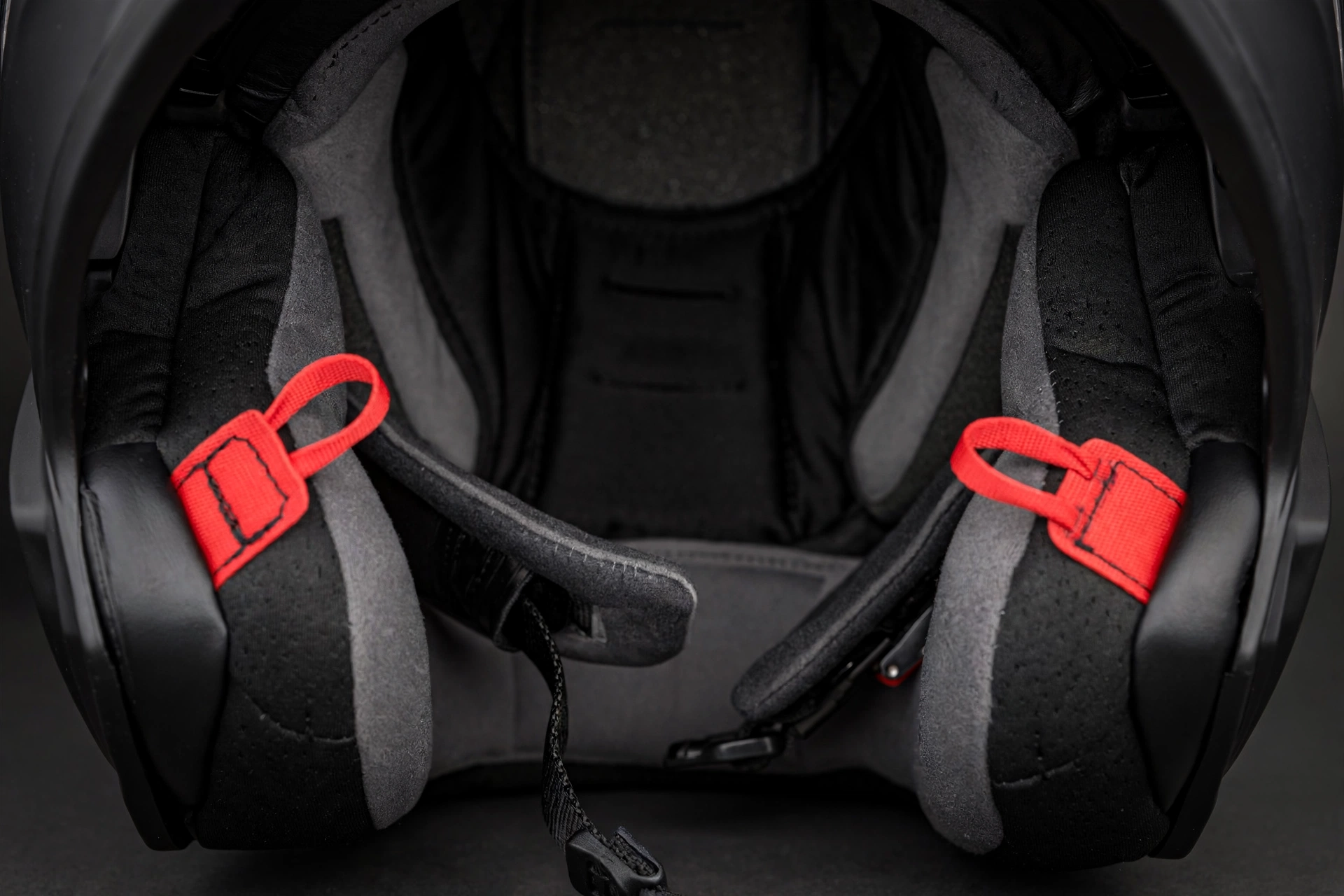
An emergency cheek pad release is a system that lets first responders pull a helmet’s cheek pads out from the outside — usually by bright pull tabs at the bottom of the pads — so the helmet can be eased off an injured rider’s head with less pulling, twisting, and pressure on the neck after a crash. It does not change how the helmet protects you during the crash; it helps the people treating you afterwards.
This guide explains how the system works, why medics value it, and what riders should know about the tabs on their own helmet.
What Is an Emergency Cheek Pad Release on a Helmet?
On most helmets, the cheek pads are the tightest-fitting part of the interior — they have to be, because they grip your cheeks to keep the helmet stable. That grip creates a problem after a serious accident: removing a tight helmet normally means pulling it over the widest part of the head, which can tug and tilt the head and neck of a rider who may have spinal injuries.
An emergency cheek pad release solves that problem by making the pads removable from outside while the helmet is still on. The pads sit on a mounting that can be released by pulling clearly marked tabs — often red — located at the lower front of each pad. A firm pull on each tab frees the pad, the rescuer slides it out, and the helmet suddenly has far more room inside.
Systems go by several brand names, but the idea is the same across makers. If your helmet has it, you will usually find small tabs or loops below the cheek pads and often a mention in the manual or a label inside the helmet. It is worth knowing whether yours is equipped before you ever need it.
How Does the Emergency Release Work at a Crash Scene?
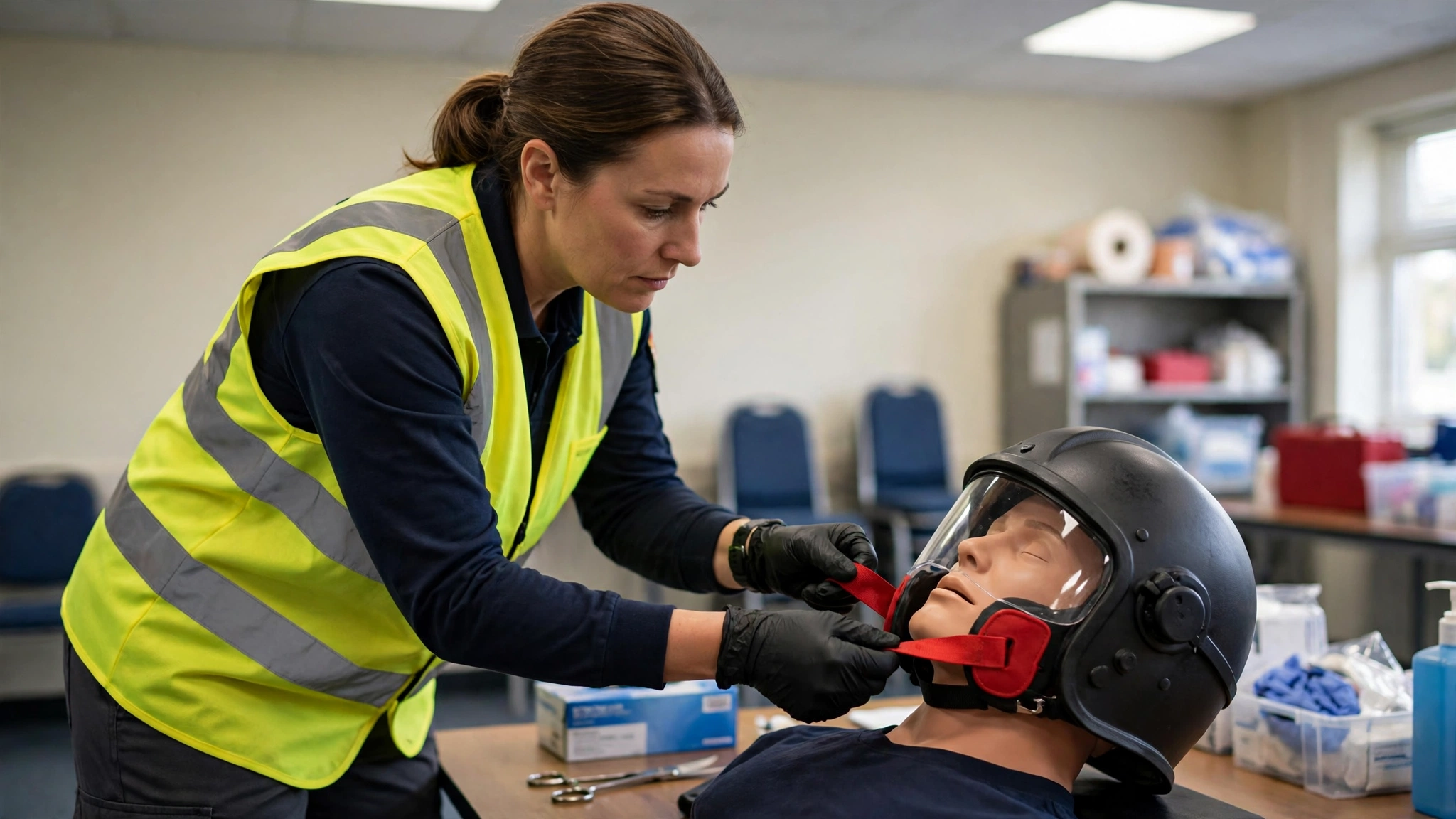
The sequence is simple by design, because it may be used at a roadside, in poor light, by someone wearing gloves. A trained responder stabilises the rider’s head and neck first. Then, one rescuer pulls each tab to release the cheek pads and slides them out, while support is maintained. With the pads gone, the helmet can be spread slightly and eased upward and off with far less force and far less movement of the head.
Removing the pads first changes the whole geometry of the job. The tightest squeeze — the pads pressing on the cheeks and jaw — disappears, so the helmet no longer has to be dragged over that resistance. Responders can then control the removal slowly, keeping the head and neck as still as possible, which is the point when a spinal injury is suspected.
Some helmets combine cheek pad release with other responder-friendly details, such as liners that come out in sections or markings showing responders where the tabs are. These features cost the rider nothing day to day.
Why Do Medics and First Responders Want This Feature?
Because helmet removal is a dilemma in crash care. A helmet may need to come off so responders can manage the airway, check for injuries, or treat the rider properly — yet forcing a tight helmet off can move the neck. Anything that reduces the force needed and the movement involved is valuable, and cheek pad release directly reduces both.
There is a second, quieter benefit: speed with control. At a chaotic scene, a system that any trained responder can operate in seconds — pull two tabs, slide two pads, ease the helmet away — reduces hesitation and improvisation. Some first-aid training now teaches responders to look for these tabs at a crash scene.
For fellow riders, the lesson is simple: if you are first at a scene, the helmet generally stays on unless a trained person decides otherwise, and if removal is necessary, the release tabs are the safest way to help it happen. Knowing your own helmet has them — and telling your riding group — turns a hidden feature into a useful one.
Does an Emergency Release Affect Normal Fit or Safety?
Used normally, no. The pads lock firmly in place for everyday riding and grip the cheeks exactly like fixed pads; the release only works when the tabs are deliberately pulled. You should feel no rattle or movement compared with a helmet without the system, and any looseness you do feel is a fit or wear problem to fix, not the release doing its job.
The system also plays no part during the crash itself. During an impact, protection comes from the shell, the energy-absorbing liner, fit, and the strap keeping everything positioned — including rotational protection, the subject of this guide to what MIPS is for helmets. The cheek pad release only matters in the minutes after, when careful handling protects the neck.
One caution: the tabs are not a fitting adjustment or a comfort trick. Pulling them mid-ride or using them to make a tight helmet feel looser defeats their purpose and can leave a pad improperly seated. Treat them as emergency-only equipment, refit pads carefully if they are ever removed for washing, and confirm they click or seat fully back into place.
- For responders: pull tabs free the pads so the helmet comes off with less force and neck movement
- For riders: no change to everyday fit — pads stay locked until the tabs are pulled
- For everyone: never use the tabs to loosen a tight helmet for comfort
How Can You Tell If Your Helmet Has an Emergency Release?
Look at the bottom edge of the cheek pads, near the front. Release systems announce themselves with small tabs or fabric loops — frequently red or orange — that are not part of the normal pad shape, sometimes with a label on the pad or in the helmet telling responders to pull. Your helmet’s manual will describe the system if one is fitted, and many product listings mention it under safety features.
If you are choosing a new helmet and ride far from help, tour, or ride in groups, it is a feature worth putting on your shortlist — not above fit, certification, and comfort, but as a genuine plus once those are equal. Adventure and touring helmets commonly offer it, and it appears across a wide range of road helmets, not only premium ones.
Whatever helmet you own, take two minutes: find whether it has release tabs, learn where they are, and make sure anyone you ride with knows too. After a crash is the wrong time to discover a feature your helmet had all along — and the right preparation is simply knowing your own kit.
Frequently Asked Questions
Q: Should I remove a crashed rider’s helmet using the release tabs?
A: Only if you are trained or guided to do so, or if the airway demands it. In general, a helmet is left in place and the emergency services called; removal is a decision for responders. The tabs make that removal safer when it is necessary — they are not an invitation for bystanders to pull helmets off.
Q: Do the cheek pads still work normally after the release has been used?
A: The pads themselves are usually undamaged by a proper release and can be refitted. However, a helmet involved in a crash serious enough to need emergency removal should be retired and replaced, whatever condition the pads appear to be in.
Q: Is an emergency cheek pad release worth paying extra for?
A: It is a sensible feature to prefer when choosing between similar helmets, especially for touring and group riding, but it should never outrank correct fit and the required safety certification. Think of it as a tie-breaker that could matter enormously on one bad day.

Olivia
Writer at Helmet Today, covering helmet reviews, fit and riding safety.