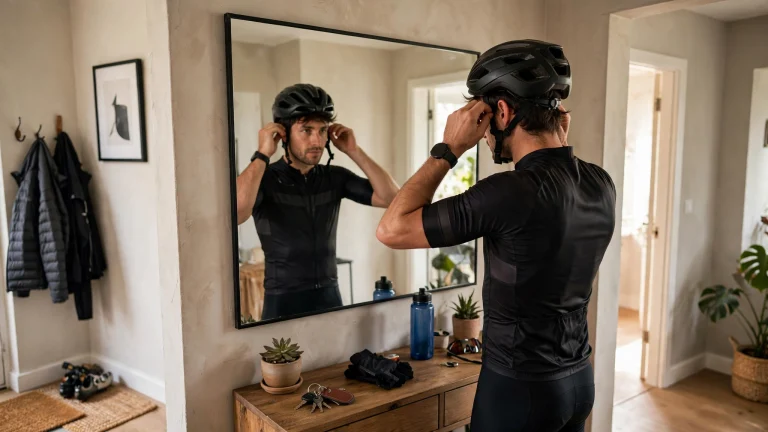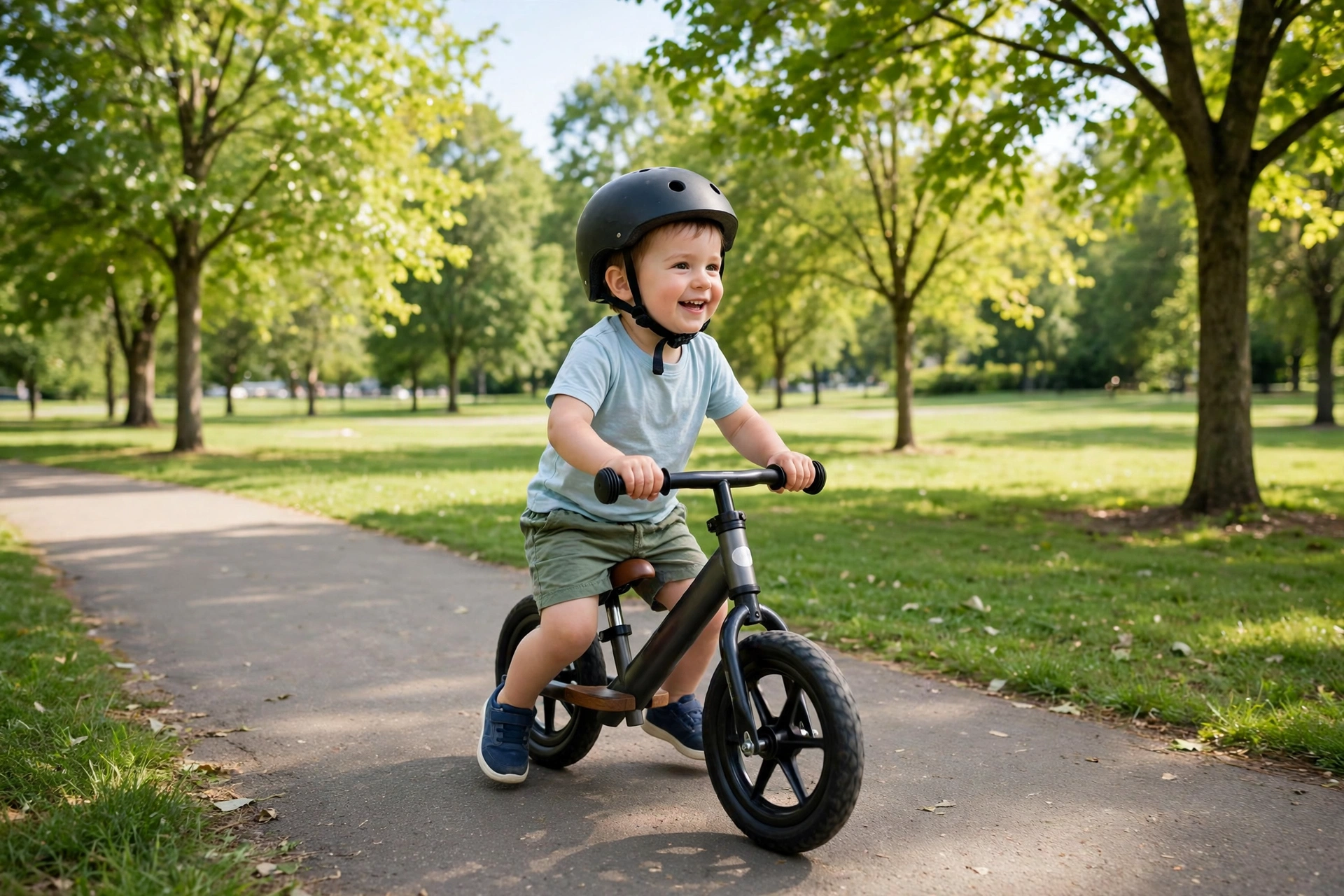
The best bicycle helmet tips for toddlers on balance bikes are simple: choose a helmet made and sized for toddlers that meets the bike helmet standard where you live, fit it level and snug with the straps forming a V under each ear and the chin strap leaving no more than a finger or two of slack, and make it a non-negotiable habit from the very first ride. Balance bikes are a toddler’s first real falls, and the helmet has to fit a small, growing head correctly to do its job.
This guide covers choosing the right helmet, fitting it properly, and building the habits that keep it on.
What Kind of Helmet Does a Toddler on a Balance Bike Need?
A toddler needs a bicycle helmet — not a skate helmet, not a ski helmet, and not an older sibling’s outgrown hand-me-down of unknown history. Bike helmets are designed and tested for the falls a small rider takes from a bike, and toddler models are made in genuinely small sizes with light shells that a young neck can carry comfortably.
Check the label inside the helmet. In general terms, a proper bicycle helmet states the safety standard it meets and the head size range it is made for; a helmet with no standard named, sold as a toy or costume, is not protection. That label check matters more with toddler helmets than almost any other, because the cheapest small helmets are the ones most likely to skip real testing.
Design details help with real toddler life. A flatter back lets a child sit in a bike seat or lean back in a trailer without the helmet being pushed forward. Bright colours aid visibility, and a pinch-guard buckle saves small fingers from the classic strap pinch.
How Do You Choose the Right Size for a Toddler?
Measure, do not guess by age. Wrap a soft tape around your toddler’s head at the widest point, just above the eyebrows and ears, and compare the number with the size range printed for the exact helmet you are considering. Toddler heads grow fast, and two children of the same age can easily be a full size apart.
Buy the size that fits now, not a size to grow into. A helmet that is too big rocks, tips over the eyes, and can shift or come off in the exact fall it is meant for — “room to grow” works for shoes, never for helmets. Most toddler helmets include sizing pads or a rear adjustment dial that adjusts as your child grows within that size.
Between sizes, follow the maker’s guidance and the fit test, and expect to replace the helmet as your toddler grows out of it. That is normal and unavoidable: a helmet is replaced when it no longer fits, after a crash, or when straps and foam are worn — and with toddlers, growth usually gets there first.
How Should a Toddler’s Helmet Sit and Fasten?
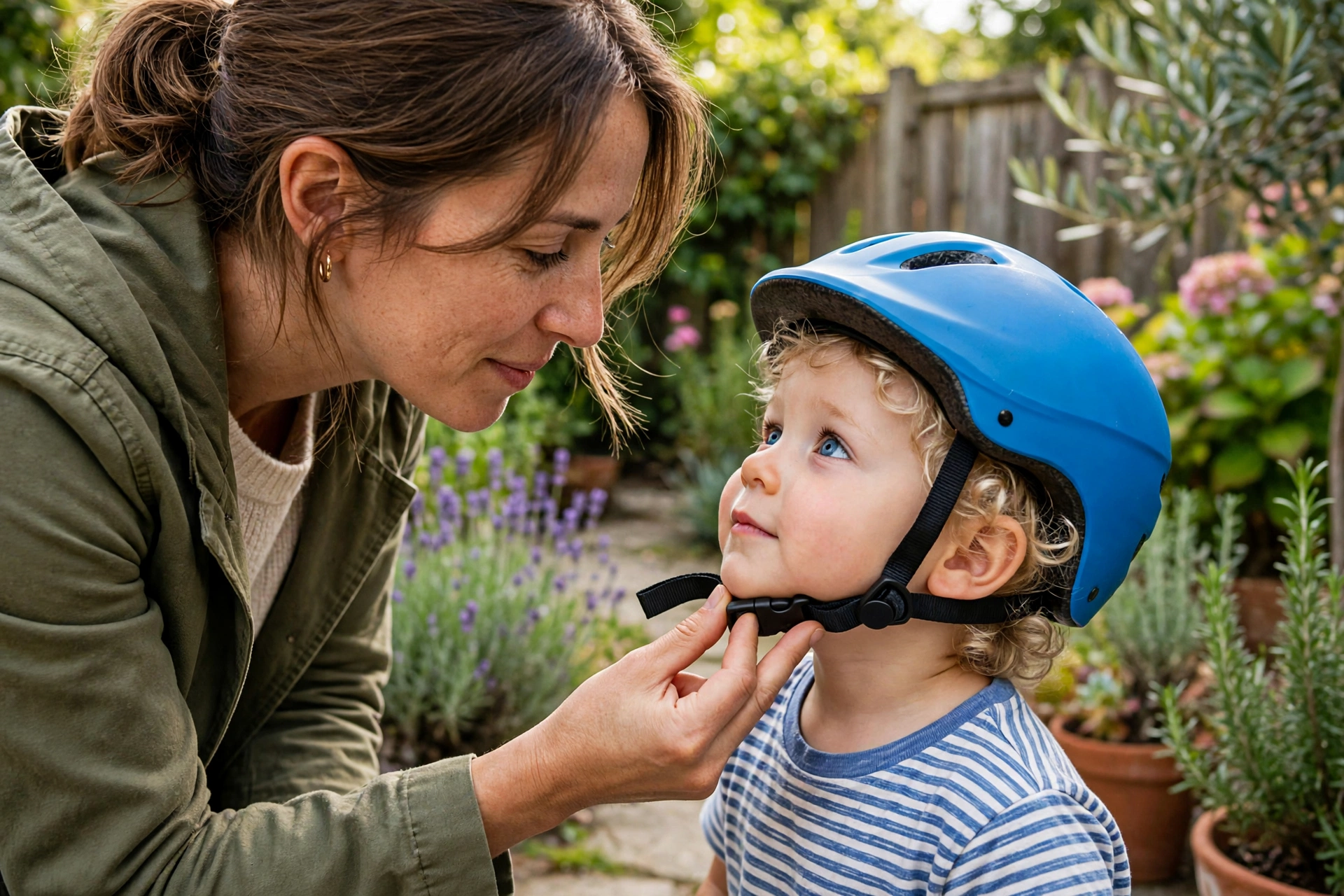
The helmet should sit level on the head — not tipped back like a cap, not pulled down over the eyes — with the front edge sitting low on the forehead, roughly a couple of finger-widths above the eyebrows. A tipped-back helmet is the most common toddler fitting mistake, and it leaves the forehead exposed.
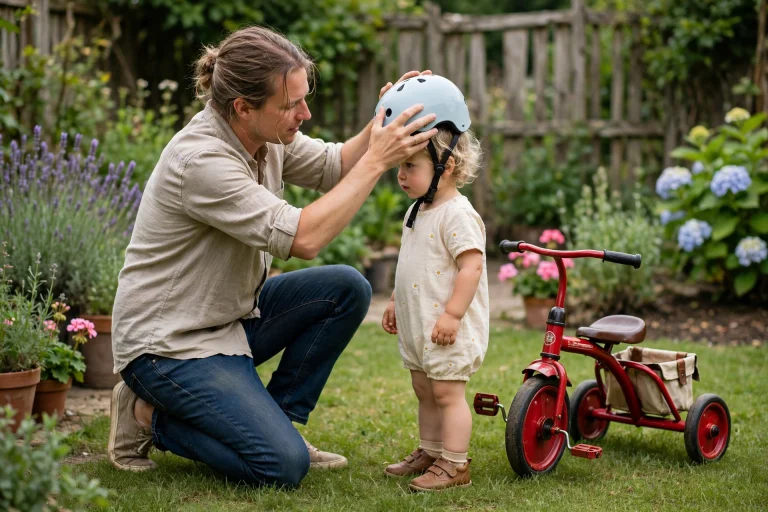
Set the straps in order. First, adjust the side straps so they meet in a V shape just below each earlobe, using the sliders on the straps. Then fasten the chin strap snugly: as a guide, you should be able to fit one or two fingers between strap and chin, and the helmet should not lift or rock when you gently try to move it front to back and side to side. If your toddler can push it back off the forehead, it is too loose, whatever the dial says.
Finish with the toddler test: ask them to shake their head and look up at you. The helmet should stay level and put, the straps should stay in place, and your child should look comfortable rather than squeezed. Recheck regularly — sliders creep, dials get twiddled by small fingers, and last month’s perfect fit is not this month’s.
- Position: level, front edge low on the forehead, never tipped back
- Straps: V under each ear, chin strap snug with one to two fingers of slack
- Stability: no rocking, tipping, or lifting when the head shakes
How Do You Get a Toddler to Actually Wear the Helmet?
Start the habit with the very first sit on the bike, before any rolling happens, so helmet and bike are one idea in your toddler’s mind: no helmet, no ride, calmly and every time. Habits formed at this age are remarkably durable, and a rule that never bends is far easier than one negotiated at every outing.
Let your toddler help choose the colour or design from a shortlist of helmetsets that all fit correctly. A helmet they picked is a helmet they ask for. Wear your own helmet whenever you ride with them, too — toddlers copy what they see far more reliably than they follow what they are told, and a parent buckling up makes helmet-wearing look like what riders simply do.
Keep early sessions short and fun: if the helmet pinches or slips, fix it indoors at fitting time rather than mid-ride. If your child fights the strap, check first for a genuine problem — a twisted strap, a buckle pinching skin, or pads pressing — before treating it as pure stubbornness. Often it is.
What Else Protects a Toddler on a Balance Bike?
The helmet is the centrepiece, not the whole system. Choose where your toddler rides: smooth, flat, enclosed spaces away from traffic, driveways, and slopes that end in roads are the right early territory, because a balance bike toddler cannot brake with their hands and manages speed with their feet alone.
Adult supervision within grabbing distance matters at this stage, as do shoes that stay on and cover the toes — toddlers brake with their feet, and sandals and pavement are a poor combination. Check the bike too: grips, saddle height set so feet rest flat, and nothing sharp or loose.
Finally, treat any fall onto the head as a helmet inspection moment. Bike helmets work by their foam crushing in an impact, and a helmet that has taken a real hit should be replaced even if it looks fine, because the damage can hide in the foam. Understanding how helmets manage angled as well as straight impacts — explained in this guide to what MIPS is for helmets — helps parents judge why a correct, undamaged helmet matters.
Frequently Asked Questions
Q: Can my toddler wear a skate helmet on a balance bike instead?
A: Only if that exact helmet is also certified as a bicycle helmet — some dual-certified models exist. In general terms, use a helmet that states it meets the bicycle helmet standard where you live, sized for your toddler, rather than assuming another helmet does the same job.
Q: How tight should a toddler’s chin strap be?
A: Snug, with roughly one to two fingers able to fit between the strap and the chin, and tight enough that the helmet cannot be pushed back off the forehead or rocked side to side. Recheck often, because sliders slip and toddlers fiddle.
Q: My toddler refuses the helmet. Should we skip short rides?
A: Keep the rule simple and total: helmet on, or the bike stays put. Most toddlers accept a calm, absolute rule quickly, especially when they chose the helmet’s colour and see you wearing yours. Short rides are exactly the rides where habits — and falls — happen.

Olivia
Writer at Helmet Today, covering helmet reviews, fit and riding safety.