If your hockey helmet is too tight on the temples, first check that it is seated level and adjusted correctly, then try the maker’s thinner temple pads or the shell’s width adjustment if it has one — and if the squeezing is still there after a fair trial, in general terms the helmet is the wrong size or the wrong shape for your head, and a different size or model is the real fix, because temple pressure that lasts a whole game should never be something you just endure.
This guide explains how to tell normal new-helmet snugness from a genuine fit problem, and every fix worth trying in order.
Is Some Temple Tightness Normal in a New Hockey Helmet?
Some firmness is normal. A new helmet should feel snug all the way round — that even grip is what keeps it in place in a collision — and new comfort pads are at their thickest before they bed in over the first few games. Mild, even pressure that you stop noticing once you are playing is usually just a new helmet being new.
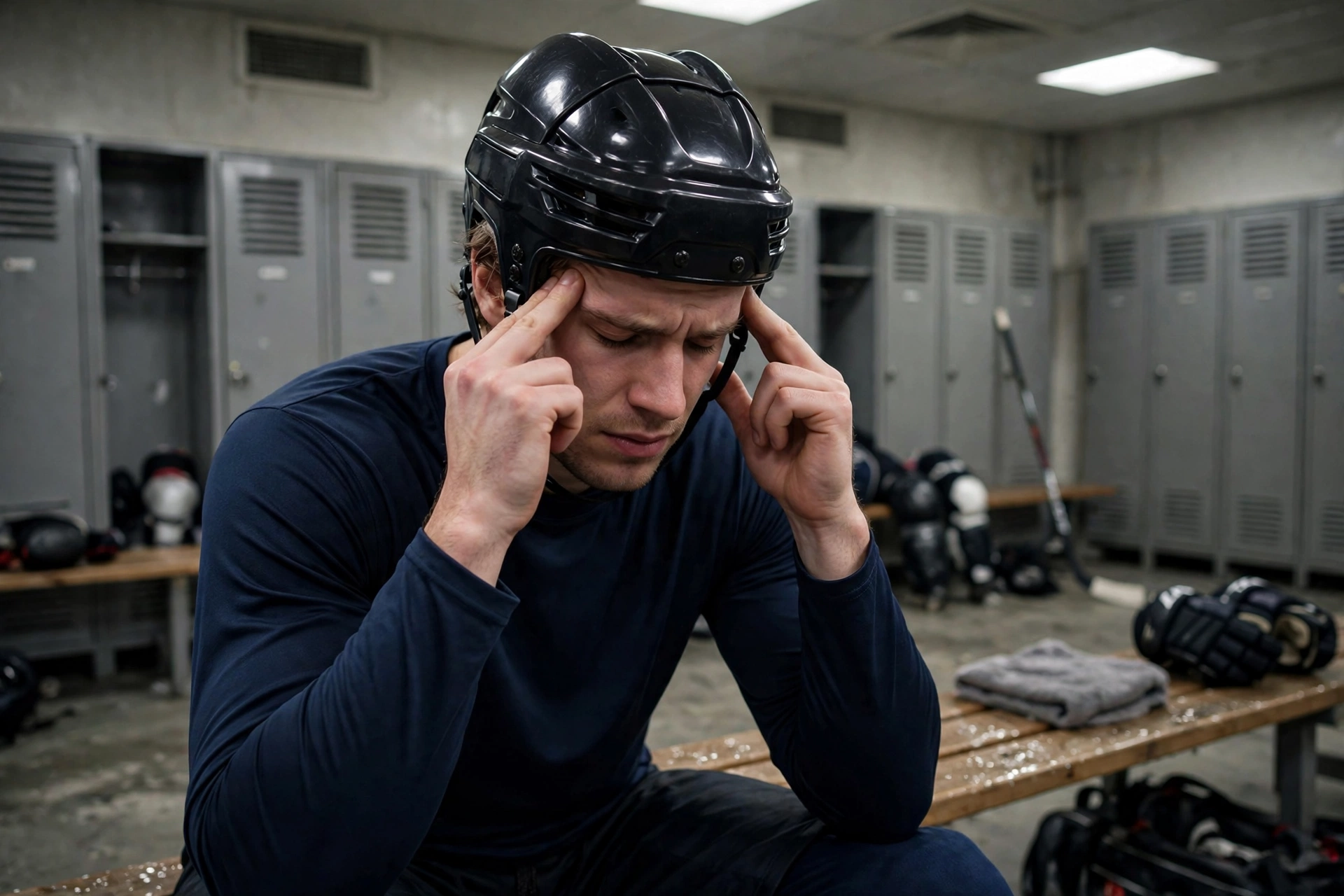
What is not normal is pain. Sharp or throbbing pressure directly on the temples, a headache that builds through the game, red marks that last long after you take the helmet off, or numbness are all signs the fit is wrong, not tight-but-right. The temples sit over sensitive structures, and a helmet pressing hard there all game is a helmet you will start wearing loose, pushed back, or unfastened — each of which quietly removes protection.
Time is the test. In general terms, bedding-in improves comfort over the first several skates; if temple pain is the same or worse after a fair trial of games, stop waiting for it to fix itself and work through the checks below.
What Should You Check Before Changing Anything?
Start with position, because a helmet worn wrong feels tight in strange places. It should sit level, low enough that the front edge is just above your eyebrows, centred rather than tipped to one side. A helmet perched too high or slid back concentrates its grip on the temples and forehead instead of spreading it round the whole head.
Then check what is underneath. Long hair bunched at the sides, a thick headband, or glasses arms trapped under the padding all add bulk exactly at the temples. Flatten the hair, thin the layer, and route glasses arms properly before you judge the helmet — many “too tight” helmets are really “too much stuff inside” helmets.
- Level and low: front edge just above the eyebrows, not perched or tilted
- Centred: equal feel on both temples — one-sided pain suggests a crooked fit or shape mismatch
- Nothing bunched: hair flat, no thick bands, glasses arms sitting properly
- Straps and cage: a cage mounted under tension can pull the shell in at the sides on some models — check the mounts are not distorted
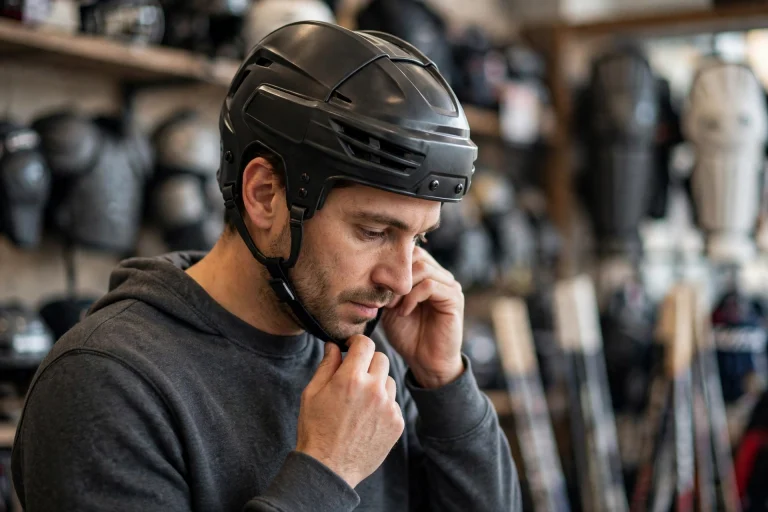
Also confirm you actually have the size you think you have: measure your head and compare it with the maker’s chart for that model. Players wear the wrong size for years more often than you would expect.
How Do Fit Adjustments and Pads Help Temple Pressure?
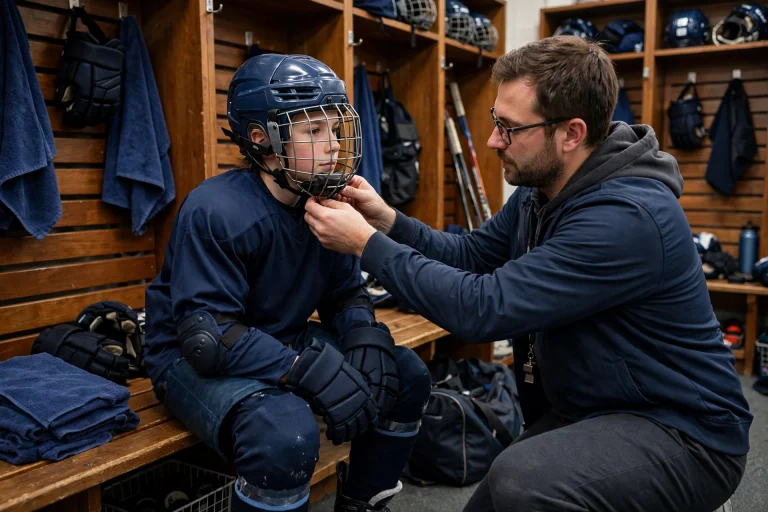
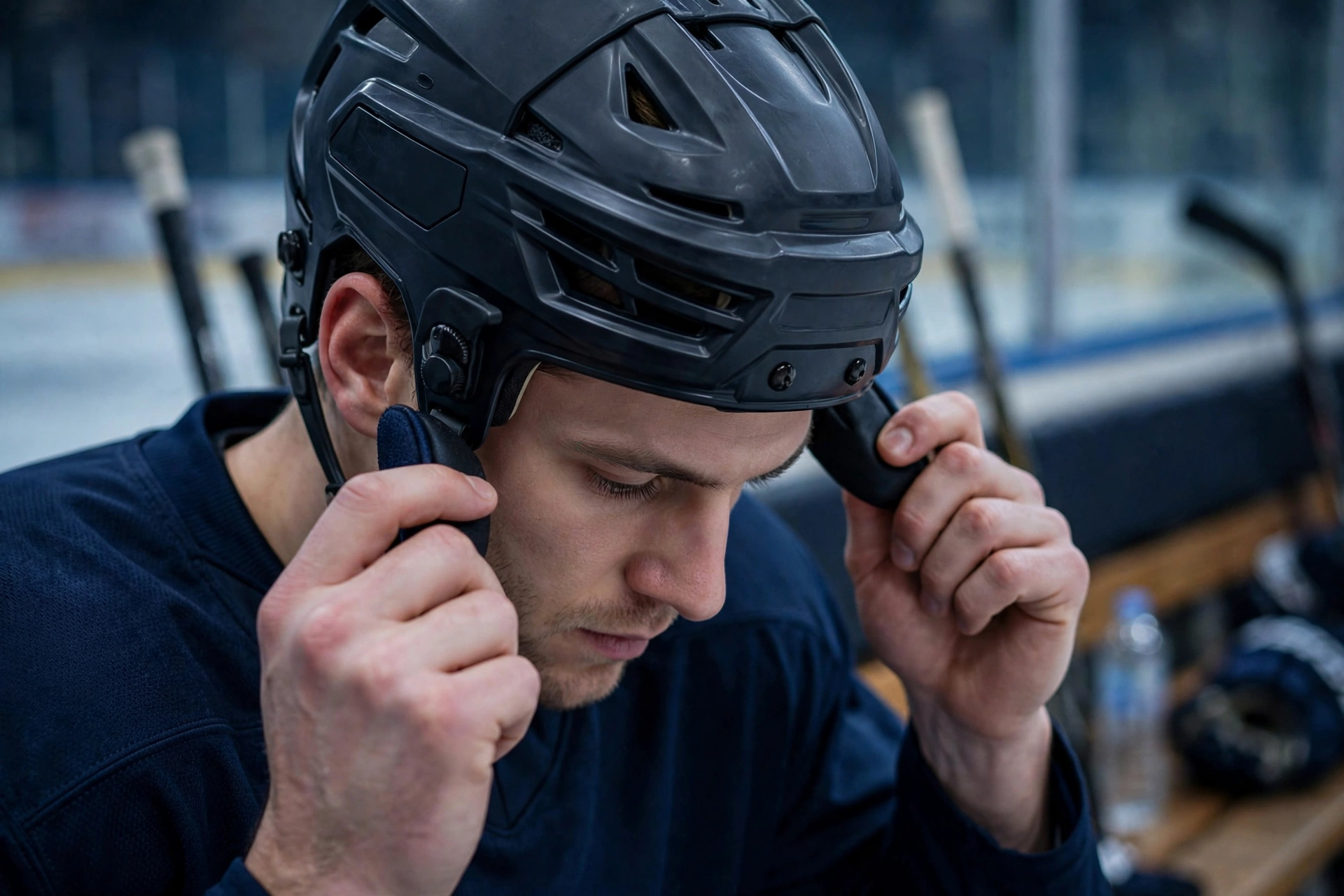
Many helmets have more adjustment than players realise. Tool-free length adjusters change how the shell wraps, and some models offer occipital or side adjustments that alter the grip at the back and sides. Read the maker’s fitting guide for your model and work through every adjustment it has, in order, with the helmet on your head — a quarter-turn or one click can move pressure off the temples entirely.
Comfort pads are the second lever. Makers commonly supply or sell pads in more than one thickness, and fitting the thinner set at the sides is the intended way to fine-tune width. Use the maker’s own pads for your model; they are shaped for the shell and keep the liner working as designed.
What never to do is crush, cut, shave, or remove the protective foam to make room. The firm liner under the comfort pads is the impact-absorbing structure — the part that, together with systems like the ones explained in this guide to what MIPS is for helmets, manages the force of a hit. Thinning it at the temples removes protection at exactly the spot that hurts, and it voids the helmet’s certified design in the process.
What If the Helmet Is Simply the Wrong Shape for Your Head?
Head shapes differ more than size charts suggest. Two heads with the same circumference can be round or long-oval, and helmets are moulded in different shapes by different makers. A shell built for a rounder head will clamp the temples of a narrower, longer head no matter what the pads do — this is the classic cause of temple pain that survives every adjustment.
The fix is a different model, and it is worth doing properly: go to a shop, take your time, and try several makers’ helmets in your measured size, wearing each for several minutes rather than judging the first ten seconds. The right shape feels snug everywhere and tight nowhere — pressure spread so evenly you can forget it.
This is also why buying the same model a teammate loves is unreliable. Shape is personal in a way size is not, and your temples are telling you about your head, not about the helmet’s quality.
When Is Going Up a Size the Right Answer — and When Is It Not?
A size up is right when your measurement genuinely sits at or beyond the top of your current size’s range on the maker’s chart. In that case the bigger shell, properly adjusted and padded, gives even pressure and still passes the shake test. A size up is wrong when it is bought purely to escape temple pressure while your measurement sits mid-range: the bigger helmet will feel kind in the shop and then rock, slide, and sit wrong on the ice.
The shake test decides. Whichever size you choose, fastened up it must not roll forward, tip back, or shift side to side when you shake and nod hard. A helmet that moves is not protecting the temples it was squeezing — it is endangering the whole head.
If you are truly between sizes, use the maker’s guidance and the padding system of the smaller size first, and try the larger with its full pad set before deciding. Fit is a system of shell, pads, and adjustment together; judge the finished fit, not the label.
Frequently Asked Questions
Q: Will a tight hockey helmet stretch out over time?
A: The comfort pads compress and bed in a little over the first games, which eases mild snugness. The shell itself does not stretch, and the protective foam should not change shape. If temple pain is sharp or causes headaches, do not count on stretching — work through the adjustments or change the helmet.
Q: Can I remove the temple pads to stop the squeezing?
A: No. Removing pads changes how the helmet sits, usually letting it drop or tilt and creating new pressure points, and the liner system no longer matches the certified design. Use the maker’s thinner pads for your model if offered — that is the supported way to gain room.
Q: Why does only one temple hurt?
A: One-sided pain usually means the helmet is sitting crooked, one pad is seated incorrectly, or your head shape is slightly asymmetric against that shell. Reseat the pads, centre the helmet carefully, and check the cage mounts are even. If it persists across models, it is a shape issue — a fitter in a good hockey shop can help.

Olivia
Writer at Helmet Today, covering helmet reviews, fit and riding safety.