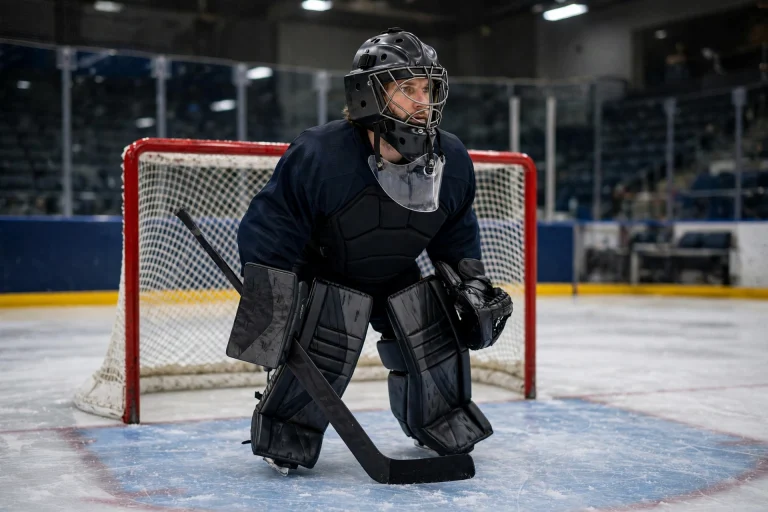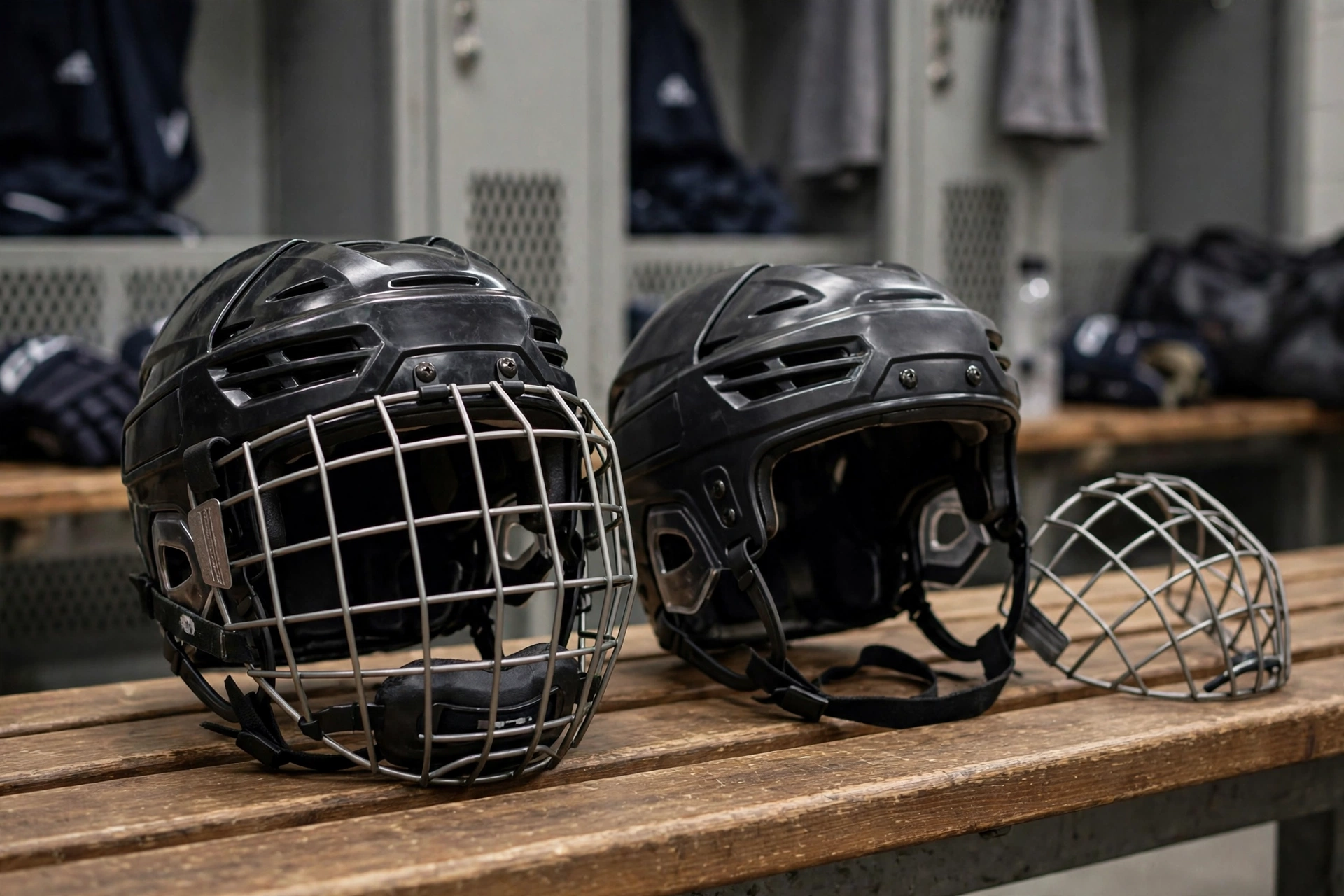
A combo cage helmet comes with the cage or visor-cage already fitted by the maker as one matched unit, while a separate cage is bought on its own and mounted onto a helmet you already own — in general terms the combo is the simpler, guaranteed-compatible choice, and the separate cage is the flexible choice that lets you pair any cage with any helmet it properly fits. Both protect the same way once fitted; the differences are fit certainty, convenience, cost, and replacement.
This guide compares the two setups honestly so you can pick the right one for your situation.
What Exactly Is a Combo Cage Helmet?
A combo is a helmet sold with its face protection already attached: most often a full cage, or a visor-and-cage combination where the upper part is a clear shield and the lower part is cage. The maker has chosen a cage sized and shaped for that shell, mounted it at the factory or packaged it as a single product, and certified or approved the pairing as it is sold.
The appeal is certainty. There is no guessing about whether a cage’s mounting points line up with your helmet’s, no hunting for the right size of cage for your size of shell, and nothing to assemble in the dressing room. Open the box, check the fit of the whole thing, adjust the straps, and play.
Combos are especially common for youth players and beginners, and in team or school orders, where one decision has to be right for many heads at once. For a parent buying a first setup, a combo removes the most common beginner mistake — a cage that does not actually fit the helmet it is bolted to.
What Is a Separate Cage, and Why Do Players Choose One?
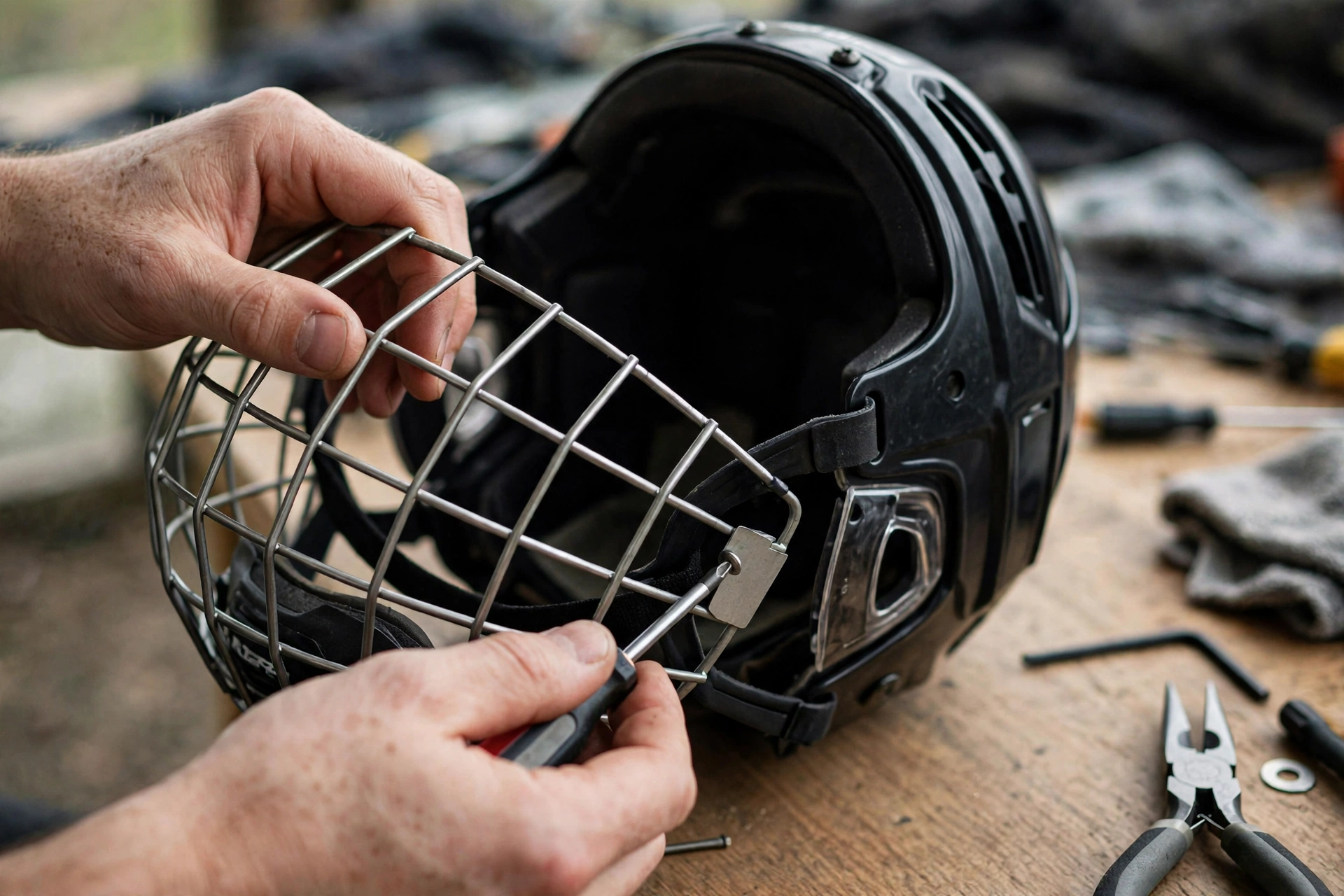
A separate cage is face protection bought independently and mounted to your helmet with screws and clips at the forehead and sides. Players choose this route when they already own a helmet they like, when they want a specific cage — a particular colour, profile, or a certified cage in a shape they prefer — or when they are replacing a damaged cage on a sound helmet.
The freedom is real but so is the responsibility. Cages come in sizes, and the cage must match the helmet’s size and mounting pattern; a cage that is too wide, too narrow, or forced onto mounts that do not line up will sit crooked, rattle, leave gaps, or stress its own welds. Getting a separate cage fitted at a hockey shop, at least the first time, is money well spent.
Separate cages also let a player change protection without changing helmets — moving from a visor to a cage for a physical league, for example — provided the helmet and cage are both compatible and the league’s rules allow the setup.
How Do Combo and Separate Cages Compare for Fit and Vision?
For fit, the combo starts ahead because the pairing is guaranteed: the cage’s curve matches the shell, the chin cup lands where it should, and the whole unit sits as the maker tested it. With a separate cage, fit is achievable but earned — correct size, correct mounts, careful adjustment of the straps and the cage’s position so it neither presses your chin nor hangs away from your face.
Vision is closer than most players expect. Both setups put the same kind of bars in front of your eyes, and players adapt to them within a few skates either way. Where a combo can edge ahead is the visor-cage versions, where the maker has aligned the shield and cage as one optical unit; where a separate cage edges ahead is choice — you can pick a cage profile your eyes prefer.
- Fit certainty: combo, guaranteed by the maker; separate, depends on correct sizing and mounting
- Choice: separate, any compatible cage on any helmet; combo, the pairing is fixed
- Vision: broadly equal for cage-only; combo visor-cages are aligned as one piece
- Convenience: combo, ready out of the box; separate, assembly and checking required
Either way, the face protection is only the front of the system. Impact protection still comes from the helmet’s shell and foam — including management of the rotational forces covered in this guide to what MIPS is for helmets — and a cage, combo or separate, earns its keep by keeping sticks and pucks away from your face, not by absorbing head impacts.
How Do They Compare for Cost and Replacement?
Bought new together, a combo is usually the cheaper total than the same helmet and cage bought separately, because you are paying for one product rather than two. For a growing youth player who will replace the whole setup on size alone, that simplicity and price are hard to beat.
The separate route wins over time for adults. When a cage gets bent, rusts, or its coating chips, a separate cage is replaced on its own while the helmet — the expensive part — carries on, provided the helmet is still in date and undamaged. With a combo, a damaged cage may mean replacing the maker’s specific cage part if available, or the whole unit if it is not.
Do the honest maths for your situation: beginners and fast-growing kids lean combo; settled adult players who keep a helmet for years lean separate, because they will likely use that replacement freedom at least once.
What Should You Check Before Buying Either Setup?
Rules first. Many leagues — and in general terms most youth hockey — require a full cage or an approved full face protector rather than a visor alone, and some specify that the face protection be certified and properly attached. A visor-cage combo may or may not satisfy a “full cage” rule; check your league’s wording before spending.
Certification and compatibility second. The helmet needs its current certification sticker, and any separate cage should be a certified cage, mounted with its proper hardware, in the size the maker matches to your helmet. If you are mixing brands, confirm compatibility rather than assuming — mounting patterns are not universal.
Fit last, and fit always. With the whole setup on and fastened, the chin cup should sit snugly on your chin, the cage should not press your cheeks or forehead, and the helmet itself must pass its normal tests: level, snug, no rocking. A perfect cage on a helmet that moves is still a failed setup.
Frequently Asked Questions
Q: Is a combo cage as protective as a separate cage?
A: Yes, when both are certified products fitted correctly. The protective bars do the same job either way. The combo’s advantage is guaranteed compatibility; the separate cage’s advantage is choice. What reduces protection is a mismatched, loose, or damaged cage in either setup.
Q: Can I move the cage from my old helmet to a new one?
A: Only if the cage is the size and mounting pattern the new helmet’s maker specifies for it, and the cage itself is undamaged and still certified. Check both makers’ guidance; if the mounts do not line up without force, the answer is no — buy the correct cage for the new helmet.
Q: Which is better for a child just starting hockey?
A: In general terms, a combo. The pairing is guaranteed to fit, the total cost is usually lower, and growing players replace the whole setup on size before either part wears out. It removes the sizing mistakes parents most often make when buying a helmet and cage separately.

Olivia
Writer at Helmet Today, covering helmet reviews, fit and riding safety.