To choose a hockey helmet as an adult beginner, put certified fit first: measure your head, buy a helmet with a current HECC or CSA certification sticker (depending on your country) that sits level and snug with no rocking and no pain points, and pair it with a full cage — in general terms a mid-range certified helmet that fits your head shape perfectly will protect and serve you better than an expensive one that almost fits.
This guide takes a first-time adult buyer through every decision in order, from sizing to cage choice to the checks to run in the shop.
What Should an Adult Beginner Look for First in a Hockey Helmet?
Certification, before anything else. Leagues in general terms require a certified helmet — look for the HECC sticker in the United States or the CSA mark in Canada, check that it is present and current, and walk away from any helmet, however cheap or comfortable, that does not carry the mark your league checks for. That includes bargain no-name helmets sold online, which may look the part without ever being tested.
After certification comes fit, and after fit comes everything else. A beginner’s instinct is to shop by features, colours, and what the local team’s players wear; resist it until a helmet has passed the fit tests below. Price tiers mostly buy comfort systems, lighter construction, and adjustability — but they all sit on top of fit, not instead of it.
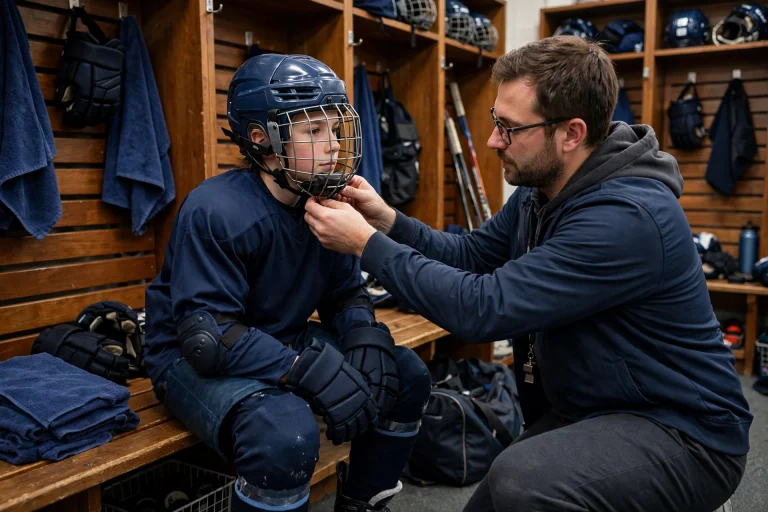
Buy from a hockey shop if you possibly can, at least for this first helmet. A fitter who watches you try three models will teach you more about your head shape in ten minutes than a season of reading size charts.
How Do You Get the Right Size and Fit?
Measure first. Wrap a soft tape around your head just above the eyebrows and ears, at the widest part, and use that measurement against the maker’s size chart for the model you are trying — sizes are not consistent between brands, so your number travels better than your size label.
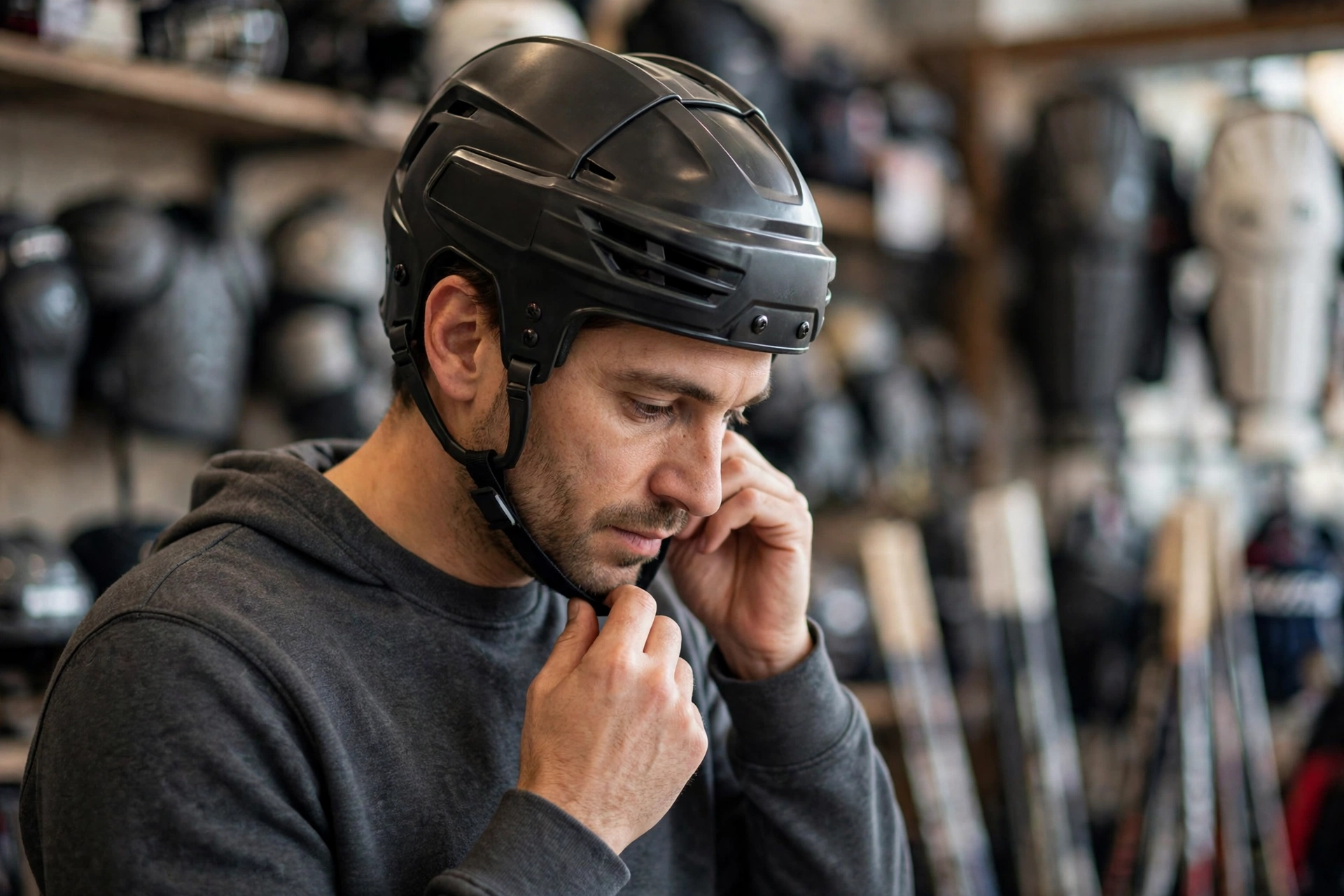
Then judge the fit on your head, because the chart only gets you to the right shelf. A correct helmet sits level, with the front edge just above your eyebrows; feels snug and even all the way round, firm like a good handshake rather than a squeeze; and does not rock when you shake and nod hard with the strap fastened. Pressure should have no single hot spot — not on the temples, not on the forehead, not at the back.
- Level: front edge just above the eyebrows, not perched or tipped back
- Even: snug everywhere, painful nowhere — hot spots mean wrong size or wrong shape
- Still: no rocking or sliding on a hard head shake, strap fastened
- Wear it a while: keep each candidate on for several minutes in the shop; real fit problems take minutes to announce themselves
Head shape is the beginner’s hidden variable: makers mould helmets differently, so if one brand pinches your temples in every size, a different brand’s shell may fit you perfectly in the size your measurement says. Trying two or three brands is not fussiness — it is the method.

Cage, Visor, or Combo: What Should a Beginner Choose?
Choose a full cage. As a beginner you will fall more, control your stick less, and play with other beginners doing the same — the ice around you is full of raised sticks, wild pucks, and unexpected elbows, and a cage protects your whole face from all of it, never fogs, and asks nothing of you. In general terms, many adult beginner leagues require full face protection anyway, which settles the question.
A visor leaves your lower face — teeth, jaw, nose — exposed, and it is a choice for experienced players in leagues that allow it, who accept that risk knowingly. Dental work costs more than any cage, and beginner hockey generates exactly the chaotic stick contact a visor does not cover.
A combo — helmet sold with its cage already fitted — is the easiest way to buy, guarantees the cage matches the helmet, and is what many beginners end up choosing. Buying the helmet and a certified cage separately is equally good if a shop fits them together properly.
How Much Should a Beginner Spend, and Does Price Mean Safer?
In general terms, price buys comfort, adjustability, weight, and materials refinement — not a higher class of certification. Every certified helmet on the shelf has passed the same standard’s impact tests; a premium model does not carry a better sticker. So a beginner’s budget is best aimed at the helmet that fits best within the certified range, plus a cage, rather than at a flagship in a nearly-right fit.
Mid-range is the usual sweet spot for a first helmet: you get a decent fit system, replaceable pads, and solid construction without paying for marginal refinements you cannot yet feel. Entry-level certified helmets are a legitimate choice too — far better a basic certified helmet that fits than a premium one that pinches.
Never buy used as a first helmet if you can avoid it. A used helmet’s impact history is unknowable, its certification may be expired, and its foam has aged in someone else’s bag. Your first helmet should be new, in date, and fitted to you.
What Else Should You Check Before Your First Season?
Think about the whole system. The helmet’s foam manages impact — including the angled, rotational forces described in this guide to what MIPS is for helmets — but it can only do that work if the helmet stays in its fitted position, so a mouthguard (required by many leagues), a properly fastened chin strap, and ear covers in place are all part of the same package, not extras.
Plan for care from day one, because a beginner’s helmet fails early through neglect more often than through hockey. Take it out of the bag after every skate, let it dry fully in open air, wipe the liner down regularly, and check straps, buckles, and cage mounts as part of the routine. That is what keeps the fit you bought feeling right.
Finally, know the replacement rules before you need them: replace the helmet after any major impact, when the foam or shell is damaged, when the fit goes sloppy, or when the certification passes its date. A beginner falls a lot; your helmet is doing its job each time, and knowing when it has done enough is part of owning one.
Frequently Asked Questions
Q: Can I buy my first hockey helmet online to save money?
A: You can, but fit is everything and head shape varies by brand, so a first helmet is the one purchase where a shop fitting earns its keep. If you do buy online, measure carefully, order from somewhere with easy returns, and be honest about hot spots when it arrives — send back a helmet that pinches rather than hoping it improves.
Q: Do I need a mouthguard as well as a helmet and cage?
A: In general terms, many leagues require one, and it is sensible regardless: a mouthguard protects your teeth and jaw in falls and collisions in a way a cage cannot, since the cage stops outside objects, not the force of your own jaw snapping shut. Your league’s rulebook will tell you if it is mandatory.
Q: How long will my first hockey helmet last?
A: It lasts until one of the end points arrives: a major impact, visible damage, a fit that has gone loose, or the certification date passing. With proper drying and care, a beginner’s helmet commonly serves several seasons of recreational play — judge it by condition and the sticker, not by the calendar alone.

Olivia
Writer at Helmet Today, covering helmet reviews, fit and riding safety.