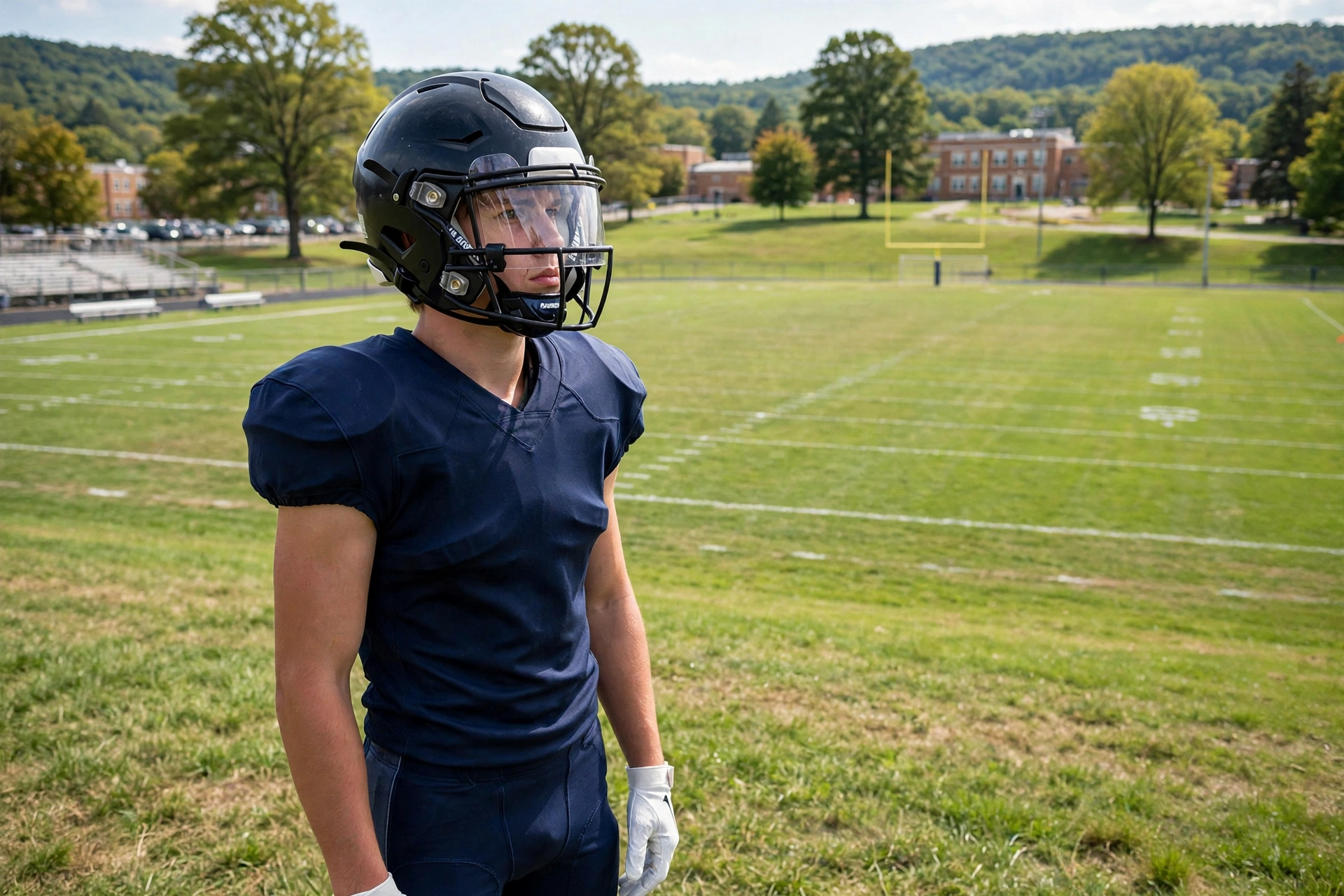
In general terms, high school football visors must be clear: most state associations and school programmes allow a visor (eye shield) only if it is completely clear and untinted, and tinted, mirrored, or coloured visors are not permitted in games unless a specific medical exception has been approved — so check your own state association and school rules before buying or wearing one. The rules exist so officials and medical staff can see a player’s eyes.
This guide explains the reasoning behind the clear-only rule, how medical exceptions generally work, and how to make sure the visor you wear is legal.
Are Visors Allowed in High School Football at All?
In general terms, yes — a clear eye shield attached properly to the facemask is permitted in most high school programmes. The visor itself is not the problem; players wear them for eye protection against fingers, turf pellets, and glare-free debris, and officials are used to seeing them.
What is restricted is anything that colours or darkens the shield. Rules are set at national federation and state association level and can differ in detail between states, and schools can add their own policies on top. That is why the honest answer to “is my visor legal?” always ends the same way: with the current rulebook for the state and competition you actually play in.
Do not take legality from what you see elsewhere. College and professional players play under different rulebooks, and a tinted visor that is normal on television may be flatly illegal in your Friday night game.
Why Must High School Visors Be Clear?
The central reason is medical. When a player is down and possibly injured, trainers and medical staff need to see the player’s eyes quickly — to check responsiveness and look for signs of head injury — without removing the helmet or fumbling with a dark shield. A clear visor allows that instant check; a tinted or mirrored one blocks it at the worst possible moment.
Identification plays a part too: officials need to see a player’s face and eyes in situations ranging from penalty discussions to checking whether a player is fit to continue. A fully clear shield preserves normal visibility in both directions.
There is also a fairness and consistency argument. A single simple standard — clear only — is easy for officials to check during equipment inspections before a game, and it removes arguments about how dark is too dark. In general terms, if a shield has any tint, smoke, mirror, or colour to it, expect it to fail that inspection.
Are Tinted or Mirrored Visors Ever Allowed?
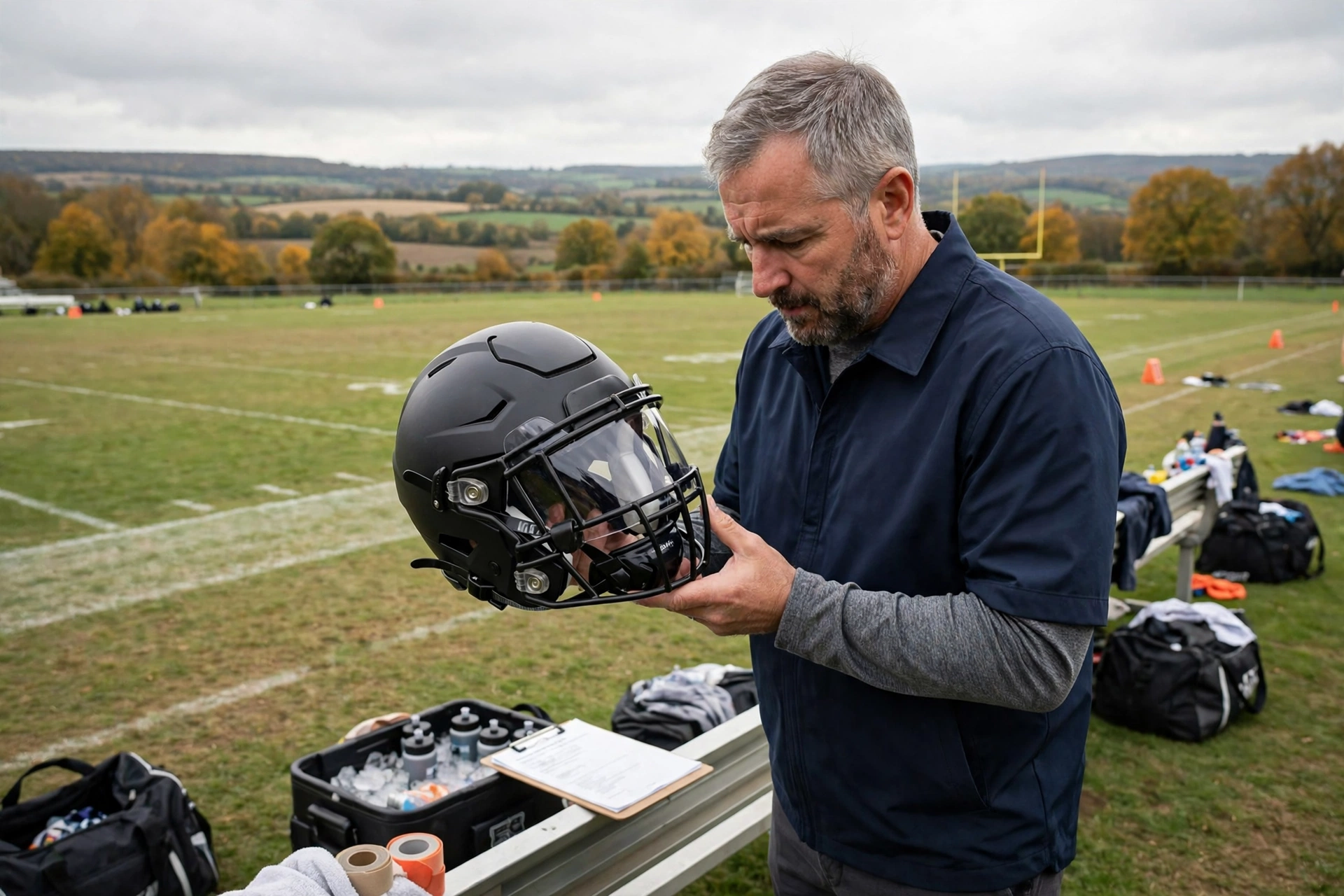
For ordinary play, in general terms, no. Smoke, tinted, mirrored, and coloured fashion visors are the ones officials remove at inspection. This catches players out every season, often because a visor was bought online marketed with photos of college or pro players wearing it.
The common exception is medical. Where a player has a genuine medical need for a tinted shield — for example a documented eye condition or light sensitivity — associations typically have a process, usually involving written medical documentation and approval before the season or the game, and the approval may specify the visor precisely. The details and the paperwork are entirely a matter for your state association and school, so start that conversation early, not on game day.
Practice is not a safe loophole in most programmes either — schools commonly apply the same equipment standards in training. Assume the game standard applies everywhere unless your coach tells you otherwise in line with the rules.
How Do Medical Exceptions for Visors Usually Work?
In general terms, the pattern is: a medical professional documents the need, the school submits or holds the documentation as the association requires, and approval is confirmed before the player uses the tinted visor in a game. The player may be asked to show the approval to officials, and the tint approved is the tint allowed — swapping to a darker or mirrored shield is not covered by someone else’s, or an earlier, approval.
Because processes differ between states and change over time, treat this as a map of the territory rather than instructions: your athletic department and state association office can tell you the exact current procedure, forms, and deadlines.
Two practical points hold everywhere. First, an exception is personal — it covers the documented player, not the team. Second, it can be checked: turning up with a tinted visor and a story is not an exception, and the visor will simply be removed.
How Do You Make Sure Your Visor Is Legal and Fitted Right?
Buy clearly: choose a visor sold as fully clear and untinted, from a maker who states it suits high school play, and keep the packaging description if your programme ever questions it. If there is any doubt, ask your coach or athletic department before the season — a ten-minute check beats a game-day removal.
Fit matters as much as legality. The visor should mount to the facemask with the proper clips or hardware, sit without pressing on the nose or frames if you wear glasses, and be kept clean and unscratched — a badly scratched clear visor can restrict vision enough to draw attention in its own right. Replace a damaged shield rather than polishing it with anything abrasive.
And a safety note underneath the rules discussion: a visor is eye protection and a supplement to the helmet, never a substitute for any part of it. The helmet’s protective system — shell, liner, and fit, including how it handles angled impacts, as set out in this guide to what MIPS is for helmets — is what protects your head. The visor protects your eyes, and the clear-only rule protects the people who may need to treat you.
Frequently Asked Questions
Q: Can I wear a tinted visor if I have a doctor’s note?
A: In general terms, a medical exception usually requires more than a note carried in your bag — associations typically need documentation processed through your school and approved in advance, and the approval defines what tint is permitted. Start with your athletic department and state association well before the season, and follow their current procedure exactly.
Q: What happens if I wear an illegal visor in a game?
A: Expect the visor to be spotted at equipment check or during the game and required to be removed before you can play — officials will not usually debate degrees of tint. Programmes can face their own consequences under competition rules, so do not put your coach in that position; use a fully clear shield.
Q: Are clear visors from any brand automatically legal?
A: Legality is about the shield being genuinely clear and untinted and properly attached, which most reputable clear visors satisfy — but rules belong to your state association and school, and they can also cover how a visor is mounted. When in doubt, ask before you buy, and keep to recognised makers.

Olivia
Writer at Helmet Today, covering helmet reviews, fit and riding safety.