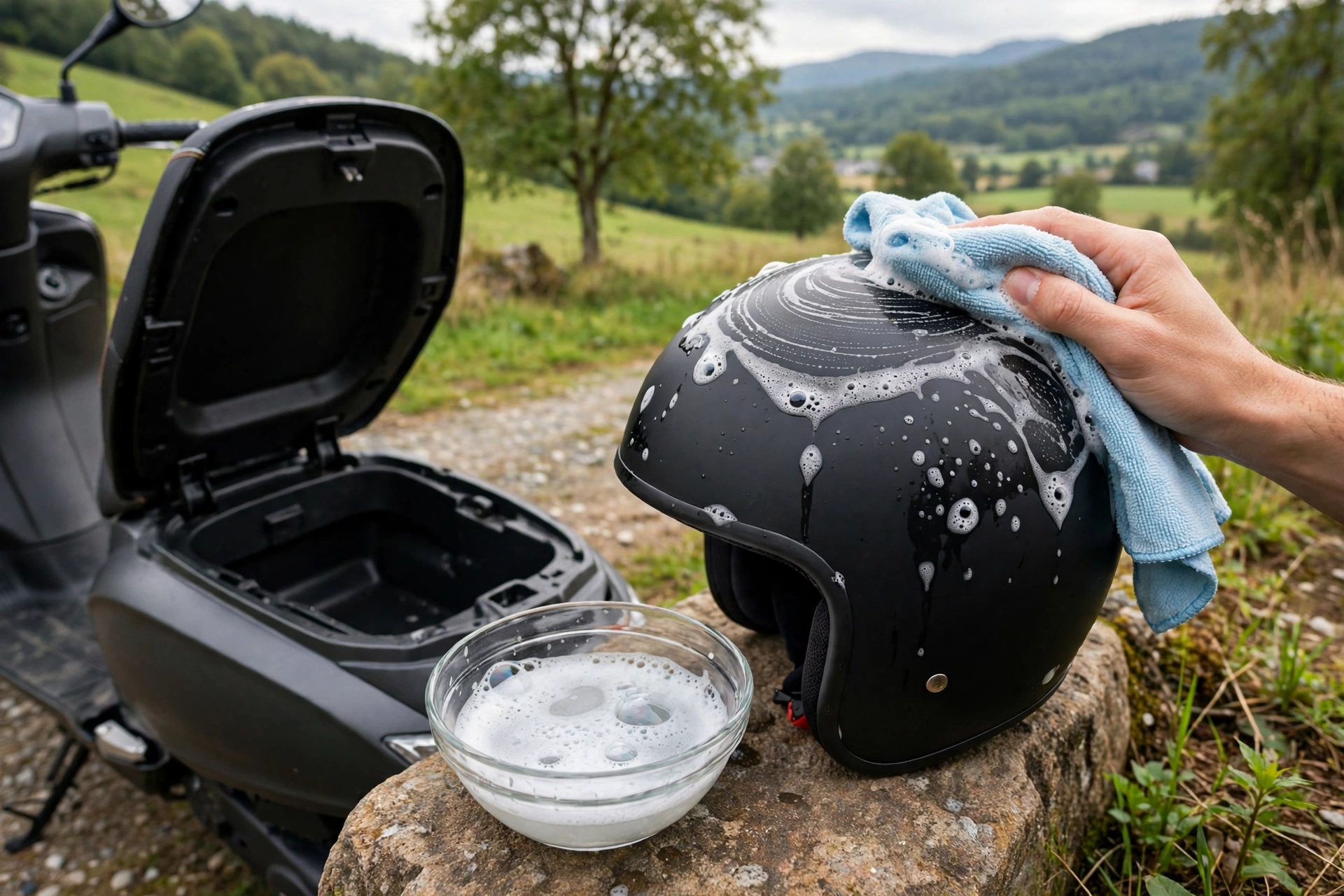
To clean a scooter helmet that lives under the seat, take it out, wipe the shell with mild soap and water, wash or wipe the liner according to the maker’s guidance, and let it air-dry fully before it goes back — in general terms, under-seat storage traps heat, damp, and dirt, so a regular gentle clean and a proper dry are what keep the helmet hygienic and its pads in good shape.
Under-seat storage is convenient and hard on helmets. The compartment is warm, poorly ventilated, and shared with dust, road grime, and whatever else lives under the seat — and a helmet that lives there without cleaning soon smells, and its liner degrades faster than it should.
Why Does Under-Seat Storage Make Helmets Dirty?
Heat and damp are the main problems. An under-seat compartment sits over the engine or battery and next to the road, so it runs warm and traps moisture from sweat, rain, and humidity. A helmet put away damp stays damp, and damp liners breed odour and, over time, mould.
Dust and grime add to it. The compartment is not sealed, so road dust settles on the shell and works into the liner, while the helmet rubs against the compartment walls and anything else stored there. Straps pick up grit, vents clog, and the shell gets scuffed in ways a helmet stored on a shelf never would.
Forgotten helmets suffer most. A helmet that lives under the seat for weeks between rides never gets aired, never gets wiped, and its liner never fully dries — so by the time you notice the smell, the pads may already be past their best.
How Should You Clean the Shell and Vents?
Start with a dry wipe to remove loose dust and grit, so you do not grind it into the shell when you wash. Then wipe the shell with a soft cloth dampened with mild soap and water, working around vents, visor mounts, and the rim. Rinse the cloth and wipe again to remove soap residue.
Clean the vents carefully. Use a soft brush or a cotton bud to clear dust from vent openings, since blocked vents reduce airflow and make the helmet hotter to wear. Do not poke hard objects into vents — they can damage internal foam or push dirt further in.
Never use harsh chemicals, solvents, or abrasive pads on the shell. These can damage the shell’s finish and, in some cases, the shell material itself. Mild soap and water is enough for road grime; for stubborn marks, a longer soak with a damp cloth beats scrubbing.
How Do You Clean the Liner and Straps?
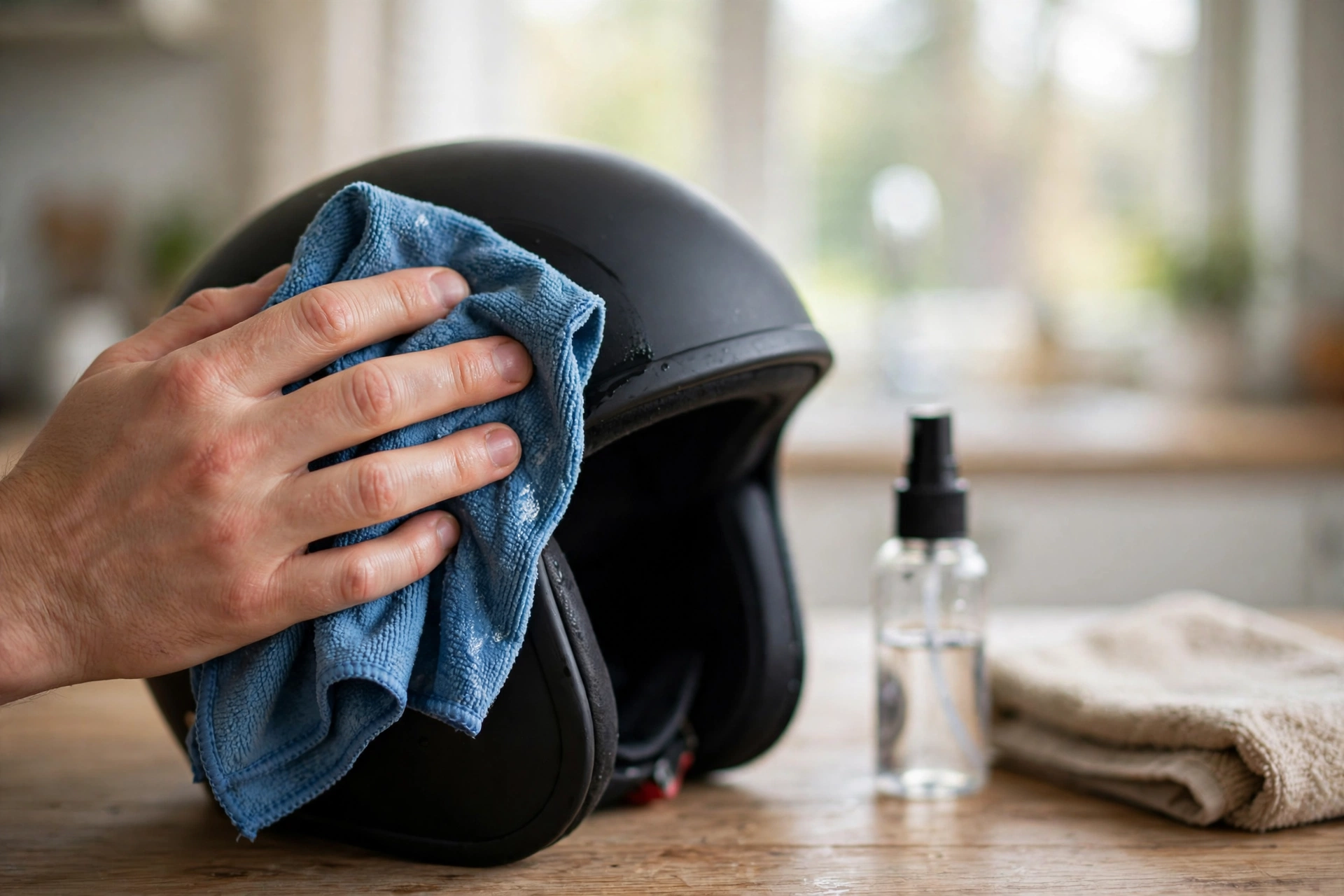
Remove the liner if it is detachable — most scooter helmets allow this — and wash it by hand in lukewarm water with a little mild detergent. Rinse thoroughly, press out excess water without wringing hard, and let it air-dry fully before refitting. Check the maker’s guidance first, since some liners are not machine-washable.
If the liner is fixed, wipe it down with a damp cloth and mild soap, then wipe again with clean water to remove residue. Pay attention to the brow band and cheek pads, where sweat concentrates, and let the helmet air-dry with the liner exposed — never refit a damp liner and shut the helmet away.
Clean the straps too. Wipe the chin strap and side straps with soapy water, rinse, and dry — grit in the strap webbing wears it faster and irritates the skin. Check the buckle for grit as well, and work it a few times after cleaning to make sure it fastens and releases cleanly.
How Do You Dry a Helmet Properly Before Storing It Again?
Air-dry, always. Place the helmet in a ventilated spot at room temperature, liner out if possible, and give it several hours or overnight. Air movement matters more than warmth — a fan nearby helps, while a radiator or direct heat can damage foam and glue.
Do not put a damp helmet straight back under the seat. That returns it to the warm, sealed environment that caused the problem, and the damp will sit there until your next ride. If you must store it under the seat, make sure it is fully dry first, and consider a breathable helmet bag to protect it from dust and rubbing.
On rainy days, take extra care: a helmet worn in rain needs drying before storage even if it looks dry on the outside, since the liner holds water long after the shell has dried. A quick wipe and an overnight air-dry after wet rides keeps the helmet fresh far longer.
- Wipe the shell: mild soap and water, soft cloth, no solvents
- Wash or wipe the liner: detachable liners by hand, fixed liners wiped down
- Clear the vents: soft brush, no hard objects poked inside
- Dry fully: air-dry before any return to under-seat storage
How Often Should an Under-Seat Helmet Be Cleaned?
In general terms, a quick wipe after wet or dusty rides, a liner clean every few weeks of regular use, and a full clean at least monthly for a daily commuter helmet. If the helmet starts to smell, that is already overdue — clean it then, and shorten the interval afterwards.
Also inspect the helmet during cleaning. Look for shell cracks, liner compression, strap wear, and buckle problems while you have it in your hands — cleaning time is inspection time, and catching wear early is cheaper than replacing a helmet that has quietly degraded.
Remember that cleaning does not restore a damaged helmet. If the shell is cracked, the foam is crushed, or the helmet has had an impact, no amount of washing makes it safe again — replace it. And a helmet that fits properly protects better, including for the rotational forces described in this guide to what MIPS is for helmets, so check the fit after refitting a washed liner, since pads can sit slightly differently when replaced.
Frequently Asked Questions
Q: Can I machine-wash my scooter helmet liner?
A: It depends on the maker — some detachable liners are machine-washable on a gentle cycle, while others are hand-wash only. Check the maker’s guidance first; when in doubt, hand-wash in lukewarm water with mild detergent, which is safe for most liners.
Q: How do I get the smell out of a helmet that has lived under the seat?
A: Wash or wipe the liner thoroughly, air-dry it fully, and clean the shell and straps too — odour lives in the liner, not the shell. If the smell survives a proper wash and dry, the liner pads may need replacing, since odour soaked deep into old foam is hard to remove.
Q: Is it better to stop storing my helmet under the seat?
A: In general terms, yes if you have the choice — a shelf or hook at home keeps the helmet dry, ventilated, and undamaged. If under-seat storage is your only option, use a breathable helmet bag, dry the helmet fully before storing it, and clean it more often.

Olivia
Writer at Helmet Today, covering helmet reviews, fit and riding safety.