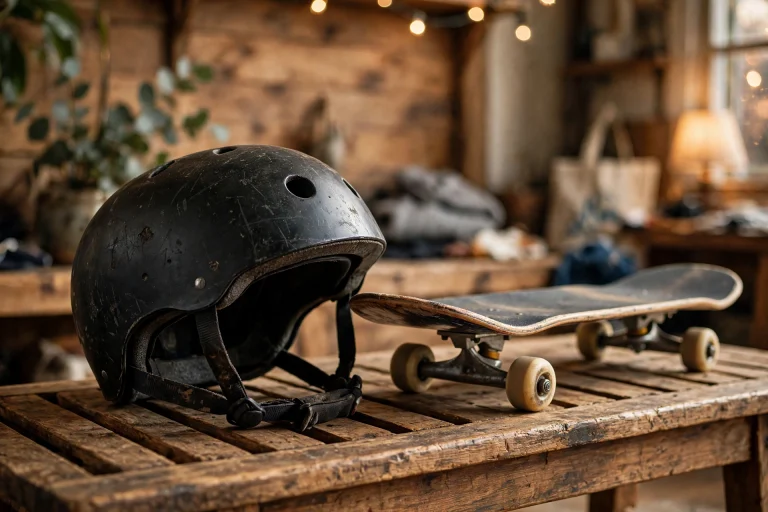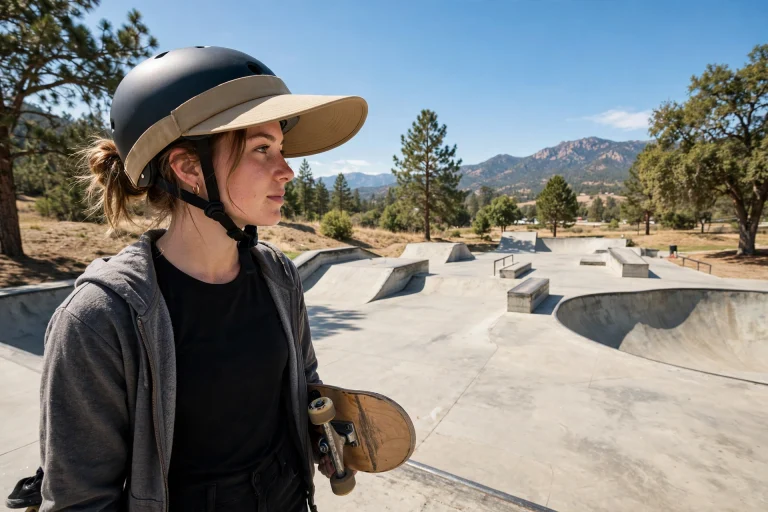
In general terms, you should not swap a skate helmet and a bike helmet as a routine habit, because they are designed and tested for different kinds of falls. A skate helmet is built for the repeated, lower-speed impacts common in skating, while a bike helmet is built mainly for a single higher-speed impact on the road. In a pinch, wearing either is better than wearing nothing, but for regular riding or skating, the right helmet for the activity is the safer choice.
How Are Skate Helmets and Bike Helmets Different?
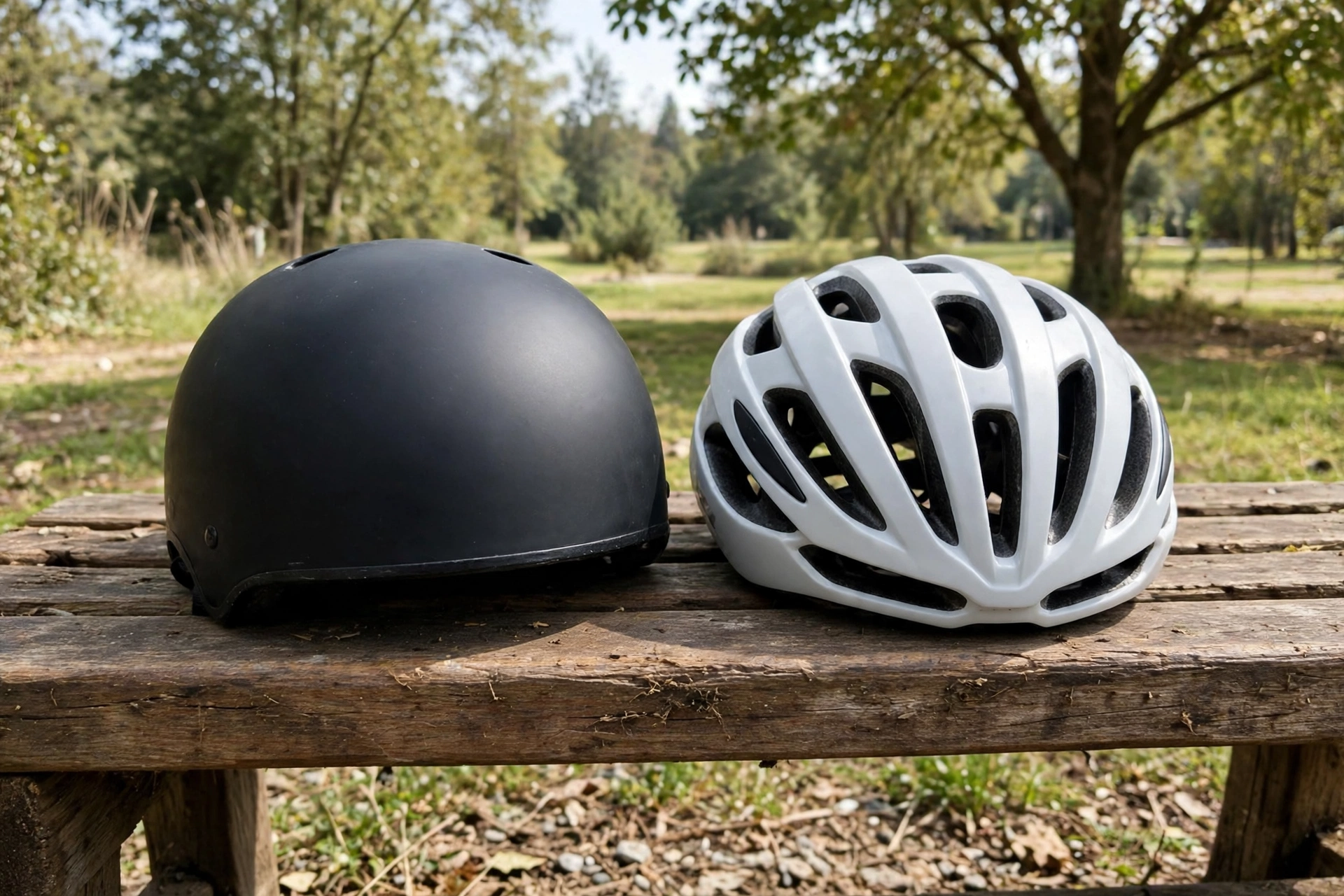
The most visible difference is shape and coverage. Skate helmets typically sit lower on the back of the head and cover more of the skull, with a rounder, harder shell and smaller vents. That design reflects how skaters tend to fall: often backwards or sideways at relatively low speed, and sometimes more than once in a session. Bike helmets, by contrast, are usually lighter and more aerodynamic, with larger vents for airflow and a shape that extends slightly forward, reflecting the faster, forward-moving falls cyclists are more likely to experience.
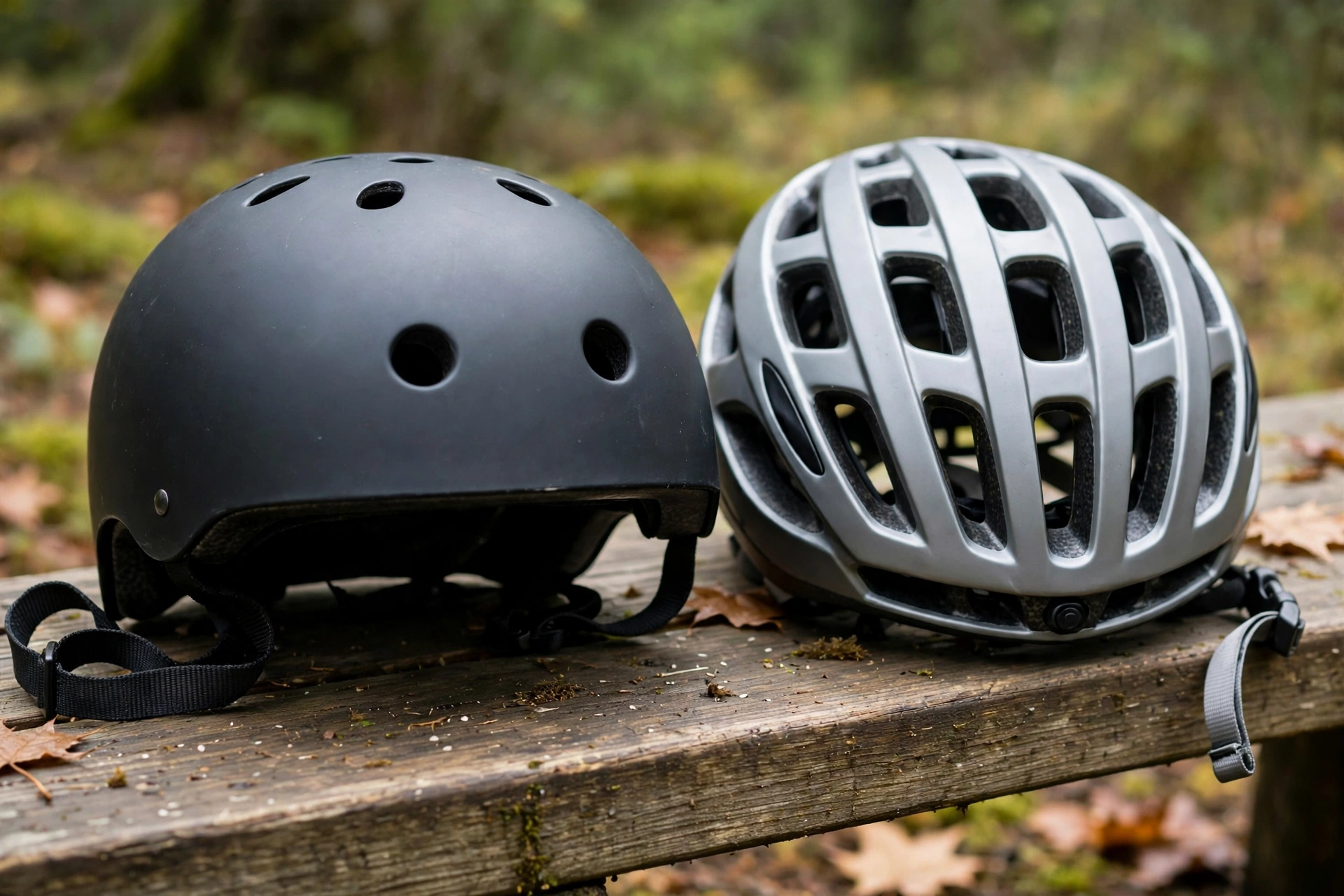
The inside of the helmet differs too. Many skate helmets use a thicker, denser foam that can handle multiple smaller knocks without needing immediate replacement. Most road and trail bike helmets use a lighter foam designed to crush and absorb energy in one serious impact, after which the helmet should be replaced. This is why the two types can look similar from the outside yet behave differently in a crash.
Certification is another key difference. Helmets are tested to different standards depending on their intended sport, and a helmet certified only for cycling has not necessarily passed the tests for skateboarding, and vice versa. Some helmets carry both certifications, and those dual-certified models are specifically designed to meet the requirements of both activities. Check the certification label inside the helmet to know what it is rated for.
Can You Wear a Bike Helmet for Skating?
Physically, yes, a bike helmet will fit on your head at the skatepark, and it will offer some protection. The problem is that it is not designed for the kinds of falls skaters commonly take. A bike helmet covers less of the back of the head, so a backwards fall, which is common when learning tricks, may leave part of your head less protected. Its lighter foam is also designed around a single-impact scenario, so repeated small knocks at the park may wear it down in ways it was not built to handle.
There is also a practical side. Bike helmets tend to have larger vents and a lighter build, which is great for airflow on a long ride but offers less coverage when you bail and slide. If you only skate very occasionally and already own a bike helmet, using it once in a while is understandable, but it is not a like-for-like substitute for a proper skate helmet.
For younger skaters and beginners, the difference matters even more. Falls are more frequent while learning, so a helmet with fuller coverage is the safer pick. If skating becomes a regular activity, investing in a helmet made for it is one of the simplest upgrades you can make.
Can You Wear a Skate Helmet for Cycling?
Again, it is physically possible, and a skate helmet will protect your head better than no helmet at all on a bike. But there are trade-offs. Skate helmets are heavier and less ventilated, so on a longer ride you may overheat and feel uncomfortable, which can itself become a distraction.
The bigger question is certification and impact design. If your skate helmet is not certified for cycling, it has not been tested to the cycling standard, and its denser foam may behave differently in a high-speed road impact than a dedicated bike helmet would. Some skate helmets are dual-certified for both cycling and skating, and those are a genuine exception: if the label inside says it meets the cycling standard as well, it is rated for both activities.
For regular commuting, road riding, or faster trail riding, a dedicated bike helmet is the better tool for the job. It is lighter, cooler, and designed around the impact patterns of cycling. If you want to understand extra protective features, learning what MIPS does can help you compare models, since this rotational-impact technology appears on both skate and bike helmets.
What Should You Check Before Swapping Helmets?
If you are considering using one helmet for both activities, start with the certification label. Look inside the helmet for the standards it meets. A dual-certified helmet that lists both cycling and skateboarding standards is the only type that is genuinely rated for both. If it lists only one activity, treat it as a helmet for that activity, even if it looks like it could do both jobs.
Next, check the fit. A helmet only protects well if it sits level on your head, covers your forehead, and stays put when you shake your head gently. The straps should form a snug fit under your chin without pinching.
Finally, check the condition. Look for cracks in the shell, dents or compression in the foam, frayed straps, or a buckle that no longer clicks securely. If the helmet has taken a hard impact, replace it rather than swapping it to another sport. A helmet that has already absorbed a serious crash may look fine on the outside while its protective foam is compromised inside.
Which Helmet Should You Buy If You Do Both?
If you regularly skate and cycle, the simplest answer is a dual-certified helmet. These models are tested to both standards and offer the fuller coverage of a skate helmet with the cycling rating you need on the road.
Alternatively, if you take one activity much more seriously than the other, buy the best helmet for your main sport and accept that the second activity may need its own helmet later. A dedicated skater who occasionally cycles short distances may be happy with a skate helmet plus a dual-certified model when it is time to replace it.
Whichever route you choose, fit comes first. A helmet that fits well, is certified for the activity you are doing, and is in good condition will always serve you better than a more expensive model that fits poorly or is rated for the wrong sport.
Frequently Asked Questions
Q: Is it illegal to wear the wrong type of helmet?
A: In general terms, helmet laws vary by location and usually require a helmet that meets an approved safety standard, rather than naming a specific sport type. Check the rules where you ride, and choose a helmet certified for your activity to stay on the safe side.
Q: Can kids use one helmet for biking and skating?
A: A dual-certified helmet is the best single-helmet option for kids who do both, since it is rated for both activities. If the helmet is certified for only one sport, it is better to get a second helmet for the other activity, especially since children fall often while learning.
Q: What if I can only afford one helmet right now?
A: Choose a dual-certified helmet if you can, since it covers both activities. If that is not available, pick the helmet for the activity you do most often, wear it every time, and add the second helmet when your budget allows.

Olivia
Writer at Helmet Today, covering helmet reviews, fit and riding safety.