In general terms, an MTB helmet with MIPS for downhill is worth it for most downhill riders, because downhill crashes are often angled and rotational forces are a real part of the impact. MIPS is a low-friction layer inside the helmet designed to reduce the twisting forces that reach the head in an angled crash. Downhill riding — high speed, steep terrain, rocks, roots, and jumps — produces exactly the kind of falls where that protection matters, which is why MIPS and similar systems are now common on downhill helmets.
That said, MIPS is not the only thing that matters in a downhill helmet, and it should not be the only reason you choose one. Fit, certification, coverage, and overall build quality matter just as much. This guide explains what MIPS does, when it helps most, and how to weigh it against the other features of a downhill helmet.
What Does MIPS Actually Do?
In a crash, your head rarely hits the ground straight on. More often the impact is angled — you slide, tumble, or clip an edge — and that angle creates rotational forces that twist the head. MIPS is a thin, low-friction layer between the helmet’s liner and your head that allows a small amount of sliding movement on impact, which is designed to reduce those rotational forces before they reach the brain.
The layer moves only a few millimetres, and only during the brief moment of impact. The rest of the time it sits unnoticed inside the helmet. It does not change how the helmet fits or feels in normal riding, and it works alongside the foam liner, which handles the direct impact forces. Together, the two systems address different parts of the same crash.
It is worth understanding the distinction: the foam liner absorbs energy from the hit itself, while the MIPS layer addresses the twisting motion that comes with an angled hit. Neither replaces the other, and a helmet with MIPS still needs a properly fitted shell, good coverage, and the right certification for downhill use.
Why Are Downhill Crashes Especially Suited to MIPS?
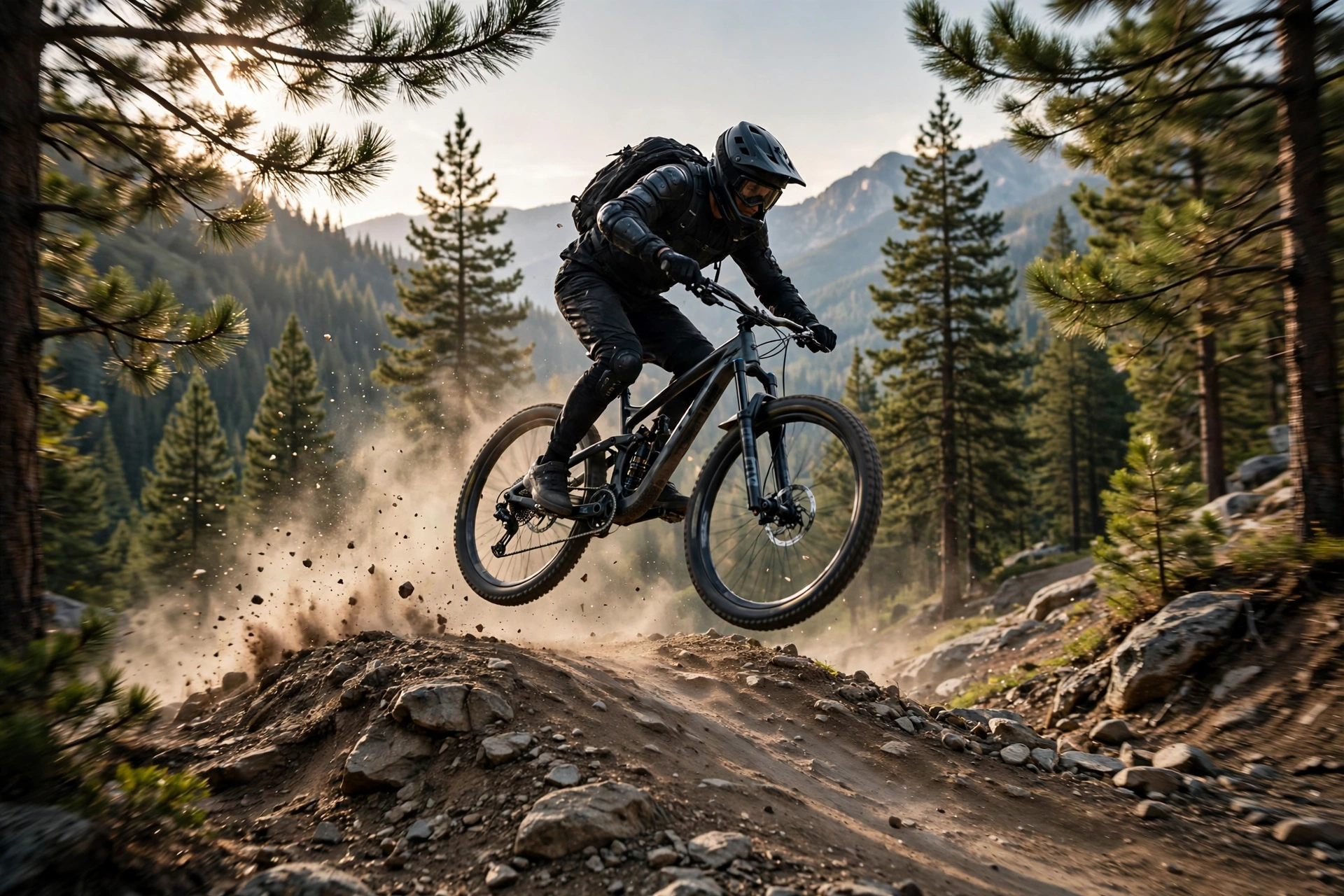
Downhill crashes happen at speed over rough, uneven ground. A rider who goes over the bars, clips a rock, or slides out on loose terrain will typically strike the ground at an angle and keep moving, which generates strong rotational forces. Low-speed trail tumbles can be angled too, but the speed and terrain of downhill riding make angled, high-energy impacts more likely.
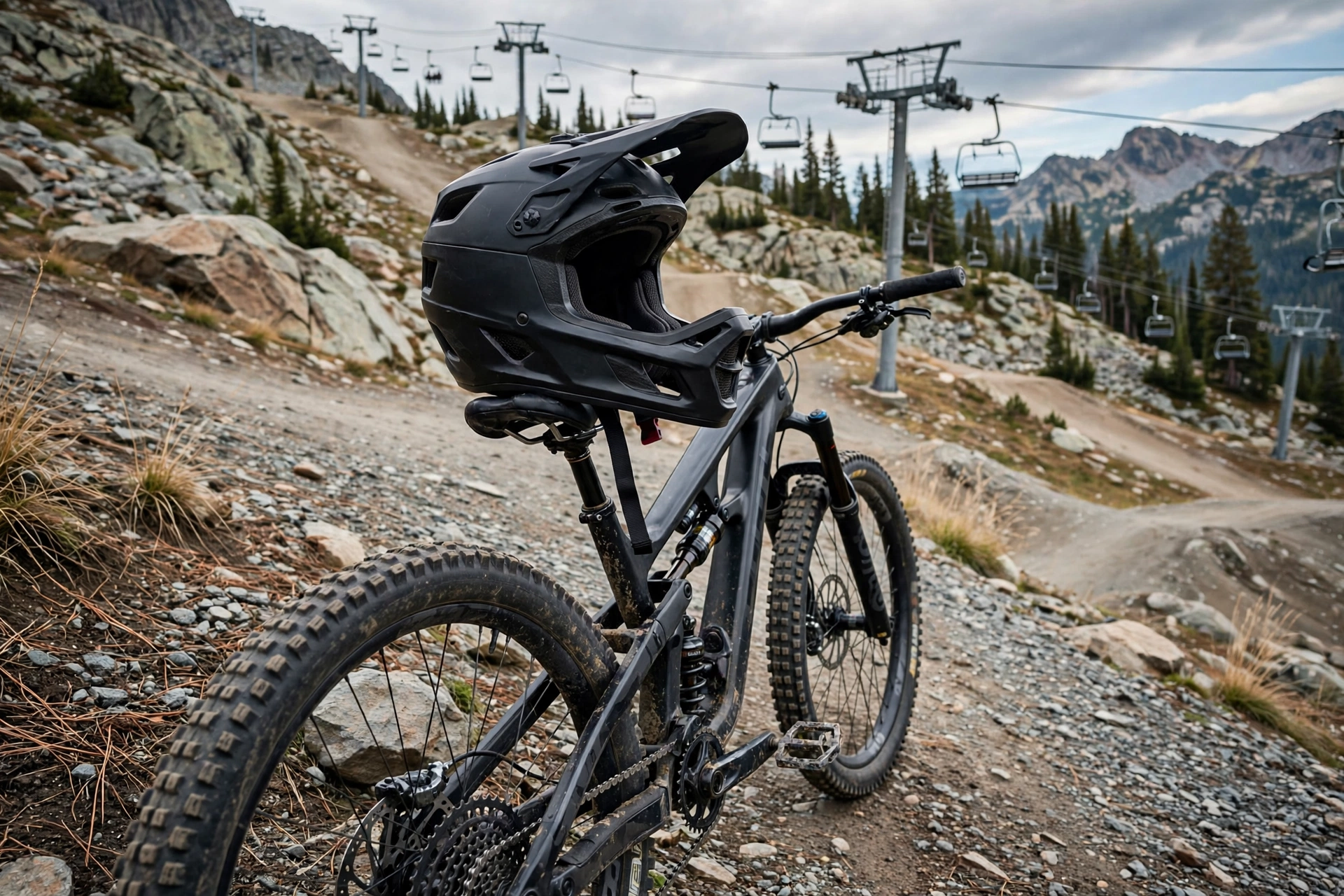
The face and jaw are also at risk in downhill falls, which is why downhill helmets are full-face. MIPS does not change that: it is an addition to a full-face design, not a substitute for a chin bar. A downhill helmet with MIPS still needs to be a properly certified full-face helmet with a solid chin bar and cheek pads that hold it in place.
Bike park riding adds another factor. Repeated runs on the same features mean repeated exposure to the same risks, and fatigue builds over a day of uplift riding. A helmet system that reduces rotational forces is a sensible layer of protection for riders who crash more often because they ride harder, more technical terrain.
Does MIPS Make a Helmet Hotter or Heavier?
Only slightly, and on most modern downhill helmets you will not notice the difference. The MIPS layer is thin and light, and manufacturers design ventilation around it, with channels that keep air moving despite the extra layer. Some riders worry that the layer blocks airflow, but well-designed helmets account for it.
Weight is similarly marginal. A MIPS liner adds a small amount of weight, far less than the difference between helmet models, and far less than the weight of the chin bar and shell that make a downhill helmet what it is. If you are comparing two downhill helmets, fit and ventilation will affect your comfort far more than the presence of a MIPS layer.
The practical point is that MIPS should not be a reason to avoid a helmet you otherwise like, nor a reason to accept a poor fit. Choose the helmet that fits best and meets downhill certification, and treat MIPS as a valuable extra on top of those fundamentals.
What Else Should You Check on a Downhill Helmet?
Certification comes first. Make sure the helmet is certified for downhill use, not just general cycling, because downhill helmets are tested for higher-energy impacts. Check the chin bar is solid and the cheek pads hold your face firmly, and that the helmet does not rock or lift when you shake your head.
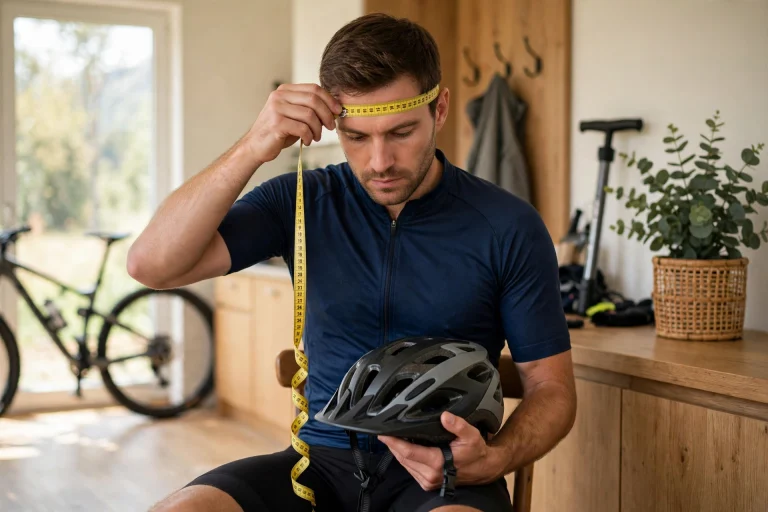
Fit and goggle compatibility come next. The eyeport must fit your goggles without gaps, and the helmet should sit level and stable. A helmet that shifts in a crash protects less well, whatever technology is inside it. Try the helmet with your goggles before buying.
Finally, consider ventilation and weight for the way you ride. Downhill riders who pedal to the top or ride all day will care more about airflow than uplift-only riders, but even in a bike park a hot helmet is distracting. This guide to what MIPS means for helmets covers the system in more detail if you want to understand how it works before you buy.
Is a MIPS Downhill Helmet Worth the Extra Cost?
In general terms, yes, if the price difference is modest and the helmet fits well. The added cost of a MIPS version is usually small compared with the price of a downhill helmet overall, and the protection addresses a real and common type of crash force. For a helmet you will wear at speed on steep terrain, that is a reasonable investment.
It is not worth paying a large premium for MIPS alone at the expense of fit or certification, however. A well-fitting, properly certified helmet without MIPS protects you better than a poorly fitting MIPS helmet. Prioritise fit first, certification second, and rotational protection third — and if you can have all three, you have a strong downhill helmet.
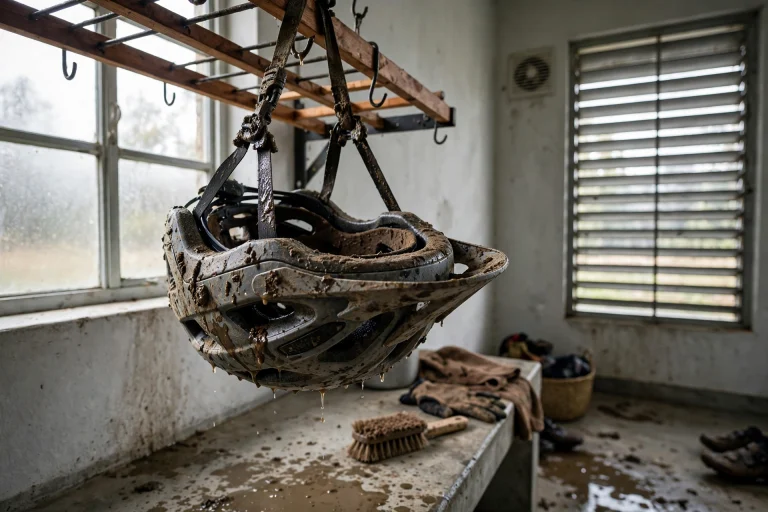
Remember too that any helmet, MIPS or not, should be replaced after a serious crash. The foam liner and the MIPS layer are designed to work once in a major impact, and invisible damage can compromise the next one. Treat replacement as part of the cost of downhill riding.
Frequently Asked Questions
Q: Does MIPS make a downhill helmet safer?
A: In general terms, yes — it is designed to reduce rotational forces in angled crashes, which are common in downhill riding. It works alongside the foam liner, not instead of it.
Q: Can I feel the MIPS layer when riding?
A: Not normally. The layer is thin and sits inside the helmet, allowing only a tiny amount of movement on impact. It should not affect comfort or fit in everyday riding.
Q: Should I replace a MIPS helmet after a crash?
A: Yes — after a serious crash, replace the helmet even if it looks undamaged. The liner and MIPS layer may have absorbed forces invisibly and should not be relied on again.

Olivia
Writer at Helmet Today, covering helmet reviews, fit and riding safety.