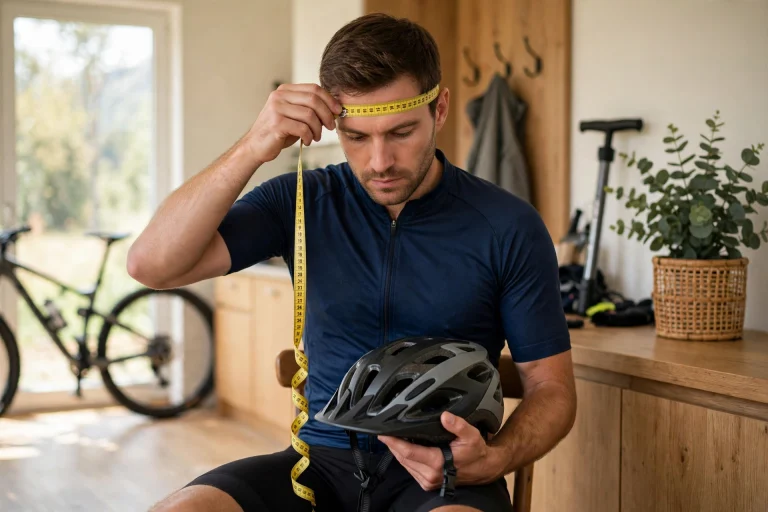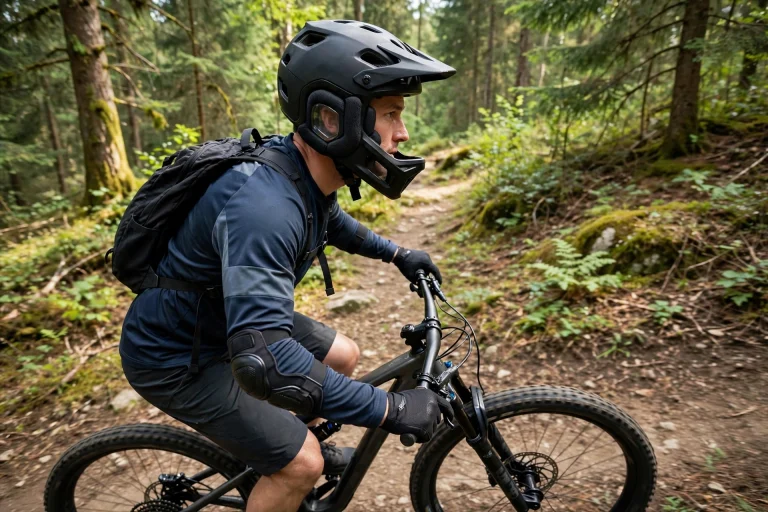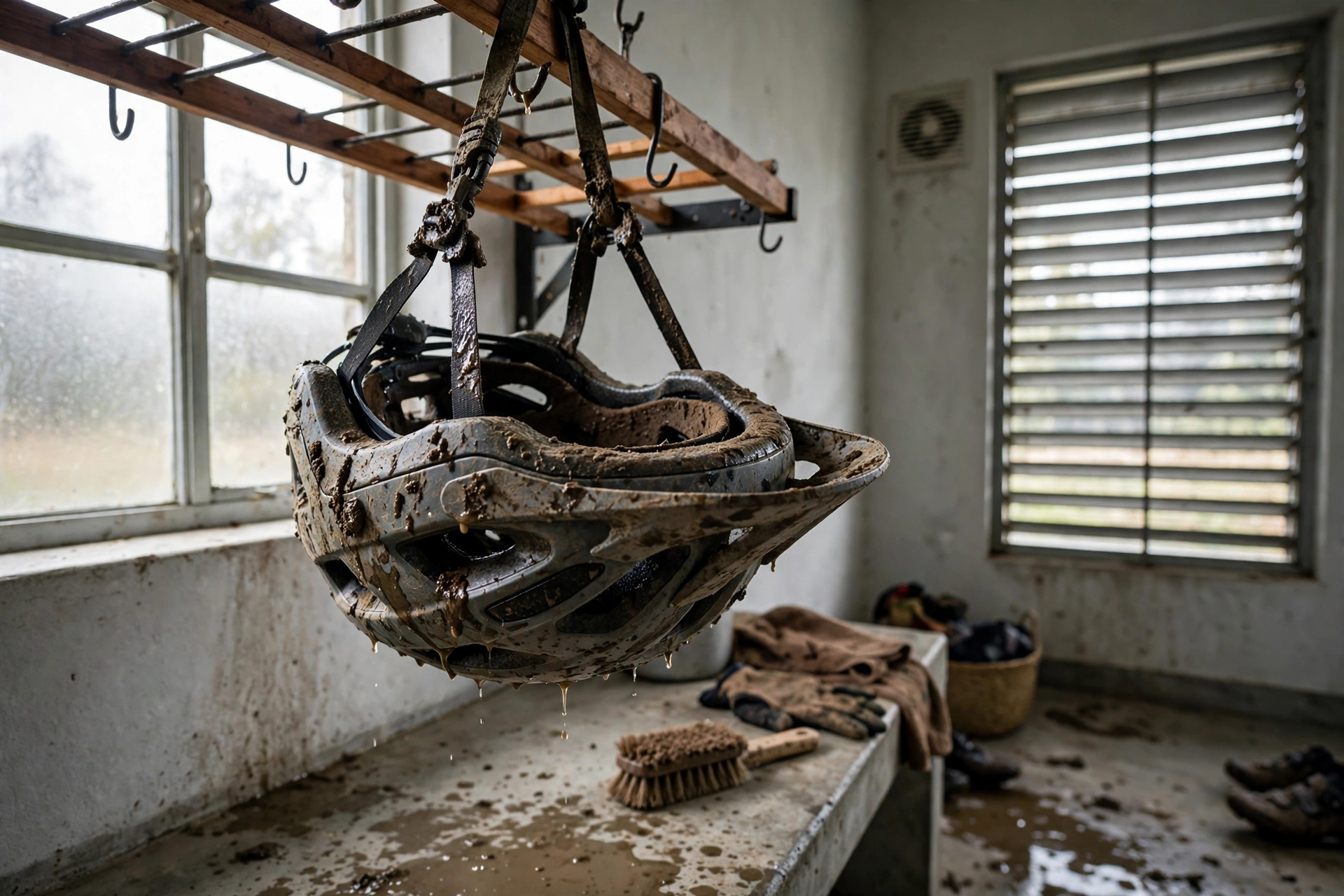
In general terms, after a wet ride you should dry your MTB helmet fully before storing it: shake out loose water, wipe the shell, remove the pads to air-dry, and store the helmet in a cool, ventilated spot — never sealed in a bag or left in a hot car. A helmet that is stored wet grows odour, degrades its pads, and can develop mould, all of which shorten its useful life.
Wet rides are part of mountain biking, and helmets are built to get wet. The damage comes not from the ride but from what happens afterwards — a helmet tossed damp into a gear bag and forgotten until the next ride. This guide covers the routine that keeps a helmet fresh and functional between wet rides.
What Should You Do Right After a Wet Ride?
Start by shaking the helmet gently upside down to remove loose water, then wipe the outside of the shell with a clean cloth. Pay attention to vents, where mud and grit collect, and to the visor and strap junctions, where dirt builds up. A quick wipe now prevents dried mud from clogging vents later.
Remove the inner pads if they are soaked. Most MTB helmet pads attach with hook-and-loop fasteners or poppers and come out easily. Squeezing them gently removes excess water, but do not wring them aggressively, which can tear the foam or distort their shape. If the straps are muddy, wipe them down too.
Do not put the helmet straight into a bag, a car boot, or a closed cupboard. Trapped moisture is what causes odour and mould, and a sealed bag is the worst place for a wet helmet. Let it breathe from the moment you get home.
How Should You Dry the Helmet and Pads?
Air-dry the helmet upside down or on its side in a ventilated room, away from direct heat. Good airflow matters more than warmth: a spot near an open window or a fan works well. Pads should be laid flat or hung where air reaches both sides, and they usually dry within a day in normal indoor conditions.
Never use a radiator, a hair dryer on high heat, or a tumble dryer to speed things up. High heat can warp the shell, degrade the foam liner, and damage adhesives. In general terms, if a drying method feels too hot for your hand, it is too hot for your helmet.
Do not reassemble the helmet until everything is fully dry. Pads that feel dry on the surface can still be damp inside, and refitting them traps that moisture against the liner. Wait until pads feel dry all the way through, then refit them and check they sit correctly.
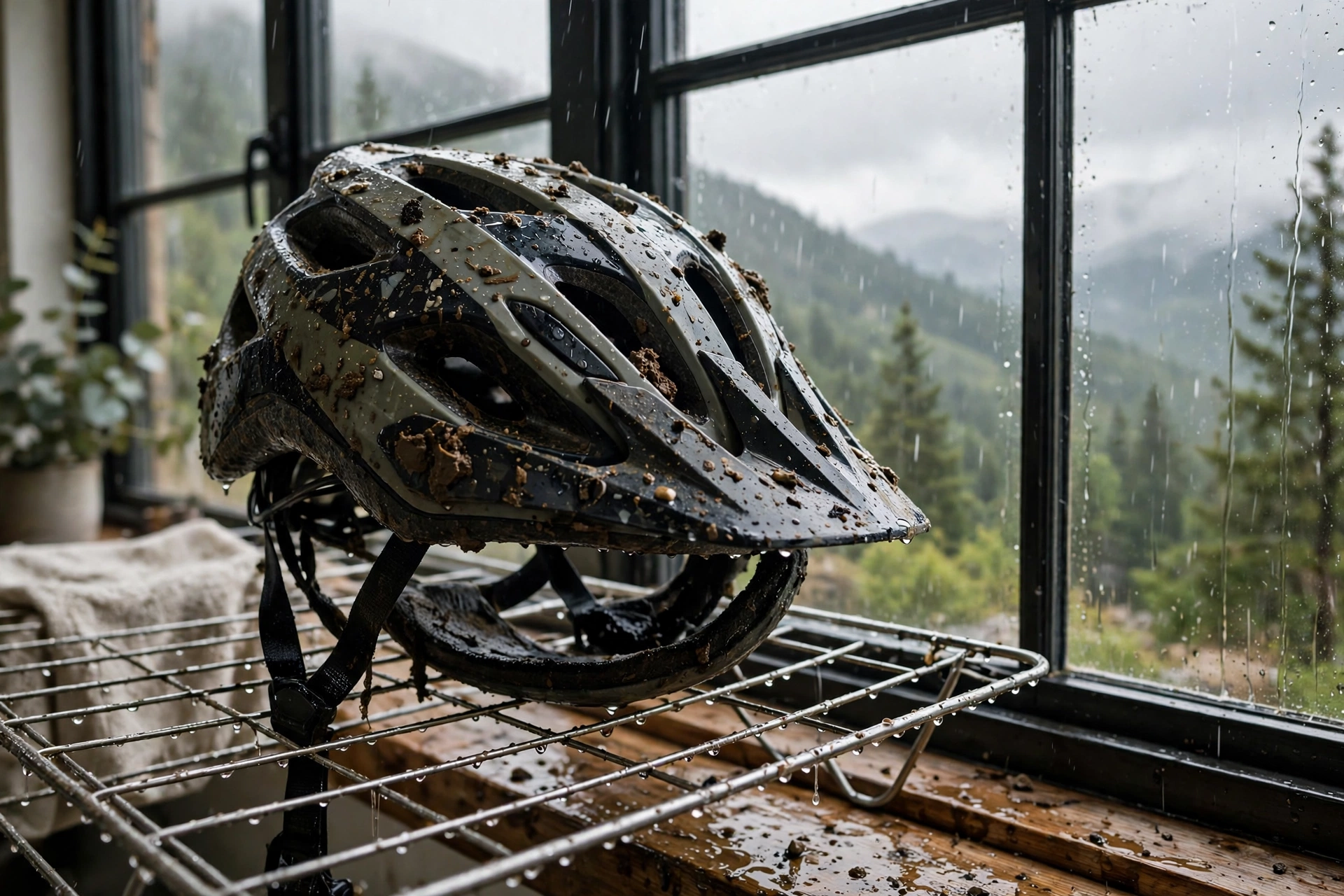
Where Is the Best Place to Store an MTB Helmet?
A cool, dry, ventilated spot out of direct sunlight is ideal. A shelf in a garage, a hook in a utility room, or a ventilated gear shelf all work well. The key factors are airflow, stable temperature, and protection from knocks — a helmet that is ventilated but constantly knocked off a shelf will still suffer.
Hang the helmet by its straps or rest it on a shelf, rather than stacking heavy gear on top of it. Weight pressing on a helmet can compress pads and, over time, distort the liner. If you use a gear bag for transport, take the helmet out when you get home rather than leaving it in the bag between rides.
Keep the helmet away from chemicals and fuels. Solvents, petrol fumes, and harsh cleaning products can degrade helmet materials, so do not store it next to fuel cans, solvents, or strong cleaners in a workshop. A clean, ordinary shelf is better than a convenient spot in a chemical cupboard.
What Should You Avoid When Storing a Wet Helmet?
Avoid sealed bags and airtight boxes. A wet helmet in a sealed bag creates exactly the warm, damp conditions mould loves, and the smell that develops can be very hard to remove. If you must transport a wet helmet in a bag, take it out and air it as soon as you arrive.
Avoid hot cars and lofts. A car parked in the sun or a hot loft can reach temperatures that soften helmet materials and degrade adhesives over time. A helmet left in a hot car all summer may look fine but have a weakened structure, and heat damage is not always visible.
Avoid hanging the helmet by a single strap on a narrow hook for long periods, which can stretch that strap unevenly. A wide hook, a shelf, or a helmet stand distributes the load better. Small habits like this add up over years of storage.
How Do You Check a Helmet After Repeated Wet Rides?
Inspect the helmet regularly, especially after a season of wet riding. Look for cracks in the shell, crushed or dented foam, frayed straps, and retention dials that no longer hold. Check the pads for thinning, tearing, or persistent odour that washing does not fix — worn pads should be replaced.
Smell is a useful diagnostic. A helmet that smells musty even after drying and washing may have mould in the liner or pads, and replacement pads or a deep clean may be needed. If the smell persists after new pads, the liner itself may be affected, and it may be time to consider a replacement helmet.
Remember that helmets have a working life, and wet, muddy riding is hard on them. A helmet that has survived many wet seasons deserves a careful inspection, and any helmet that has taken a hard crash should be replaced regardless of how well it has been stored. Fit and protection depend on the helmet being in good condition, which is also why systems that reduce twisting forces need a sound helmet to work with — this guide to what MIPS means for helmets explains how one such system works.
Frequently Asked Questions
Q: Can I wash MTB helmet pads in a washing machine?
A: In general terms, hand washing is safer. Machine washing can distort pads and damage fasteners, so wash pads by hand in mild soapy water and air-dry them fully.
Q: How long does a wet helmet take to dry?
A: Usually within a day in a ventilated room, though thick pads can take longer. Do not store the helmet until pads feel dry all the way through.
Q: Is it okay to store a helmet in a gear bag between rides?
A: For transport, yes, but not for storage. Take the helmet out at home so it can ventilate, especially after wet rides.

Olivia
Writer at Helmet Today, covering helmet reviews, fit and riding safety.