In general terms, a junior cricket helmet should be sized to the child’s head, fitted with a grille that matches the ball they play with, and comfortable enough that the child actually wears it every time they bat — size, grille, and comfort matter more than price or looks. Parents buying a first helmet often focus on the brand or the price, but a helmet that does not fit or that a child refuses to wear is no protection at all.
Junior cricket covers a wide age range, from young children facing a soft ball to teenagers facing hard-ball bowling, so one helmet does not suit every junior. This guide helps parents choose the right helmet for their child’s age, level, and head size.
What Size Cricket Helmet Does a Junior Need?
Measure the child’s head around the widest part, just above the eyebrows and ears, and compare it with the manufacturer’s junior size chart. Junior helmets usually come in sizes such as small junior, junior, and youth, but the measurements behind those labels vary between brands, so always check the actual centimetre range.
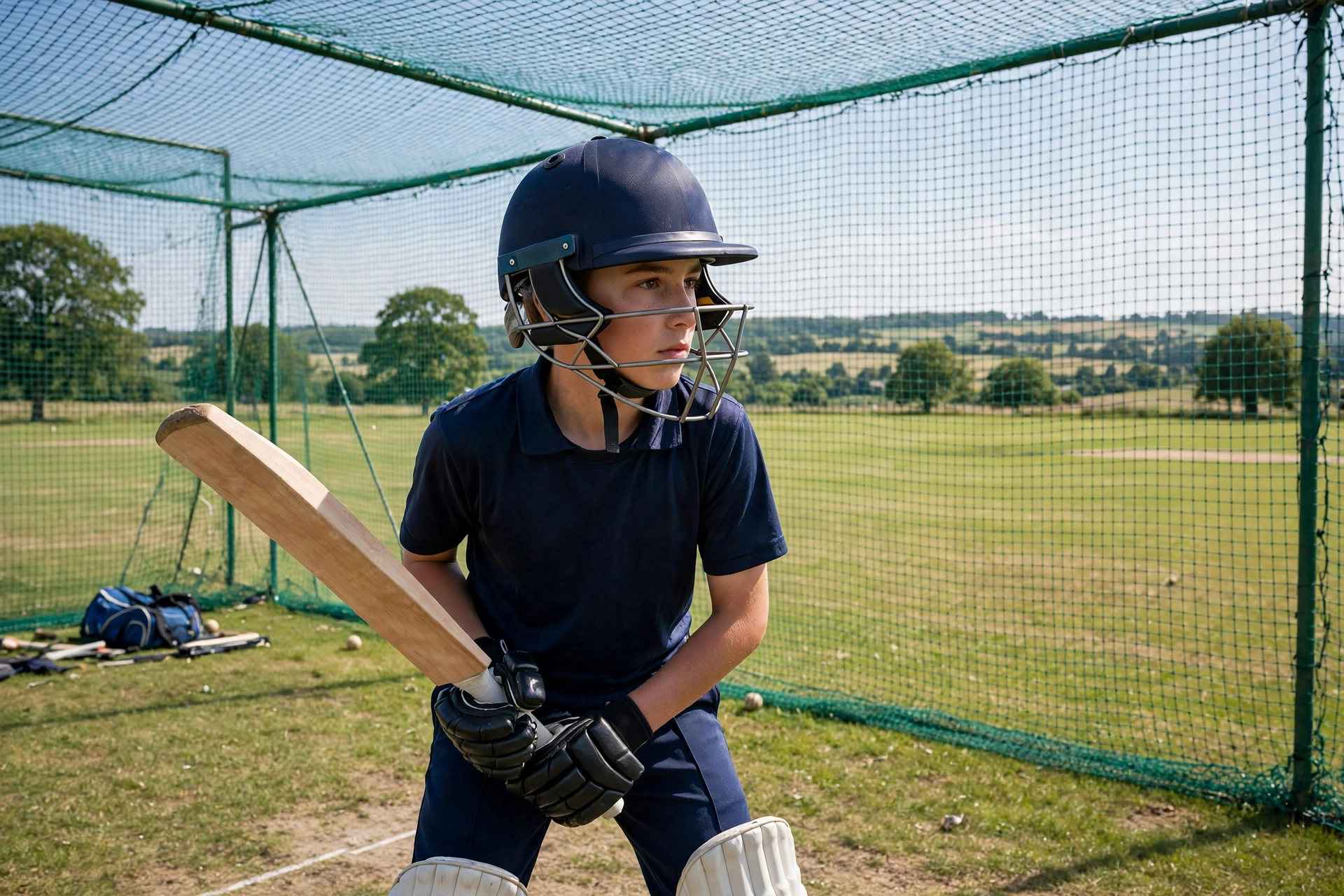
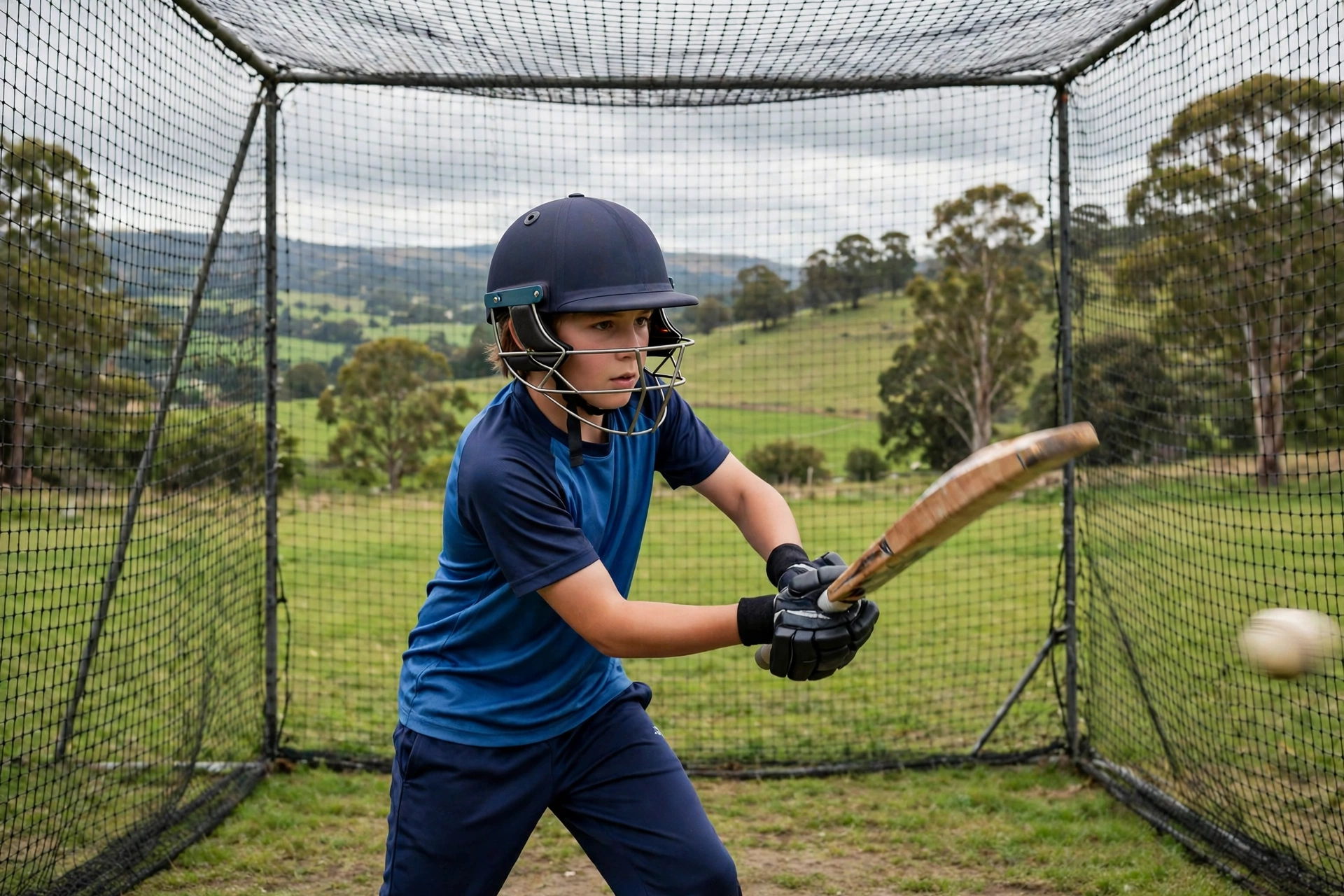
The helmet should sit level, covering the forehead, with the grille positioned so the child can see clearly without tilting their head. It should feel snug all the way around without pressing painfully. A helmet that rocks or slides is too large, and one that leaves red marks quickly is too small.
Children grow fast, so check the fit at the start of every season and after any growth spurt. A helmet that fitted perfectly last summer may be too tight this spring. Adjustable fit systems and interchangeable pads can extend a helmet’s useful life, but they cannot compensate for a shell that is now too small.
What Protection Features Should Parents Look For?
The grille is the most important feature. It should be sized for the ball the child faces: junior grilles have narrower gaps for smaller balls, and senior grilles are not suitable for young children playing with a junior ball, which could pass through a wider gap. Check that the grille matches the ball size for the child’s age group and competition.
Look for a helmet with a strong shell, good internal padding, and a secure chin strap and retention system. The helmet should stay in place when the child runs, dives, and turns their head quickly. Ear protection matters too — the helmet should cover the ears and the sides of the head, not just the top.
Some helmets include additional neck or stem guards, which protect the back of the neck area. These are worth considering for older juniors facing faster bowling, and they can often be added to a helmet later. Ask the child’s coach or club what level of protection is expected for their age group and competition.
How Should a Junior Helmet Fit?
Fit follows the same principles as an adult helmet, but children are less likely to complain about a poor fit, so parents need to check actively. The helmet should sit level, not tipped back or forward, and the grille should not obstruct vision. Ask the child to run, jump, and shake their head — the helmet should stay put.
The chin strap should be snug enough that the helmet does not lift when the child looks up, but not so tight that it is uncomfortable. Check the strap adjustment regularly, because children fiddle with straps and they loosen with use.
Watch for signs of a poor fit during play: a child constantly adjusting the helmet, pushing it back, or complaining of headaches may have a fit problem rather than a discipline problem. A helmet that is uncomfortable will be worn loosely or left off, so comfort is a safety issue, not a luxury.
How Do You Get a Child to Wear Their Helmet?
Let the child be involved in choosing it. A helmet in a colour they like, or one their cricketing hero wears, is far more likely to be worn willingly than one chosen purely by a parent. Within the right size and protection level, there is usually room for the child’s preference.
Make wearing it non-negotiable and consistent. If the helmet is required every time they bat at nets and in matches, without exceptions, it becomes part of the routine rather than a point of argument. Coaches and clubs that enforce helmet use consistently make this much easier for parents.
Check that the helmet works with the rest of the child’s kit. It should fit comfortably with a cap or sweatband underneath if they wear one, and it should not clash with their batting gloves or pads in a way that makes batting awkward. Small comfort issues become big excuses for children.
When Should a Junior Helmet Be Replaced?
Replace the helmet when the child outgrows it, when it has taken a hard impact, or when straps, pads, or the grille are worn or damaged. A cracked shell, a bent grille, or a retention system that no longer holds should end the helmet’s life immediately, even if it looks mostly fine.
As children move up age groups, the ball gets harder and bowling gets faster, so the protection level needs to keep pace. A helmet that was right for under-11 soft-ball cricket may not be right for under-15 hard-ball cricket. Review the helmet whenever the child moves to a new age group or competition level.
Finally, remember that helmet technology and fit systems improve over time, and a well-fitting modern helmet is worth the investment. Rotational protection is one feature worth understanding as children face faster bowling — this guide to what MIPS means for helmets explains how one such system works, though parents should note it was developed for cycling and similar angled-impact protection concepts apply across helmet types in general terms.
Frequently Asked Questions
Q: Can my child use an adult cricket helmet?
A: In general terms, no — adult helmets are too large for most children and will not sit correctly. A junior helmet sized to the child’s head gives proper coverage and stays in place.
Q: Does a junior need a helmet for soft-ball cricket?
A: Yes, even a soft ball can cause injury, and clubs usually require helmets for batting. Check your club’s rules and choose a helmet with a grille suited to the ball used.
Q: How often should I check my child’s helmet fit?
A: At the start of every season and after any growth spurt. Children grow quickly, and a helmet that fitted last season may be too small now.

Olivia
Writer at Helmet Today, covering helmet reviews, fit and riding safety.