In general terms, a cricket helmet should be replaced after any hard ball strike that cracks the shell, dents or bends the grille, or damages the padding — and if you are unsure whether a strike was hard enough to matter, replacing it is the safer choice. Helmets are designed to absorb impact, and that job can use up the protection in a way you cannot always see from the outside.
Every batsman takes blows on the helmet eventually, from a glancing deflection to a full-blooded strike. Knowing which strikes end a helmet’s life, and which ones it can shrug off, is essential — a helmet kept too long after a serious impact may not protect properly next time.
What Counts as a Damaging Ball Strike?
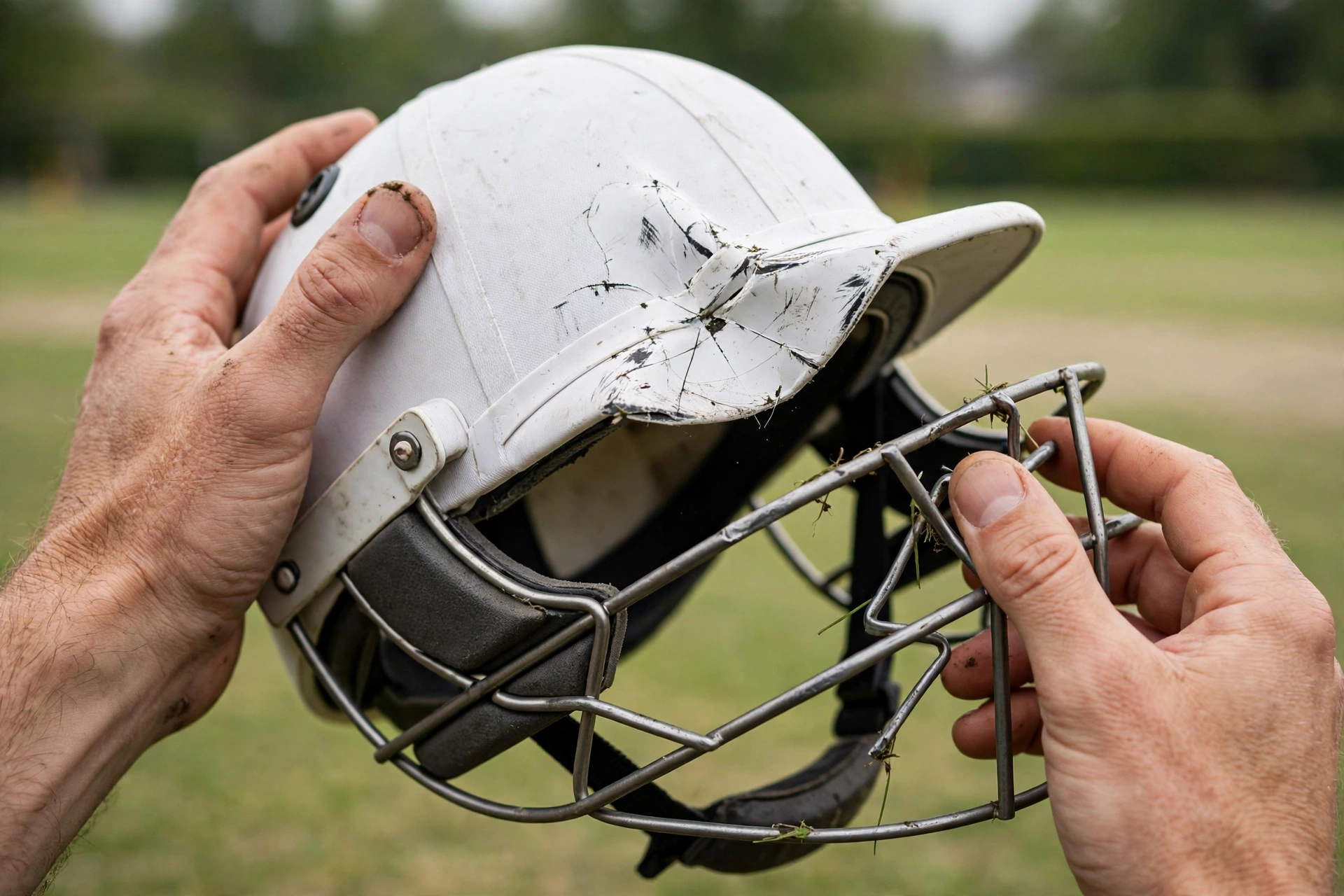
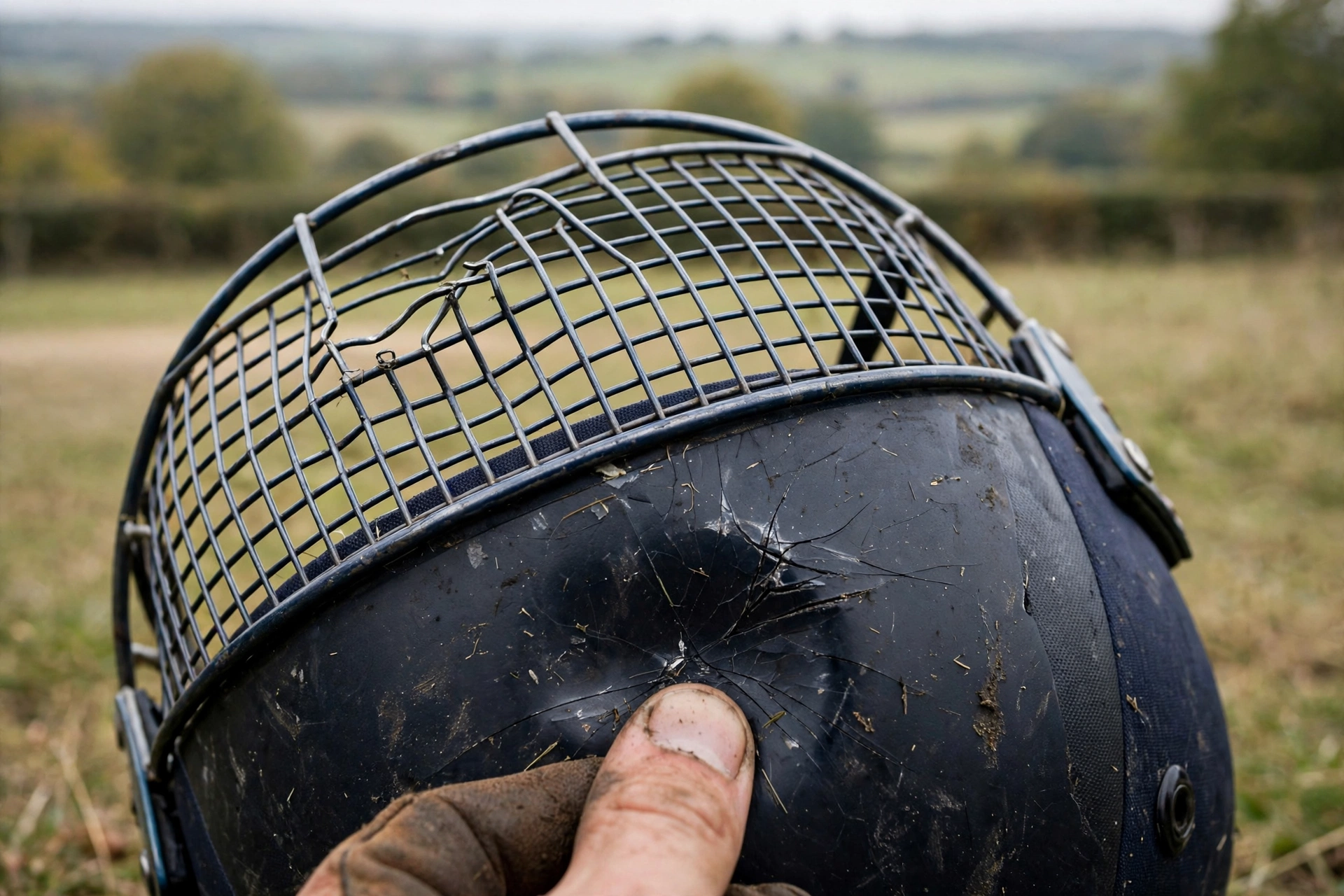
A direct, high-speed strike to the shell or grille is the clearest case for replacement. If the ball hits hard enough to leave a visible mark, dent, crack, or bent grille bar, the helmet has absorbed significant energy, and its protective structure may be compromised. This applies even if the batsman felt fine and carried on batting.
Glancing blows and slower deflections are less clear-cut. A ball that brushes the grille or clips the side at low speed may not damage the helmet at all. The key factors are the speed of the ball, how directly it struck, and whether the batsman felt a sharp jolt. A strike that stung or jarred the head deserves more suspicion than one barely noticed.
Repeated smaller strikes also add up. A helmet that has taken many blows over several seasons may have accumulated wear in its liner and padding that is not obvious from a single inspection. Age and strike history both count, not just the last impact.
How Do You Inspect a Helmet After a Strike?
Start with the shell. Look closely for cracks, dents, chips, or areas where the outer surface has compressed or delaminated. Run your fingers over the impact area and feel for soft spots, raised edges, or changes in the shell’s shape. Check the inside too — remove the pads if you can and look at the liner for cracks, crushing, or deformation.
Next, check the grille. Look for bent bars, loose fixings, or a grille that has shifted out of alignment. A bent grille may not sit correctly in front of the face, and it may have transferred force to its mounting points. Test the fixings: they should be firm, with no play or wobble.
Finally, check straps, pads, and the retention system. A hard strike can stretch straps, compress pads unevenly, or damage the fit mechanism. If the helmet no longer sits level or feels different on the head after a strike, that change itself is a warning sign, even if you cannot see damage.
What If There Is No Visible Damage?
Absence of visible damage does not always mean the helmet is fine. Foam liners can compress internally without cracking the outer shell, and that compression reduces the helmet’s ability to absorb the next impact. This is why the force of the strike matters as much as what you can see.
If a strike was hard enough that the batsman felt a significant jolt, had to pause, or was checked by an umpire or physio, treat the helmet as suspect even if it looks intact. In general terms, the cost of a replacement helmet is small compared with the risk of relying on a compromised one.
When in doubt, ask a coach, club official, or the helmet manufacturer. Many manufacturers will inspect a helmet or advise on whether a particular impact warrants replacement, and clubs often have experience judging strike damage. A second opinion costs nothing and can settle an uncertain call.
How Long Does a Cricket Helmet Last Otherwise?
Even without a major strike, cricket helmets wear out. Pads compress, straps stretch, grilles loosen, and materials age, especially with exposure to sun, sweat, and heat. In general terms, a helmet used regularly for several seasons should be inspected carefully and may need replacing on age and condition alone.
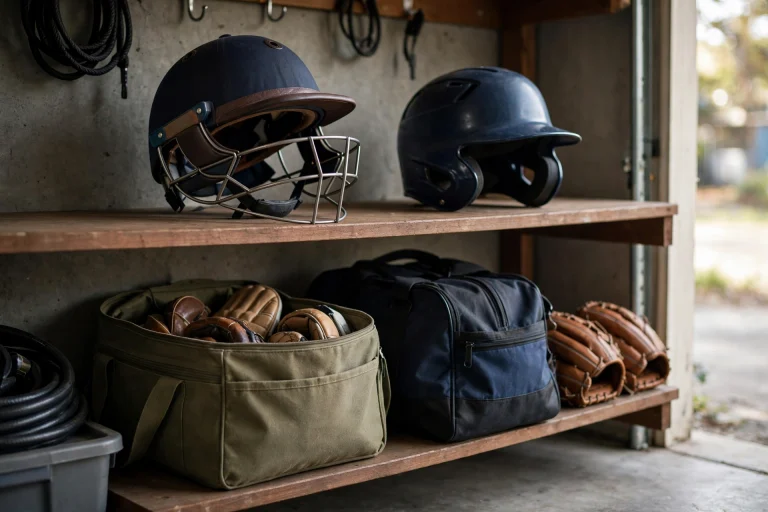
Storage matters. A helmet left in a hot car boot, a damp kit bag, or direct sunlight degrades faster than one stored cool and dry. Sweat and sunscreen also break down padding over time, so wipe the helmet down after matches and let it air before putting it away. Keep the helmet in a kit bag out of extreme heat, and take it out to air after wet matches rather than leaving it sealed and damp.
Children’s helmets need more frequent review, because juniors outgrow them and because the protection level must keep pace as they move to harder balls and faster bowling. A junior helmet should be reassessed at every age-group change, regardless of strikes.
What Should You Do With a Retired Helmet?
Do not pass a retired helmet on to another player. A helmet retired after a hard strike or for age-related wear may look usable, but its protection is uncertain, and handing it on transfers that risk to someone else. Retire it properly instead.
Some clubs collect old helmets for training demonstrations or for parts, such as spare grilles or straps for the same model. If the shell is damaged, though, the helmet should be disposed of rather than stripped for parts that might be compromised too.
When buying the replacement, re-check size and grille suitability rather than simply reordering the same model. Heads change, age groups change, and helmet designs improve. A fresh fitting ensures the new helmet protects as well as the old one did when it was new — and remember that fit underpins every protection feature, including systems that address angled impacts, as explained in this guide to what MIPS means for helmets.
Frequently Asked Questions
Q: Does every ball strike mean a new helmet?
A: No — glancing, low-speed deflections often cause no damage. Replace the helmet after a hard direct strike, visible damage, or any strike that jarred the head significantly.
Q: Can a cracked helmet be repaired?
A: In general terms, no. A cracked shell or bent grille should not be repaired at home, because repairs cannot restore the helmet’s original protective performance. Replace it.
Q: How can I tell if the foam liner is damaged?
A: Remove the pads and look for cracks, crushing, or soft spots in the liner, and feel for changes in shape. If the liner looks or feels different after a strike, replace the helmet.

Olivia
Writer at Helmet Today, covering helmet reviews, fit and riding safety.