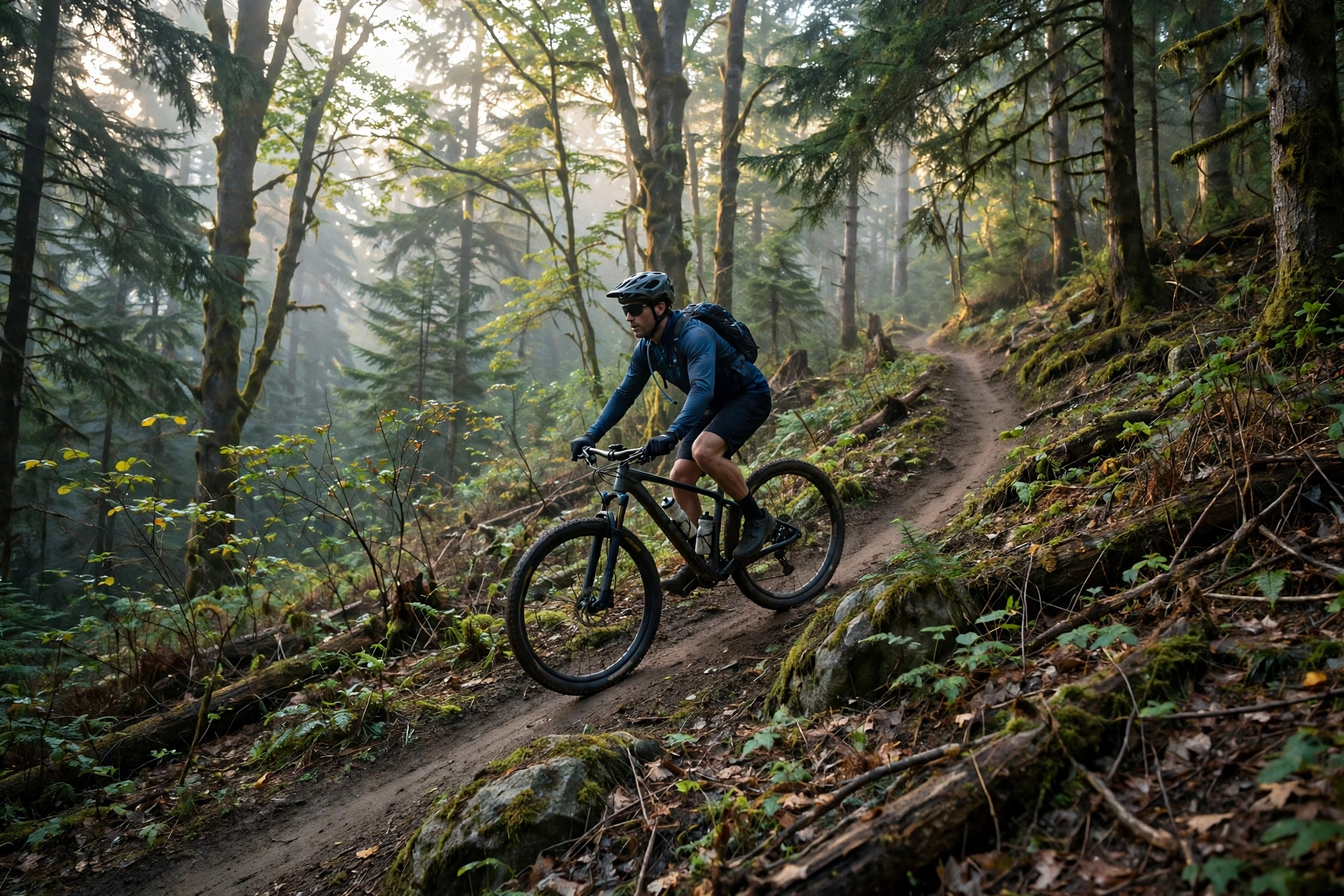
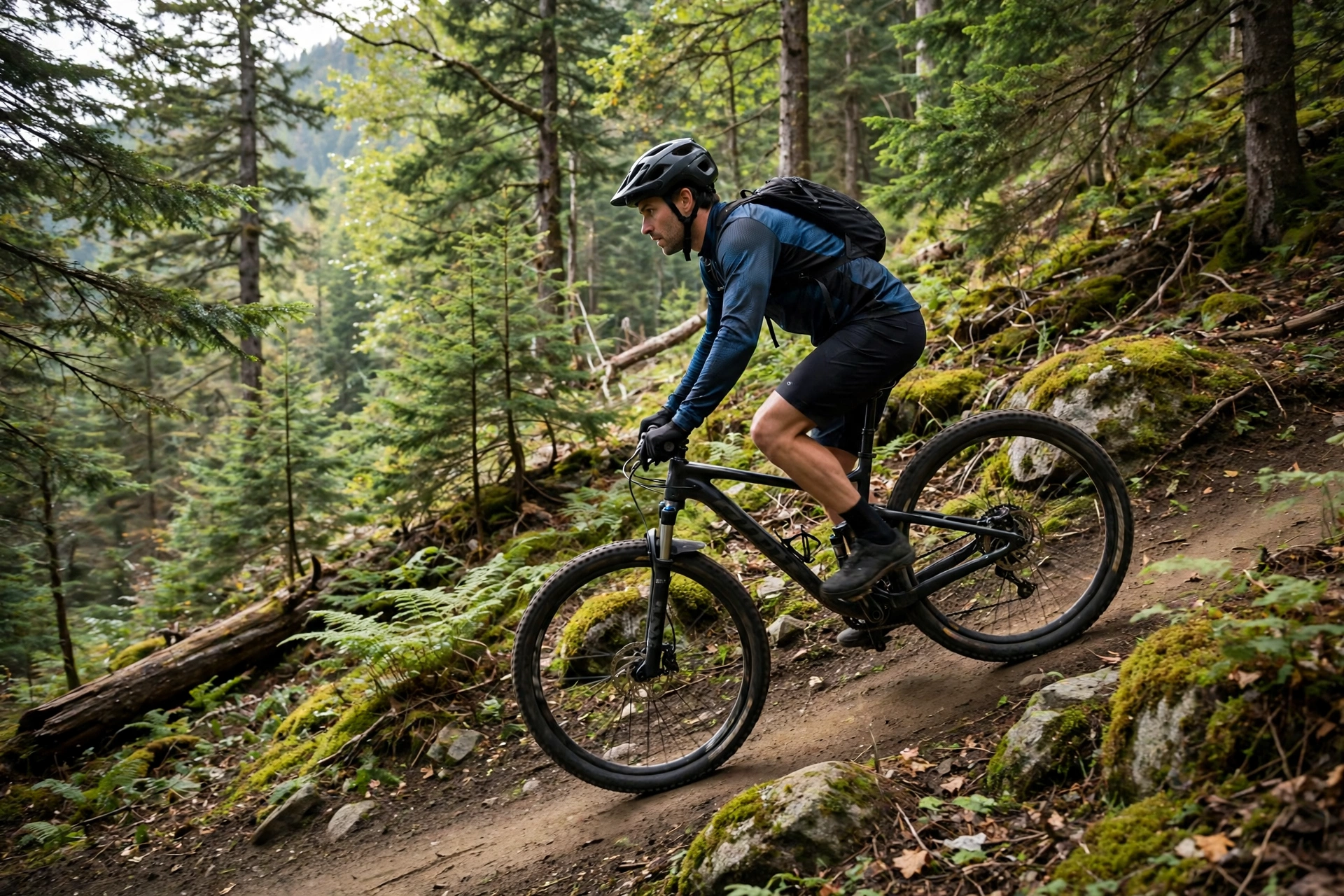
In general terms, an open-face MTB helmet is the right choice for cross-country riding: it is light, well ventilated, and comfortable for long pedalling days, with enough coverage for the falls cross-country riders typically have. Cross-country is about climbing, distance, and flowing trails rather than steep downhill tracks, so the helmet should prioritise weight and airflow over chin-bar protection.
Cross-country riders sometimes wonder whether they need a full-face helmet, or whether a road helmet would do. The answer sits in between: a proper cross-country MTB helmet is an open-face design, but with more coverage, tougher construction, and trail features a road helmet lacks. Here is what to look for.
Why Does Open-Face Suit Cross-Country Riding?
Cross-country riding means long climbs, sustained pedalling, and hours in the saddle. Weight matters on every climb, and heat builds up fast when you are working hard. An open-face helmet keeps weight down and lets air flow over the head, which is exactly what a cross-country rider needs for comfort over a long ride.
The crash profile suits open-face too. Cross-country falls are usually lower-speed tumbles: a washed-out front wheel on a corner, a clipped pedal, a slow-speed fall on a technical climb. These falls can still hurt, but they rarely involve the high-speed face impacts that make a chin bar essential. Extended rear and side coverage, which cross-country helmets provide, covers the areas most exposed in these falls.
An open-face helmet also makes eating, drinking, and talking easy, which matters on long rides and races. You can sip from a bottle, eat a snack, and communicate with riding partners without removing the helmet — small things that add up over hours on the trail.
What Coverage Should You Look For?
Look for a helmet that extends lower at the back and sides than a road helmet. That extended coverage is the key difference between a cross-country MTB helmet and a road helmet, and it protects the back of the head in the sideways and backward falls common on trails.
The helmet should sit level, covering your forehead, with the rear sitting low on the back of your head without pressing your neck. If it perches high like a road helmet, it is not giving you the trail coverage you need. If it presses your neck when you look up the trail, it is sitting too low or is the wrong shape for you.
Rotational impact protection is worth having. Most cross-country crashes are angled rather than straight-on, and systems designed to reduce twisting forces address exactly that. Look for it as a feature, but do not let it override fit — a helmet that fits well protects better than a poorly fitting helmet with extra technology.
How Important Are Ventilation and Weight?
Very important — these are the two features you will notice on every ride. Cross-country helmets use large vents and internal channels to move air over the head while climbing. More vents are not automatically better, though: what matters is how air flows through the helmet at climbing speed, not just how many holes it has.
Weight is the other constant factor. A cross-country helmet should feel light enough to forget about. Heavier helmets cause neck fatigue on long rides, especially on rough trails where your head is constantly moving. In general terms, lighter is better here, as long as coverage and fit are not sacrificed to get there.
Try helmets on and compare. Two helmets with similar weights can feel very different, because fit and weight distribution matter as much as the number on the scale. A helmet that balances well and sits snugly will feel lighter than a heavier-feeling one of the same weight.
What About Visors, Glasses, and Fit Systems?
A visor is useful on cross-country trails for shading your eyes and deflecting branches and spray. Look for an adjustable visor that you can tilt up when climbing slowly and down for descents, and check that it does not block your view of the trail ahead when you are in a climbing position.
Glasses compatibility matters too. Cross-country riders usually wear sunglasses or clear glasses, so the helmet should not press the arms of your glasses into your temples. Try the helmet on with the glasses you actually ride in, and check for pressure points after a few minutes.
A good retention system is essential. A rear dial that tightens the helmet evenly, with vertical adjustment for the cradle, lets you fine-tune the fit. Ponytail-compatible designs are a bonus for riders with long hair. The helmet should stay put on rough descents without needing constant readjustment.
When Should You Choose a Full-Face Helmet Instead?
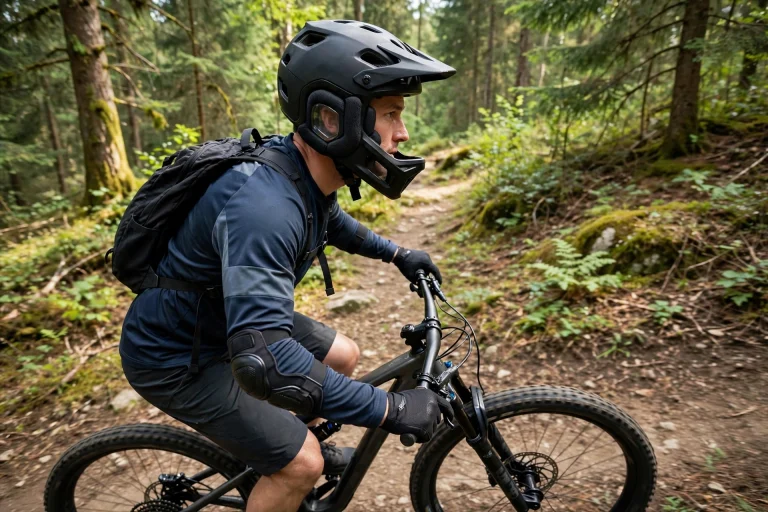
If your cross-country riding includes steep, technical descents, bike park days, or racing on courses with serious downhill sections, a full-face helmet may be the better call for those rides. Some cross-country racers keep a lightweight full-face helmet for particularly technical courses.
Convertible helmets with a removable chin bar are an option for riders who mix cross-country with more aggressive descending. They let you ride open-face for the climbs and add the chin bar for the descents, though they are heavier than a pure cross-country helmet and less protective than a dedicated full-face.
For everyday cross-country riding, though, an open-face helmet remains the standard. Do not let downhill worries push you into a helmet that makes every climb hotter and heavier — choose for the riding you do most, and keep a second helmet for the exceptions.
How Do You Pick the Right One?
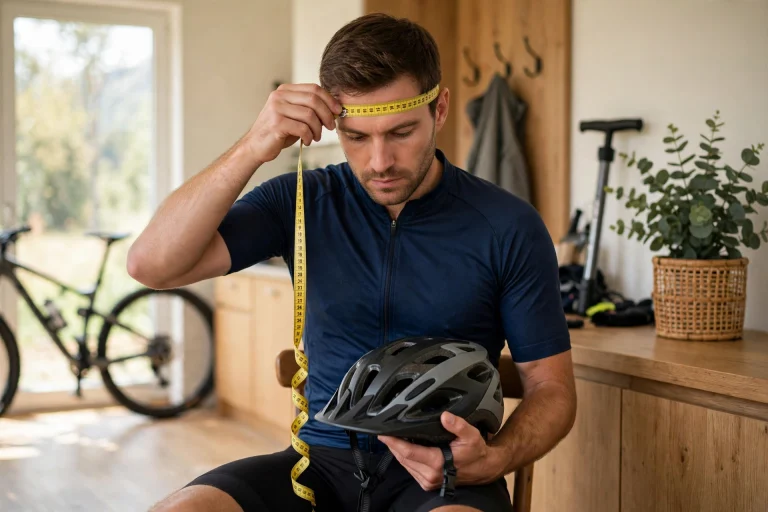
Start with fit: measure your head, try several brands, and choose the one that sits level and snug without pressure points. Head shapes differ, and brands differ too, so the right helmet is the one that matches your head, not just your size number.
Then weigh coverage, ventilation, and weight for your riding. A cross-country helmet should cover the back and sides well, breathe on climbs, and feel light over hours. Check visor adjustment and glasses fit, and confirm the retention system holds the helmet steady.
Finally, remember that any helmet works best when it fits well and is worn every ride. Rotational protection is a useful extra, and this guide to what MIPS means for helmets explains how one such system works if you want to understand it before buying.
Frequently Asked Questions
Q: Can I use a road helmet for cross-country mountain biking?
A: In general terms, it is better than nothing, but a cross-country MTB helmet gives more rear and side coverage for trail falls and is built tougher for off-road use. Choose an MTB helmet for regular trail riding.
Q: Do cross-country helmets work with goggles?
A: Most are designed for glasses rather than goggles, since cross-country riders rarely wear goggles. If you prefer goggles, check strap routing and eyeport fit before buying.
Q: How light should a cross-country helmet be?
A: There is no single target, but it should feel light enough to forget on a long ride. Prioritise fit and coverage first, then choose the lightest helmet that still gives both.

Olivia
Writer at Helmet Today, covering helmet reviews, fit and riding safety.