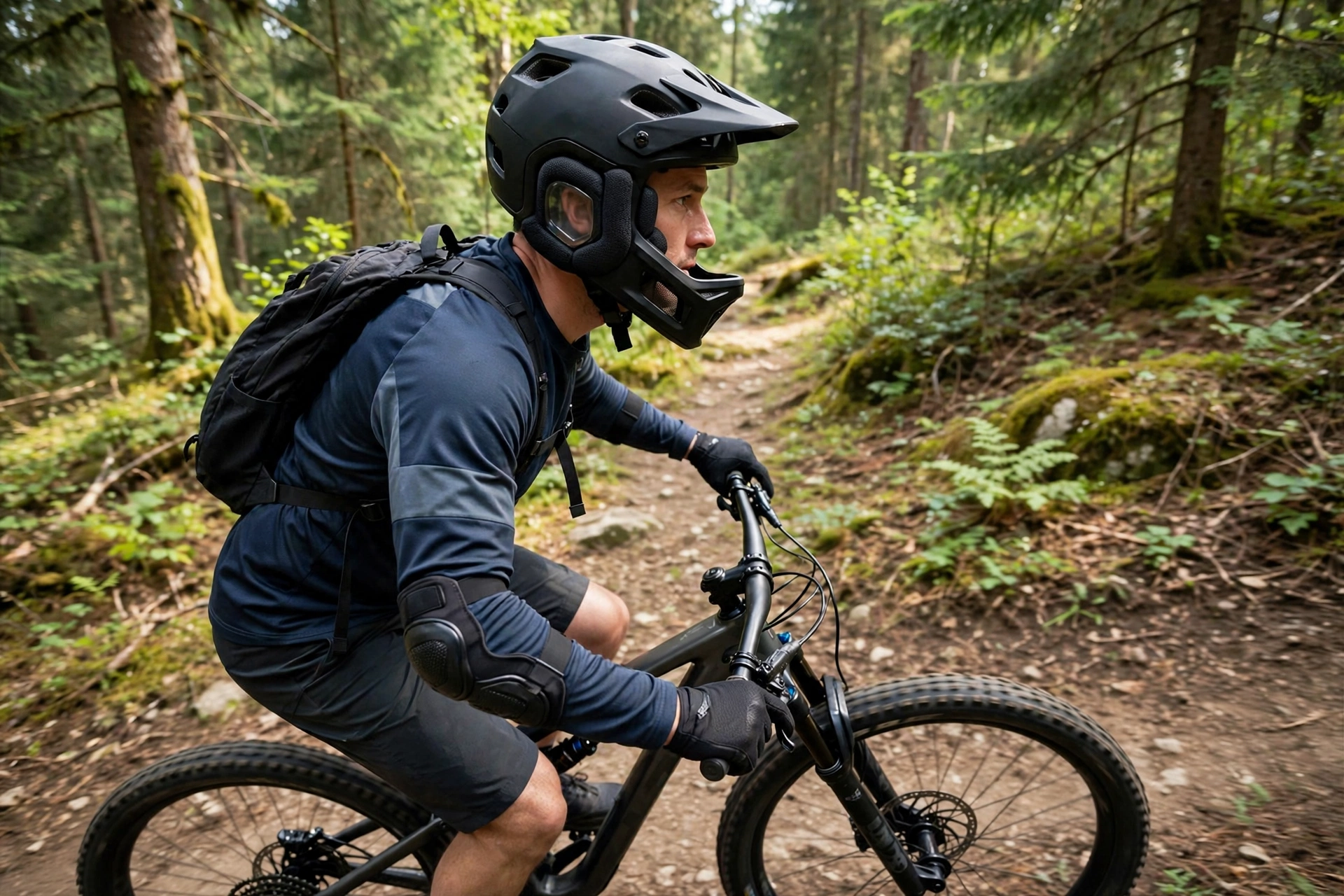
In general terms, MTB helmet ear coverage muffles trail sounds slightly, but it does not block them — you can still hear other riders, trail warnings, and approaching bikes, especially with an open-face helmet. Full-face helmets muffle more than open-face ones, but even then the effect is modest, and most riders adapt quickly. Hearing matters on shared trails, so it is worth understanding what each style actually does to your hearing.
Ear coverage is one of those features riders worry about before buying and rarely think about afterwards. This guide explains how much coverage different MTB helmets give, how that affects what you hear, and what to do if you feel cut off from the trail.
How Much Ear Coverage Do MTB Helmets Give?
Open-face trail helmets give very little ear coverage. The shell sits above the ears, with straps passing around them, so your ears are essentially open to the air. You hear almost exactly as you would without a helmet, apart from a small amount of wind noise change from the shell and visor.
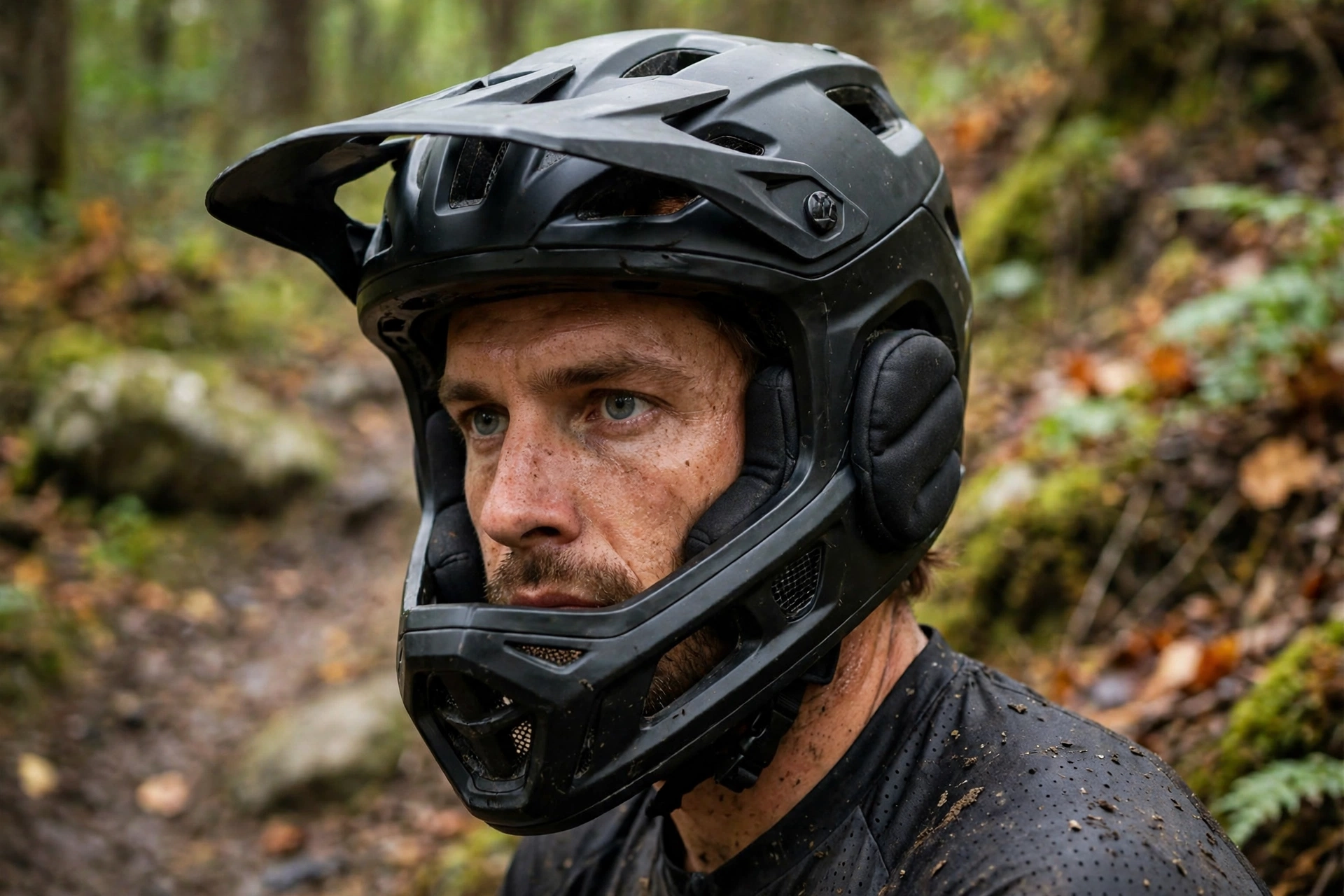
Full-face MTB helmets cover much more. Cheek pads wrap around the jaw and sit close to the ears, and the shell extends lower on the sides of the head. This gives real protection to the ears and jaw in a crash, but it also creates a layer of padding between your ears and the outside world.
Some helmets sit in between. Enduro-style helmets with extended side coverage, and convertible helmets with the chin bar removed, cover slightly more than a standard trail helmet but far less than a full-face. The range of coverage across MTB helmets is wide, so the hearing effect depends heavily on the style you choose.
Does Ear Coverage Actually Block Trail Sounds?
In general terms, no — it muffles rather than blocks. With an open-face helmet, the difference is negligible. With a full-face helmet, sounds become slightly quieter and less directional, because the cheek pads absorb some sound and change how it reaches your ears. Voices, bells, and shouted warnings still come through clearly at normal trail distances.
What changes most is direction. With ears covered, it can be slightly harder to tell exactly where a sound is coming from — whether that rider calling out is behind you or to your left. This matters on busy shared trails, but most riders compensate quickly by glancing around more and riding with a little extra awareness.
Wind noise is a separate factor. At speed, wind rushing past the helmet can be louder than the muffling effect itself, and it affects open-face and full-face riders alike. A helmet that fits well and does not whistle or buffet tends to give a quieter, clearer soundscape than a loose one, regardless of ear coverage.
Do Full-Face Helmets Make Hearing Worse Than Open-Face?
Yes, but the gap is smaller than many riders expect. A full-face helmet’s cheek pads sit against the sides of the face, and thicker pads muffle more. Some downhill helmets have particularly thick, snug cheek pads for a secure fit at speed, and those muffle the most. Lighter enduro full-face helmets with thinner pads muffle less.
The trade-off is deliberate. Cheek pads exist to hold the helmet firmly in place and protect the jaw and lower face in a crash. A helmet that gripped less would hear better but protect worse. For downhill riding, where speeds are high and face impacts are a real risk, that trade-off is worth it.
For trail riding, where speeds are lower and communication with riding partners matters more, an open-face helmet usually makes more sense. You get full hearing, better ventilation, and lighter weight, and you give up the chin-bar protection you are less likely to need at trail speeds.
How Can You Hear Better With Ear Coverage?
First, make sure the helmet fits correctly. A loose helmet shifts around and can press a pad over one ear, muffling one side unevenly. A snug, level helmet keeps pads in their designed position, which usually means the least muffling the design allows.
Second, consider thinner cheek pads if your helmet brand offers them. Many full-face helmets come with pad sets in different thicknesses, and a thinner set can open up hearing noticeably while still holding the helmet securely. Check that the helmet still passes the push and twist fit tests after swapping pads.
Third, ride with awareness. On shared trails, call out clearly when passing, listen for bells and voices, and glance back before changing line. Good trail etiquette matters more than perfect hearing, and it keeps everyone safer regardless of helmet style.
When Is Ear Coverage Actually Helpful?
Ear coverage is not just a drawback — it protects. In a crash, the ears and the side of the head are vulnerable, and extended side coverage and cheek pads reduce the risk of cuts and direct impacts there. For downhill and bike park riding, that protection is a genuine benefit.
Coverage also helps in cold and wet weather. Covered ears stay warmer on winter rides, and pads block some wind and spray. Some riders who would never choose a full-face helmet for summer trail riding switch to one in winter partly for this reason.
Finally, coverage can reduce wind roar at high speed. A full-face helmet smooths airflow around the head, which can make descending quieter overall even though voices are slightly muffled. On a fast downhill run, less wind noise can actually make it easier to hear a riding partner shouting behind you.
Should Ear Coverage Decide Your Helmet Choice?
For most riders, no. Choose a helmet for the riding you do — open-face for trail and cross-country, full-face for downhill — and accept the hearing characteristics that come with it. Hearing differences between styles are real but modest, and they rarely justify choosing the wrong protection level for your riding.
If you ride busy shared trails and value communication highly, an open-face helmet is the natural choice, and it also happens to hear best. If you ride downhill, take the full-face helmet and its muffling as part of the package, and compensate with clear communication and awareness.
Whatever style you choose, fit is what makes protection work, including systems that reduce twisting forces in angled crashes. This guide to what MIPS means for helmets explains how one such system works and why a snug fit matters.
Frequently Asked Questions
Q: Will a full-face MTB helmet stop me hearing other riders?
A: In general terms, no. It muffles sounds slightly and makes direction a little harder to judge, but voices, bells, and warnings still come through clearly.
Q: Do open-face helmets affect hearing at all?
A: Barely. Open-face helmets sit above the ears, so your hearing is almost unchanged apart from minor wind noise differences from the shell and visor.
Q: Can I cut holes in cheek pads to hear better?
A: No — modifying pads can change how the helmet fits and performs in a crash. If hearing is a problem, try thinner manufacturer pads or switch to an open-face helmet instead.

Olivia
Writer at Helmet Today, covering helmet reviews, fit and riding safety.