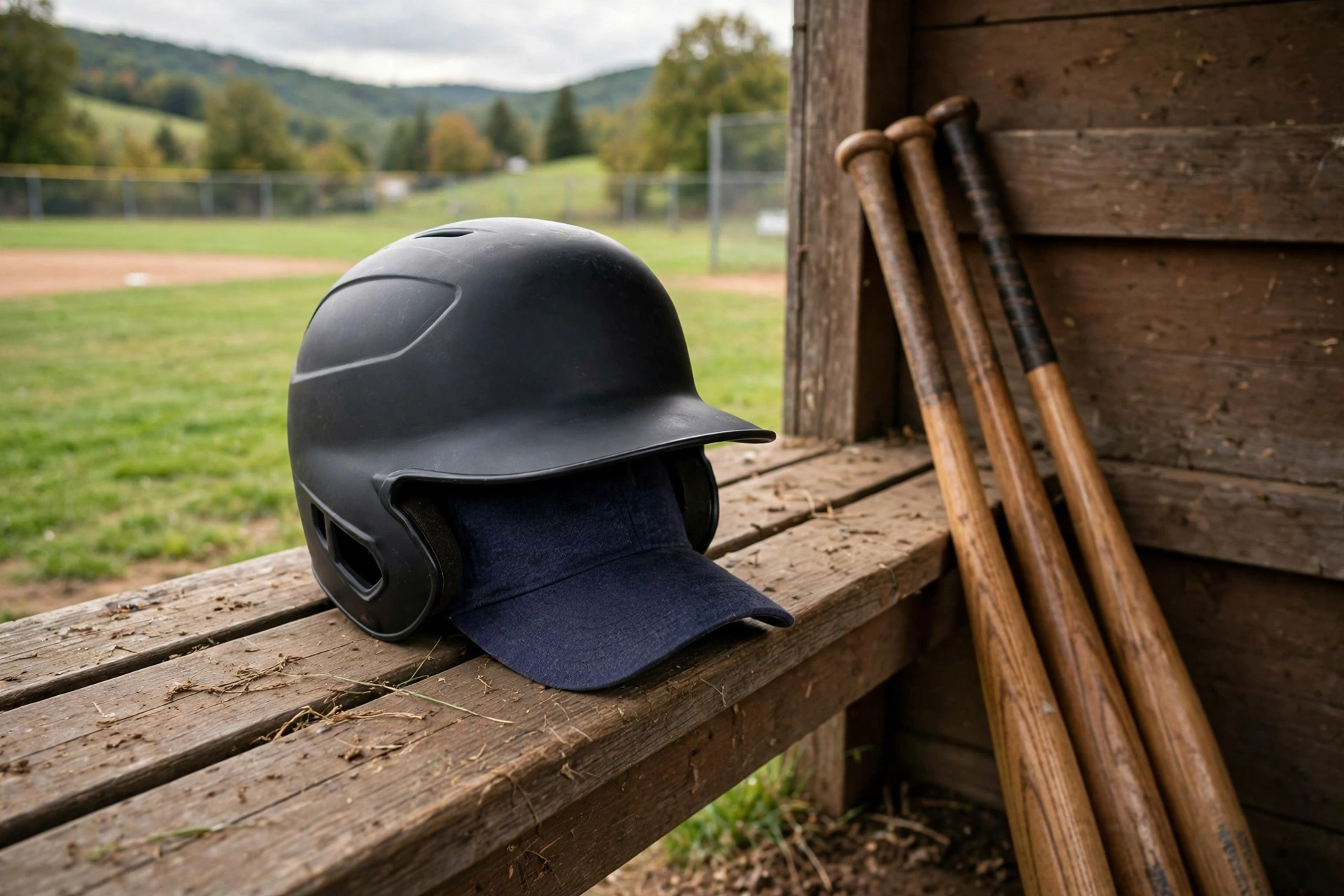
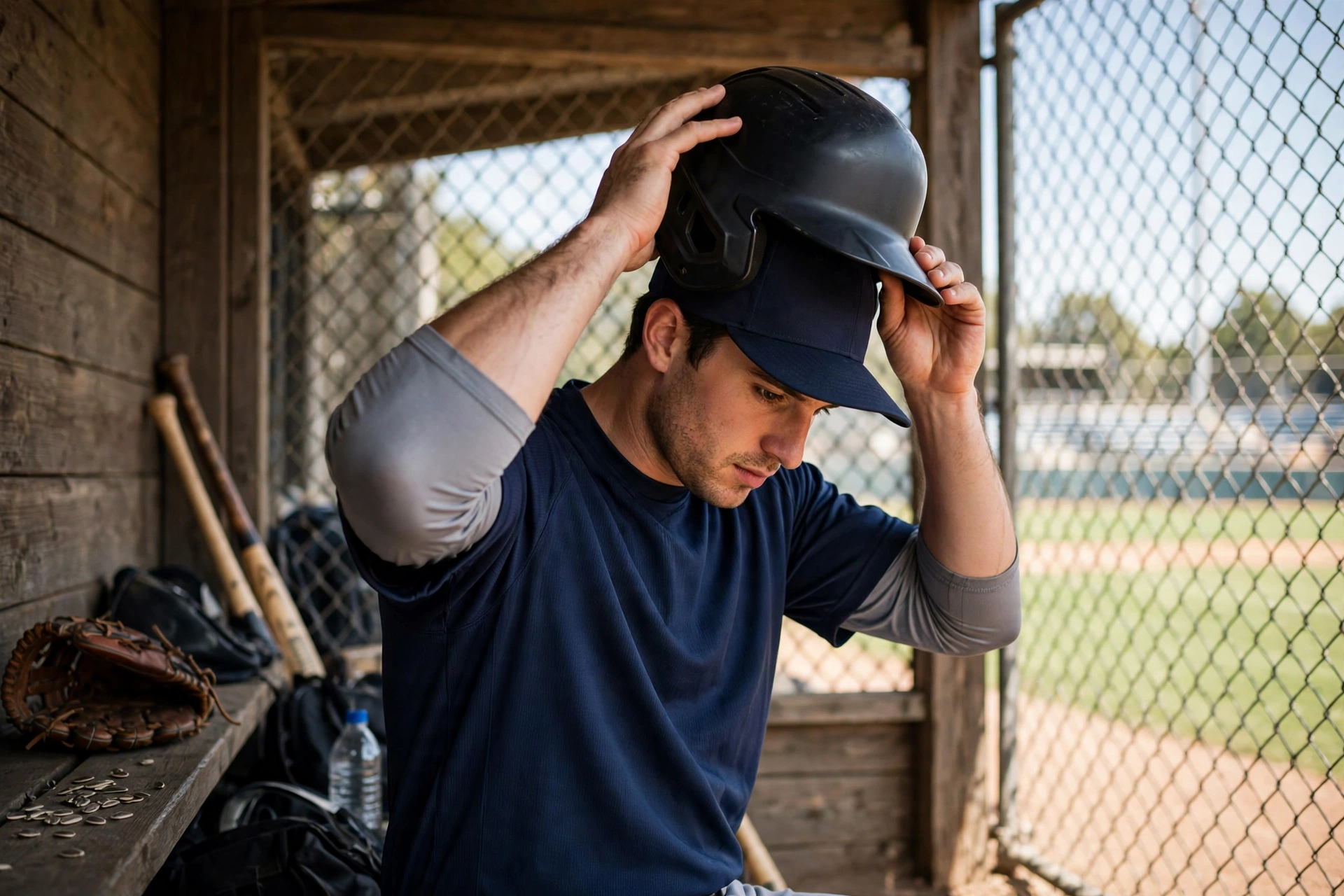
In general terms, to fit a baseball helmet over a cap, wear a thin, low-profile cap, put the cap on first with the brim sitting flat, then lower the helmet over it and adjust the strap — the helmet should still sit level and snug, and if it rocks, slides, or sits too high, the cap is too bulky or the helmet is the wrong size. Many players wear a cap under their batting helmet for sun, sweat, or habit, and it usually works fine — but only when the cap and the helmet are compatible.
This guide covers which caps work under a helmet, how to fit the two together, and what to do when the combination does not feel right.
What Kind of Cap Works Under a Batting Helmet?
Thin caps work best. A standard low-profile baseball cap with a soft, flexible crown sits neatly under a helmet, while a structured cap with a stiff, high crown pushes the helmet up and makes it sit too high on the forehead. If you wear a cap under your helmet regularly, choose one specifically for that purpose — a thin training cap or a skull cap often works better than a game cap.
The brim matters too. A flat, flexible brim can sit under the helmet’s brim without bunching, while a stiff, curved brim can push the helmet forward or create pressure points. Some players fold the brim or wear the cap backwards under the helmet, but in general terms, a low, flexible brim worn normally gives the most consistent fit.
Sweatbands and skull caps are a useful alternative. A thin moisture-wicking skull cap gives the sweat management and comfort of a cap without the bulk of a crown or brim, and it usually fits under a helmet more easily. If your main reason for wearing a cap is sweat or sun, a skull cap may be the simpler solution.
How Do You Fit the Helmet Over the Cap?
Start by putting the cap on properly: centred, sitting level, with the brim flat and the crown settled on your head. A cap worn crooked or pushed back will make the helmet sit crooked too, so get the cap right first.
Then lower the helmet over the cap, keeping it level, and settle it so it covers the forehead to just above the eyebrows. The helmet should feel snug all round, with the padding touching the cap evenly. Fasten the chin strap firmly — the strap is what holds the helmet in place, and a loose strap lets the helmet slide, especially when running or swinging.
Finally, test the fit properly. Shake your head firmly, jog on the spot, and practise a swing. The helmet should stay put and should not rock forward over your eyes or slide back off your forehead. If it moves, adjust the cap, the strap, or the helmet’s padding before you play.
What If the Helmet Sits Too High Over a Cap?
A helmet that sits too high is the most common problem when wearing a cap underneath, and it matters: a helmet sitting high leaves the forehead exposed and is more likely to slide. The first fix is to switch to a thinner cap — a structured game cap is often the culprit, and a thin training cap may solve the problem immediately.
If a thinner cap does not fix it, check the helmet’s size and padding. Some helmets have adjustable padding that can be thinned to make room for a cap, while others are sized to be worn without one. If your helmet only fits without a cap, you may need a larger size for cap use — but do not simply buy a larger helmet and wear it without the cap as well, because then it will be too loose.
Another option is to skip the cap and use a thin sweatband instead. A sweatband gives sweat control without adding bulk, and it rarely changes the helmet’s fit. Many players find that a sweatband under the helmet is more comfortable than a cap in hot weather, because it does not trap as much heat.
Does Wearing a Cap Affect Helmet Safety?
In general terms, a thin cap worn under a well-fitting helmet does not meaningfully reduce protection, because the helmet’s shell and padding still do their job and the cap adds only a thin layer. The risk comes when the cap changes the fit — pushing the helmet up, making it rock, or preventing the strap from holding it firmly. A helmet that does not fit properly protects less well, whatever is underneath it.
League rules are worth checking too. Some leagues have rules about what may be worn under a helmet, or about uniform caps, and a cap that does not match the team’s colours may not be allowed in a game. Check your league’s rules before relying on a particular cap in a match.
Also consider the heat. A cap under a helmet adds a layer of insulation, which can make a hot day feel hotter. Ventilation matters: a helmet with good airflow will feel more comfortable with a cap underneath, and a thin, breathable cap will feel better than a thick one. If you overheat, you are more likely to fiddle with the helmet or take it off between innings, which defeats its purpose.
How Do You Keep the Combination Comfortable?
Comfort comes from getting the layers right. Choose a cap made from light, breathable fabric, and make sure it does not bunch or fold under the helmet’s padding — bunched fabric creates pressure points that become painful over a long game. Smooth the cap flat before putting the helmet on, and re-settle both if they shift during play.
Keep the cap clean. A cap worn under a helmet absorbs sweat, and a sweaty cap can make the helmet’s padding damp and less comfortable. Wash the cap regularly, and let the helmet’s padding dry between games. And remember that fit is what makes any helmet’s protection work — including systems that address angled impacts, as explained in this guide to what MIPS means for helmets.
Frequently Asked Questions
Q: Can I wear any baseball cap under a batting helmet?
A: In general terms, a thin, low-profile cap works best. A structured cap with a stiff, high crown can push the helmet up and make it sit too high, which reduces protection.
Q: Should I buy a larger helmet to wear over a cap?
A: Only if you always wear the cap with that helmet. A larger helmet worn without the cap will be too loose, so size the helmet for the combination you actually use.
Q: Is a skull cap better than a baseball cap under a helmet?
A: Often, yes — a thin skull cap manages sweat without the bulk of a crown or brim, so it usually fits under a helmet more easily and changes the fit less.

Olivia
Writer at Helmet Today, covering helmet reviews, fit and riding safety.