In general terms, to size a youth baseball helmet, measure your child’s head around the forehead just above the eyebrows, match that measurement to the manufacturer’s size chart, and then check the fit in person — the helmet should sit level, feel snug all round, and stay put when your child shakes their head. Children grow quickly, and a helmet that fitted last season may not fit this season, so sizing is worth checking at the start of every season, not just when buying.
This guide walks parents through measuring, choosing, fitting, and knowing when to replace a youth baseball helmet.
How Do You Measure a Child’s Head for a Helmet?
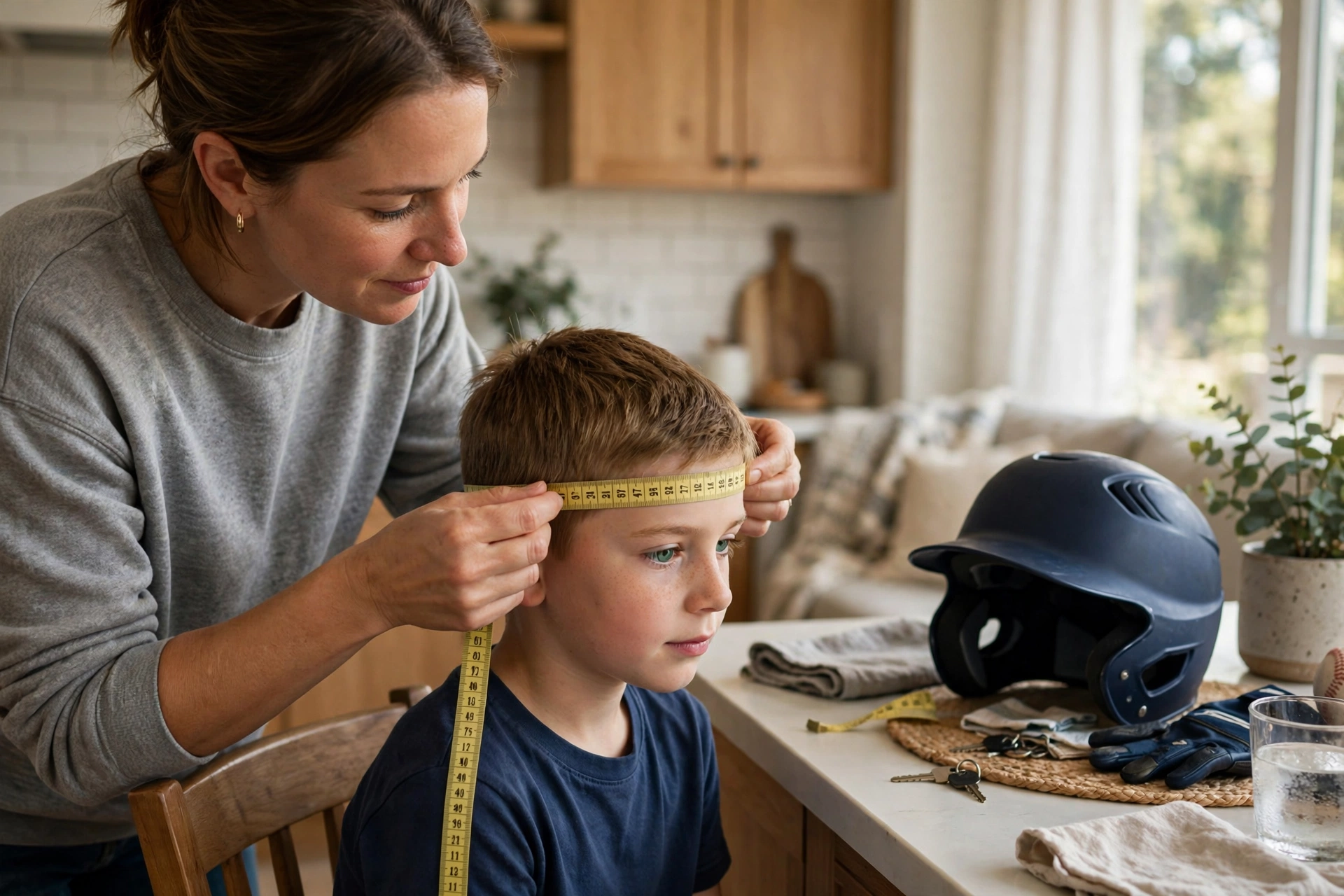
Use a soft measuring tape, and measure around the widest part of the head, just above the eyebrows and ears and around the back of the head. Keep the tape level and snug but not tight, and take the measurement twice to be sure. Write the number down — you will need it when comparing size charts, because different brands size differently.
Do not guess from age alone. Two children of the same age can have very different head sizes, and age-based size guides are only rough estimates. A tape measurement takes a minute and avoids the most common sizing mistake: buying a helmet that is too large because it was chosen by age rather than by measurement.
Measure with anything your child normally wears under the helmet, such as a thin sweatband or skull cap, if they will wear one in games. A measurement taken without that layer can lead to a helmet that feels tight once the layer is added.
How Do Youth Helmet Sizes Work?
Youth baseball helmets usually come in sizes based on head circumference, often labelled small, medium, and large within a youth range, with some brands offering a specific junior or tee-ball size for the youngest players. Always check the manufacturer’s own size chart rather than assuming one brand’s medium matches another’s — the ranges can differ by a centimetre or more.
Some youth helmets have adjustable fit systems, such as interchangeable pads or a dial at the back, which let you fine-tune the fit within a size. These are useful for children between sizes or growing through a season, but they cannot fix a helmet that is fundamentally too large or too small — they adjust the fit, they do not change the shell size.
Resist the temptation to buy a size up “to grow into”. A helmet that is too large can slide over the eyes, shift on impact, and leave the forehead exposed, which defeats its purpose. Buy the size that fits now, and plan to replace it as your child grows — a helmet is not a pair of shoes to grow into.
How Do You Check the Fit in Person?
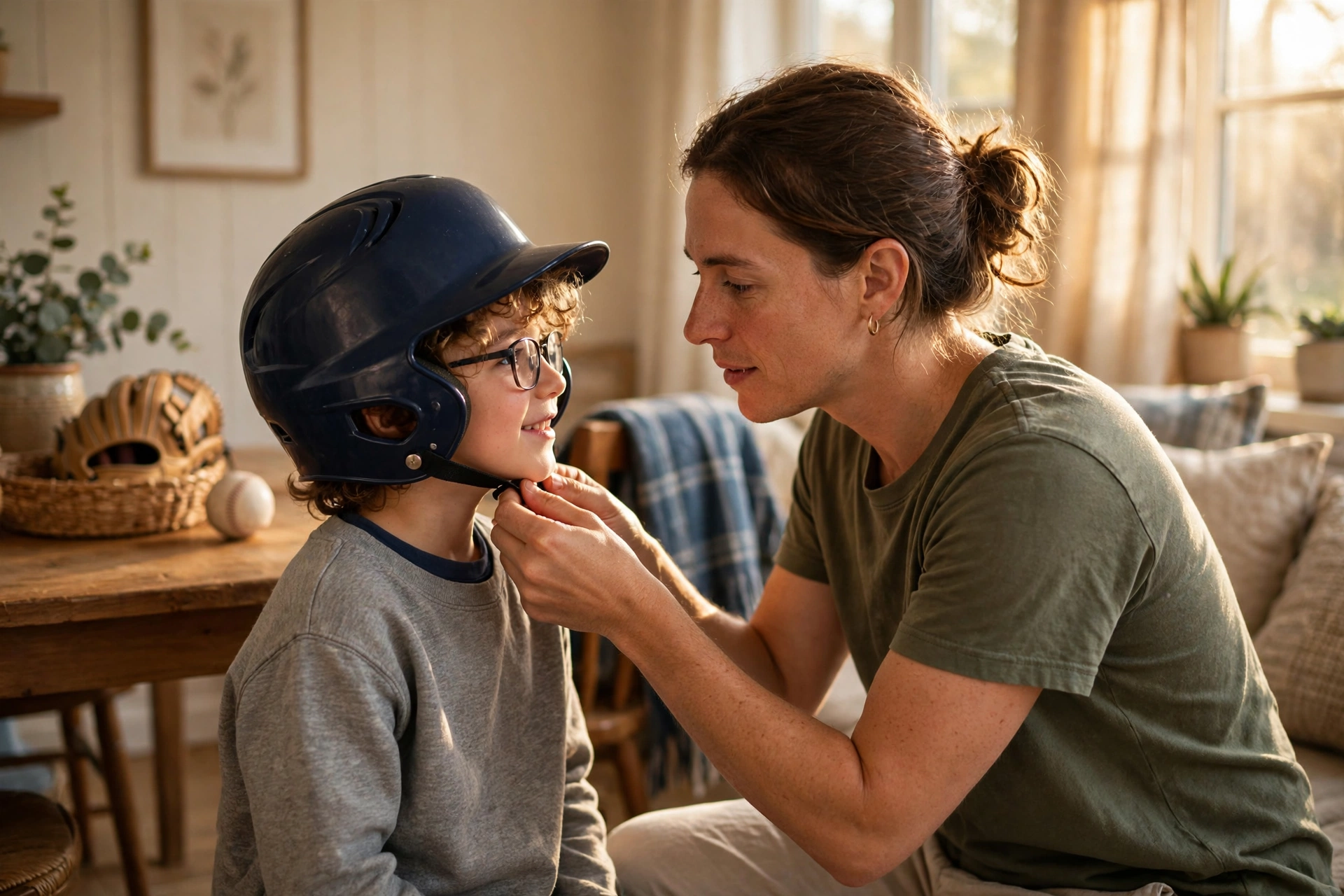
Once you have a helmet in the right size range, put it on your child and check four things. First, it should sit level, covering the forehead to just above the eyebrows — not pushed back like a cap, and not pulled down over the eyes. Second, it should feel snug all round, with the padding touching the head evenly and no rocking when your child shakes their head firmly.
Third, fasten the chin strap and check that it holds the helmet firmly without pinching. A strap that is too loose lets the helmet slide, and a strap that is too tight will be uncomfortable and may be left undone. Fourth, check the ear coverage: the helmet should cover the ears, and the ear holes or flaps should line up with your child’s ears rather than sitting above or below them.
Finally, have your child move in it — jog on the spot, swing a bat, and bend forward. A helmet that feels fine standing still but slides when moving is not fitted properly. If it slides, try different padding or a different size before accepting it.
What About Face Guards and Ear Flaps?
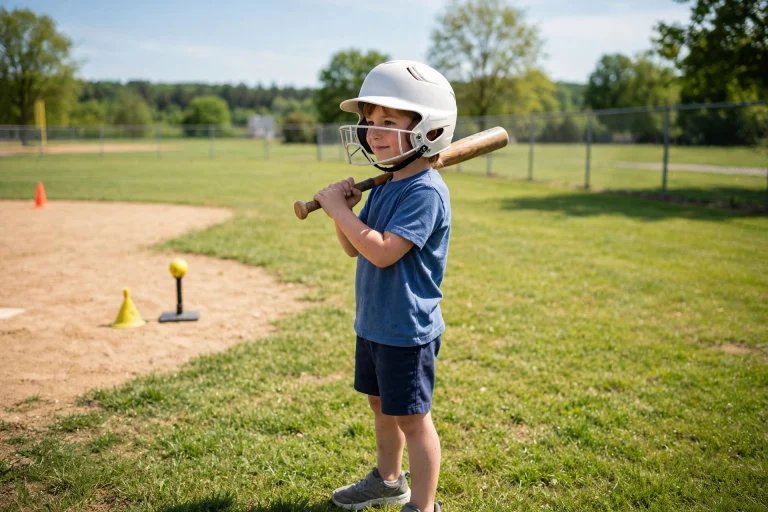
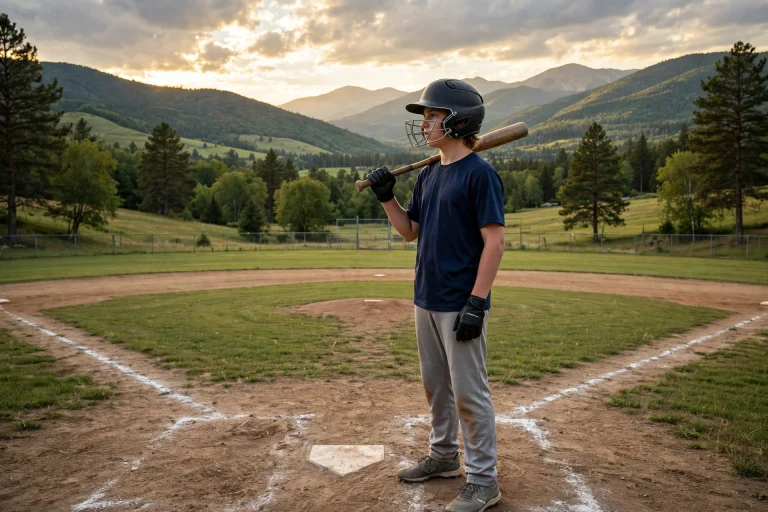
Many youth helmets come with an ear flap on one or both sides, and some come with a face guard. In general terms, a single ear flap is standard for batters, while a double ear flap is common for younger players and for leagues that require it. Face guards add protection for the face and jaw and are worth considering for younger players, pitchers, and anyone who is nervous about being hit.
Check your league’s rules before choosing. Some leagues require a face guard or a double ear flap for certain age groups, and buying a helmet that does not meet the league’s requirements means buying twice. If the rules do not specify, choose based on your child’s position and comfort — a face guard that your child finds distracting may be worse than one they wear happily.
Also check that any face guard is fitted correctly: it should sit at a sensible distance from the face, with no loose fixings, and it should not obstruct vision. A face guard that wobbles or blocks the view is a problem, not a protection.
When Should You Replace a Youth Helmet?
Replace a youth helmet when it no longer fits, when it is damaged, or when it has taken a hard impact. Growth is the most common reason: check the fit at the start of every season, and mid-season for fast-growing children. A helmet that has become too tight may sit too high and expose the forehead, while one that has become too loose will slide.
Damage is the other trigger. Inspect the shell for cracks, the padding for flattening or crumbling, and the strap and buckle for wear. A helmet that has been struck hard by a ball, or dropped onto a hard surface, should be checked carefully and replaced if there is any doubt. And remember that fit is what makes any helmet’s protection work — including systems that address angled impacts, as explained in this guide to what MIPS means for helmets.
Frequently Asked Questions
Q: Should I buy a youth helmet a size bigger so my child grows into it?
A: No — a helmet that is too large can slide, shift on impact, and leave the forehead exposed. Buy the size that fits now and replace it as your child grows.
Q: How do I measure my child’s head for a helmet?
A: Use a soft tape around the widest part of the head, just above the eyebrows and ears. Match that measurement to the manufacturer’s size chart, and always check the fit in person.
Q: Does my child need a face guard on their helmet?
A: It depends on the league’s rules and your child’s position — some leagues require one for younger players. Even where not required, a face guard adds protection for the face and jaw.

Olivia
Writer at Helmet Today, covering helmet reviews, fit and riding safety.