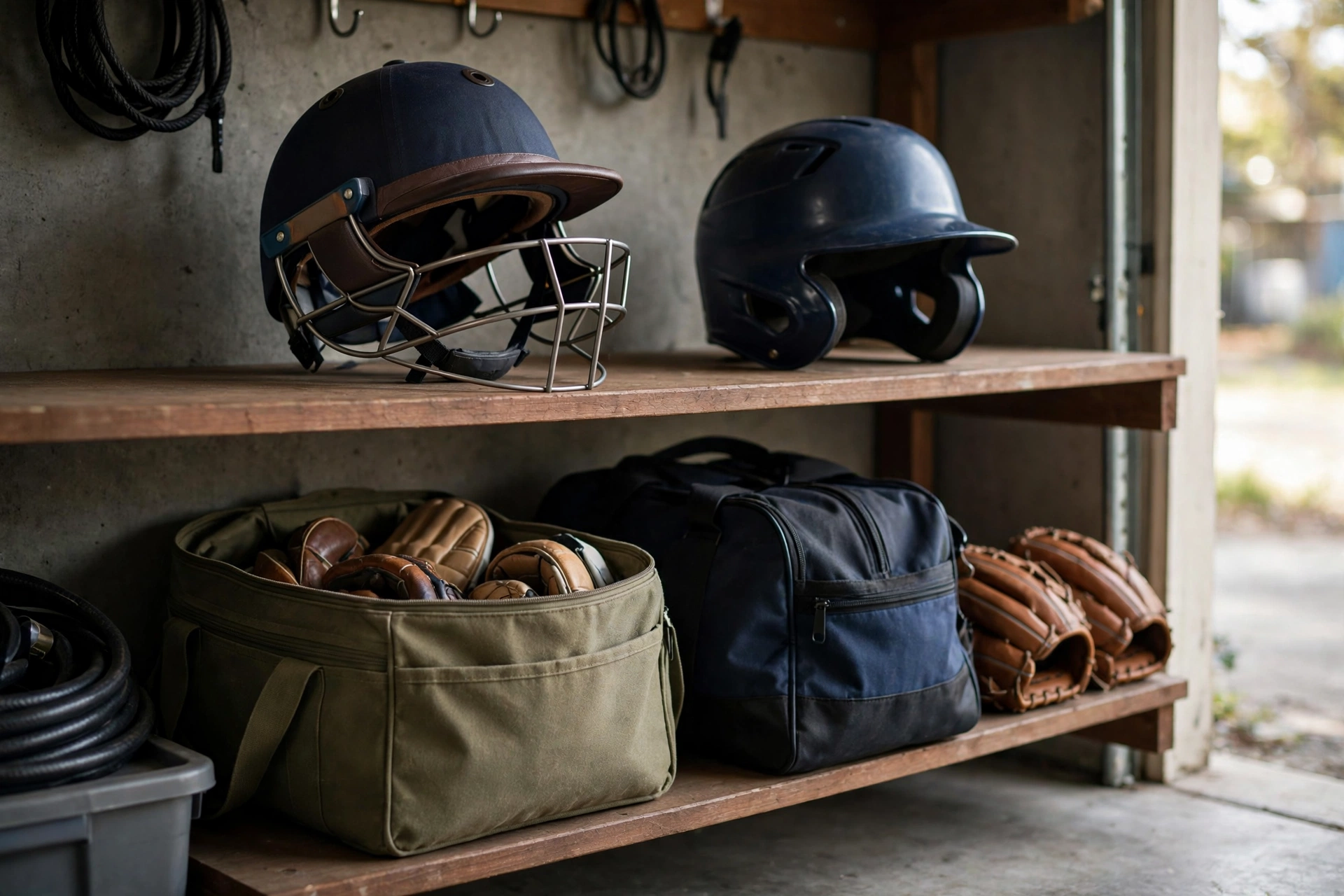
In general terms, to store cricket and baseball helmets in the off season, clean them, let them dry completely, and keep them in a cool, dry place away from direct sunlight and heat — a helmet stored damp, squashed, or in a hot loft will come back next season with degraded padding, a distorted shell, or a smell you cannot shift. Off-season storage is easy to get wrong, because helmets are often tossed into a kit bag and forgotten until the first match of the new season.
This guide covers cleaning, drying, choosing a storage spot, and the checks to make before the first game back.
How Should You Clean Helmets Before Storing Them?
Start by removing loose dirt and dust. Wipe the shell with a damp cloth, and use a soft brush for the grill and vents, where mud and grass tend to collect. Avoid harsh chemicals or abrasive cleaners, which can damage the shell’s finish and degrade the padding — in general terms, mild soap and water is enough.
Clean the padding separately where possible. Many helmets have removable pads that can be washed by hand in mild soapy water; if the pads are fixed, wipe them with a damp cloth and let them air out. Sweat and bacteria build up in padding over a season, and a helmet stored dirty will smell worse and degrade faster than one stored clean.
Clean the straps and buckles too. Straps absorb sweat and can stiffen or smell if left dirty, and buckles can corrode if stored damp. Wipe them down, check for fraying or damage, and replace any strap that is worn before storage, so the helmet is ready to use next season.
How Do You Dry a Helmet Properly?
Drying matters more than most players realise. A helmet put away damp will develop mould and odour in the padding, and dampness can degrade foam and corrode metal fixings over months of storage. After cleaning, let the helmet air-dry completely in a well-ventilated room, out of direct sunlight, before storing it.
Do not use direct heat to dry a helmet. Radiators, hair dryers, and hot air can warp the shell and damage the foam liner, so avoid them even if you are in a hurry. Patience is the right approach: a helmet left to air-dry for a day or two will be fully dry and undamaged.
Remove any removable pads and dry them separately, which speeds drying and prevents moisture being trapped between the pad and the shell. If the pads are fixed, prop the helmet so air can circulate inside it — upside down on a shelf, or on a helmet stand, works well.
Where Is the Best Place to Store Helmets?
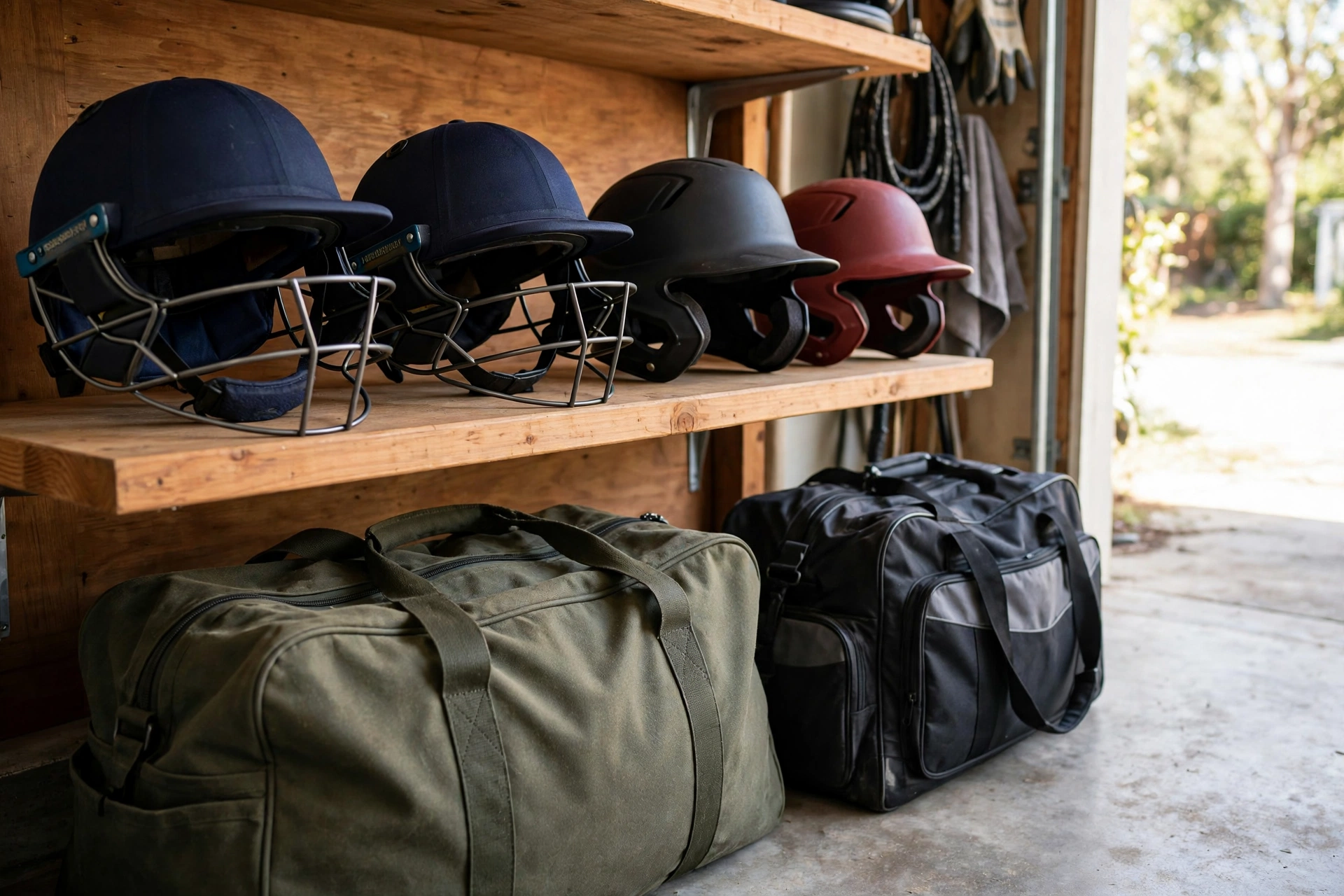
A cool, dry, indoor spot is ideal — a bedroom shelf, a cupboard, or a garage shelf that stays dry and does not get hot. Avoid lofts and car boots, which can become extremely hot in summer and very cold in winter; heat in particular accelerates the ageing of foam padding and can distort a shell over time.
Keep helmets out of direct sunlight. Sunlight fades colours, degrades plastics, and heats the helmet, all of which shorten its life. A helmet left on a windowsill or in a sunlit car will age faster than one kept in a shaded cupboard, even if both are indoors.
Store helmets where they will not be squashed or knocked about. A helmet at the bottom of a pile of kit, or loose in a car boot with bats and bags on top of it, can be dented or have its grill bent. Give each helmet its own space on a shelf, or keep it in a padded helmet bag that protects it from knocks.
Should You Use a Helmet Bag?
A helmet bag is a good investment for off-season storage. A padded bag protects the shell and grill from knocks, keeps dust off, and prevents the helmet from being squashed by other kit. It also keeps the helmet together with its straps and any spare pads, so nothing goes missing over the winter.
Make sure the helmet is fully dry before putting it in a bag, because a sealed bag traps moisture and encourages mould. A bag made from breathable fabric is better than a sealed plastic bag for that reason — it protects from dust and knocks while still allowing some air circulation.
If you do not have a helmet bag, a clean pillowcase or a cloth bag works as a simple dust cover. Avoid sealed plastic bags for long-term storage, and never store a helmet in a damp kit bag — take it out, clean it, dry it, and store it separately.
What Should You Check Before the New Season?
Before the first match of the new season, inspect the helmet properly. Check the shell for cracks or dents, the grill for bent or loose bars, the padding for flattening or crumbling, and the straps and buckles for wear. A helmet that has been stored well should pass these checks easily, but months of storage can reveal problems that were not obvious at the end of last season.
Check the fit as well, particularly for young players who may have grown over the winter. A helmet that fitted last season may be too small now, and a helmet that is too tight can sit too high and expose the forehead. Re-check the fit with whatever the player wears underneath, and adjust the padding or replace the helmet if needed.
Finally, air the helmet out before use. Even a well-stored helmet can smell slightly stale after months in a cupboard, and a quick airing in a ventilated room freshens it up. And remember that fit and condition are what make any helmet’s protection work — including systems that address angled impacts, as explained in this guide to what MIPS means for helmets.
Frequently Asked Questions
Q: Can I store a cricket helmet in the loft over winter?
A: In general terms, it is better not to — lofts get very hot in summer and very cold in winter, and heat in particular degrades foam padding and can distort the shell. A cool, dry indoor spot is better.
Q: Should I clean my helmet before storing it?
A: Yes — clean it with mild soap and water, let it dry completely, and then store it. A helmet stored dirty or damp will develop odour, mould, and degraded padding.
Q: Is a helmet bag worth it for storage?
A: Yes, a padded, breathable helmet bag protects the shell and grill from knocks and dust. Just make sure the helmet is fully dry before putting it in the bag.

Olivia
Writer at Helmet Today, covering helmet reviews, fit and riding safety.