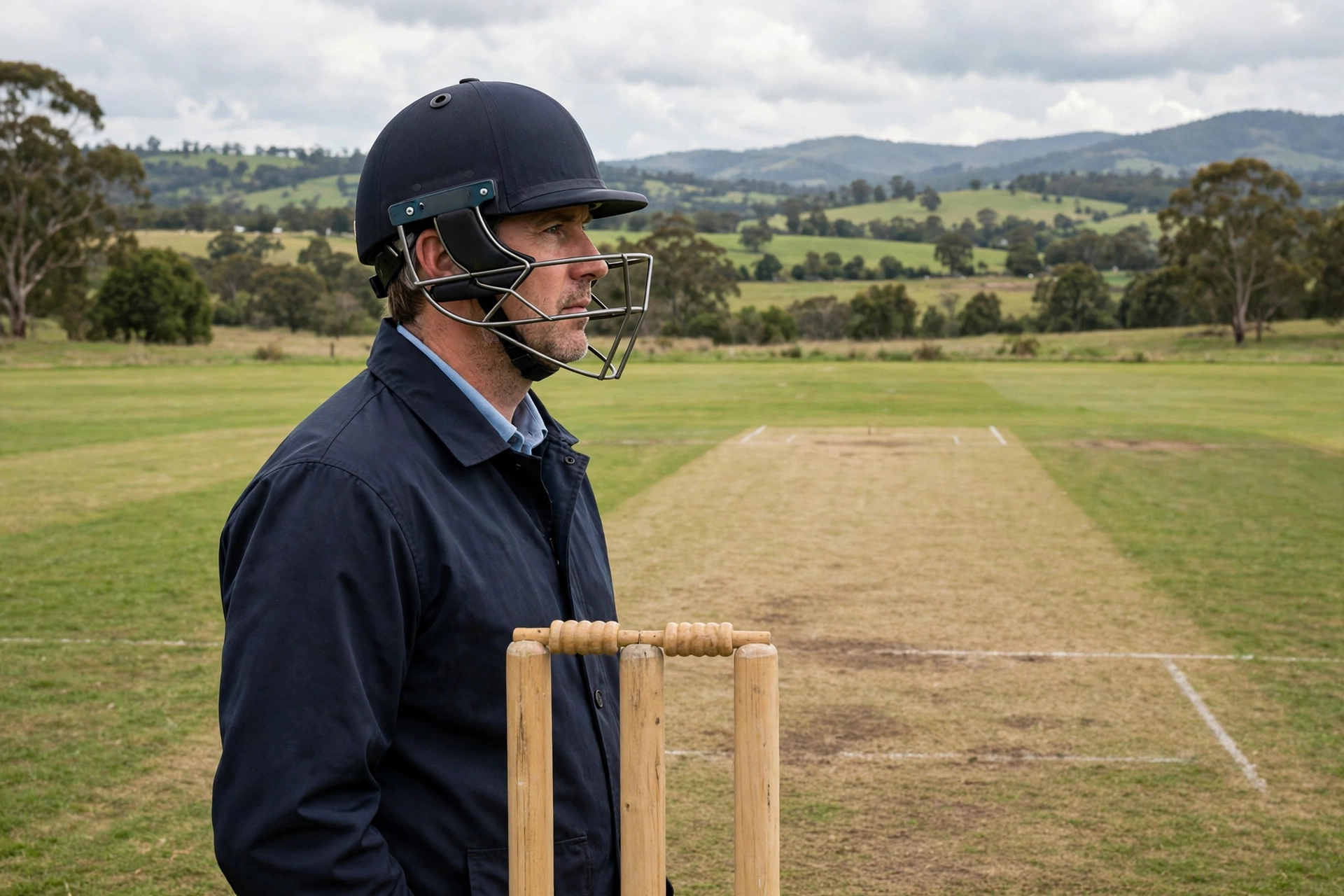
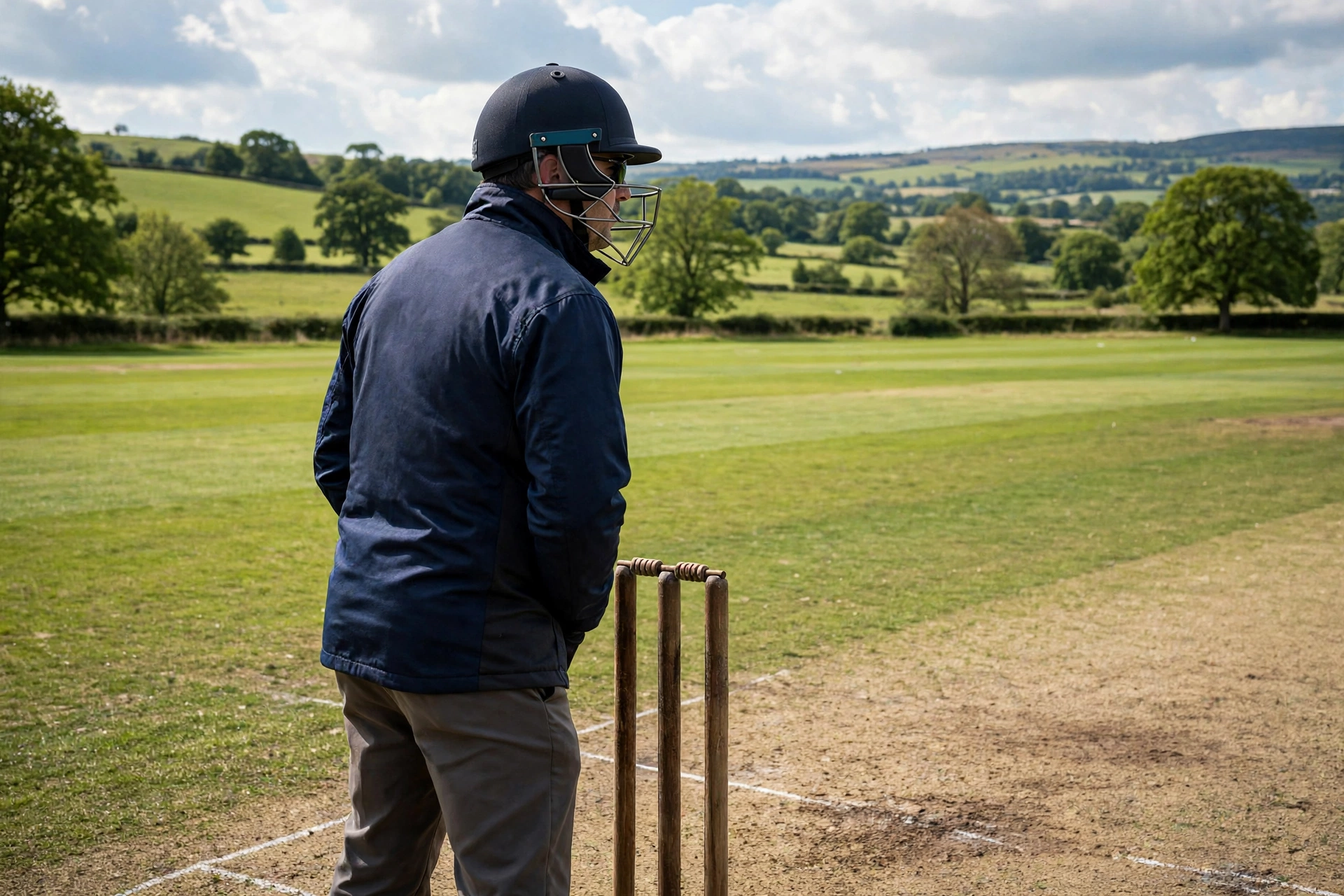
In general terms, whether umpires wear helmets in cricket depends on the level and the position: umpires standing at the striker’s end and at square leg are increasingly seen wearing helmets or protective headgear in professional and higher-level matches, while in club and junior cricket umpires often wear a hat — but the risk of being struck by a ball is real for umpires, and helmet use is growing. An umpire stands closer to the batter than any fielder, directly in the line of powerful shots, which is why the question of umpire protection has become more serious in recent years.
This guide covers which umpires wear helmets, what kind they wear, and why the practice is spreading.
Why Are Umpires at Risk?
The striker’s-end umpire stands just behind the stumps at the batter’s end, only a short distance from the batter, and directly in the path of straight drives, pulls, and deflections. A ball struck firmly can reach the umpire in a fraction of a second, with very little time to react or take evasive action.
The square-leg umpire is also exposed. Standing at square leg, the umpire is in line with pull shots and hook shots, which are among the most powerful strokes in cricket, and a ball hit square can arrive fast and at head height. Both umpires are also at risk from throws: a fielder’s return to the stumps that misses can travel straight at the umpire.
Umpires are particularly vulnerable because they are not expecting to field the ball. A fielder is watching the ball and ready to move; an umpire is watching for no-balls, wides, and run-outs, and may be looking elsewhere when a ball is struck towards them. That divided attention, combined with close proximity, is what makes the risk serious.
Which Umpires Wear Helmets?
In professional cricket, umpires at the striker’s end and at square leg are increasingly wearing helmets, and in some competitions helmet use by umpires is now standard practice. The change has been gradual: umpires traditionally wore hats, and helmets were seen as unusual, but a series of incidents in which umpires were struck has shifted attitudes.
In domestic and club cricket, the picture is mixed. Some umpires wear helmets, particularly at higher levels where bowling is faster and batting more powerful, while others still wear hats. Junior cricket umpires — often coaches, parents, or senior players — rarely wear helmets, though the risk is lower because the bowling is slower and the batting less powerful.
There is no single worldwide rule that requires umpires to wear helmets, so practice varies by competition, association, and level. In general terms, if you are umpiring at a level where fast bowling and powerful batting are involved, wearing a helmet is a sensible precaution regardless of whether the rules require it.
What Kind of Helmet Do Umpires Wear?
Umpires who wear helmets typically wear a cricket helmet or a lightweight protective helmet designed for officials. A standard cricket batting helmet is a common choice, because it is readily available, meets a recognised standard, and protects the head and face. Some umpires prefer a helmet with a faceguard, while others wear a helmet without a grill for better visibility and communication.
Visibility and hearing matter for umpires in a way they do not for batters. An umpire needs a clear view of the pitch, the crease, and the fielders, and needs to hear appeals, calls, and communication from players. A helmet that restricts vision or muffles sound can interfere with decision-making, so umpires often choose helmets that balance protection with a wide field of view and open ears.
Comfort over a long day is another factor. Umpires stand for hours, often in heat, and a heavy or poorly ventilated helmet becomes a burden. Lightweight helmets with good ventilation are popular among umpires for that reason, and a helmet that is comfortable is one that stays on for the whole match.
Do Umpires Wear Helmets in All Formats?
Helmet use by umpires is most common in longer formats and higher-level matches, where fast bowling is a regular feature and the ball is harder. In limited-overs cricket, where batting is often more aggressive and powerful shots are more frequent, umpires are also at significant risk, and helmet use is growing there too.
In junior and recreational cricket, helmet use by umpires is still uncommon, largely because the risk is perceived as lower and because helmets for officials are not always provided. However, some junior associations are beginning to encourage umpire helmets, particularly for umpires standing at the striker’s end in older age groups where bowling speeds are higher.
Indoor cricket and other shorter formats have their own considerations: the distances are shorter, which can increase the risk, but the ball is often softer. In general terms, the decision should be based on the actual risk in the match — the speed of bowling, the power of batting, and the proximity of the umpire to the action — rather than on tradition.
Should Club Umpires Wear Helmets?
In general terms, yes, if the level of play involves fast bowling or powerful batting. Club umpires are volunteers in many cases, and they deserve the same consideration for safety as players. A club that provides helmets for its umpires, or encourages umpires to wear their own, is taking a simple step that reduces a real risk.
Some umpires resist helmets because they feel it looks unusual or because they worry about comfort and visibility. Those concerns are understandable, but they fade against the risk of a head injury, and modern lightweight helmets address most of the comfort and visibility issues. And remember that fit is what makes any helmet’s protection work — including systems that address angled impacts, as explained in this guide to what MIPS means for helmets.
Frequently Asked Questions
Q: Do cricket umpires have to wear helmets?
A: There is no single worldwide rule — practice varies by competition and level. Professional umpires increasingly wear them, and they are a sensible choice wherever fast bowling or powerful batting is involved.
Q: Which umpire is most at risk?
A: The striker’s-end umpire, who stands just behind the stumps near the batter, and the square-leg umpire, who stands in line with pull and hook shots, are both exposed to fast, powerful balls.
Q: What helmet should an umpire wear?
A: In general terms, a lightweight cricket helmet that balances protection with a wide field of view, good hearing, and ventilation for a long day standing in the field.

Olivia
Writer at Helmet Today, covering helmet reviews, fit and riding safety.