In general terms, a karting helmet and an auto racing helmet are built for different kinds of impact: a karting helmet is designed for open-cockpit karting at relatively low speeds, while an auto racing helmet is built for closed-cockpit cars, higher speeds, and the added risk of fire. They can look similar at a glance, but the shell, lining, visor, and certification behind each one are tuned to a different job.
Many newcomers assume any full-face helmet will do for both sports. That can cause problems at scrutineering, where officials check the standard required for the event, and it can mean wearing a helmet heavier or hotter than the situation calls for. This guide explains the differences in plain terms.
What Is a Karting Helmet Designed For?
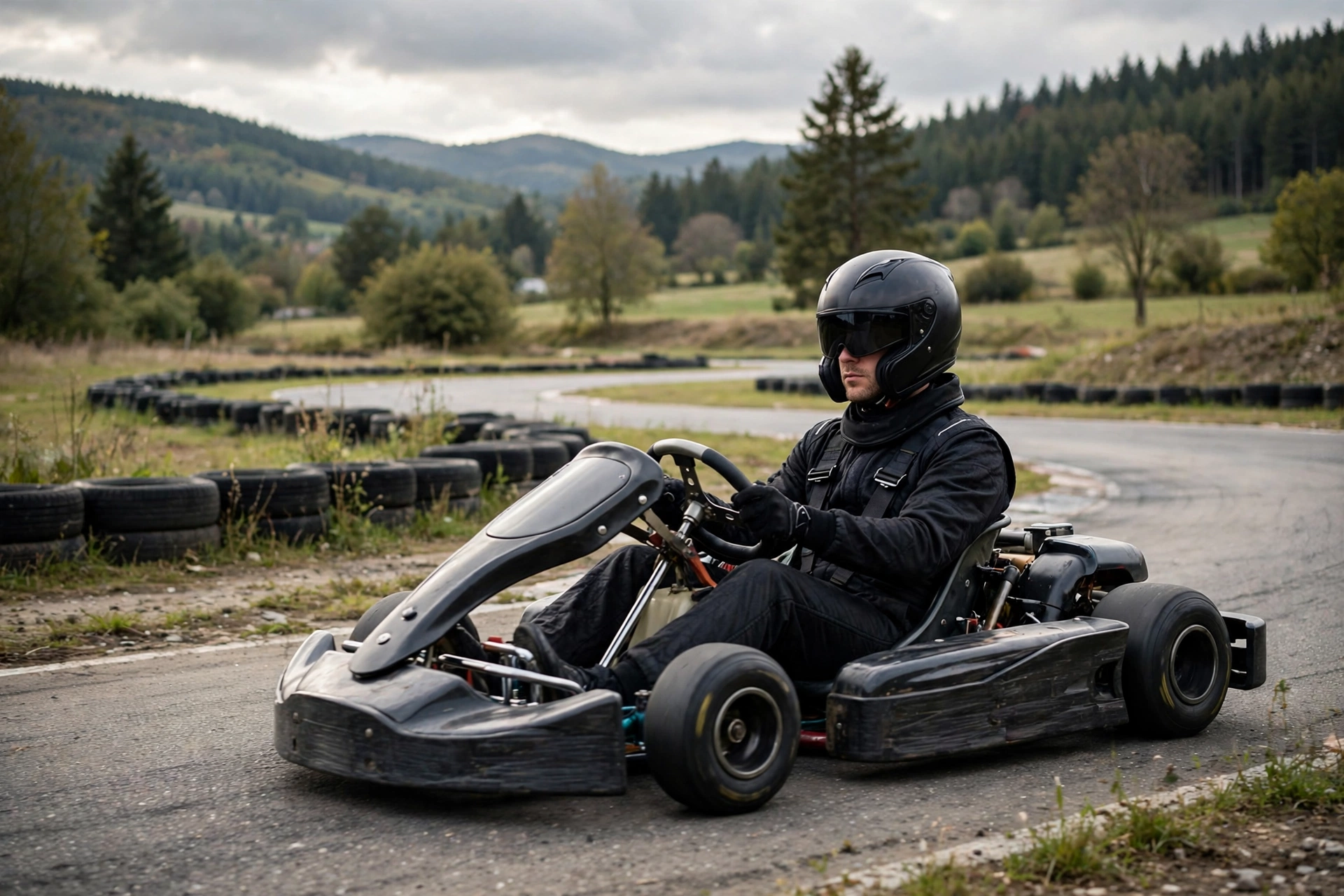
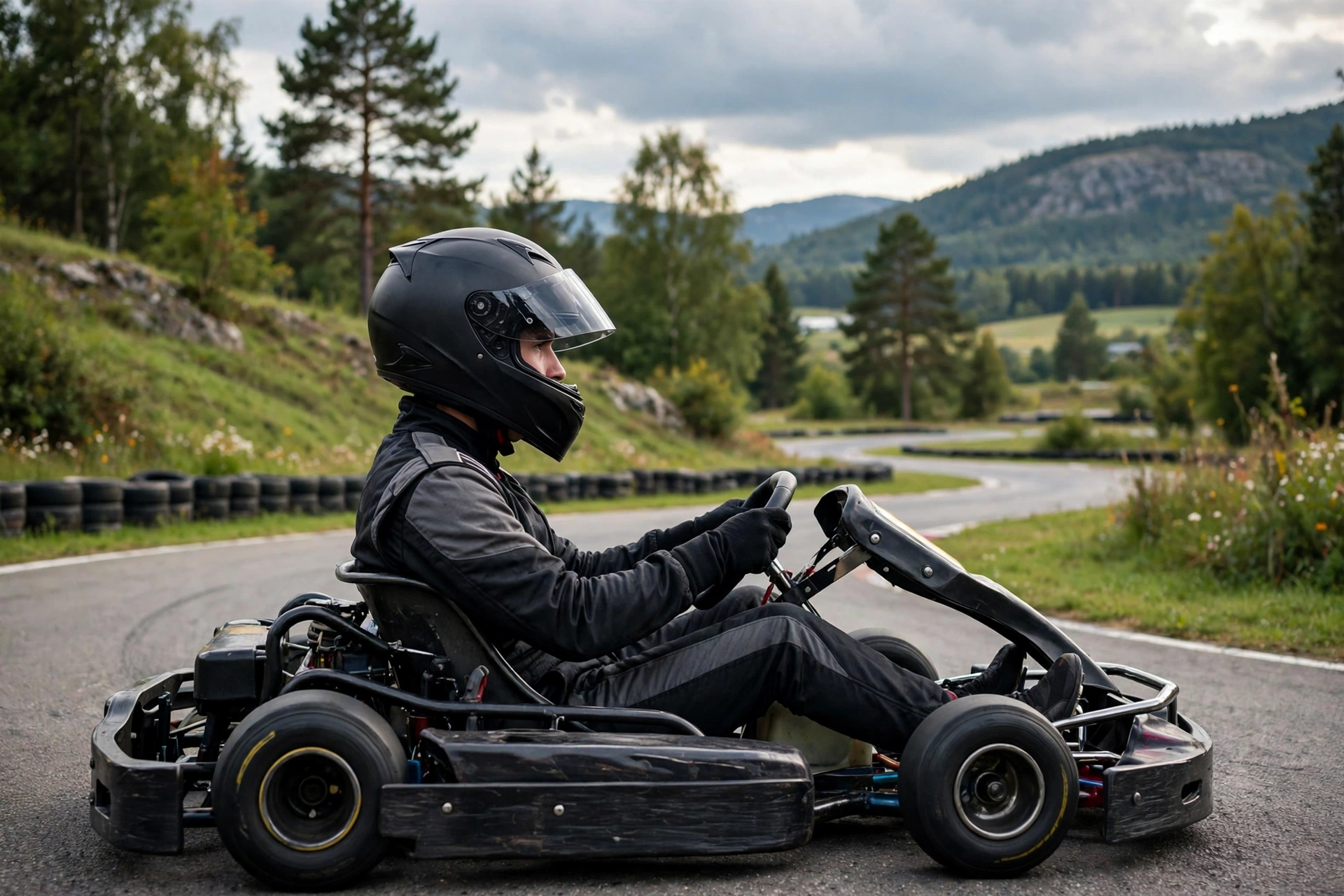
A karting helmet is designed for drivers sitting in an open kart, exposed to wind, dust, and stones thrown up from the track. Because there is no bodywork around the driver, the visor and shell need to cope with debris and weather, and ventilation matters a great deal on a hot day when the driver is working hard in a suit.
Karting helmets are usually lighter than auto racing helmets. Karting involves constant head movement — checking mirrors is not an option in most karts, so drivers turn their heads to look around — and a lighter helmet reduces neck fatigue over a long race day. The shell is still a full-face design in most cases, covering the chin and jaw, because a kart offers no protection in a roll or a collision with a barrier.
In general terms, karting helmets are also made to be practical for club racing: often more affordable than top-level auto racing helmets, easier to clean after a dusty session, and available in sizes that suit younger drivers as well as adults.
What Is an Auto Racing Helmet Designed For?
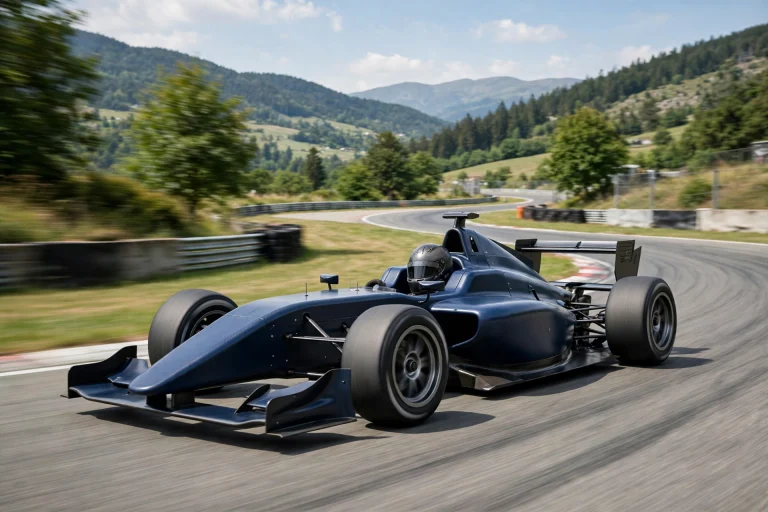
An auto racing helmet is designed for a driver strapped into a car, often with a harness, a head restraint device, and a roll cage around them. The speeds are higher, the forces in a crash are greater, and the driver may need to escape from a car quickly after an incident. Each of those factors shapes the helmet.
Fire resistance is one of the clearest differences. Auto racing helmets are built with fire-resistant linings and materials, because a driver may be near fuel and hot components after a crash and needs time to get out of the car. Karting helmets, in general terms, are not built to the same fire standard, because the fire risk in karting is much lower and the driver is already out in the open.
Auto racing helmets also tend to be heavier and more heavily constructed. They are designed to work with head restraint systems, so they have anchor points for tethers, and their shells are tested against the kinds of impacts and penetration risks found in car racing. That extra construction is welcome in a car, but it would be unnecessary weight and bulk on a kart.
How Do the Visors and Ventilation Differ?
Visors differ because the environments differ. A karting helmet visor needs to handle wind, rain, dust, and stones at open-air speeds, and it should be easy to open, close, and swap between sessions. Many karting drivers carry a clear visor and a tinted visor and change them as the light changes through the day.
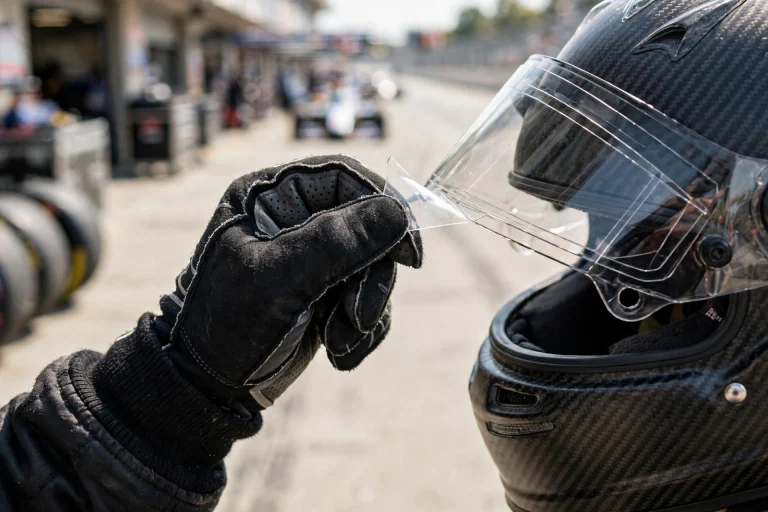
An auto racing helmet visor is part of a sealed system. Inside a closed car, the driver is shielded from wind and debris, but heat builds up quickly, so ventilation is channelled through the helmet in a controlled way. Some auto racing helmets also accept tear-off visor strips, which let a driver peel away a dirty layer during a pit stop without stopping to clean the visor.
Ventilation design follows the same logic. Karting helmets rely on airflow over the shell as the kart moves, with vents placed to draw air across the face. Auto racing helmets often have vents designed to work with a car’s ventilation or a cool-air hose system, and they must balance airflow against the need to keep the helmet sealed and fire-resistant.
Can You Use a Karting Helmet for Auto Racing?
In general terms, no — not for organised car racing. Event rules usually specify which helmet standards are accepted, and a karting helmet will not meet the standard required for most car racing events. Even if it physically fits, it may be turned away at scrutineering, and that can end your race day before it starts.
The reverse is sometimes possible in casual settings: some kart tracks accept auto racing helmets for hire-kart sessions or practice, because an auto racing helmet generally offers at least as much impact protection. Even so, it is worth checking with the track first, since some venues have their own rules about which helmets are allowed, and an auto racing helmet can be hot and heavy for karting.
The safest approach is to match the helmet to the sport you do most. If you race karts regularly and occasionally try a car, a karting helmet is the right main purchase, and you can hire or borrow a car helmet for the odd car event. If you race cars, buy a proper auto racing helmet and do not try to stretch a karting helmet into service it was not designed for.
Which Helmet Should You Buy First?
Start by being honest about where you will spend your time. A club karter who races most weekends needs a karting helmet that fits well, ventilates well, and meets the standard their club requires. Fit is the deciding factor: a helmet that moves around or presses on the forehead will distract you and tire you out, however good its specification looks on paper.
Budget matters too, but it should follow fit and certification, not lead them. A well-fitting helmet that meets the required standard is a better buy than a more expensive helmet that fits poorly. Try helmets on with a balaclava if you wear one, check that the visor seals and opens smoothly, and make sure the chin strap holds the helmet firmly without choking you.
Finally, remember that protection works as a system, and that fit is what makes any helmet’s protection work — including systems that address angled impacts, as explained in this guide to what MIPS means for helmets. Whatever helmet you choose, check it after any hard impact, replace it when the lining or shell shows wear, and never race in a helmet that has been dropped hard or crashed in.
Frequently Asked Questions
Q: Is a karting helmet the same as a motorcycle helmet?
A: In general terms, no. Karting helmets are built for karting conditions and standards, while motorcycle helmets are built for road riding. Some may look alike, but the certification and design details differ, so check your event’s rules before using one in place of the other.
Q: Can children use adult karting helmets?
A: Only if the fit is genuinely correct. A helmet that is too large will move in a crash and may not protect properly. Children should use a helmet sized for their head, with the right shell size and padding, not simply the smallest adult size available.
Q: How often should a karting helmet be replaced?
A: In general terms, replace it after a hard impact, when the lining is compressed or worn, or when the shell shows cracks or damage. Even without a crash, regular use, sweat, and sun wear a helmet down over time, so inspect it at the start of each season.

Olivia
Writer at Helmet Today, covering helmet reviews, fit and riding safety.