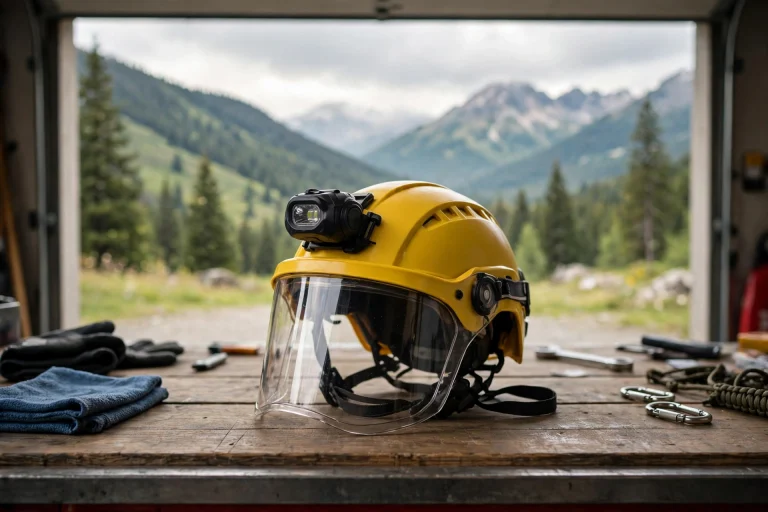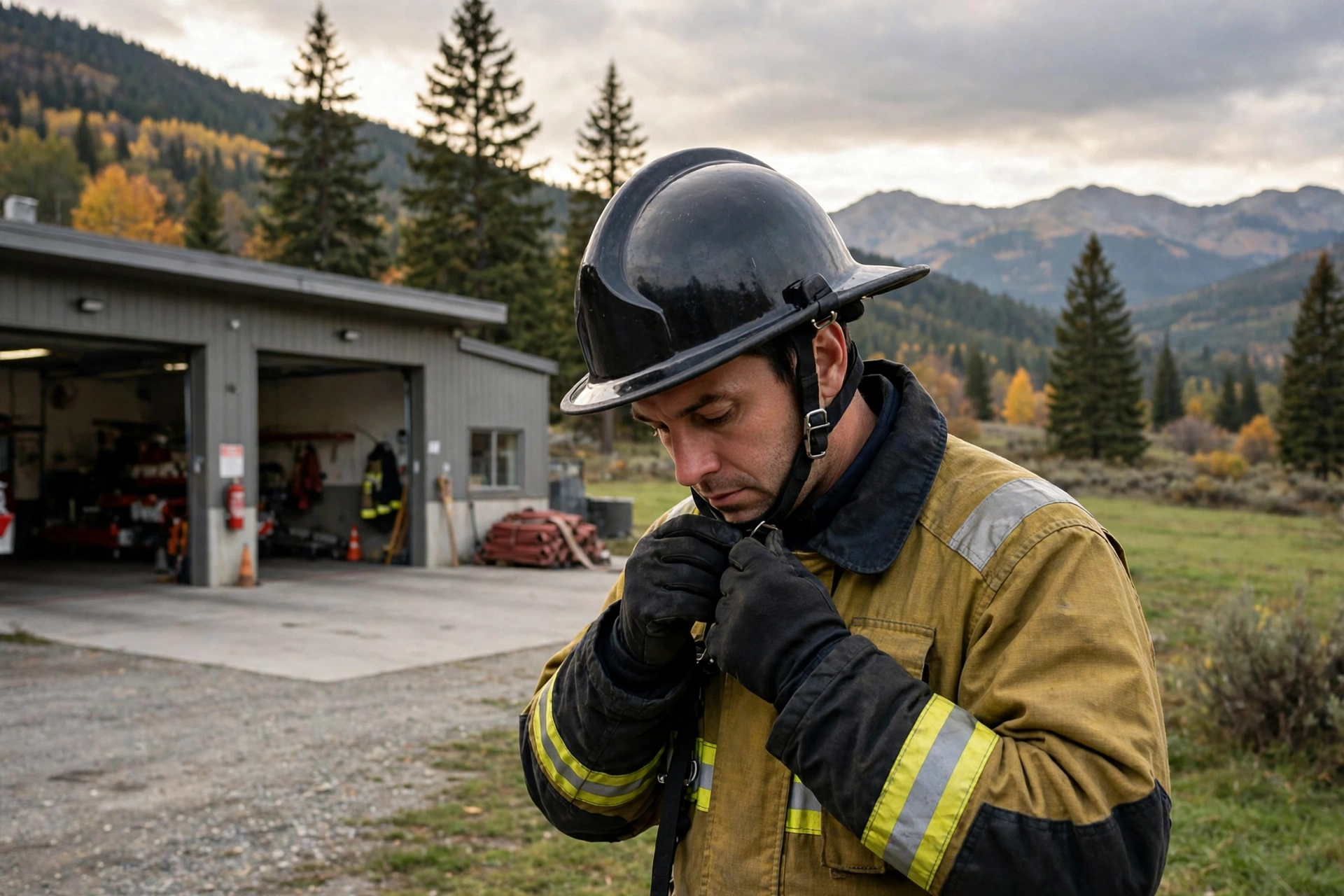
In general terms, a firefighter helmet fits correctly when it sits level on the head, feels snug all round without pressure points, and stays put when you shake your head or bend forward. A helmet that rocks, slips over the eyes, or pinches after a few minutes will not protect as well as it should, and it will distract you at exactly the moment you need to concentrate.
Fitting a fire helmet is not a one-time job done on the day it is issued. Heads change with haircuts, the liner compresses with use, and the helmet must work with a hood, a breathing apparatus mask, and a radio headset. A proper fitting routine, checked regularly, is a small investment that pays off on every call.
How Do You Measure for a Firefighter Helmet?
Start with a simple head measurement. Wrap a flexible tape around the head just above the eyebrows and ears, at the widest point, and note the measurement. Helmet sizing charts use this circumference, and it gives a reliable starting point, though it does not tell the whole story, because head shapes differ. Two people with the same circumference may need different sizes or liner adjustments if one has a rounder head and the other a longer one.
Try the helmet on with the gear you will actually wear under it. That means the fire hood, and ideally the breathing apparatus mask as well, since both change how the helmet sits. A helmet that fits perfectly on a bare head may feel tight or sit too high once the hood and mask are added, and discovering that at a fire is too late.
Pay attention to the liner and suspension system. Most fire helmets have an adjustable suspension or a ratchet system that can be tightened or loosened, and some have interchangeable liner pads in different thicknesses. Use these adjustments to get an even fit all round, rather than forcing a helmet that is fundamentally the wrong size. If no adjustment makes the helmet comfortable and stable, it is the wrong size, and it should be exchanged.
What Does a Correct Fit Look and Feel Like?
A correctly fitted helmet sits level, not tilted forward or back, with the brim roughly level all round. It should cover the forehead without sliding down over the eyes, and the rear brim should sit over the back of the neck without pushing the head forward. When you look in a mirror, the helmet should look balanced, not perched on top of the head.
The feel is just as important as the look. The helmet should feel snug, with even pressure all round, and no single spot that digs in. Shake your head from side to side and nod up and down: the helmet should move with your head, not lag behind or slide around. Bend forward as if picking something up: the helmet should stay in place, held by the chin strap, not slide off.

How Do You Fit the Helmet With a Breathing Apparatus?
The breathing apparatus mask is the part that most often upsets a good fit. Put the hood on first, then the mask, and check that the mask seals properly against the face before adding the helmet. The helmet should sit over the mask straps without pushing the mask out of position or breaking its seal. If the helmet presses the mask straps into the face or lifts the mask at the edges, adjust the helmet suspension or try a different size.
It is worth doing this full-kit check at the station, in calm conditions, rather than on the fireground. Run through the sequence a few times until it becomes routine: hood, mask, helmet, strap, communications check. That routine will serve you well when the alarm sounds and there is no time to fiddle with adjustments.
What Are the Common Fitting Mistakes?
The most common mistake is wearing a helmet that is too loose. A loose helmet feels comfortable at first, which is why it goes unnoticed, but it will shift in a fall, slide over the eyes during movement, and offer less protection in an impact. If the helmet moves when you shake your head, tighten the suspension or add liner pads until it stays put.
The opposite mistake, a helmet that is too tight, is also common, especially when a new helmet is issued and the wearer assumes it will break in. Some softening of the liner does occur with use, but a helmet that causes headaches or leaves deep marks after a short wear is too tight, and it will only distract and fatigue the wearer on a long incident.
Another frequent error is ignoring the hood. Fire hoods vary in thickness, and a helmet fitted without the hood may sit too high or too loose once the hood is added. Always fit with the hood on, and recheck the fit if the service changes hood type. The same applies to hair: a significant haircut or a change in hairstyle can alter the fit enough to warrant a quick recheck.
Finally, many firefighters forget to recheck the fit over time. Liners compress, straps stretch, and suspension systems wear. A helmet that fitted perfectly a year ago may not fit as well today. A quick fit check at the start of each shift, or at least each week, catches these changes before they matter. Fit is also central to how modern impact systems perform, as explained in this guide to what MIPS means for helmets.
How Often Should You Recheck the Fit?
In general terms, a quick check each time you put the helmet on is good practice, and a more thorough check is worth doing whenever anything changes: a new hood, a new mask, a haircut, or a helmet that has been repaired or had parts replaced. After any incident where the helmet took a knock, check both the fit and the condition of the shell and liner before returning it to service.
Remember that a good fit is not vanity, it is protection. A helmet that fits correctly stays where it should, absorbs impact as designed, and lets the wearer focus on the job. Taking a few minutes to get the fit right, and to keep checking it, is one of the simplest safety measures a firefighter can take.
Frequently Asked Questions
Q: Should a firefighter helmet feel tight?
A: It should feel snug all round, with even pressure and no movement when you shake your head, but not so tight that it causes pain or headaches. A helmet that hurts after a short wear is too tight and should be adjusted or exchanged.
Q: Do you fit a fire helmet over the fire hood?
A: Yes, always. The hood changes how the helmet sits, so fitting without it can leave the helmet too high or too loose in a real incident. Fit the helmet with the hood and breathing apparatus mask in place.
Q: How do I know if my fire helmet is too big?
A: If it slides over your eyes, rocks when you shake your head, or moves independently of your head when you bend forward, it is too big or too loosely adjusted. Tighten the suspension first, and exchange the helmet if no adjustment makes it stable.

Olivia
Writer at Helmet Today, covering helmet reviews, fit and riding safety.